

Kirjailija
Robert A. Day
Kirjat ja teokset yhdessä paikassa: 9 kirjaa, julkaisuja vuosilta 1998-2024, suosituimpien joukossa How To Write And Publish A Scientific Paper. Vertaile teosten hintoja ja tarkista saatavuus suomalaisista kirjakaupoista.
Mukana myös kirjoitusasut: Robert A Day
9 kirjaa
Kirjojen julkaisuhaarukka 1998-2024.

How to Write and Publish a Scientific Paper
Barbara Gastel; Robert A. Day
Cambridge University Press
2024
pokkari
Thoroughly updated throughout, the authors of this classic guide put their advice into practice by keeping the book as clear and simple as possible. They provide early-career scientists and experienced researchers with practical support on writing for different audiences and getting published. This ninth edition retains the key material – including preparing text and graphics, publishing research papers, writing grant proposals, rights and permissions, and a wealth of advice on writing style – while new material includes new guidance on navigating copyright, presenting online, identifying co-authors, creating visual abstracts, and writing in English as a non-native language. Valuable appendices provide a ready reference on words and expressions to avoid, SI prefixes, useful websites, and a handy glossary. Postgraduate students and working scientists will want to keep How to Write and Publish a Scientific Paper at their desks and refer to it at every stage of writing and publication.

How to Write and Publish a Scientific Paper
Barbara Gastel; Robert A. Day
BLOOMSBURY PUBLISHING PLC
2022
nidottu
Thoroughly updated throughout, this classic, practical text on how to write and publish a scientific paper takes its own advice to be "as clear and simple as possible." "The purpose of scientific writing," according to Barbara Gastel and Robert A. Day, "is to communicate new scientific findings. Science is simply too important to be communicated in anything other than words of certain meaning." This clear, beautifully written, and often funny text is a must-have for anyone who needs to communicate scientific information, whether they're writing for a professor, other scientists, or the general public. The thoughtfully revised 9th edition retains the most important material—including preparing text and graphics, publishing papers and other types of writing, and plenty of information on writing style—while adding up-to-date advice on copyright, presenting online, identifying authors, creating visual abstracts, and writing in English as a non-native language. A set of valuable appendixes provide ready reference, including words and expressions to avoid, SI prefixes, a list of helpful websites, and a glossary. Students and working scientists will want to keep How to Write and Publish a Scientific Paper at their desks and refer to it at every stage of writing and publication.

How to Write and Publish a Scientific Paper
Barbara Gastel; Robert A. Day
BLOOMSBURY PUBLISHING PLC
2022
sidottu
Thoroughly updated throughout, this classic, practical text on how to write and publish a scientific paper takes its own advice to be "as clear and simple as possible.""The purpose of scientific writing," according to Barbara Gastel and Robert A. Day, "is to communicate new scientific findings. Science is simply too important to be communicated in anything other than words of certain meaning."This clear, beautifully written, and often funny text is a must-have for anyone who needs to communicate scientific information, whether they're writing for a professor, other scientists, or the general public. The thoughtfully revised 9th edition retains the most important material—including preparing text and graphics, publishing papers and other types of writing, and plenty of information on writing style—while adding up-to-date advice on copyright, presenting online, identifying authors, creating visual abstracts, and writing in English as a non-native language.A set of valuable appendixes provide ready reference, including words and expressions to avoid, SI prefixes, a list of helpful websites, and a glossary. Students and working scientists will want to keep How to Write and Publish a Scientific Paper at their desks and refer to it at every stage of writing and publication.
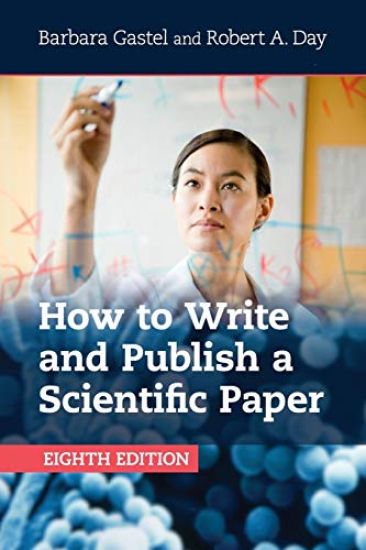
How to Write and Publish a Scientific Paper
Barbara Gastel; Robert A. Day
Cambridge University Press
2017
pokkari
An essential guide for succeeding in today's competitive environment, this book provides beginning scientists and experienced researchers with practical advice on writing about their work and getting published. This brand new, updated edition also includes a new chapter on editing one's own work, a section on publicizing and archiving one's paper, and updates on authorship, including information on new authorship criteria and on the author identification number ORCID. The book guides readers through the processes involved in writing for and publishing in scientific journals, from choosing a suitable journal, to writing each part of the paper, to submitting the paper and responding to peer review, through checking the proofs. It covers ethical issues in scientific publishing, explains rights and permissions, and discusses writing grant proposals, giving presentations and writing for general audiences.

This entertaining and highly readable book gives anyone writing in the sciences a clear and easy-to-follow guide to the English language.English is often regarded as one of the most difficult languages to master. Yet while the English language has a vocabulary of upwards of 500,000 words, it only uses nine parts of speech, and all of these words fall into one (or more) of those nine categories. Scientific English: A Guide for Scientists and Other Professionals, Third Edition contains many simple revelations like this that make effective scientific writing in English easy, even for those whose fluency is in another language.The book is organized around a basic guide to English grammar that is specifically tailored to the needs of scientists, science writers, science educators, and science students. The authors explain the goals of scientific writing, the role of style, and the various kinds of writing in the sciences, then provide a basic guide to the fundamentals of English and address problem areas such as redundancies, abbreviations and acronyms, jargon, and foreign terms. Email, online publishing, blogs, and writing for the Web are covered as well. This book is designed to be an enlightening and entertaining read that can then be retained as a practical scientific writing reference guide.
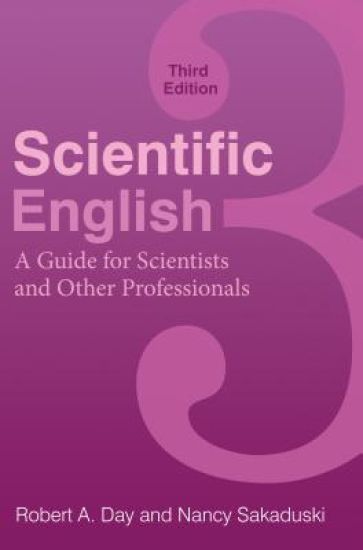
This entertaining and highly readable book gives anyone writing in the sciences a clear and easy-to-follow guide to the English language.English is often regarded as one of the most difficult languages to master. Yet while the English language has a vocabulary of upwards of 500,000 words, it only uses nine parts of speech, and all of these words fall into one (or more) of those nine categories. Scientific English: A Guide for Scientists and Other Professionals, Third Edition contains many simple revelations like this that make effective scientific writing in English easy, even for those whose fluency is in another language.The book is organized around a basic guide to English grammar that is specifically tailored to the needs of scientists, science writers, science educators, and science students. The authors explain the goals of scientific writing, the role of style, and the various kinds of writing in the sciences, then provide a basic guide to the fundamentals of English and address problem areas such as redundancies, abbreviations and acronyms, jargon, and foreign terms. Email, online publishing, blogs, and writing for the Web are covered as well. This book is designed to be an enlightening and entertaining read that can then be retained as a practical scientific writing reference guide.