Kirjojen hintavertailu. Mukana 12 390 323 kirjaa ja 12 kauppaa.

Kirjailija

Robert A. Krieg

Kirjat ja teokset yhdessä paikassa: 6 kirjaa, julkaisuja vuosilta 1992-2022, suosituimpien joukossa God's World. No String Puppets. Vertaile teosten hintoja ja tarkista saatavuus suomalaisista kirjakaupoista.

Mukana myös kirjoitusasut: Robert A Krieg

6 kirjaa

Kirjojen julkaisuhaarukka 1992-2022.

God's World. No String Puppets

God's World. No String Puppets

Jane Lee-Barker; Robert A Krieg

Wipf Stock Publishers
2022
sidottu
We live in a world facing many crises, pandemics, climate and environmental challenges, human rights abuses, and threats of totalitarian regimes. Romano Guardini (1885-1968), a major influencer of Pope Benedict XVI and Pope Francis, worked through one of the most difficult periods of German history--the first half of the twentieth century. What does he have to say to these challenges, and how is his notion of providence relevant today? Jane Lee-Barker shows how Guardini's insight and deep thought on God's providence weave their way through his work, enabling the reader to fully appreciate "God's world." In relationship with God, the human person is invited to participate in responsible care for the world while responding to their own vocational call from the God who sustains him or her.
God's World. No String Puppets

God's World. No String Puppets

Jane Lee-Barker; Robert A Krieg

Wipf Stock Publishers
2022
pokkari
We live in a world facing many crises, pandemics, climate and environmental challenges, human rights abuses, and threats of totalitarian regimes. Romano Guardini (1885-1968), a major influencer of Pope Benedict XVI and Pope Francis, worked through one of the most difficult periods of German history--the first half of the twentieth century. What does he have to say to these challenges, and how is his notion of providence relevant today? Jane Lee-Barker shows how Guardini's insight and deep thought on God's providence weave their way through his work, enabling the reader to fully appreciate "God's world." In relationship with God, the human person is invited to participate in responsible care for the world while responding to their own vocational call from the God who sustains him or her.
Treasure in the Field

Treasure in the Field

Robert A. Krieg

Liturgical Press
2013
pokkari
What does it mean to say that God offers salvation to humanity? What is this salvation, and how can we become more conscious of it in our lives? These are the questions that Robert Krieg faces in Treasure in the Field. While his intent is certainly to impart information and ideas found in Scripture, church teaching, and theology, it is also to illumine our own experiences.Krieg retrieves the Bible's teaching on salvation and expresses it in contemporary terms. Drawing deeply from Scripture, he defines salvation as God's gift of personal identity, of wholeness. In this perspective, God calls us not to invent ourselves but to discover ourselves as God intends us to be. Those who gradually make this discovery become grateful recipients who give themselves and their talents for the well-being of other people and creation. Robert A. Krieg is professor of theology at the University of Notre Dame. He is the editor and translator of Romano Guardini: Spiritual Writings, as well as the author of Romano Guardini: A Precursor of Vatican II; Karl Adam: Catholicism in German Culture; and Story-Shaped Christology. His work has also appeared in America, Theological Studies, Worship, and many other journals.
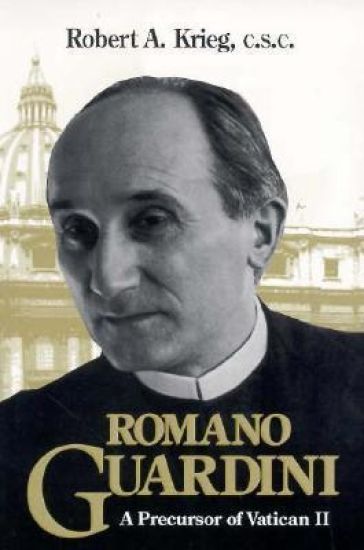
Romano Guardini

Romano Guardini

Robert A. Krieg

University of Notre Dame Press
1997
nidottu
How did Catholicism move from the defensive stance of the First Vatican Council in the 1870s to the open, responsive position of the Second Vatican Council in the 1960s? The life and thought of Romano Guardini shows the way. In his unwavering pursuit of truth, Guardini discovered a clear path from the understanding of faith as theoretical conviction to one of faith as living experience. In Romano Guardini: A Precursor of Vatican II, Robert Krieg tells the story of one of the most creative theologians in the twentieth century, who anticipated Vatican II's commitment to read "the signs of the times." No other volume in the English language offers such a complete portrait of Guardini and his world. Exploring the context in which Guardini learned and taught, Krieg introduces us to his pastoral leadership, particularly in the liturgical and youth movements. Drawing on the more than 75 books and 100 articles written by Guardini, this book then examines the recurring major themes of his theology: divine revelation as God's self-disclosure, the church as Christian community, liturgy as play in God's presence, literature as expression of religious experience, Nazism as negation of personal existence, Jesus Christ as mediator, and Christian acceptance of modernity. Although he never intended to promote an ecumenical council of reform, Guardini's career-long commitment to both Judeo-Christian wisdom and intellectual exchange with contemporary thought resulted in his becoming widely regarded as a major precursor of the Second Vatican Council. Respected theologians such as Karl Rahner, Hans Urs von Balthasar, and Cardinal Joseph Ratzinger have acknowledged their indebtedness to him. All those who wish to better understand the Church today can learn much from Romano Guardini, a pioneer in exciting theological territory. And this book is an excellent guide for an inspiring intellectual journey.
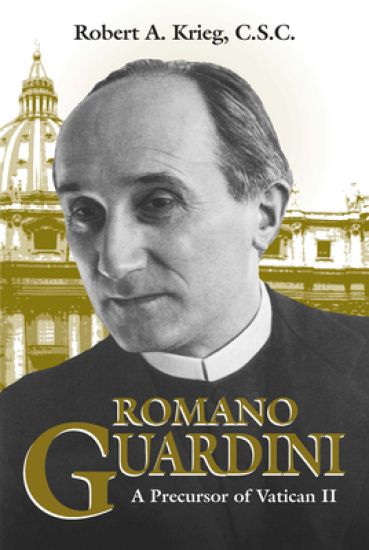
Romano Guardini

Romano Guardini

Robert A. Krieg

University of Notre Dame Press
1997
sidottu
How did Catholicism move from the defensive stance of the First Vatican Council in the 1870s to the open, responsive position of the Second Vatican Council in the 1960s? The life and thought of Romano Guardini shows the way. In his unwavering pursuit of truth, Guardini discovered a clear path from the understanding of faith as theoretical conviction to one of faith as living experience. In Romano Guardini: A Precursor of Vatican II, Robert Krieg tells the story of one of the most creative theologians in the twentieth century, who anticipated Vatican II's commitment to read "the signs of the times." No other volume in the English language offers such a complete portrait of Guardini and his world. Exploring the context in which Guardini learned and taught, Krieg introduces us to his pastoral leadership, particularly in the liturgical and youth movements. Drawing on the more than 75 books and 100 articles written by Guardini, this book then examines the recurring major themes of his theology: divine revelation as God's self-disclosure, the church as Christian community, liturgy as play in God's presence, literature as expression of religious experience, Nazism as negation of personal existence, Jesus Christ as mediator, and Christian acceptance of modernity. Although he never intended to promote an ecumenical council of reform, Guardini's career-long commitment to both Judeo-Christian wisdom and intellectual exchange with contemporary thought resulted in his becoming widely regarded as a major precursor of the Second Vatican Council. Respected theologians such as Karl Rahner, Hans Urs von Balthasar, and Cardinal Joseph Ratzinger have acknowledged their indebtedness to him. All those who wish to better understand the Church today can learn much from Romano Guardini, a pioneer in exciting theological territory. And this book is an excellent guide for an inspiring intellectual journey.
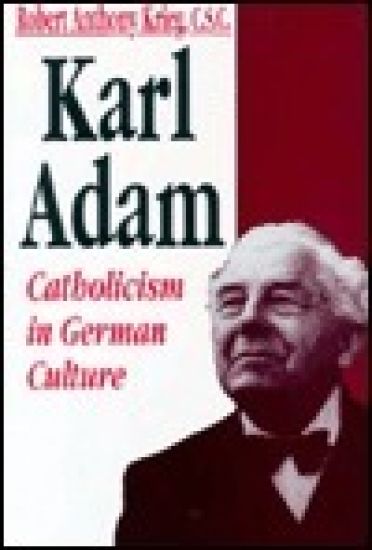
Karl Adam

Karl Adam

Robert A. Krieg

University of Notre Dame Press
1992
sidottu
Karl Adam illuminates the life and work of one of the most highly respected and widely read Catholic theologians of the twentieth century—a theologian who not only influenced such diverse thinkers as Pope Paul VI, Karl Rahner, and Flannery O'Connor, but who also had a tremendous impact on Vatican II. Here Robert Anthony Krieg, C.S.C., unites biography and theology in an insightful analysis of Adam's most influential works, showing how he crafted a theology for his time, one that embodied the central tenets of Christian belief while simultaneously adopting the language of German neoromanticism. The book spans the century from Vatican I to Vatican II. Krief begins by describing Adam's work against the backdrop of German Catholics' struggle to enter the cultural mainstream. He then analyzes Adam's major writings in the context of the Weimar Republic and the theological fermentation between the wars. Adam's confrontation with Nazism and his impact upon ecumenism and christology after the Second World War are also discussed. The last chapter appraises Adam's reliance on German neoromanticism for his "theology of life." Church leaders, historians, and theologians will appreciate this stimulating case study on Catholicism and inculturation, which locates Adam's efforts at theological renewal in relation both to Rome's defensive stance against modernity and Berlin's nationalism during the Weimar Republic and the Third Reich.