Kirjojen hintavertailu. Mukana 12 152 606 kirjaa ja 12 kauppaa.

Kirjailija

Robert A. Levine

Kirjat ja teokset yhdessä paikassa: 11 kirjaa, julkaisuja vuosilta 1963-2018, suosituimpien joukossa Aging Wisely. Vertaile teosten hintoja ja tarkista saatavuus suomalaisista kirjakaupoista.

Mukana myös kirjoitusasut: Robert A Levine

11 kirjaa

Kirjojen julkaisuhaarukka 1963-2018.

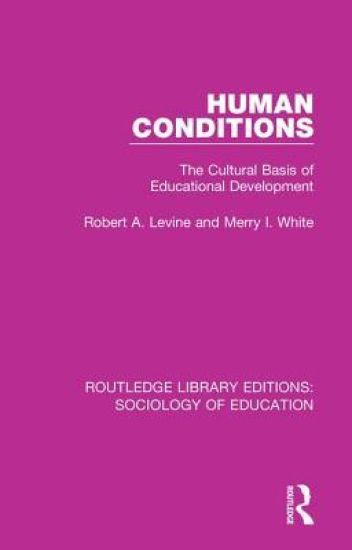
Human Conditions

Human Conditions

Robert A Levine; Merry White

Routledge
2018
nidottu
First published in 1986, this book proposes and illustrates a new approach to the comparative analysis of educational policy, based on anthropological and historical inquiry. It reviews the transitions of Western countries, Japan, and the People’s Republic of China and in doing so investigates cultural ideas of human potential and how they inform social and economic goals of education. An analysis of the problems and emerging patterns in developing countries reveals how and why the meanings of life for the majority of their populations were still influenced by agrarian cultural models, even after the introduction of new educational and occupational careers. In place of universalistic economic models and homogenous modernization strategies, the authors propose that culture-specific meanings of education are determined by each country’s particular transition from its agrarian past to its socio-economic conditions at the time. They argue that change in educational development has been as varied in ends, means and significance outcomes as the cultures in which it has occurred and point to the need for a deeper understanding of cultural contexts in which policy choices and development plans are made.
Do Parents Matter?: Why Japanese Babies Sleep Soundly, Mexican Siblings Don't Fight, and American Families Should Just Relax
When it comes to parenting, more isn't always better-but it is always more tiring In Japan, a boy sleeps in his parents' bed until age ten, but still shows independence in all other areas of his life. In rural India, toilet training begins one month after infants are born and is accomplished with little fanfare. In Paris, parents limit the amount of agency they give their toddlers. In America, parents grant them ever more choices, independence, and attention. Given our approach to parenting, is it any surprise that American parents are too frequently exhausted? Over the course of nearly fifty years, Robert and Sarah LeVine have conducted a groundbreaking, worldwide study of how families work. They have consistently found that children can be happy and healthy in a wide variety of conditions, not just the effort-intensive, cautious environment so many American parents drive themselves crazy trying to create. While there is always another news article or scientific fad proclaiming the importance of some factor or other, it's easy to miss the bigger picture: that children are smarter, more resilient, and more independent than we give them credit for. Do Parents Matter? is an eye-opening look at the world of human nurture, one with profound lessons for the way we think about our families.
Culture, Behavior, and Personality

Culture, Behavior, and Personality

Robert A LeVine

Routledge
2017
sidottu
This book presents an overview of the sense of theoretical problem in culture and personality research and a biological perspective on culture and the individual. It describes relations between psychological theory and method, and explores the psychology of culture and social change.
Human Conditions

Human Conditions

Robert A Levine; Merry White

Routledge
2017
sidottu
First published in 1986, this book proposes and illustrates a new approach to the comparative analysis of educational policy, based on anthropological and historical inquiry. It reviews the transitions of Western countries, Japan, and the People’s Republic of China and in doing so investigates cultural ideas of human potential and how they inform social and economic goals of education. An analysis of the problems and emerging patterns in developing countries reveals how and why the meanings of life for the majority of their populations were still influenced by agrarian cultural models, even after the introduction of new educational and occupational careers. In place of universalistic economic models and homogenous modernization strategies, the authors propose that culture-specific meanings of education are determined by each country’s particular transition from its agrarian past to its socio-economic conditions at the time. They argue that change in educational development has been as varied in ends, means and significance outcomes as the cultures in which it has occurred and point to the need for a deeper understanding of cultural contexts in which policy choices and development plans are made.

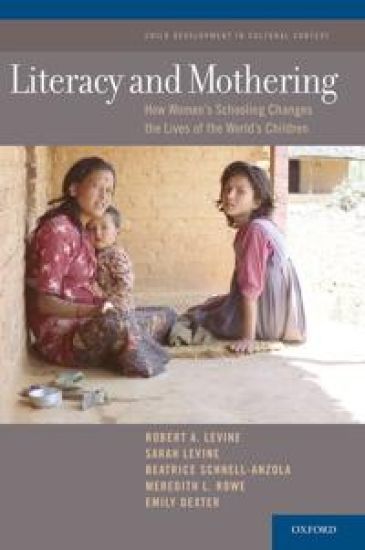
Literacy and Mothering

Literacy and Mothering

Robert A. LeVine; Sarah LeVine; Beatrice Schnell-Anzola; Meredith L. Rowe; Emily Dexter

Oxford University Press Inc
2016
nidottu
Women's schooling is strongly related to child survival and other outcomes beneficial to children throughout the developing world, but the reasons behind these statistical connections have been unclear. In Literacy and Mothering, the authors show, for the first time, how communicative change plays a key role: Girls acquire academic literacy skills, even in low-quality schools, which enable them, as mothers, to understand public health messages in the mass media and to navigate bureaucratic health services effectively, reducing risks to their children's health. With the acquisition of academic literacy, their health literacy and health navigation skills are enhanced, thereby reducing risks to children and altering interactions between mother and child. Assessments of these maternal skills in four diverse countries - Mexico, Nepal, Venezuela, and Zambia - support this model and are presented in the book. Chapter 1 provides a brief history of mass schooling, including the development of a bureaucratic Western form of schooling. Along with the bureaucratic organization of healthcare services and other institutions, this form of mass schooling spread across the globe, setting new standards for effective communication - standards that are, in effect, taught in school. Chapter 2 reviews the demographic and epidemiological evidence concerning the effects of mothers' education on survival, health, and fertility. In this chapter, the authors propose a model that shows how women's schooling, together with urbanization and changes in income and social status, reduce child mortality and improve health. In Chapter 3, the authors examine the concept of literacy and discuss how its meanings and measurements have been changed by educational research of the last few decades. Chapter 4 introduces the four-country study of maternal literacy. Chapters 5, 6, and 7 present the findings, focusing on academic literacy and its retention (Chapter 5), its impact on maternal health literacy and navigation skills (Chapter 6), and changes in mother-child interaction and child literacy skills (Chapter 7). Chapter 8 presents a new analysis of school experience, explores policy implications, and recommends further research.
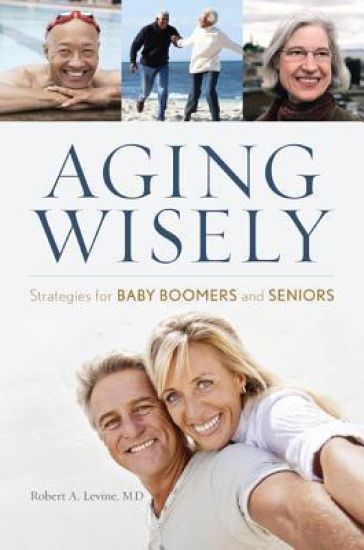
Aging Wisely

Aging Wisely

Robert A. Levine

Rowman Littlefield
2014
sidottu
Everyone ages. Not everyone ages well. Aging Wisely explains that much of what happens to our minds and bodies as we grow older depends on our approach to life and our attitudes and feelings about ourselves. Though there are elements beyond our control, we must take advantage of those things we can control while dealing competently with adversity. In describing the impact of aging and various conditions associated with the aging process upon our minds and bodies, Aging Wisely provides readers with the knowledge needed to fight back and maximize their relevance and independence. It emphasizes the importance of maintaining the quality of our lives in addition to longevity, for survival alone does not matter if the quality of survival is poor. To age successfully, we must find satisfaction and pleasure in what we do in the time available to us. Here, Robert A. Levine explores how attitudes about aging, and quality of life, can affect the process of aging. He suggests that maintaining a good attitude is a key element to aging well, reminding readers that aside from illnesses and random events, we are in control of our lives. Through personal accounts and real stories from mid-lifers and older people, the various issues associated with the aging process are addressed in an easy-to-follow way to allow people to understand the choices they have, and the decisions they may have to make, when faced with common diseases of aging. Levine devotes chapters to discussing the various illnesses that people can face in their older years and strategies for leading fulfilling lives while reducing their risk of physical and cognitive decline. He considers ageism and its impact on society, and he discusses how advances in science and technology will affect how people age in the future. Levine offers helpful consideration of aging for readers who are preparing themselves for what lies ahead, allowing them to then confront aging with the advantage of being ready.
Literacy and Mothering

Literacy and Mothering

Robert A. LeVine; Sarah LeVine; Beatrice Schnell-Anzola; Meredith L. Rowe; Emily Dexter

Oxford University Press Inc
2012
sidottu
Women's schooling is strongly related to child survival and other outcomes beneficial to children throughout the developing world, but the reasons behind these statistical connections have been unclear. In Literacy and Mothering, the authors show, for the first time, how communicative change plays a key role: Girls acquire academic literacy skills, even in low-quality schools, which enable them, as mothers, to understand public health messages in the mass media and to navigate bureaucratic health services effectively, reducing risks to their children's health. With the acquisition of academic literacy, their health literacy and health navigation skills are enhanced, thereby reducing risks to children and altering interactions between mother and child. Assessments of these maternal skills in four diverse countries - Mexico, Nepal, Venezuela, and Zambia - support this model and are presented in the book. Chapter 1 provides a brief history of mass schooling, including the development of a bureaucratic Western form of schooling. Along with the bureaucratic organization of healthcare services and other institutions, this form of mass schooling spread across the globe, setting new standards for effective communication - standards that are, in effect, taught in school. Chapter 2 reviews the demographic and epidemiological evidence concerning the effects of mothers' education on survival, health, and fertility. In this chapter, the authors propose a model that shows how women's schooling, together with urbanization and changes in income and social status, reduce child mortality and improve health. In Chapter 3, the authors examine the concept of literacy and discuss how its meanings and measurements have been changed by educational research of the last few decades. Chapter 4 introduces the four-country study of maternal literacy. Chapters 5, 6, and 7 present the findings, focusing on academic literacy and its retention (Chapter 5), its impact on maternal health literacy and navigation skills (Chapter 6), and changes in mother-child interaction and child literacy skills (Chapter 7). Chapter 8 presents a new analysis of school experience, explores policy implications, and recommends further research.
Defying Dementia

Defying Dementia

Robert A. Levine

Rowman Littlefield Publishers
2010
nidottu
How do we motivate ourselves and others to take action or change behavior in response to the threat of dementia - a threat that may or may not be relevant to everyone? Yet, with such high stakes and devastating outcomes, how can we ignore those methods that could be useful in heading off this dreaded scourge? Longtime neurologist Robert Levine argues we cannot continue the way we have, pretending that dementia cannot happen to us. The earlier the campaign is initiated to repel and defend against the threat of dementia, the greater the chances the combatant will emerge victorious. Dementia is merciless, comes in various forms, and does not necessarily discriminate, so taking action early is one of our best defenses. Once dementia has taken hold, however, there are considerable challenges for both the sufferer and his or her loved ones. Levine urges us to take action to prevent the onset of dementia, but also caringly discusses ways to handle it once it takes root. As American society continues to grow older, tackling one of the more confusing and frightening diseases becomes a more urgent need. This book urges understanding, offers preventative measures, considers various treatments, and looks to the future to see where we might be headed. In a new afterword, Levine updates the state of the research into dementia, its causes and constitution, and considers the various approaches both the medical community and everyday people can take to deal with it.
Child Care and Culture

Child Care and Culture

Robert A. Levine; Sarah Levine; Suzanne Dixon; Amy Richman; P. Herbert Leiderman; Constance H. Keefer; T. Berry Brazelton

Cambridge University Press
1996
pokkari
Child Care and Culture examines parenthood, infancy, and early childhood in an African community, revealing patterns unanticipated by current theories of child development and raising provocative questions about ‘normal’ child care in the human species. Comparing the Gusii people of Kenya, whose practices were intensively observed from the combined perspectives of social anthropology, pediatrics, and developmental psychology, with the American white middle class, the authors show how divergent cultural priorities create differing conditions for early childhood development.
Culture, Behavior, and Personality

Culture, Behavior, and Personality

Robert A LeVine

AldineTransaction
1982
nidottu
This new edition of Culture, Behavior, and Personality is organized into ve parts. Part I de nes the eld of inquiry, Part II presents a critical review of existing theories and methods, Part III expounds LeVine's unique Darwinian model of culture and personality, Part IV deals with the strategies and methods with which to study individual dispositions within the sociocultural matrix, Part V concludes with two essays on cultural and personality research including new advances and avenues of research that have appeared within the last seven years.