Kirjailija
Robert A.M. Stern
Kirjat ja teokset yhdessä paikassa: 18 kirjaa, julkaisuja vuosilta 1997-2025, suosituimpien joukossa Robert A.M. Stern Architects. Vertaile teosten hintoja ja tarkista saatavuus suomalaisista kirjakaupoista.
Mukana myös kirjoitusasut: Robert A. M. Stern
18 kirjaa
Kirjojen julkaisuhaarukka 1997-2025.
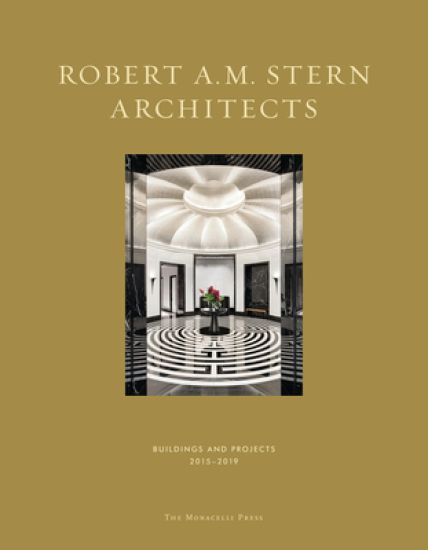
This comprehensive, lavishly illustrated survey of the most recent work of Robert A. M. Stern Architects, arguably the most versatile of the "starchitects," is an essential reference for architecture offices and libraries and an exceptionally handsome volume that will appeal to architecture aficionados. Architect and architectural historian Robert A. M. Stern has garnered prestigious commissions across America and throughout the world, including, most recently, the Museum of the American Revolution in Philadelphia, residential towers in Manhattan, Washington, and Hangzhou, China, and major campus projects for the Kennedy School of Government at Harvard and Tsinghua University in Beijing. Deeply committed to the principle of building in context, Stern has no signature style. Instead his work speaks to the urban fabric that surrounds it, yielding a portfolio that is at once historically sensitive and responsive to contemporary life.
* Just the essential information for readers on the go who want to understand architecture. * Covers the highlights of architectural history, from the Great Pyramids to Frank Gehry's Guggenheim museum in Bilbao. * Explains how to look at a building and appreciate it. Explains when a building's a building and when it's art. * Part of Tens includes: Ten Great Architectural Masterpieces, Ten Biggest Architectural and Engineering Failures, Ten of the Most Interesting Architects Working Today-and more.
The culmination of Robert A.M. Stern’s monumental history of architecture in New York City and a comprehensive record of building over the last twenty-five years A landmark in architectural publishing, New York 2020 explores the planning and politics of building in New York City during the first decades of the 21st century. This encyclopedic book, as complex and vast as the city itself, references more than 3,000 projects constructed between the year 2000 and the present day. Across 1,500 pages, New York 2020 describes and illustrates the ‘supertalls’ now populating our skyline, lush riverfront parks born from derelict waterfront, iconic cultural destinations, and thousands of smaller, unheralded residential and civic projects that enhance the built environment and the urban fabric. Readers will discover work by leading architects, including Norman Foster, Renzo Piano, Bjarke Ingels, Diller Scofidio + Renfro, Selldorf Architects, Frank Gehry, and Robert A.M. Stern Architects; a dazzling array of museums and institutions, including the High Line, Hudson Yards, the new Whitney Museum, and the expansions of MoMA and Lincoln Center; the rebuilding of the World Trade Center site; and more. The much-anticipated final volume in architect Robert A.M. Stern’s critically acclaimed New York series, which traces the evolution of the city from the Civil War to present day, New York 2020 tells the story of a remarkable period of urban development, architectural experiment, and seismic cultural shifts.
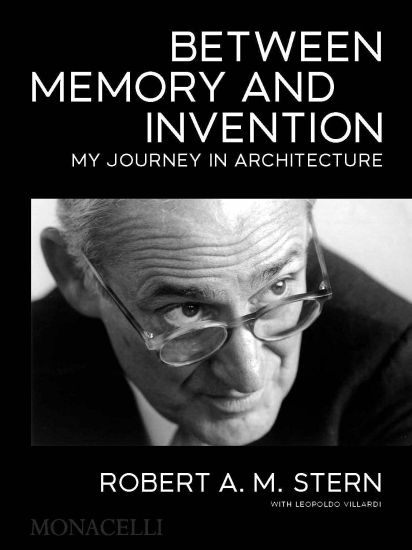
"A capsule history of American architecture since 1960." - Wall Street Journal Architect, historian, and educator Robert A.M. Stern presents a personal and candid assessment of contemporary architecture and his fifty years of practice. Encompassing autobiography, institutional history, and lively, behind-the-scenes anecdotes, Between Memory and Invention surveys the world of architecture from the 1960s to the present, and Stern's critical role in it. By turns thoughtful, critical, and irreverent, this is a highly accessible text replete with personal insights and humor. The author is Robert A.M. Stern, once described by Philip Johnson as "the brightest young man I have ever met in my entire teaching career," and internationally acknowledged as a leader in architecture and architectural scholarship. Deeply committed to the concept that architects must "look to the past to build for the future," Stern is the founding partner of Robert A.M. Stern Architects, the former Dean and current Hoppin Professor of Architecture at the Yale School of Architecture, and the author of more than twenty books and countless essays and commentaries on an extraordinary range of architectural and cultural topics. Chronicling his formative years, architectural education, and half-century of architectural practice, Stern touches on influences that shaped him - his Brooklyn upbringing, family excursions to look at buildings, teachers (Paul Rudolph, the legendary Vincent Scully, and Philip Johnson among them), major projects of the firm (the new town of Celebration, Florida, restoration of Times Square and 42nd Street, George W. Bush Presidential Center), and the many clients, fellow architects, and professional partners that have peopled his extraordinary career. Often proposed as "Mr. New York," Stern has a deep commitment to the city, to recording its past - he is the lead author of the monumental New York series, the definitive history of architecture and urbanism from the late nineteenth century to the present - and shaping its future. Today elegant RAMSA residential towers are rising throughout Manhattan to enrich the skyline in the tradition of the luxurious apartment buildings of the 1920s and 1930s. The text is supported by a lively mix of images drawn from Stern's personal archive, including student work and travel slides, images of architectural precedents and colleagues that have shaped his thinking, and images related to projects he discusses (drawings, plans, and finished photography, architectural team, and clients).
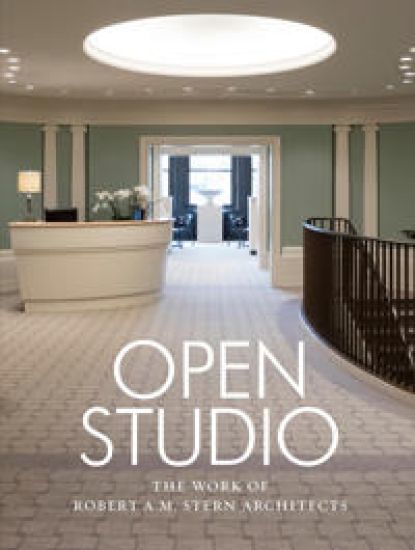
Open Studio offers a window into the methods and unique culture of an architecture firm that has achieved international success. Curated illustrations of hand sketches, study models, design sessions, and site visits pull back the curtain on the creative collaboration behind the scenes at Robert A.M. Stern Architects. Nearly 100 pages of photographs of finished work, including academic buildings, museums, houses, apartment houses, and office towers, demonstrate the firm's ability to realize modern buildings in a wide variety of stylistic vocabularies through a commitment to fundamental principles of architecture and a respect for context and history. Founded in 1969, the 250-person New York-based Robert A.M. Stern Architects has received numerous awards for design excellence from the American Institute of Architects, the Congress for the New Urbanism, the Urban Land Institute, the Society for College and University Planning, and the Institute of Classical Architecture and Art.
A personal look at the buildings that define Yale University through the eyes of alumni. “The Stones of Yale is a delight—fresh and highly observant. I will be turning to its pages again and again, I have no doubt.”—David McCullough Artist Adam Van Doren wanted to know how Yale University’s buildings made people feel to live and to study in them. He spoke to alumni as diverse as actor Sam Waterston, the writer Christopher Buckley, Yale librarian Judith Schiff, former NFL great Calvin Hill, architect Cesar Pelli, among others, about their experiences and illustrates this book in gorgeous watercolor paintings of the buildings of Yale that interest him most. Rather than an architectural analysis of buildings, Van Doren explores the visceral experience of seeing them and being inside them. This is one-of-a-kind approach that will interest anyone who’s felt the intangible power of a building and a place.
The New Residential Colleges at Yale
Robert A.M. Stern; Gideon Fink Shapiro; Paul Goldberger
Monacelli Press
2018
sidottu
Celebrating Yale's first new residential colleges in fifty years, The New Residential Colleges at Yale examines the role of the residential college system and the evolution of Yale's urban campus, presenting an important new chapter in the history of Yale and New Haven The residential college system at Yale, modeled after the academic communities at Oxford and Cambridge, is a cornerstone of Yale undergraduate life, breaking down the larger university into smaller, more closely-knit communities. Eight of the original ten residential colleges at Yale were designed by James Gamble Rogers in the 1930s, establishing Collegiate Gothic as the style with which Yale is most closely identified today. For the two new colleges, Robert A.M. Stern Architects was charged with designing buildings that fit into the residential college system, and in so doing say "Yale," while bringing twenty-first-century standards of communal living and environmental responsibility to college residential life. The two new colleges, housing 450 students each, are conceived as fraternal twins, similar in size but each enjoying its own identity, each incorporating a dining hall, a library, and a house for the head of the college, and each maintaining the traditional organization of entryways that intentionally create more intimate communities of students within the larger whole. The site will play important role in redefining the overall sense of the Yale campus, serving as it does as a lynchpin between districts identified with the humanities and the sciences, and between the university and adjacent neighborhoods. Beyond questions of Yale and New Haven, the book contributes to a wider historical and theoretical conversation about the expression of place, time, and identity through architecture. The design of the new colleges exemplifies the challenges and opportunities involved with practicing traditional architecture as a meditation between past and present in a historically sensitive setting. An extensive archive of original drawings, models, material samples, as well as extensive color photography of the completed buildings, illustrates the story.
Harrie T. Lindeberg and the American Country House
Peter Pennoyer; Anne Walker; Robert A.M. Stern
Monacelli Press
2017
sidottu
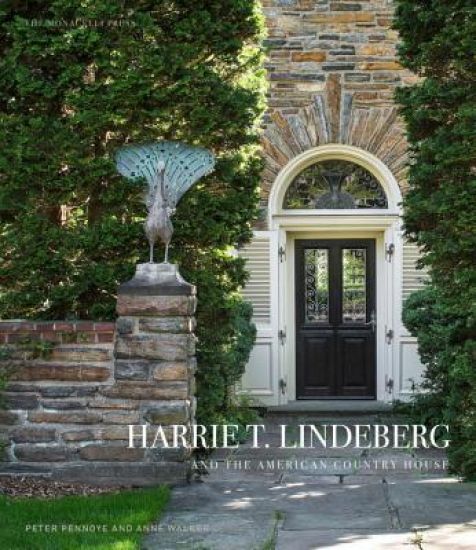
First monograph on a leading architect of the American Country House Era who synthesized Scandinavian, European, and American traditions. This architectural tour brings to light the genius and influence of Harrie T. Lindeberg, a leader of the American Country House Era who synthesized Scandinavian, European, and American traditions. Harrie T. Lindeberg (1880–1959) was born of Swedish immigrants who settled in New Jersey. He apprenticed with architect George A. Freeman, joined the prestigious firm McKim, Mead & White in 1901, and forged out on his own in 1906, beginning fifty years of independent practice. An impressive client list includes the leading American families - Du Pont, Havemeyer, Doubleday - for whom he built houses in affluent suburbs and resorts across the country - Rhinebeck, Newport, Grosse Point, Lake Forest, and the Gold Coast of Long Island. As a designer, Lindeberg drew inspiration from the English Arts and Crafts movement, with touches from the Beaux-Arts, mixed with Norman, Tudor, and Georgian elements. He borrowed ideas from his ancestral Sweden, including steep roofs and a floor plan that interacted closely with the landscape. Today, as his country houses enter their second century, a remarkable number stand as they were originally built, prized by their owners for their livability and their elegantly wrought design. Architect Peter Pennoyer and historian Anne Walker bring Lindeberg’s work to life in Harrie T. Lindeberg and the American Country House. This survey of Lindeberg’s most stunning and influential projects includes more than 200 photographs - including new color photography by Jonathan Wallen - floor plans, and sketches. After introducing Lindeberg’s personal history and professional background, the book traces his career from his acclaimed debut in Pocantico Hills to larger developments like Meadow Spring and the export of his signature style to the Onwentsia Country Club in Lake Forest, Illinois. Pennoyer and Walker follow Lindeberg as he adapted to the building busts of the Great Depression and the rise of modernism. Experimenting with President Franklin D. Roosevelt’s aesthetic mission to bring America’s architecture abroad, Lindeberg also designed the United States Legation in Helsinki. A gorgeous entrée to one of America’s most recognizable yet underappreciated architects, Harrie T. Lindeberg and the American Country House brings readers insight into how we view country houses today.
Through more than thirty projects for major colleges and universities across the country and in China, Designs for Learning presents the principles and practices behind academic buildings, libraries, graduate centers, and academic facilities that sensitively integrate into the fabric of each campus. In its forty years, Robert A.M. Stern Architects has honed a contemporary practice that is in close dialogue with the past, making it one of the most admired architectural firms today. Even in its growing global reach and expanding practice areas, the firm maintains a close attention to form, context, local culture, and received tradition, as well as to the demands and needs of the building users. These principles have served the firm particularly well on campuses, where architectural styles and building traditions are often well established. Robert A.M. Stern Architects has created classroom buildings, student centers, athletic facilities, and libraries that respect and expand those traditions. In each case, the firm demonstrates a deep understanding of the American college campus, with its roots in Thomas Jefferson's design for the University of Virginia. In their buildings, "the present, interacting with memories of the past, can create something that can be interesting in the future." Each campus in Designs for Learning is described in detail, with historic photographs and campus plans illustrating its development. Projects by Robert A. M. Stern are placed in their context, providing a complete view of these distinguished places of learning.
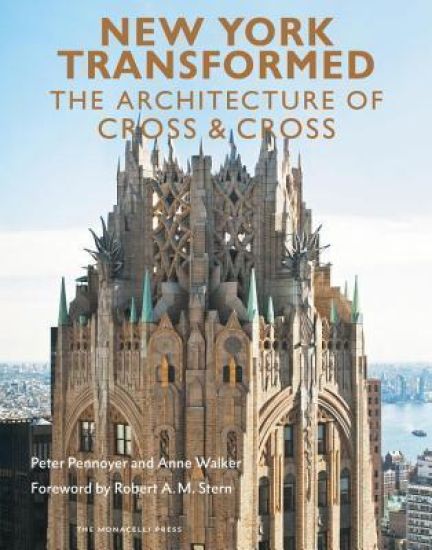
This is the first book to present the work of Cross & Cross, one of the New York "starchitects" of the vibrant era of the 1910s and 1920s. Best known for gracious and elegant townhouses and apartment buildings throughout Manhattan, the firm made its mark on the city with the RCA Victor headquarters and Tiffany's flagship store on 57th Street. The architects Cross & Cross shaped the streetscape and skyline of New York City in the 1920s and 1930s with Upper East Side townhouses and apartment buildings, the RCA Victor Building, and Tiffany’s flagship store on 57th Street. Working through a period of American history that saw dramatic change, from luxurious apartment buildings during the economic boom of the 1920s, to federal commissions during the Depression, the brothers John and Eliot Cross were masters of their craft. Well-connected society men who also showed remarkable foresight in business, Cross & Cross supported their practice with a partnered real estate firm and played a vital role in residential developments like Sutton Place along the East River. Cross & Cross oversaw the development of handsome clubs and houses throughout New York City, including the Links Club and the Upper East Side houses of Lewis Spencer Morris and George Whitney. They designed country houses in exclusive residential pockets outside New York - the Southampton estate of Winterthur founder Henry Francis du Pont; houses on the North Shore of Long Island, and in Greenwich, Connecticut; the childhood home of Sister Parish in Far Hills, New Jersey; and the Shelburne, Vermont home of J. Watson and Electra Webb. In this first book to collect the achievements of Cross & Cross, Peter Pennoyer and Anne Walker present a comprehensive monograph of the firm’s work, with more than 300 illustrations both historic and new and a catalogue raisonné of their projects.
A thought-provoking, elegantly crafted collection of essays by one of architecture’s most influential figures Among practicing architects today, perhaps only Robert A. M. Stern once contemplated a career as a historian, an interest that has informed both his built work and his writings. Tradition and Invention in Architecture brings together 26 of Stern's essays and conversations from the past five decades. Topics range from modern classicism, American housing, gardens, and New York City to the work of Norman Foster, Louis Kahn, Charles Moore, and Robert Moses. Reminders of Stern's own broad career in architecture are found in his thoughts on his PBS television series Pride of Place, his discussion of the planning of Seaside and Celebration, Florida, and his view on institutional branding through architecture.Known as much for his candor as for his profound knowledge of American architecture, Stern's observations on the architecture of his time are equally valuable. As he writes, "For an architect, writing is one way of reconsidering history while working in the present—always in search of the best from the past and the present, which allows us to invent for the future."
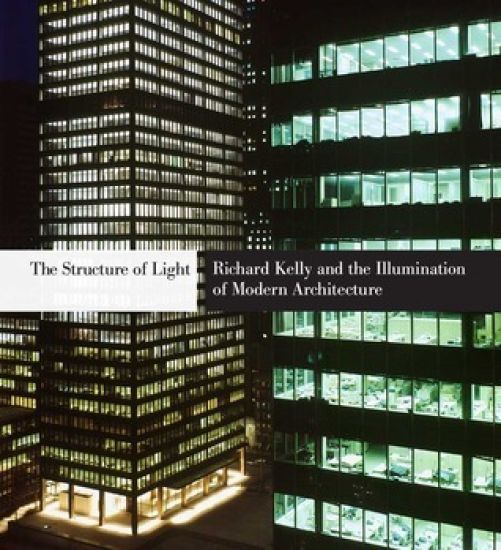
The potential of electric light as a new building “material” was recognized in the 1920s and became a useful design tool by the mid-century. Skillful lighting allowed for theatricality, narrative, and a new emphasis on structure and space. The Structure of Light tells the story of the career of Richard Kelly, the field’s most influential figure. Six historians, architects, and practitioners explore Kelly’s unparalleled influence on modern architecture and his lighting designs for some of the 20th century’s most iconic buildings: Philip Johnson’s Glass House; Louis Kahn’s Kimbell Art Museum; Eero Saarinen’s GM Technical Center; and Mies van der Rohe’s Seagram Building, among many others. This beautifully illustrated history demonstrates the range of applications, building types, and artistic solutions he employed to achieve a “nocturnal modernity” that would render buildings evocatively different at night. The survival of Kelly’s rich correspondence and extensive diaries allows an in-depth look at the triumphs and uncertainties of a young profession in the making. The first book to focus on the contributions of a master in the field of architectural lighting, this fascinating volume celebrates the practice’s significance in modern design. Published in association with the Yale School of Architecture Exhibition Schedule: Yale School of Architecture (08/23/10-10/02/10)
"At its best, the college campus is the representation of beliefs, of the specific character of a place, of a community, of an institution. It is the setting for the continually evolving interaction of people and ideas over time. " "--"Robert A. M. Stern Ss an architect, educator, and architectural historian, Robert A. M. Stern brings special knowledge and expertise to issues of campus master planning and the design of academic buildings. This unique volume collects more than fifty projects by the firm for the most prestigious institutions in America--Harvard, Yale, Dartmouth, Georgetown, Stanford, University of Virginia--and focuses on the importance of the historic character of the place in charting the future. In surveying the American campus, Stern begins with Thomas Jefferson's Academical Village at the University of Virginia and then considers its many heirs. He organizes campuses into three principal paradigms: the Embedded Campus, those closely connected with the fabric of the cities and towns in which they sit; the Citadel Campus, those perched above and removed from the surroundings; and the Garden Campus, those whose buildings sit in a more casual configuration in the landscape. Each campus is described in detail, with historic photographs and campus plans illustrating its development. Projects by Robert A. M. Stern Architects are placed in their context, providing a complete view of these distinguished places of learning.
The Architecture of Grosvenor Atterbury
Peter Pennoyer; Anne Walker; Robert A. M. Stern
WW Norton Co
2009
sidottu
In the final decade of the nineteenth century and the early twentieth century, the United States experienced exponential growth and a flourishing economy, and with it, a building boom. Grosvenor Atterbury (1869–1956) produced more than one hundred major projects, including an array of grand mansions, picturesque estates, informal summer cottages, and farm groups. However, it was his role as town planner and civic leader and his work to create model tenements, hospitals, workers’ housing, and town plans for which he is most celebrated. His Forest Hills Gardens, designed in association with the Olmsted Brothers, is lauded as one of the most highly significant community planning projects of its time. As an inventor, Atterbury was responsible for one of the country’s first low-cost, prefabricated concrete construction systems, introducing beauty and inexpensive good design into the lives of the working classes. The Architecture of Grosvenor Atterbury is the first book to showcase the rich and varied repertoire of this prolific architect whose career spanned six decades and whose work affected the course of American architecture, planning, and construction. Illustrated with Jonathan Wallen’s stunning color photographs and over 250 historic drawings, plans, and photographs, it also includes a catalogue raisonné and an employee roster. It is the definitive source on an architect who made an indelible imprint on the American landscape.
Fascinating profiles of the leading architects of the 1930s during a crucial period in the evolution of modernism Architect, designer, and architectural critic, George Nelson (1908–1986) was a young and impressionable architect when he wrote a series of articles in 1935 and 1936 that eloquently introduced astonishing buildings and fascinating personalities from across the Atlantic to wider American audiences. Building a New Europe presents this important collection of writings together for the first time. The subjects of Nelson’s essays include figures both major (Mies van Der Rohe and Le Corbusier) and minor (Helweg-Moeller and Ivar Tengbom). All of these architects would soon be affected by World War II—they would be put out of work or seek new careers abroad. Nelson’s essays spark fascinating questions about the canon of modernism: how would circumstances in the pre-war years cause some architects to rise and others to fall? Accompanied by a comprehensive introduction and a wide selection of archival photographs, many never before published, this unique study is a significant contribution to the history of modern architecture.Published in association with the Yale University School of Architecture
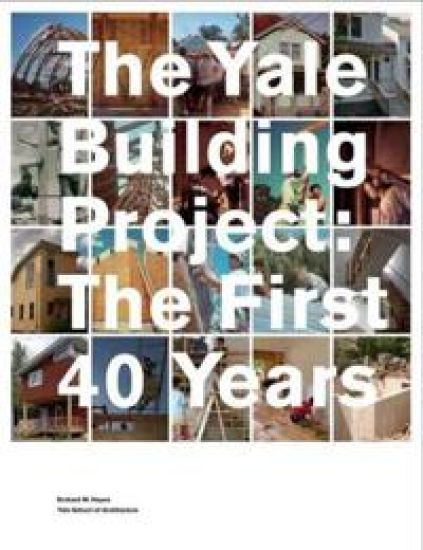
A comprehensive history of the program that has been a model for “design-build” initiatives nationwide Conceived by architect Charles W. Moore and begun in the context of social activism and dramatic institutional change during the 1960s, the Yale Building Project has contributed to the education of many of this country’s leading architects, serving as the model for “design-build” programs at universities nationwide. The Yale Building Project: The First 40 Years is the first comprehensive history of this important initiative. Every year since 1967, graduate students in the Yale School of Architecture have designed and constructed a building for a community-based client. This book documents the projects alongside essays that situate the program in its historical context, from students’ journeys to rural Appalachia to build community centers and a health clinic to pavilions and recreational structures constructed throughout Connecticut and affordable housing built in New Haven. Describing a program that has had a profound effect on American architectural culture, this book will serve as a valuable resource for architects, historians, students, and community planners. Distributed for the Yale University School of Architecture
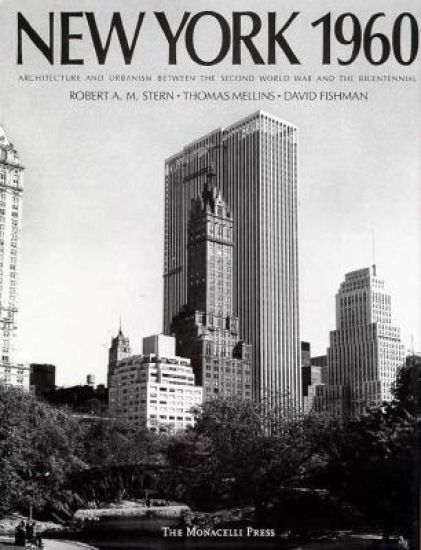
The post-World War II era witnessed New York's reign as the unofficial but undisputed economic and artistic capital of the world. By the mid-1970s, the city had experienced a profound reversal, and both its economy and its reputation were at a historic nadir This is the third volume (and the fourth chronologically) in architect and historian Robert A. M. Stern's monumental series of documentary studies of New York City architecture and urbanism. New York 1880, New York 1900, and New York 1930 have comprehensively covered the architects and urban planners who defined New York from the end of the nineteenth century to the middle of the twentieth century. The post-World War II era witnessed New York's reign as the unofficial but undisputed economic and artistic capital of the world. By the mid-1970s, the city had experienced a profound reversal, and both its economy and its reputation were at a historic nadir. The architectural history of the period offered an exceptionally abundant and varied mix of building styles and types, from the faltering traditionalism of the 1940s through the heyday of International Style modernism in the 1950s and 1960s to the incipient postmodernism of the 1970s. Organized geographically, New York 1960 provides an encyclopedic survey of the city's postwar architecture as well as relating a coherent story about each of its diverse neighborhoods. Primary sources are emphasized, including the commentaries of the preeminent architecture critics of the day; the text is illustrated exclusively with a rich collection of period photographs.