Kirjojen hintavertailu. Mukana 12 152 606 kirjaa ja 12 kauppaa.

Kirjailija

Robert A. Yelle

Kirjat ja teokset yhdessä paikassa: 7 kirjaa, julkaisuja vuosilta 2003-2018, suosituimpien joukossa Explaining Mantras. Vertaile teosten hintoja ja tarkista saatavuus suomalaisista kirjakaupoista.

7 kirjaa

Kirjojen julkaisuhaarukka 2003-2018.

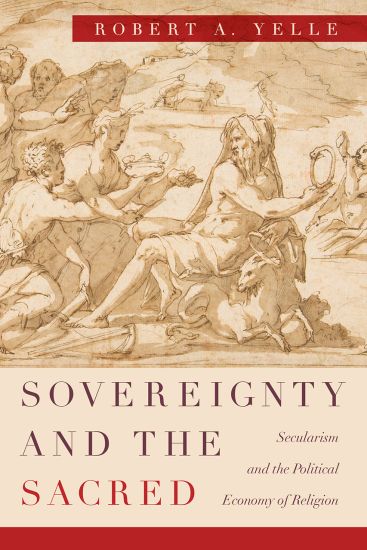
Sovereignty and the Sacred

Sovereignty and the Sacred

Robert A. Yelle

University of Chicago Press
2018
nidottu
Sovereignty and the Sacred challenges contemporary models of polity and economy through a two-step engagement with the history of religions. Beginning with the recognition of the convergence in the history of European political theology between the sacred and the sovereign as creating “states of exception”—that is, moments of rupture in the normative order that, by transcending this order, are capable of re-founding or remaking it—Robert A. Yelle identifies our secular, capitalist system as an attempt to exclude such moments by subordinating them to the calculability of laws and markets. The second step marshals evidence from history and anthropology that helps us to recognize the contribution of such states of exception to ethical life, as a means of release from the legal or economic order. Yelle draws on evidence from the Hebrew Bible to English deism, and from the Aztecs to ancient India, to develop a theory of polity that finds a place and a purpose for those aspects of religion that are often marginalized and dismissed as irrational by Enlightenment liberalism and utilitarianism.Developing this close analogy between two elemental domains of society, Sovereignty and the Sacred offers a new theory of religion while suggesting alternative ways of organizing our political and economic life. By rethinking the transcendent foundations and liberating potential of both religion and politics, Yelle points to more hopeful and ethical modes of collective life based on egalitarianism and popular sovereignty. Deliberately countering the narrowness of currently dominant economic, political, and legal theories, he demonstrates the potential of a revived history of religions to contribute to a rethinking of the foundations of our political and social order.
Sovereignty and the Sacred

Sovereignty and the Sacred

Robert A. Yelle

University of Chicago Press
2018
sidottu
Sovereignty and the Sacred challenges contemporary models of polity and economy through a two-step engagement with the history of religions. Beginning with the recognition of the convergence in the history of European political theology between the sacred and the sovereign as creating “states of exception”—that is, moments of rupture in the normative order that, by transcending this order, are capable of re-founding or remaking it—Robert A. Yelle identifies our secular, capitalist system as an attempt to exclude such moments by subordinating them to the calculability of laws and markets. The second step marshals evidence from history and anthropology that helps us to recognize the contribution of such states of exception to ethical life, as a means of release from the legal or economic order. Yelle draws on evidence from the Hebrew Bible to English deism, and from the Aztecs to ancient India, to develop a theory of polity that finds a place and a purpose for those aspects of religion that are often marginalized and dismissed as irrational by Enlightenment liberalism and utilitarianism.Developing this close analogy between two elemental domains of society, Sovereignty and the Sacred offers a new theory of religion while suggesting alternative ways of organizing our political and economic life. By rethinking the transcendent foundations and liberating potential of both religion and politics, Yelle points to more hopeful and ethical modes of collective life based on egalitarianism and popular sovereignty. Deliberately countering the narrowness of currently dominant economic, political, and legal theories, he demonstrates the potential of a revived history of religions to contribute to a rethinking of the foundations of our political and social order.
Semiotics of Religion

Semiotics of Religion

Robert A. Yelle

Bloomsbury Academic USA
2012
nidottu
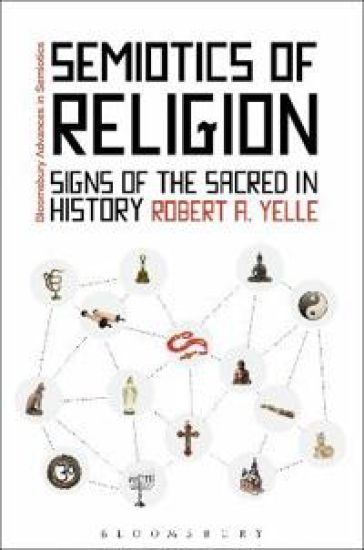
Following the heyday of Lévi-Straussian structuralism in the 1970s-80s, little attention has been paid by scholars of religion to semiotics. Semiotics of Religion reassesses key semiotic theories in the light of religious data. Yelle examines the semiotics of religion from structural and historical perspectives, drawing on Peircean linguistic anthropology, Jakobsonian poetics, comparative religion and several theological traditions. This book pays particular attention to the transformation of religious symbolism under modernization and the rise of a culture of the printed book. Among the topics addressed are:- ritual repetition and the poetics of ritual performance- magic and the belief in a natural (iconic) language- Protestant literalism and iconoclasm- disenchantment and secularization- Holiness, arbitrariness, and agencyBuilding from the legacy of structuralism while interrogating several key doctrines of that movement, Semiotics of Religion both introduces the field to a new generation and charts a course for future research.
The Language of Disenchantment

The Language of Disenchantment

Robert A. Yelle

Oxford University Press Inc
2012
nidottu
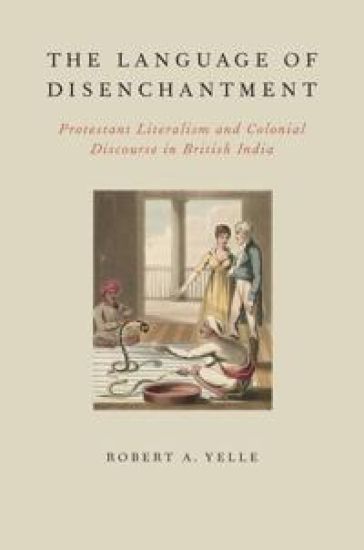
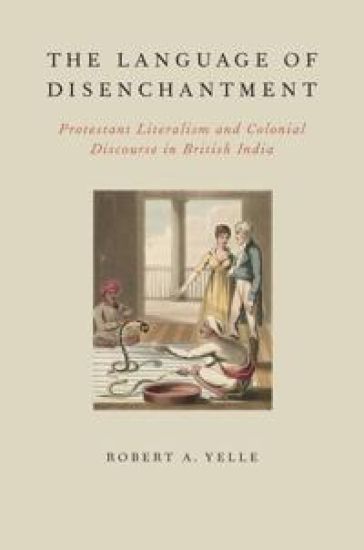
The Language of Disenchantment explores how Protestant ideas about language influenced British colonial attitudes toward Hinduism and proposals for the reform of that tradition. Protestant literalism, mediated by a new textual economy of the printed book, inspired colonial critiques of Indian mythological, ritual, linguistic, and legal traditions. Central to these developments was the transposition of the Christian opposition between monotheism and polytheism or idolatry into the domain of language. Polemics against verbal idolatry - including the elevation of a scriptural canon over heathenish custom, the attack on the personifications of mythological language, and the critique of "vain repetitions" in prayers and magic spells - previously applied to Catholic and sectarian practices in Britain were now applied by colonialists to Indian linguistic practices. As a remedy for these diseases of language, the British attempted to standardize and codify Hindu traditions as a step toward both Anglicization and Christianization. The colonial understanding of a perfect language as the fulfillment of the monotheistic ideal echoed earlier Christian myths according to which the Gospel had replaced the obscure discourses of pagan oracles and Jewish ritual. By recovering the historical roots of the British re-ordering of South Asian discourses in Protestantism, Yelle challenges representations of colonialism, and of the modernity that it ushered in, as simply rational or secular.
The Language of Disenchantment

The Language of Disenchantment

Robert A. Yelle

Oxford University Press Inc
2012
sidottu
The Language of Disenchantment explores how Protestant ideas about language influenced British colonial attitudes toward Hinduism and proposals for the reform of that tradition. Protestant literalism, mediated by a new textual economy of the printed book, inspired colonial critiques of Indian mythological, ritual, linguistic, and legal traditions. Central to these developments was the transposition of the Christian opposition between monotheism and polytheism or idolatry into the domain of language. Polemics against verbal idolatry - including the elevation of a scriptural canon over heathenish custom, the attack on the personifications of mythological language, and the critique of "vain repetitions" in prayers and magic spells - previously applied to Catholic and sectarian practices in Britain were now applied by colonialists to Indian linguistic practices. As a remedy for these diseases of language, the British attempted to standardize and codify Hindu traditions as a step toward both Anglicization and Christianization. The colonial understanding of a perfect language as the fulfillment of the monotheistic ideal echoed earlier Christian myths according to which the Gospel had replaced the obscure discourses of pagan oracles and Jewish ritual. By recovering the historical roots of the British re-ordering of South Asian discourses in Protestantism, Yelle challenges representations of colonialism, and of the modernity that it ushered in, as simply rational or secular.
Semiotics of Religion

Semiotics of Religion

Robert A. Yelle

Bloomsbury Academic USA
2012
sidottu
Following the heyday of Lévi-Straussian structuralism in the 1970s-80s, little attention has been paid by scholars of religion to semiotics. Semiotics of Religion reassesses key semiotic theories in the light of religious data. Yelle examines the semiotics of religion from structural and historical perspectives, drawing on Peircean linguistic anthropology, Jakobsonian poetics, comparative religion and several theological traditions. This book pays particular attention to the transformation of religious symbolism under modernization and the rise of a culture of the printed book. Among the topics addressed are:- ritual repetition and the poetics of ritual performance- magic and the belief in a natural (iconic) language- Protestant literalism and iconoclasm- disenchantment and secularization- Holiness, arbitrariness, and agencyBuilding from the legacy of structuralism while interrogating several key doctrines of that movement, Semiotics of Religion both introduces the field to a new generation and charts a course for future research.
Explaining Mantras

Explaining Mantras

Robert A. Yelle

Routledge
2003
sidottu
Explaining Mantras explores the intersection of poetry and magic in the mantras or verbal formulas of Hindu Tantra. The author reveals how mantras work in light of both the esoteric tradition of Tantra and a general semiotic theory of ritual. Mantras mimic the act of sexual reproduction and the cosmic cycle of creation and destruction. A mantra that imitates creation is believed to be more creative and effective in producing a real-world result. Drawing from linguistics, semiotics, anthropology, and philosophy, as well as the history of religions, the author argues that mantras and other ritual discourses use rhetorical devices, including imitation, to construct the persuasive illusion of a natural language, one with a direct and immediate connection to reality. This vital relation between poetry and ritual has been neglected in many current theories of religion. Explaining Mantras combines the study of ancient Tantric rituals with the latest theories in the human sciences, and will be of interest to a broad range of readers.