Kirjojen hintavertailu. Mukana 12 595 353 kirjaa ja 12 kauppaa.
Kirjailija
Robert A. Young
Kirjat ja teokset yhdessä paikassa: 22 kirjaa, julkaisuja vuosilta 1992-2026, suosituimpien joukossa Mississippi Snakes. Vertaile teosten hintoja ja tarkista saatavuus suomalaisista kirjakaupoista.
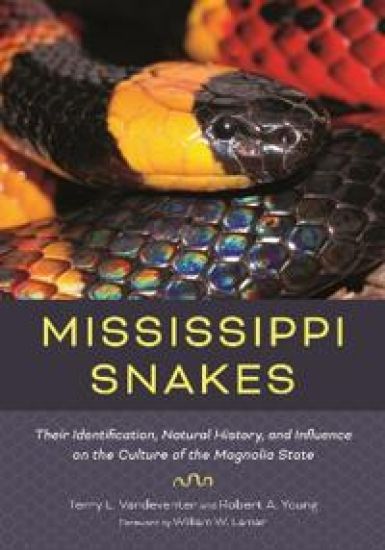
Mississippi Snakes: Their Identification, Natural History, and Influence on the Culture of the Magnolia State is more than just a guidebook about snakes. It is a new approach to understanding the natural history of one of the most biologically diverse and culturally rich states in the country. Authors Terry L. Vandeventer and Robert A. Young share facts, stories, and practical advice about the more than fifty different kinds of snakes living in Mississippi. The topic of snakes slithers to the forefront of conversations held on porches and around campfires throughout Mississippi. However, most people know very little about snakes, and what they believe is often steeped in myth and inaccuracies. The authors present facts and answer questions about the often-misunderstood reptiles. "What are snakes good for?" "Do snakes really chase people?" "Can you age a rattlesnake by the rattle?" "What do I do if I’m bitten by a snake?" With 350 beautiful color photographs, the authors teach readers how to identify snakes and how to determine what they eat and where they live. They also delve into how snakes feature in our history, music, and everyday activities. Written for the general audience but containing a wealth of accurate scientific data, the book appeals equally to the layperson and the professional herpetologist.
This volume, number 15 in the Studies in Water Policy and Management Series and joins two other volumes (8 and 10) that collectively summarize a significant part of the post-World War II experience of Western experts and donors with the development and management of irrigation in Third World countries. The evolution of understanding of Third World irrigation issues has been toward a greater appreciation of the potential for augmenting traditional production and water allocation systems with improved institutional arrangements for achieving allocative efficiency and equity. The need for local inputs for planning, system operation, and system maintenance is now widely recognized, as is the need for providing proper motivation for system administrators. The authors of this volume offer improved conceptual frameworks and analytic techniques applied to specific country and regional problems in hopes of edifying future experts and donors
The Magic of Life is a transformational story of the inhabitants of an island called "Isles" in an undefined location possibly in the Pacific Ocean. The island has two distinct and separate communities that are completely unaware of one another apart from the secret few with access to both areas. This book is based on many intimate stories of transformation, spiritual interactions, healing, excitement, personal and technical achievement, and most of all, the overall story of life that starts with devastating circumstances and through many thrilling events, ends up with a magical twist that leaves the reader with a calm sense of harmony and delight. This book is a stand-alone story developed from Volume 1 that takes you on an exciting adventure described as "The Next Step".
Water provides benefits as a commodity for agriculture, industry, and households, and as a public good such as fisheries habitat, water quality and recreational use. To aid in cost-benefit analysis under conditions where market determined price signals are usually unavailable, economists have developed a range of alternative valuation methods for measuring economic benefits. This volume provides the most comprehensive exposition to-date of the application of economic valuation methods to proposed water resources investments and policies. It provides a conceptual framework for valuation of both commodity and public good uses of water, addressing non-market valuation techniques appropriate to measuring public benefits - including water quality improvement, recreation, and fish habitat enhancement. The book describes the various measurement methods, illustrates how they are applied in practice, and discusses their strengths, limitations, and appropriate roles. In this second edition, all chapters have been thoroughly updated, and in particular the coverage of water markets and valuation of ecosystem services from water has been expanded. Robert Young, author of the 2005 edition, has been joined for this new edition by John Loomis, who brings additional expertise on ecosystem services and the environmental economics of water for recreational and other public good uses of water.
Federal property issues - especially those involving divestiture - create political disputes at all levels of government. Federal Property Policy in Canadian Municipalities analyzes the emergence of many of these issues involving military bases, airports, and other facilities in communities across Canada. With careful analysis the contributors show the underlying patterns and causes of these conflicts and their resolutions while emphasizing intergovernmental relations and the social forces that are active in property issues. Contributors examine general federal policy as well as issues pertinent to British Columbia, the Toronto waterfront, New Brunswick, and Newfoundland and Labrador. The unprecedented number of cases discussed in these essays provides general conclusions and recommendations for a new orientation that will take local interests and preferences into account from the outset of decision-making. Public property is an understudied field of public policy, particularly as it concerns municipal government. Federal Property Policy in Canadian Municipalities presents a comprehensive treatment of federal property, changes in policy, and the effects these changes have on various levels of government. Contributors include Jeff Braun-Jackson (Memorial University of Newfoundland), Pierre Filion (University of Waterloo), Michael C. Ircha (University of New Brunswick), Leonard Wade Locke (Memorial University of Newfoundland), Robert MacKinnon (University of New Brunswick in Saint John), Kurt Peacock (University of New Brunswick in Saint John), Christopher Sanderson (Government of Manitoba), Tracy Summerville (University of Northern British Columbia), Stephen Tomblin (Memorial University of Newfoundland), Gary N. Wilson (University of Northern British Columbia), John Young (University of Northern British Columbia), and Robert A. Young (University of Western Ontario).
When we think of green building, we tend to picture new construction. But Robert Young argues that the greenest building is often the one that has already been built. In "Stewardship of the Built Environment", he shows how rehabilitating and reusing existing structures holds untapped potential for achieving sustainable communities. Students and professionals alike will discover the multifaceted benefits of reuse. Young begins by describing how historic preservation, often overlooked because of the predominant focus on new construction, is actually an important sustainable design strategy. He then examines the social, environmental, and economic benefits of preservation - from the societal value of reusing existing buildings to financial incentives available for rehabilitation. Young concludes with insights into the future of reusing buildings as a sustainability strategy. He also provides several informative appendices, including a glossary of key terms and acronyms and recommendations for further reading. Readers will become familiar with essential terminology; sustainability and historic preservation metrics; and opportunities for smart growth afforded by rehabilitation. This knowledge is key to preserving the past while building a sustainable future.
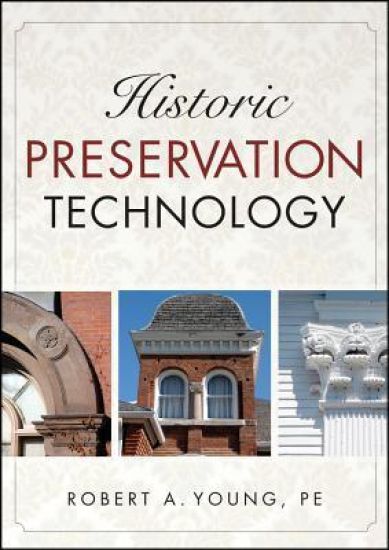
This introduction to historic preservation goes well beyond the Secretary of the Interior's Standards for Rehabilitation and shows how wood, stone, masonry, and metal were used in the past and how adaptive re-use can be employed to bring modern amenities to historic structures. The book covers all aspects of the exterior and interior building fabric, including windows, roofing, doors, porches, and electrical and mechanical systems for both residential and small-scale commercial buildings. Richly illustrated with photographs showing typical elements of historic buildings, decay mechanisms, and remediation techniques, the book also contains a variety of useful case studies and features a companion Website that offers dozens of additional images and resources.
Stretching the Federation deals with such topics as world trends in federations, whether decentralization is inherently conservative, decentralization in health care, possible reallocations of programs and tax revenues, overlap and duplication in service delivery, and fiscal decentralization. Stretching the Federation is a timely and topical collection of cutting-edge thinking about the future of the Canadian federation. Contributors include Paul Boothe (Alberta), David Cameron (Toronto), Thomas Courchene (Queen's), Derek Hermanutz (Alberta), Michael Keating (University of Western Ontario), Harvey Lazar (Queen's), Evert Lindquist (Toronto), Antonia Maloni (McGill), Peter Meekison (Victoria), Alain Noel (Universite de Montreal and Berkeley), Bill Robson (C.D. Howe Institute), and France St. Hilaire (IRPP).
In The Struggle for Quebec Young updates this work, treating new developments and making his analysis accessible to a wider audience. He describes the prelude to the 1995 referendum campaign, as well as the history of the campaign itself, analysing the arguments deployed by federalists and sovereigntists and seeking to explain why the Yes forces gained ground in 1995 and almost won. He also suggests what would have happened if the Yes side had actually won the 1995 referendum. Young then assesses the fallout of the referendum - its impact on the attitudes and behaviour of the public, elites, and foreign governments - and describes how the sovereigntists and federalists are manoeuvring around the prospect of another referendum. He considers Lucien Bouchard's policies as well as Ottawa's attempts both to accommodate Quebecers' desires for change - Plan A - and to demonstrate how difficult secession would be - Plan B - and analyses the 1997 federal election and the Calgary accord. All of this lays the groundwork for prediction and Young provides a set of scenarios about what would happen after a Yes vote in a future referendum on sovereignty. The Struggle for Quebec is a current, thorough, and lively book which is indispensable reading for all Canadians concerned with their future.