Kirjojen hintavertailu. Mukana 12 390 323 kirjaa ja 12 kauppaa.

Kirjailija

Robert B. Talisse

Kirjat ja teokset yhdessä paikassa: 17 kirjaa, julkaisuja vuosilta 2007-2025, suosituimpien joukossa Sustaining Democracy. Vertaile teosten hintoja ja tarkista saatavuus suomalaisista kirjakaupoista.

17 kirjaa

Kirjojen julkaisuhaarukka 2007-2025.

Civic Solitude

Civic Solitude

Robert B. Talisse

OXFORD UNIVERSITY PRESS INC
2025
sidottu
An internet search of the phrase "this is what democracy looks like" returns thousands of images of people assembled in public for the purpose of collective action. But is group collaboration truly the defining feature of effective democracy? Robert B. Talisse suggests that while group action is essential to democracy, action without reflection can present insidious challenges, as individuals' perspectives can be distorted by group dynamics. The culprit is a cognitive dynamic called belief polarization. As we interact with our political allies, we are exposed to forces that render us more radical in our beliefs and increasingly hostile to those who do not share them. What's more, the social environments we inhabit in our day-to-day lives are sorted along partisan lines. We are surrounded by triggers of political extremity and animosity. Thus, our ordinary activities encourage the attitude that democracy is possible only when everyone agrees--a profoundly antidemocratic stance. Drawing on extensive research about polarization and partisanship, Talisse argues that certain core democratic capacities can be cultivated only at a distance from the political fray. If we are to meet the responsibilities of democratic citizenship, we must occasionally step away from our allies and opponents alike. We can perform this self-work only in secluded settings where we can engage in civic reflection that is not prepackaged in the idiom of our political divides, allowing us to contemplate political circumstances that are not our own.
Sustaining Democracy

Sustaining Democracy

Robert B. Talisse

Oxford University Press Inc
2021
sidottu
Democracy is not easy. Citizens who disagree sharply about politics must nonetheless work together as equal partners in the enterprise of collective self-government. Ideally, this work would be conducted under conditions of mutual civility, with opposed citizens nonetheless recognizing one another's standing as political equals. But when the political stakes are high, and the opposition seems to us severely mistaken, why not drop the democratic pretences of civil partnership, and simply play to win? Why seek to uphold properly democratic relations with those who embrace political ideas that are flawed, irresponsible, and out of step with justice? Why sustain democracy with political foes? Drawing on extensive social science research concerning political polarization and partisan identity, Robert B. Talisse argues that when we break off civil interactions with our political opponents, we imperil relations with our political allies. In the absence of engagement with our political critics, our alliances grow increasingly homogeneous, conformist, and hierarchical. Moreover, they fracture and devolve amidst internal conflicts. In the end, our political aims suffer because our coalitions shrink and grow ineffective. Why sustain democracy with our foes? Because we need them if we are going to sustain democracy with our allies and friends.
Overdoing Democracy

Overdoing Democracy

Robert B. Talisse

OXFORD UNIVERSITY PRESS INC
2021
nidottu
We live in an age of political polarization. As political beliefs on the left and the right have been pulled closer to the extremes, so have our social environments: we seldom interact with those with whom we don't see eye to eye. Making matters worse, we are being appealed to--by companies, products, and teams, for example--based on our deep-seated, polarized beliefs. Our choice of Starbucks or Dunkin' Donuts, Costco or Sam's Club, soccer or football, New York Times vs. Wall Street Journal is an expression of our beliefs and a reinforcement of our choice to stay within the confines of our self-selected political community, making us even more polarized. Letting it bleed into these choices in every corner of our lives, we take democracy too far and it ends up keeping us apart. We overdo democracy. When we overdo democracy, we allow it to undermine and crowd out many of the most important social goods that democracy is meant to deliver. What's more, in overdoing democracy, we spoil certain social goods that democracy needs in order to flourish. A thriving democracy needs citizens to reserve space in their social lives for collective activities that are not structured by political allegiances. To ensure the health and the future of democracy, we need to forge civic friendships by working together in social contexts in which political affiliations and party loyalties are not merely suppressed, but utterly beside the point. Drawing on his extensive research, Talisse sheds light on just how deeply entrenched our political polarization has become and opens our eyes to how often we allow politics to dictate the way we see almost everything. By limiting our interactions with others and our experience of the world so that we only encounter the politically like-minded, we are actually damaging the thing that democracy is meant to preserve in the first place: the more fundamental good of recognizing and respecting each other's standing equals.
Pragmatism, Pluralism, and the Nature of Philosophy

Pragmatism, Pluralism, and the Nature of Philosophy

Scott F. Aikin; Robert B. Talisse

Routledge
2020
nidottu
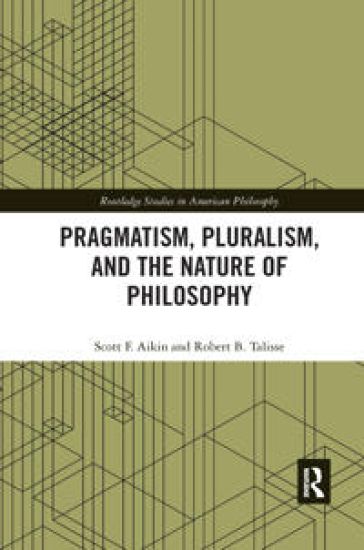
For the past fifteen years, Aikin and Talisse have been working collaboratively on a new vision of American pragmatism, one which sees pragmatism as a living and developing philosophical idiom that originates in the work of the "classical" pragmatisms of Charles Peirce, William James, and John Dewey, uninterruptedly develops through the later 20th Century pragmatists (C. I. Lewis, Wilfrid Sellars, Nelson Goodman, W. V. O. Quine), and continues through the present day. According to Aikin and Talisse, pragmatism is fundamentally a metaphilosophical proposal – a methodological suggestion for carrying inquiry forward amidst ongoing deep disagreement over the aims, limitations, and possibilities of philosophy. This conception of pragmatism not only runs contrary to the dominant self-understanding among cotemporary philosophers who identify with the classical pragmatists, it also holds important implications for pragmatist philosophy. In particular, Aikin and Talisse show that their version of pragmatism involves distinctive claims about epistemic justification, moral disagreement, democratic citizenship, and the conduct of inquiry. The chapters combine detailed engagements with the history and development of pragmatism with original argumentation aimed at a philosophical audience beyond pragmatism.
Political Argument in a Polarized Age

Political Argument in a Polarized Age

Scott F. Aikin; Robert B. Talisse

Polity Press
2020
nidottu
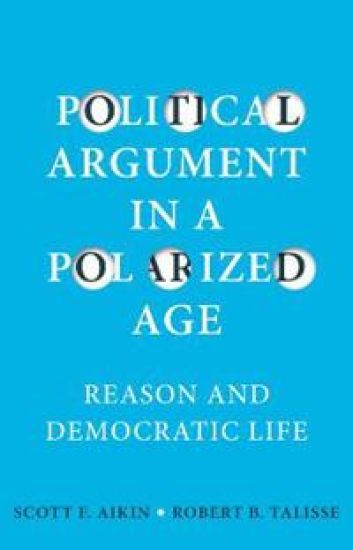
From obnoxious public figures to online trolling and accusations of “fake news”, almost no one seems able to disagree without hostility. But polite discord sounds farfetched when issues are so personal and fundamental that those on opposing sides appear to have no common ground. How do you debate the “enemy”? Philosophers Scott Aikin and Robert Talisse show that disagreeing civilly, even with your sworn enemies, is a crucial part of democracy. Rejecting the popular view that civility requires a polite and concessive attitude, they argue that our biggest challenge is not remaining calm in the face of an opponent, but rather ensuring that our political arguments actually address those on the opposing side. Too often politicians and pundits merely simulate political debate, offering carefully structured caricatures of their opponents. These simulations mimic political argument in a way designed to convince citizens that those with whom they disagree are not worth talking to. Good democracy thrives off conflict, but until we learn the difference between real and simulated arguments we will be doomed to speak at cross-purposes. Aikin and Talisse provide a crash course in political rhetoric for the concerned citizen, showing readers why understanding the structure of arguments is just as vital for a healthy democracy as debate over facts and values. But there’s a sting in the tail - no sooner have we learned rhetorical techniques for better disagreement than these techniques themselves become weapons with which to ignore our enemies, as accusations like “false equivalence” and “ad hominem” are used to silence criticism. Civility requires us to be eternally vigilant to the ways we disagree.
Political Argument in a Polarized Age

Political Argument in a Polarized Age

Scott F. Aikin; Robert B. Talisse

Polity Press
2020
sidottu
From obnoxious public figures to online trolling and accusations of “fake news”, almost no one seems able to disagree without hostility. But polite discord sounds farfetched when issues are so personal and fundamental that those on opposing sides appear to have no common ground. How do you debate the “enemy”? Philosophers Scott Aikin and Robert Talisse show that disagreeing civilly, even with your sworn enemies, is a crucial part of democracy. Rejecting the popular view that civility requires a polite and concessive attitude, they argue that our biggest challenge is not remaining calm in the face of an opponent, but rather ensuring that our political arguments actually address those on the opposing side. Too often politicians and pundits merely simulate political debate, offering carefully structured caricatures of their opponents. These simulations mimic political argument in a way designed to convince citizens that those with whom they disagree are not worth talking to. Good democracy thrives off conflict, but until we learn the difference between real and simulated arguments we will be doomed to speak at cross-purposes. Aikin and Talisse provide a crash course in political rhetoric for the concerned citizen, showing readers why understanding the structure of arguments is just as vital for a healthy democracy as debate over facts and values. But there’s a sting in the tail - no sooner have we learned rhetorical techniques for better disagreement than these techniques themselves become weapons with which to ignore our enemies, as accusations like “false equivalence” and “ad hominem” are used to silence criticism. Civility requires us to be eternally vigilant to the ways we disagree.
Overdoing Democracy

Overdoing Democracy

Robert B. Talisse

Oxford University Press Inc
2019
sidottu
We live in an age of political polarization. As political beliefs on the left and the right have been pulled closer to the extremes, so have our social environments: we seldom interact with those with whom we don't see eye to eye. Making matters worse, we are being appealed to--by companies, products, and teams, for example--based on our deep-seated, polarized beliefs. Our choice of Starbucks or Dunkin' Donuts, Costco or Sam's Club, soccer or football, New York Times vs. Wall Street Journal is an expression of our beliefs and a reinforcement of our choice to stay within the confines of our self-selected political community, making us even more polarized. Letting it bleed into these choices in every corner of our lives, we take democracy too far and it ends up keeping us apart. We overdo democracy. When we overdo democracy, we allow it to undermine and crowd out many of the most important social goods that democracy is meant to deliver. What's more, in overdoing democracy, we spoil certain social goods that democracy needs in order to flourish. A thriving democracy needs citizens to reserve space in their social lives for collective activities that are not structured by political allegiances. To ensure the health and the future of democracy, we need to forge civic friendships by working together in social contexts in which political affiliations and party loyalties are not merely suppressed, but utterly beside the point. Drawing on his extensive research, Talisse sheds light on just how deeply entrenched our political polarization has become and opens our eyes to how often we allow politics to dictate the way we see almost everything. By limiting our interactions with others and our experience of the world so that we only encounter the politically like-minded, we are actually damaging the thing that democracy is meant to preserve in the first place: the more fundamental good of recognizing and respecting each other's standing as equals.
Pragmatism, Pluralism, and the Nature of Philosophy

Pragmatism, Pluralism, and the Nature of Philosophy

Scott F. Aikin; Robert B. Talisse

Routledge
2017
sidottu
For the past fifteen years, Aikin and Talisse have been working collaboratively on a new vision of American pragmatism, one which sees pragmatism as a living and developing philosophical idiom that originates in the work of the "classical" pragmatisms of Charles Peirce, William James, and John Dewey, uninterruptedly develops through the later 20th Century pragmatists (C. I. Lewis, Wilfrid Sellars, Nelson Goodman, W. V. O. Quine), and continues through the present day. According to Aikin and Talisse, pragmatism is fundamentally a metaphilosophical proposal – a methodological suggestion for carrying inquiry forward amidst ongoing deep disagreement over the aims, limitations, and possibilities of philosophy. This conception of pragmatism not only runs contrary to the dominant self-understanding among cotemporary philosophers who identify with the classical pragmatists, it also holds important implications for pragmatist philosophy. In particular, Aikin and Talisse show that their version of pragmatism involves distinctive claims about epistemic justification, moral disagreement, democratic citizenship, and the conduct of inquiry. The chapters combine detailed engagements with the history and development of pragmatism with original argumentation aimed at a philosophical audience beyond pragmatism.
Engaging Political Philosophy

Engaging Political Philosophy

Robert B. Talisse

Routledge
2015
nidottu
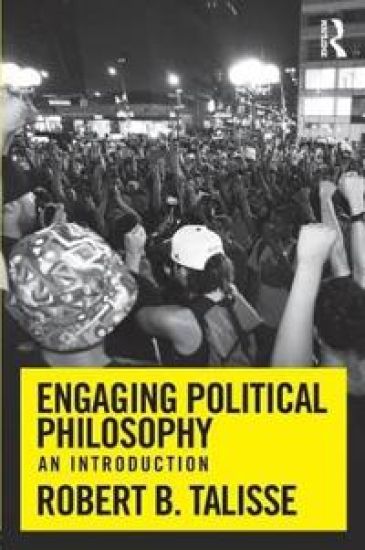
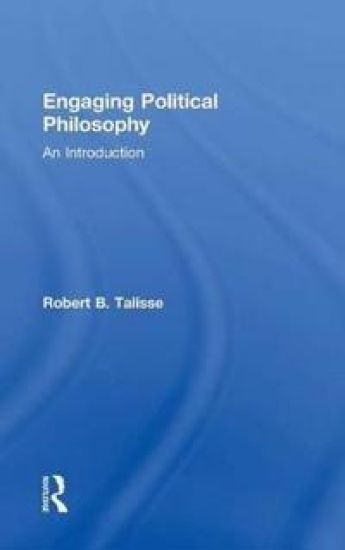
Engaging Political Philosophy introduces readers to the central problems of political philosophy. Presuming no prior work in the area, the book explores the fundamental philosophical questions regarding freedom, authority, justice, and democracy. More than a survey of the central figures and texts, Engaging Political Philosophy takes readers on a philosophical exploration of the core of the field, directly examining the arguments and concepts that drive the contemporary debates. Thus the fundamental issues of political philosophy are encountered first-hand, rather than through intermediary summaries of the major texts and theories. As a result, readers are introduced to political philosophy by doing philosophy. Written in a conversational style, Engaging Political Philosophy is accessible to students and general readers. Instructors can use it in the classroom as a stand-alone textbook, a complement to a standard collection of historical readings, or as a primer to be studied in preparation for contemporary readings.
Engaging Political Philosophy

Engaging Political Philosophy

Robert B. Talisse

Routledge
2015
sidottu
Engaging Political Philosophy introduces readers to the central problems of political philosophy. Presuming no prior work in the area, the book explores the fundamental philosophical questions regarding freedom, authority, justice, and democracy. More than a survey of the central figures and texts, Engaging Political Philosophy takes readers on a philosophical exploration of the core of the field, directly examining the arguments and concepts that drive the contemporary debates. Thus the fundamental issues of political philosophy are encountered first-hand, rather than through intermediary summaries of the major texts and theories. As a result, readers are introduced to political philosophy by doing philosophy. Written in a conversational style, Engaging Political Philosophy is accessible to students and general readers. Instructors can use it in the classroom as a stand-alone textbook, a complement to a standard collection of historical readings, or as a primer to be studied in preparation for contemporary readings.
Democracy and Moral Conflict

Democracy and Moral Conflict

Robert B. Talisse

Cambridge University Press
2011
pokkari
Why democracy? Most often this question is met with an appeal to some decidedly moral value, such as equality, liberty, dignity or even peace. But in contemporary democratic societies, there is deep disagreement and conflict about the precise nature and relative worth of these values. And when democracy votes, some of those who lose will see the prevailing outcome as not merely disappointing, but morally intolerable. How should citizens react when confronted with a democratic result that they regard as intolerable? Should they revolt, or instead pursue democratic means of social change? In this book, Robert Talisse argues that each of us has reasons to uphold democracy - even when it makes serious moral errors - and that these reasons are rooted in our most fundamental epistemic commitments. His original and compelling study will be of interest to a wide range of readers in political philosophy and political theory.
Democracy and Moral Conflict

Democracy and Moral Conflict

Robert B. Talisse

Cambridge University Press
2009
sidottu
Why democracy? Most often this question is met with an appeal to some decidedly moral value, such as equality, liberty, dignity or even peace. But in contemporary democratic societies, there is deep disagreement and conflict about the precise nature and relative worth of these values. And when democracy votes, some of those who lose will see the prevailing outcome as not merely disappointing, but morally intolerable. How should citizens react when confronted with a democratic result that they regard as intolerable? Should they revolt, or instead pursue democratic means of social change? In this book, Robert Talisse argues that each of us has reasons to uphold democracy - even when it makes serious moral errors - and that these reasons are rooted in our most fundamental epistemic commitments. His original and compelling study will be of interest to a wide range of readers in political philosophy and political theory.
A Teacher's Life

A Teacher's Life

Robert B. Talisse; Maureen Eckert

Lexington Books
2009
sidottu
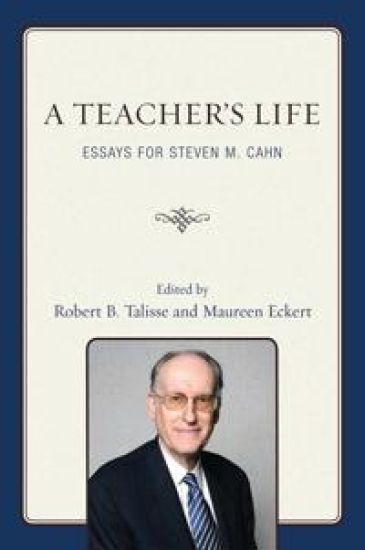
Steven Cahn belongs to that exclusive class of professors who have not only contributed influentially to the leading debates of their discipline, but have also written insightfully about the academic vocation itself. This volume comprises 13 essays, authored by Cahn's colleagues and former students, presented in his honor on the occasion of his 25th year as Professor of Philosophy at the City University of New York. The chapters focus on topics that have been central to Cahn's philosophical work, such as the teaching of Philosophy, the responsibilities of Philosophy professors, the nature of happiness, and the concept of the good life.
Pragmatism: A Guide for the Perplexed

Pragmatism: A Guide for the Perplexed

Robert B. Talisse; Scott Aikin

Continuum International Publishing Group Ltd.
2008
sidottu
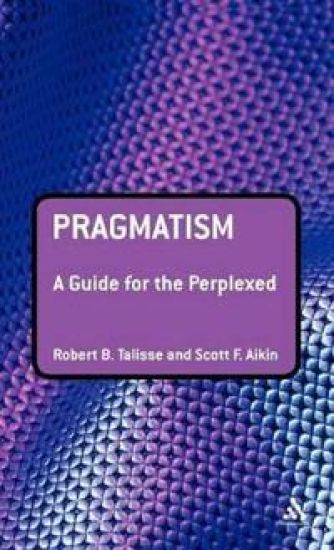
The recent revival of interest in pragmatism has reintroduced into mainstream philosophy the insights and arguments of great American philosophers such as C.S. Peirce, William James and John Dewey. But it has also led to the use of the term 'pragmatism' in a huge variety of contexts, such that students and readers can find this fascinating subject confusing. Pragmatism: A Guide for the Perplexed seeks to dispel some of the ambiguity surrounding the term 'pragmatism'. The book offers a clear and thorough account of this key philosophical movement. Thematically structured, it lays out the historical development and surveys the key thinkers. Crucially, it concentrates on the ways in which pragmatists, both contemporary and historical, have attempted to address some of the most important problems in philosophy. Geared towards the specific requirements of students who need to reach a sound understanding of pragmatism, the book serves as an ideal companion to study of this most important and influential of movements.
Pragmatism: A Guide for the Perplexed

Pragmatism: A Guide for the Perplexed

Robert B. Talisse; Scott Aikin

Continuum International Publishing Group Ltd.
2008
nidottu
This is a student's guide to the historical context, key thinkers and central themes of pragmatism, a concept central to American philosophy.The recent revival of interest in pragmatism has reintroduced into mainstream philosophy the insights and arguments of great American philosophers such as C.S. Peirce, William James and John Dewey. But it has also led to the use of the term 'pragmatism' in a huge variety of contexts, such that students and readers can find this fascinating subject confusing. "Pragmatism: A Guide for the Perplexed" seeks to dispel some of the ambiguity surrounding the term 'pragmatism'.The book offers a clear and thorough account of this key philosophical movement. Thematically structured, it lays out the historical development and surveys the key thinkers. Crucially, it concentrates on the ways in which pragmatists, both contemporary and historical, have attempted to address some of the most important problems in philosophy. Geared towards the specific requirements of students who need to reach a sound understanding of pragmatism, the book serves as an ideal companion to study of this most important and influential of movements." Continuum's Guides for the Perplexed" are clear, concise and accessible introductions to thinkers, writers and subjects that students and readers can find especially challenging - or indeed downright bewildering. Concentrating specifically on what it is that makes the subject difficult to grasp, these books explain and explore key themes and ideas, guiding the reader towards a thorough understanding of demanding material.
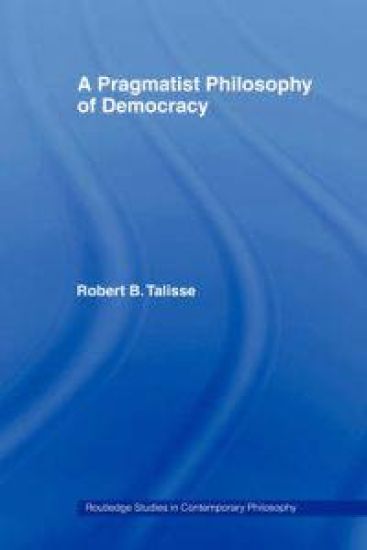
A Pragmatist Philosophy of Democracy

A Pragmatist Philosophy of Democracy

Robert B. Talisse

Routledge
2008
nidottu
In recent years there has been a renewed interest in American pragmatism. In political philosophy, the revival of pragmatism has led to a new appreciation for the democratic theory of John Dewey. In this book, Robert B. Talisse advances a series of pragmatic arguments against Deweyan democracy. Particularly, Talisse argues that Deweyan democracy cannot adequately recognize pluralism, the fact that intelligent, sincere, and well-intentioned persons can disagree sharply and reasonably over moral ideals. Drawing upon the epistemology of the founder of pragmatism, Charles S. Peirce, Talisse develops a conception of democracy that is anti-Deweyan but nonetheless pragmatist. Talisse then brings the Peircean view into critical conversation with contemporary developments in democratic theory, including deliberative democracy, Rawlsian political liberalism, and Richard Posner’s democratic realism. The result is a new pragmatist option in democratic theory.
A Pragmatist Philosophy of Democracy

A Pragmatist Philosophy of Democracy

Robert B. Talisse

Routledge
2007
sidottu
In recent years there has been a renewed interest in American pragmatism. In political philosophy, the revival of pragmatism has led to a new appreciation for the democratic theory of John Dewey. In this book, Robert B. Talisse advances a series of pragmatic arguments against Deweyan democracy. Particularly, Talisse argues that Deweyan democracy cannot adequately recognize pluralism, the fact that intelligent, sincere, and well-intentioned persons can disagree sharply and reasonably over moral ideals. Drawing upon the epistemology of the founder of pragmatism, Charles S. Peirce, Talisse develops a conception of democracy that is anti-Deweyan but nonetheless pragmatist. Talisse then brings the Peircean view into critical conversation with contemporary developments in democratic theory, including deliberative democracy, Rawlsian political liberalism, and Richard Posner’s democratic realism. The result is a new pragmatist option in democratic theory.