Kirjojen hintavertailu. Mukana 12 595 353 kirjaa ja 12 kauppaa.

Kirjailija

Robert Baldwin

Kirjat ja teokset yhdessä paikassa: 17 kirjaa, julkaisuja vuosilta 2000-2026, suosituimpien joukossa Understanding Regulation. Vertaile teosten hintoja ja tarkista saatavuus suomalaisista kirjakaupoista.

17 kirjaa

Kirjojen julkaisuhaarukka 2000-2026.

Understanding Regulation

Understanding Regulation

Robert Baldwin; Martin Cave; Martin Lodge

Oxford University Press
2026
nidottu
Regulation is a matter of central importance to industries, consumers, citizens, and governments alike. The third edition of Understanding Regulation provides the reader with an introduction to key debates on regulation and does so from a number of disciplinary perspectives, looking to law, economics, business, political science, sociology, and social administration. The book has been extensively revised and updated to account for the significant developments in business, regulation, technology, and government that have taken place in the last decade and a half. It contains several new chapters and is structured into parts dealing with fundamentals, strategies, rules and enforcement, regulatory quality and evaluation, regulation beyond the state, regulating network industries, and unfolding issues (including challenges relating to digital platforms, artificial intelligence, and sustainability). Understanding Regulation draws on regulatory experiences in many sectors and countries throughout the world. It reviews the central questions of regulation and explores the key issues that affect the operation of regulatory regimes. It is an essential resource for academics and researchers involved with regulation, as well as those concerned with the design and practice of regulation.

Understanding Regulation

Understanding Regulation

Robert Baldwin; Martin Cave; Martin Lodge

Oxford University Press
2026
sidottu
Regulation is a matter of central importance to industries, consumers, citizens, and governments alike. The third edition of Understanding Regulation provides the reader with an introduction to key debates on regulation and does so from a number of disciplinary perspectives, looking to law, economics, business, political science, sociology, and social administration. The book has been extensively revised and updated to account for the significant developments in business, regulation, technology, and government that have taken place in the last decade and a half. It contains several new chapters and is structured into parts dealing with fundamentals, strategies, rules and enforcement, regulatory quality and evaluation, regulation beyond the state, regulating network industries, and unfolding issues (including challenges relating to digital platforms, artificial intelligence, and sustainability). Understanding Regulation draws on regulatory experiences in many sectors and countries throughout the world. It reviews the central questions of regulation and explores the key issues that affect the operation of regulatory regimes. It is an essential resource for academics and researchers involved with regulation, as well as those concerned with the design and practice of regulation.
Taming the Corporation

Taming the Corporation

Robert Baldwin; Martin Cave

Oxford University Press
2020
sidottu
Virtually all enterprises are regulated. Regulation is crucial not only to economic success but also to protecting consumer, worker, environmental, and other interests. Yet it is often considered a tiresome interference with entrepreneurial activity. This negative vision is unhelpful in addressing business and other needs for productive forms of regulation. Taming the Corporation offers an alternative, positive, vision of regulation. It stresses the role of good regulation in allowing businesses to flourish, serve markets effectively, and respect broader interests. This perspective paves the way for more productive regulatory designs. It looks at the characteristics of good regulation and provides businesses, consumers, and citizens with the arguments that will enable them to push for regulatory controls that serve their needs. Understandings of regulation are served by looking at the potentially positive roles of control strategies ranging from 'command laws' to 'nudges'. This book not only discusses regulatory theory but also uses numerous case examples to illustrate real life challenges and address three key regulatory challenges in the modern world: regulating for sustainability, addressing global warming, and controlling digital platforms.
A Sermon Preach'd at the Arch-Deacon's Visitation at Burnham-Westgate, in the County of Norfolk October 9, 1706. By R. Baldwin,
The 18th century was a wealth of knowledge, exploration and rapidly growing technology and expanding record-keeping made possible by advances in the printing press. In its determination to preserve the century of revolution, Gale initiated a revolution of its own: digitization of epic proportions to preserve these invaluable works in the largest archive of its kind. Now for the first time these high-quality digital copies of original 18th century manuscripts are available in print, making them highly accessible to libraries, undergraduate students, and independent scholars.The Age of Enlightenment profoundly enriched religious and philosophical understanding and continues to influence present-day thinking. Works collected here include masterpieces by David Hume, Immanuel Kant, and Jean-Jacques Rousseau, as well as religious sermons and moral debates on the issues of the day, such as the slave trade. The Age of Reason saw conflict between Protestantism and Catholicism transformed into one between faith and logic -- a debate that continues in the twenty-first century.++++The below data was compiled from various identification fields in the bibliographic record of this title. This data is provided as an additional tool in helping to insure edition identification: ++++Cambridge University LibraryT197982Norwich: printed for T. Goddard, 1706. pp. 1-20; 4
My Life: From Cotton Patches on the South Plains of Texas to Negotiation Tables in China and North Korea
This book is the account of an ordinary person whose life experiences were atypical. He was the fifth of seven children born into the home of a rural minister and educator. The author taught in public schools for six years. Personal economics forced him to become a telephone man, earn a master's degree, and receive certification as a professional engineer. The breakup of the Bell System was experienced from the inside. The last three years of his telecommunications experience were with the United Nation, and afforded him the opportunity to travel to more than forty-five countries. His UN tenure was during the chaos of network privatization and the retrenchment of centrally planned markets. Concurrently with his interesting professional career, he was a caregiver of a chronically ill spouse and father of an active daughter. He was a serious runner among other non-job passions. A spiritual story is also entwined: believer in childhood, atheist in his forties who regained faith some twenty years later. Details of death of first wife, remarriage followed by divorce, and third marriage at age seventy-five are included. The writer has made eight trips to Moldova to work with orphans. Excerpts Chapter 2 Streun's Barn ... she had a gentle, soft facial expression in response to my smile. I took that as positive, but any response less than her coming over and slapping me would not have dampened my desire to know her. Chapter 7 Walsenburg "Don't you say a word," I said slowly in a low, threatening tone. He again started to speak. I slammed him against the locker a second time with much greater force than the first while still maintaining my strong two-handed grip on his clothing. Again the resulting sound echoed down the hallway. "Keep your mouth shut, and don't force me to remind you again " I shouted with enough volume to be heard in all rooms of the third floor. Chapter 11 Naperville My belief in the existence of God and faith in His omnipotence could not have been firmer unless embedded in my DNA. That sureness was a liability. Chapter 14 Switzerland I ran back toward the building, but not to the door of my exit. Once at the building I stood quietly with my back tightly against the outside wall. I stayed in that position long enough to catch my breath and be convinced neither the guard, nor anyone else knew I was there. Chapter 15 Bon Co ncidence ... the interpreter woke me. This time he had been instructed to be very forthright and brutally frank.... the consequences were not a question of mere embarrassment.... careers would be destroyed, and for some it could be a matter of life or death.... The interpreter's eyes and voice tone convinced me not to risk that he was overly dramatic. Chapter 16 Kerrville Shirley didn't have a desire to die. However, she had experienced life down the hemodialysis path, and it had been horrid. This time there would not be a transplant off ramp, just an agonizing longer journey leading to the same end as the pain-free hospice route. Chapter 20 Empty House For the past few weeks, life had been a psychological bungee jump into a dark mental canyon. Free fall toward fear of the unknown then suddenly yanked back to a feeling of "all will be fine." It was a repetitious cycle with my emotional elasticity placed under less stress with each progression. Chapter 22 Bittersweet I removed the gold band from the third finger of my left hand upon exiting Judge Brown's chambers. My emotions were neither relief nor sadness, only a numb pale of unavoidable failure. Chapter 24 Twilight Love Seated on Janie's love seat, we were having a pleasant conversation when I experienced a sudden rush of passion. Janie's presence in the future would be different than the past in ways unknown to me during that blissful moment. I tentatively leaned toward her and we kissed, and Janie playfully said, "We had better be careful or we might destroy a good friendship." I disregarded the warning and kissed her long a
Making Money in Construction: A Guide for Contractors and Subcontractors
Sales Techniques and Strategies: Includes a basic sales plan and 15 key sales tactics to be used in negotiations with clients. There is also an extensive section devoted to closing techniques. The advice contained in this chapter will increase builders' closing percentages and help them avoid wasting time on customers who will never buy. Estimating: This chapter presents the only estimating formula a builder will ever need and gives precise information on how to figure overhead and profit into their estimates. This section also examines the differences between estimating for remodeling and for new construction. Advertising, Website Design, and Social Media: Discusses the extent to which each trade should use traditional advertising media, presents a case for a reduced emphasis on traditional advertising in general, and sets forth 8 ways to achieve an alternative to conventional advertising that will increase the size and quality of the response. Also covers website design and optimization, and social media, in depth. Kitchen Design and Cabinetry: This section contains an overview of the most important area of knowledge for remodeling contractors, that is, kitchen design, and presents the basics of the technical aspects of cabinetry and dealerships. Accounting, Tax Avoidance and Record Keeping: Discusses the advantages and disadvantages of the different business forms and accounting methods, gives the procedures for forming sole proprietorships, partnerships and corporations, and examines how each affects taxes. The Legal Aspects of Construction: Covers lien law and the legal relationship between the contractor and his clients, and details the provisions contained in construction contracts. This book also contains a general construction contract, a contract for use between contractors and subcontractors, and a construction management agreement. Subjects also covered in this book are employee relations, bankruptcy options, survival strategies, and a discussion about trends and influences that will impact the future of the industry.
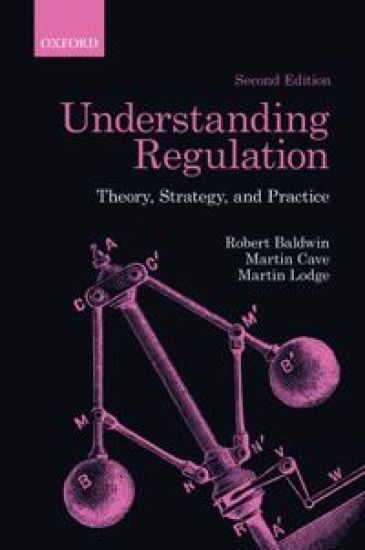
Understanding Regulation

Understanding Regulation

Robert Baldwin; Martin Cave; Martin Lodge

Oxford University Press
2011
sidottu
Regulation is a key concern of industries, consumers, citizens, and governments alike. Building on the success of the first edition, Understanding Regulation, Second Edition provides the reader with an introduction to key debates and discussions in the field of regulation from a number of disciplinary perspectives, looking towards law, conomics, business, political science, sociology, and social administration. The book has been extensively revised and updated to take into account the significant developments and events of the past decade. Containing several new chapters, it has been completely restructured into seven parts, covering: the fundamental issues regarding regulation; different types of regulatory strategies; rules and enforcement; quality and evaluation; regulation at different levels of government; network issues; and concluding thoughts. Drawing on cross-sectoral and cross-national examples, this book reviews the central questions of regulation, and reflects upon those contentious issues that affect the design and operation of regulatory institutions. Amongst other topics, it discusses 'better regulation', enforcement, self-regulation, risk regulation, cost-benefit analysis, and more utility regulation-oriented topics, such as price-setting. It will be an essential resource for academics, researchers, and graduates across the social sciences studying regulation.
Understanding Regulation

Understanding Regulation

Robert Baldwin; Martin Cave; Martin Lodge

Oxford University Press
2011
nidottu
Regulation is a key concern of industries, consumers, citizens, and governments alike. Building on the success of the first edition, Understanding Regulation, Second Edition provides the reader with an introduction to key debates and discussions in the field of regulation from a number of disciplinary perspectives, looking towards law, economics, business, political science, sociology, and social administration. The book has been extensively revised and updated to take into account the significant developments and events of the past decade. Containing several new chapters, it has been completely restructured into seven parts, covering: the fundamental issues regarding regulation; different types of regulatory strategies; rules and enforcement; quality and evaluation; regulation at different levels of government; network issues; and concluding thoughts. Drawing on cross-sectoral and cross-national examples, this book reviews the central questions of regulation, and reflects upon those contentious issues that affect the design and operation of regulatory institutions. Amongst other topics, it discusses 'better regulation', enforcement, self-regulation, risk regulation, cost-benefit analysis, and more utility regulation-oriented topics, such as price-setting. It will be an essential resource for academics, researchers, and graduates across the social sciences studying regulation.
Integrated Management of Depression in the Elderly

Integrated Management of Depression in the Elderly

Carolyn A. Chew-Graham; Robert Baldwin; Alistair Burns

Cambridge University Press
2008
pokkari
Depression is one of the most common mental health problems facing older people, and it is often unrecognised and usually under-treated. Integrated Management of Depression in the Elderly provides an entirely new approach to understanding late-life depression, by using a series of case studies with commentaries from practitioners internationally. The book covers the epidemiology, presentation and diagnosis of depression in older people and outlines current evidence for effective management drawing on recently published work. The substantive part of the book presents ten case studies of increasing complexity, each case has a commentary from a primary care clinician and a health or social care professional, to outline how professionals should work together to manage the patient within their community. Contributions from world experts give the book an international appeal. It will appeal to a wide audience of health and social care professionals together with psychiatrists-in-training.
Motorway Achievement

Motorway Achievement

Peter Baldwin; Robert Baldwin; I. Evans

Phillimore Co Ltd
2007
sidottu
The busy motorway network of Southern and Eastern England has, over 40 years, overlaid a vast and mostly earlier road system, adopting directly from that system only the Maidenhead and Runnymede bridges and a significant constructional experiment near Stilton in 1957-8 which now underlies the A1(M). The area's motorways now total 657 miles - nearly one third of the UK's motorway system but by length only 0.013 per cent of all UK roads. To thread motorways around London and through the diverse economic geography and geology of those populous car-owning regions to seaports and airports, required civil engineers to overcome many planning and structural problems and the post-war shortages, particularly of steel and finance. Their work facilitated far heavier freight and passenger flows, and easier distribution for the building aggregates needed in roads, new factories and offices, New Towns and the rebuilding of London. Meanwhile, inter-urban commuting from points beyond London's Green Belt was largely facilitated by matching investments in electrified railways - many running parallel with motorways. The book also includes the visionary ideas for motorways advanced by Lord Montagu of Beaulieu from 1906 to 1928 and the later successes of Sir Frederick Cook and Lord Watkinson of Woking in persuading H.M. Government to secure appropriate legislation and build the region's motorways from 1958 onwards. It looks at changes in traffic control systems and envisages the extra links and motorway widening works needed to serve international trade and meet the challenges of congestion, pollution and using different fuels. This beautifully produced volume is the second in Phillimore's Building the Network series and is sure to be highly acclaimed by transport historians.
The Government of Risk

The Government of Risk

Christopher Hood; Henry Rothstein; Robert Baldwin

Oxford University Press
2004
nidottu
Why does regulation vary so dramatically from one area to another? Why are some risks regulated aggressively and others responded to only modestly? Is there any logic to the techniques we use in risk regulation? These key questions are explored in The Government of Risk. This book looks at a number of risk regulation regimes, considers the respects in which they differ, and examines how these differences can be justified. Analyzing regulation in terms of 'regimes' allows us to see the rich, multi-dimensional nature of risk regulation. It exposes the thinness of society-wide analyses of risk controls and it offers a perspective that single case studies cannot reach. Regimes analysis breaks down the components of risk regulation systems and shows how they interact. It also shows how different parts of the same regime may be shaped by different factors and have to be explained and understood in quite different ways. The Government of Risk shows how such an approach is of high policy relevance as well as of considerable theoretical importance.
The Decline of US Labor Unions and the Role of Trade

The Decline of US Labor Unions and the Role of Trade

Robert Baldwin

The Peterson Institute for International Economics
2003
nidottu
Between 1977 and 1997, there was a precipitous decline in the proportion of US workers with median education (12 years or less) who were represented by a labor union-from 29 to 14 percent; the unionization proportion declined much less among workers with above-median education (19 to 13 percent). The union wage premium also declined for workers with basic education, from 58 to 51 percent, whereas it rose slightly for better-educated unionists, from 18 to 19 percent. Thus, whatever safety net American unions provide was disproportionately lost by the less-educated workers who, arguably, need it the most. In this study, Robert E. Baldwin investigates the role of changes in US imports and exports in explaining this dramatic decline. The main analysis (which includes workers in manufacturing as well as service sectors) relates changes in the number of union workers across industries to changes in domestic spending, imports, exports, and the intensity with which labor is used across these industries for both union and nonunion workers. Baldwin finds that although globalization (i.e., increased trade) seems to have contributed only modestly to the general decline in unionization, it has, more importantly, contributed to the decline in unionization among workers with less education.The study concludes with a discussion on the implication of this and the other findings for governmental policy and for the policy position of unions toward globalization.
The Government of Risk

The Government of Risk

Christopher Hood; Henry Rothstein; Robert Baldwin

Oxford University Press
2001
sidottu
Why does regulation vary so dramatically from one area to another? Why are some risks regulated aggressively and others responded to only modestly? Is there any logic to the techniques we use in risk regulation? These key questions are explored in The Government of Risk. This book looks at a number of risk regulations regimes, considers the respects in which they differ, and examines how these differences can be explained. Analysing regulation in terms of 'regimes' allows us to see the rich, multi-dimensional nature of risk regulation. It exposes the thinness of society-wide analyses of risk controls and it offers a perspective that single case studies cannot reach. Regimes analysis breaks down the components of risk regulation systems and shows how these interact. It also shows how different parts of the same regime may be shaped by different factors and have to be understood in quite different ways. The Government of Risk shows how such an approach is of high policy relevance as well as of considerable theoretical importance.
Congressional Trade Votes – From NAFTA Approval to Fast–Track Defeat

Congressional Trade Votes – From NAFTA Approval to Fast–Track Defeat

Robert Baldwin; Christopher Magee

The Peterson Institute for International Economics
2000
nidottu
The unwillingness of the US House of Representatives to renew fast-track authority in 1997 and 1998 means that further trade liberalization for the United States is likely to slow down or grind to a halt, since negotiators elsewhere know that any agreements reached could be modified by the US Congress. This political impasse raises several overarching questions: Does the status of fast track represent a temporary or a permanent setback in the postwar trend toward freer trade? Is it due simply to lax efforts in mobilizing groups that support trade liberalization, or is US trade policy becoming more protectionist? More generally, what were the most important economic and social factors shaping congressional voting on trade legislation in the 1990s? How do these factors differ for the various trade bills Congress considered over this period? Baldwin and Magee attempt to answer these questions by analyzing three key trade bills: NAFTA in 1993; the legislation implementing the Uruguay Round agreements in 1994; and the House bill seeking to renew fast-track authority in 1998.The authors provide a brief legislative history of each, and then outline a conceptual framework for their analysis. Focusing on district and state economic conditions, ideological leanings, and campaign contributions, they find both predictable and surprising relationships in the data.