Kirjojen hintavertailu. Mukana 12 595 353 kirjaa ja 12 kauppaa.

Kirjailija

Robert Bogdan

Kirjat ja teokset yhdessä paikassa: 7 kirjaa, julkaisuja vuosilta 1982-2016, suosituimpien joukossa Introduction to Qualitative Research Methods. Vertaile teosten hintoja ja tarkista saatavuus suomalaisista kirjakaupoista.

7 kirjaa

Kirjojen julkaisuhaarukka 1982-2016.

Introduction to Qualitative Research Methods

Introduction to Qualitative Research Methods

Steven J. Taylor; Robert Bogdan; Marjorie L. DeVault

John Wiley Sons Inc
2016
sidottu
An informative real-world guide to studying the "why" of human behavior Introduction to Qualitative Research Methods is a practical, comprehensive guide to the collection and presentation of qualitative data. Unique in the market, this book describes the entire research process — from design through writing — illustrated by examples of real, complete qualitative work that clearly demonstrates how methods are used in actual practice. This updated fourth edition includes all new case studies, with additional coverage of mixed methods, non-sociological settings, funding, and a sample interview guide. The studies profiled are accompanied by observation field notes, and the text includes additional readings for both students and instructors. More than just theory, this guide is designed to give you a real-world practitioner's view of how qualitative research is handled every step of the way. Many different disciplines rely on qualitative research as a method of inquiry, to gain an in-depth understanding of human behavior and the governing forces behind it. Qualitative research asks "why" and "how," and the data is frequently complex and difficult to measure. This book shows you how to effectively handle qualitative work, regardless of where it's being applied. Understand the strengths and limitations of qualitative dataLearn how experts work around common methodological issuesCompare actual field notes to the qualitative studies they generatedExamine the full range of qualitative methods throughout the research process Whether you're studying sociology, psychology, marketing, or any number of other fields, especially in the social and behavioral sciences, human behavior is the central concern of your work. So what drives human behavior? That's what qualitative research helps to explain. Introduction to Qualitative Research Methods gives you the foundation you need to begin seeking answers.

Picturing Disability

Picturing Disability

Robert Bogdan

Syracuse University Press
2012
sidottu
Midget, feeble-minded, crippled, lame, and insane: these terms and the historical photographs that accompany them may seem shocking to present-day audiences. A young woman with no arms wears a sequined tutu and smiles for the camera as she smokes a cigarette with her toes; a man holds up two prosthetic legs while his own legs are bared to the knees to show his missing feet. The photos were used as promotional material for circus sideshows, charity drives, and art galleries. They were found on begging cards and in family albums. In Picturing Disability, Bogdan and his collaborators gather over 200 historical photographs showing how people with disabilities have been presented and exploring the contexts in which they were photographed. Rather than focus on the subjects, Bogdan turns his gaze on the people behind the camera. He examines the historic and cultural environment of the photographs to decipher the relationship between the images and the perspectives of the picture makers. In analyzing the visual rhetoric of these photographs, Bogdan identifies the wide variety of genres, from sideshow souvenirs to clinical photographs. Ranging from the 1860s, when photographs first became readily available, to the 1970s, when the disability rights movement became a force for significant change, Bogdan chronicles the evolution of disability image creation. Picturing Disability takes the reader beyond judging images as positive or slanderous to reveal how particular contexts generate specific emotions and lasting depictions.
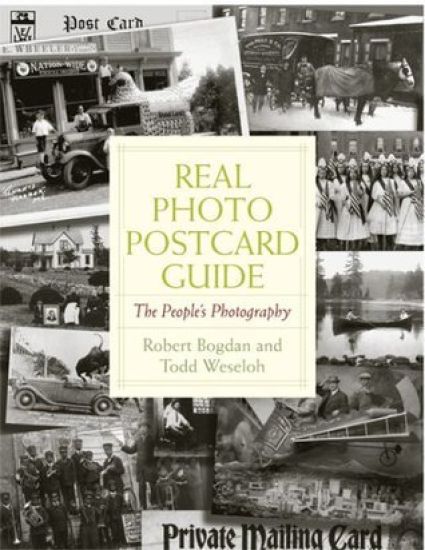
Real Photo Postcard Guide

Real Photo Postcard Guide

Robert Bogdan

Syracuse University Press
2006
sidottu
The Real Photo Postcard Guide is an informative, comprehensive, and practical treatment of this wildly popular American phenomenon that dominated the United States photographic market during the first third of the twentieth century. Robert Bogdan and Todd Weseloh draw on extensive research and observation to address all aspects of the postcard from its history, origin, and cultural significance to practical matters like dating, purchasing, condition, and preservation. Illustrated with over 350 exceptional photo postcards taken from archives and private collections across the country, the scope of the ""Real Photo Postcard Guide"" spans technical considerations of production, characteristics of superior images, collecting categories, and methods of research for dating postcards and investigating their photographers. In a broader sense, the authors show how ""real photo postcards"" document the social history of America. From family outings and workplace awards to lynchings and natural disasters, every image captures a moment of American cultural history from the society that generated them. Bogdan and Weseloh's book provides an admirable integration of informative text and compelling photographic illustrations. Collectors, archivists, photographers, photo historians, social scientists, and anyone interested in the visual documentation of America will find the ""Real Photo Postcard Guide"" indispensable.
Adirondack Vernacular

Adirondack Vernacular

Robert Bogdan

Syracuse University Press
2003
sidottu
Henry M. Beach was a prolific and accomplished upstate New York photographer who documented the North Country during the first quarter of the twentieth century. Although much less known and celebrated, Beach's work is as important to the twentieth-century Adirondacks as Seneca Ray Stoddard's is to the nineteenth century. Illustrated with over 250 examples of his work including ten panoramic foldouts, this book covers the range of Beach's subject matter. Robert Bogdan's lively and accessible approach to the photographer's work encourages the reader to explore the North Country's people and places through Beach's photography and life. Although Beach's postcard pictures and other photographs were taken to sell in bulk to hotel managers, tourist shop owners, and other retail merchants, they are not just mass-produced, stylized, pretty pictures. Beside the bubbling brooks and shady woodland paths are factory boomtowns and paper mills belching pollution. As the rails brought increasing numbers of middle-class tourists to the Adirondacks, the wealthy created their own exclusive wilderness playground. Beach photographed dandy visitors at play as well as manual laborers sweating in the forest, logging camps, factories, mines, and construction sites. Images of ""great camps"" sit next to modest abodes, small stores, and family-owned resorts. Pictures of trains in scenic surroundings give way to mangled wrecks after tragic railroad accidents. In addition to standard view cards, he produced montages and advertisement postcardsserious visual commentary as well as lighthearted picture play. Beach's best works stir the heart and provoke the imagination, and his whimsical, down-to-earth approach to photography produced images that are a treat to the eye.
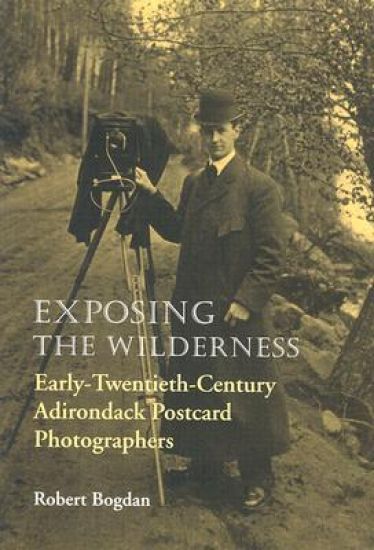
Exposing the Wilderness

Exposing the Wilderness

Robert Bogdan

Syracuse University Press
1999
sidottu
An exploration of New York State's Adirondack mountains through the lives and images of six early 20th-century postcard photographers who left a visual documentary of this wilderness region and its culture in the 1800s. There are illustrations and photographs depicting Adirondack life.
Freak Show

Freak Show

Robert Bogdan

University of Chicago Press
1990
nidottu
Traces the history of freak shows, describes the deceptions used in marketing carnival attractions, and looks at changing public attitudes
Inside Out

Inside Out

Robert Bogdan; Steven Taylor; Seymour Sarason

University of Toronto Press
1982
pokkari
‘We have to assume that the mind is working no matter what it looks like on the outside. We can’t just judge by appearance…If you take away the label they are human beings.’ Ed Murphy What does it mean to be ‘mentally retarded’? Professors Bogdan and Taylor have interviewed two experts, ‘Ed Murphy’ and ‘Pattie Burt,’ for answers. Ed and Pattie, former inmates of institutions for the retarded, tell us in their own words. Their autobiographies are not always pleasant reading. They describe the physical, mental, and emotional abuses heaped upon them throughout their youth and young adulthood; being spurned, neglected, and ultimately abandoned by family and friends; being labelled and stigmatized by social service professionals armed with tests and preconceptions; being incarcerated and depersonalized by the state. Ed and Pattie survived these experiences-evidence, perhaps, of the indefatigable will of the human spirit to assert its essential humanity-but the wounds they have suffered, and the scars they bear, have not been overcome. They are now contributing, independent, members of society, but the stigma of ‘mental retardation’ remains. Their stories are both true and representative-powerful indictments of our knowledge of, our thinking about, and our ministrations to, the mentally handicapped. The interviewers argue that Ed and Pattie challenge the very concept of ‘mental retardation.’ Retardation, they assert, is an ‘imaginary disease’; our attempts to ‘cure’ it are a hoax. Read Ed’s and Pattie’s accounts and judge for yourself.