
Kirjailija
Robert Browning
Kirjat ja teokset yhdessä paikassa: 648 kirjaa, julkaisuja vuosilta 1899-2026, suosituimpien joukossa Saul. Vertaile teosten hintoja ja tarkista saatavuus suomalaisista kirjakaupoista.
648 kirjaa
Kirjojen julkaisuhaarukka 1899-2026.


Browning’s acclaimed biography of this extraordinary and enigmatic couple includes every aspect of imperial administration and policy. It is the story of a peasant's son who becomes emperor and enthrones a dissolute actress beside him.
Robert And Elizabeth Barrett Browning Poems
Robert Browning; Elizabeth Browning Barrett
Everyman's Library
2003
sidottu
Celebrated in their time and still popular over a century after their deaths, Robert Browning and Elizabeth Barrett had a unique relationship which is reflected in their work. Both were distinguished as poets before they met, and they learnt from one another without ever sacrificing their individuality. If Elizabeth recognized that Robert’s talent was the greater of the two, Robert understood that his wife’s voice was unique. All the great themes they shared are represented in this collection of their shorter poems – love, marriage, poetry, religion, England and Italy, the natural world – and the poems are accompanied by a selection from the marvellous letters they wrote to one another, especially in the years of their courtship. Among the items included are extracts from Aurora Leigh and Pauline, and the whole of Sonnets from the Portuguese, together with many lyrics and narrative poems by both poets.
The Complete Works of Robert Browning, Volume XII
Robert Browning
Ohio University Press
2001
sidottu
In seventeen volumes, copublished with Baylor University, this acclaimed series features annotated texts of all of Robert Browning's known writing. The series encompasses autobiography as well as influences bearing on Browning's life and career and aspects of Victorian thought and culture. A single work, the complex Aristophanes' Apology (1875), comprises the twelfth volume of The Complete Works of Robert Browning. Second in Browning's series of long narrative poems based on classical Greek materials, Aristophanes' Apology begins as a further adventure of Browning's young Greek heroine, Balaustion (previously encountered in Balaustion's Adventure, in Volume X of the present edition). In a confrontation with Aristophanes, Balaustion defends her (and Browning's) favorite tragedian, Euripides, whom Aristophanes had repeatedly satirized. Aristophanes offers an ingenious, vigorous explanation of his motives and values, but Browning ensures that Balaustion claims the higher moral and artistic ground for Euripides. To demonstrate his greatness, she reads Euripides' play Herakles aloud, in Browning's own translation. Browning's understanding of this play and its author, like his view of Greek drama overall, is both idiosyncratic and strongly held. He energetically takes up artistic and philosophical issues ancient and modern through his dramatized speaker. Many interpreters have noted that the charges against Euripides are parallel to Victorian critics' complaints about Browning's own works, and that the poet's justification of Euripides constitutes a vehement defense of his art. As always in this acclaimed series, a complete record of textual variants is provided, as well as extensive explanatory notes.

In June, 1860, Browning purchased an “old yellow book” from a bookstall in Florence. The book contained legal briefs, pamphlets, and letters relating to a case that had been tried in 1698 involving a child bride, a disguised priest, a triple murder, four hangings and the beheading of a nobleman. Browning resolved to use it as the source for a poem. The result, The Ring and the Book, is certainly one of the most important long poems of the Victorian era and is arguably Browning’s greatest work. Basing their edition on the 1888–89 version of the poem, Altick and Collins include the last corrections Browning intended before his death. In addition to a substantial introduction, this Broadview Literary Texts edition also includes selections from Browning’s correspondence, and contemporary reviews and reactions to the work.

Robert Browning was one of the greatest of English poets, whose intense and original imagination enabled him to transform any subject he chose - whether everyday or sublime - into startling memorable verse. In his work he brought to life the personalities of a diverse range of characters, and introduced a new immediacy, colloquial energy and psychological complexity to the poetry of his day. This selection brings together verse ranging from early dramatic monologues such as the chilling 'My Last Duchess' and the ribald 'Fra Lippo Lippi', which show his gift for inhabiting the mind of another, to the popular children's poem 'The Pied Piper of Hamelin' and many lesser known works. All display his innovative techniques of diction, rhythm and symbol, which transformed Victorian poetry and influenced major poets of the twentieth century such as Ezra Pound, T. S. Eliot and Robert Frost.

See 'Bhagavad Gita'.

The Complete Works of Robert Browning, Volume XVI
Robert Browning
Ohio University Press
1999
sidottu
In seventeen volumes, copublished with Baylor University, this acclaimed series features annotated texts of all of Robert Browning's known writing. The series encompasses autobiography as well as influences bearing on Browning's life and career and aspects of Victorian thought and culture. Robert Browning wrote Parleyings with Certain People of Importance in Their Day in his seventy-third year. The work is a capstone to the poet's long career, encompassing autobiography as well as influences bearing on the poet's life and career and on Victorian thought and culture in general. One of Browning's most complex works, Parleyings is also a work essential to understanding his genius and career as a whole. The Ohio/Baylor Browning edition offers keys to the complexity and interest of Parleyings through a definitive, emended text, full annotations for allusions both explicit and implicit in the text, and variant readings for the manuscript and all editions revised by Browning during his lifetime. In form and structure, Parleyings is a series of seven poems written in Browning's own voice and addressed to figures influential in his development. The series is framed by a prologue and an epilogue, the whole amounting to some 3,500 lines. The poems are a formal contrast and a pendant to the great series of linked dramatic monologues in The Ring and the Book. They demonstrate the zest for innovation possessed by the master of the dramatic monologue in his ripe maturity. Interested readers as well as students and scholars of Browning will find a rich field of poetry and a critical mass of resources in Volume XVI of the Ohio/Baylor Browning edition. As always in this acclaimed series, a complete record of textual variants is provided, as well as extensive explanatory notes.
In seventeen volumes, copublished with Baylor University, this acclaimed series features annotated texts of all of Robert Browning's known writing. The series encompasses autobiography as well as influences bearing on Browning's life and career and aspects of Victorian thought and culture. The sixth in the projected seventeen-volume work, this volume covers the second half of Men and Women (1855), perhaps Browning's most famous collection, and the entirety of Dramatis Personae (1864), the first book Browning produced after the death of Elizabeth Barrett Browning in 1861. Men and Women II contains several great dramatic poems on which Browning's reputation still depends, including "Andrea del Sarto," "Saul," and "Cleon." It also includes the more intimate and personal works "The Guardian Angel" and "One Word More," as well as the mysterious "Women and Roses." The Brownings' shared interests in Renaissance art and nineteenth-century Italian politics inform the challenging "Old Pictures in Florence." The publication of Dramatis Personae was a key event in the rapid rise of Browning's fame in the 1860s, though the collection is marked by a welter of conflicting impulses that arose after the poet left Italy and his married life behind. The classic monologues "Rabbi Ben Ezra" and "Abt Vogler" are here, but beside them Browning placed the nearly surreal "Caliban upon Setebos" and the achingly self-regarding "James Lee's Wife," one of the volume's handful of dramatic lyrics about betrayed or failed relationships. Also included are "A Death in the Desert," which contributed to the intense Victorian debate about scriptural validity and religious authority; and "Mr Sludge, 'The Medium,'" Browning's ferocious, pyrotechnic exposé of a spiritualist fraud. As always in this acclaimed series, a complete record of textual variants is provided, as well as extensive explanatory notes.

The Complete Works of Robert Browning, Volume XIII
Robert Browning
Ohio University Press
1995
sidottu
In seventeen volumes, copublished with Baylor University, this acclaimed series features annotated texts of all of Robert Browning's known writing. The series encompasses autobiography as well as influences bearing on Browning's life and career and aspects of Victorian thought and culture.

First published in 1842, Robert Browning's poetic version of the legend about the lost children of Hamelin is sub-titled 'A Child's Story' and was originally intended only for the private enjoyment of Willie Macready, young son of the famous actor.
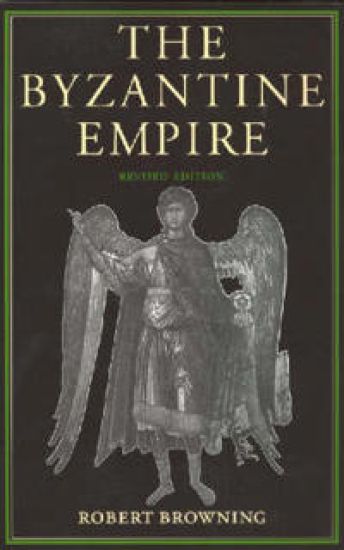
This revised edition presents the history of the Byzantine Empire from the 6th to the 15th century, not merely in terms of political events, but also through the art, literature, and thought of Byzantine society. It emphasizes the constant tension between continuity and change, between conservation of the traditions of the Roman Empire of Augustus and Trajan and the Christian Roman Empire of Constantine and his successors on the one hand, and on the other, the need to react positively to the loss of the Latin-speaking west and the successive challenges offered by the Arab conquests, the Crusades, and the inexorable expansion of the Ottoman Empire. Browning rejects the almost traditional concept of decline and fall - an empire whose decline lasted a thousand years must have had an inner strength of its own - in favour of that of a changing and developing state that at some periods was the ""superpower"" of Europe. But great power status is always fragile, and the story of the Byzantines' response to being overtaken by others is not without its lessons for today. The complex problems of relations between the Christian and Muslim worlds, and between the Catholic/Protestant western Europe and Orthodox eastern Europe (including Russia), cannot be understood without some acquaintance of Byzantine history. Addressed to the general reader as well as to students and scholars, this volume encourages readers to be wary of unconscious prejudice and to reject hasty and superficial solutions.

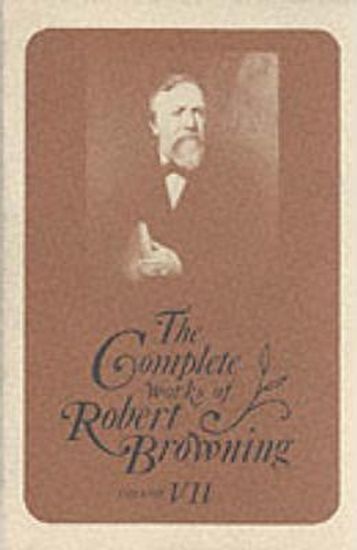
The Complete Works of Robert Browning, Volume VII
Robert Browning
Ohio University Press
1985
sidottu
The first complete edition of the works of Robert Browning with variant readings and annotations contains: 1. The entire contents of the first editions of Browning's work; 2. All prefaces and dedications which Browning wrote for his own works and for those of Elizabeth Barrett Browning and others; 3. The two prose essays: The Essay on Chatterton and The Essay on Shelley; 4. The front matter and tables of contents of each of the collected editions (1849, 1863, 1865, 1868, 1888–1889) which Browning himself saw through the press; 5 Poems by Browning published during his lifetime but not collected by him; 9. Poems not published during Browning's lifetime which have come to light since his death; 7. John Forster's Thomas Wentworth, Earl of Strafford to which Browning contributed significantly, though to what precise extent has not been determined. The edition provides a full apparatus, including variant readings and annotations.

To speakers of modern Greek the Homeric poems of the 7th century BC are not written in a foreign language. The Greek language has enjoyed a continuous tradition from earliest times until now. This book traces its history from the immediately post-classical or Hellenistic period to the present day. The aim is both to analyse the changing structure of a language stabilised by a peculiarly long and continuous literary tradition, and to show how changing historical circumstances are reflected in its development. In particular the historical roots of modern Greek’s internal bilingualism are traced.

The Complete Works of Robert Browning, Volume III
Robert Browning
Ohio University Press
1972
sidottu
In seventeen volumes, copublished with Baylor University, this acclaimed series features annotated texts of all of Robert Browning's known writing. The series encompasses autobiography as well as influences bearing on Browning's life and career and aspects of Victorian thought and culture. Volume III contains Browning's dramatic piece, Pippa Passes (1841), which Arthur Symons said was "Browning's most perfect work"; another play King Victor and King Charles; A Tragedy, which Browning described as "the first artistic consequence of what Voltaire termed 'a terrible event without consequences'"; the "Essay on Chatterton," which appeared anonymously in the Foreign Quarterly Review in July, 1842; the play The Return of the Druses: A Tragedy (1843); and the short pieces of Dramatic Lyrics, which contain some of Browning's finest and most popular works such as "My Last Duchess," "The Soliloquy of the Spanish Cloister," and "The Pied Piper of Hamelin." As always in this acclaimed series, a complete record of textual variants is provided, as well as extensive explanatory notes.

In seventeen volumes, copublished with Baylor University, this acclaimed series features annotated texts of all of Robert Browning's known writing. The series encompasses autobiography as well as influences bearing on Browning's life and career and aspects of Victorian thought and culture. Volume II contains Browning's play, Strafford: An Historical Tragedy (1837), and the long poem, Sordello (1840). Strafford was Browning's first play, based on the tragic life of Thomas Wentworth, Earl of Strafford. The editors note that the play had only four performances, "undoubtedly due… to its esoteric subject and bad acting." Sordello is a fictionalized version of the life of Sordello da Goito, a 13th century Italian troubadour. The poem itself was famously known for being "difficult." As always in this acclaimed series, a complete record of textual variants is provided, as well as extensive explanatory notes.

"With this book, M. H. Abrams has given us a remarkable study, admirably conceived and executed, a book of quite exceptional and no doubt lasting significance for a number of fields--for the history of ideas and comparative literature as well as for English literary history, criticism and aesthetics." –Harry Bergholz, Modern Language Journal