Kirjojen hintavertailu. Mukana 12 390 323 kirjaa ja 12 kauppaa.

Kirjailija

Robert C Bishop

Kirjat ja teokset yhdessä paikassa: 11 kirjaa, julkaisuja vuosilta 2007-2025, suosituimpien joukossa Chaos Theory. Vertaile teosten hintoja ja tarkista saatavuus suomalaisista kirjakaupoista.

Mukana myös kirjoitusasut: Robert C. Bishop

11 kirjaa

Kirjojen julkaisuhaarukka 2007-2025.

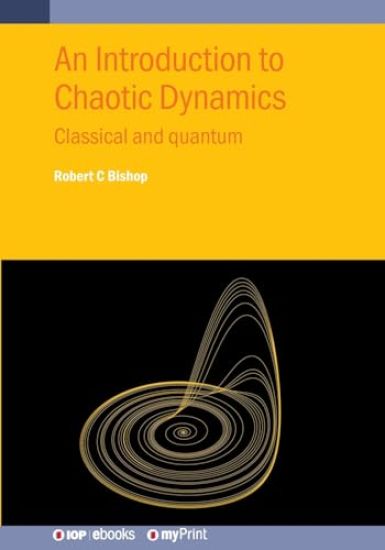
An Introduction to Chaotic Dynamics

An Introduction to Chaotic Dynamics

Robert C Bishop

INSTITUTE OF PHYSICS PUBLISHING
2025
sidottu
This book fills the gap between popular accounts of dynamical systems and chaos and textbooks aimed at physicists and mathematicians by covering the preliminary material needed to understand the literature to the broader implications of chaos.
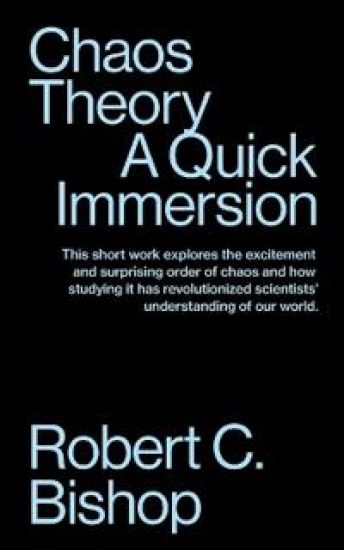
Chaos Theory

Chaos Theory

Robert C Bishop

Tibidabo Publishing, Inc.
2023
pokkari
This short work explores the excitement and surprising order of chaos and how studying it has revolutionized scientists' understanding of our world. ENDORSEMENTS: "Books on chaos theory tend to fall one of two ways. The first are those that cannot resist the hype. The exotic sound of "chaos," like "artificial intelligence," invites authors to lean into its mysteries. The second group of books is overly technical and beyond the reach of most readers. Physicists and mathematicians especially find it hard not to include all sorts of arcane detail. This book avoids both pitfalls. Robert Bishop deftly takes the reader through each of the key topics raised by chaos, including its historical roots, and shows why so many disciplines take note. Mathematicians provide fractal geometry as a tool. Computer scientists reveal how chaos puts limits on numerical simulations. Physical scientists have discovered that chaos is ubiquitous in nature. And philosophers explore its implications for a range of longstanding questions. With one foot in physics and another in the philosophy of science, Bishop illustrates each using minimal mathematics with important technical terms explained throughout. There is no better introduction to the topic available and no scholar better suited to the task. Jeffrey Koperski, Professor of Philosophy, Saginaw Valley State University "Sensitivity to initial conditions and path dependence, nonlinearities, strange attractors, and fractals...Bishop explains - in enviably clear language - the surprising properties and emergence of chaotic dynamics in mathematical models and real-world systems, and the differences between the two. The last chapter, on the limits chaos places on knowledge and predictability, provides insights on how individuals as well as scientists can work within those limits while at the same time embracing the remarkable wisdom they offer. Highly recommended. Alicia Juarrero, author of Context Changes Everything: How Constraints Create Coherence (MIT Press). "It won't come as a surprise to anyone who has been following Professor Bishop's work over the years on this topic that this book represents the best primer on chaos theory and nonlinear dynamics in existence today. Michael Silberstein, Professor of Philosophy, Elizabethtown College. "Chaos Theory: A Quick Immersion is a clear and engaging introduction to chaos theory. Assuming no prior knowledge, and using helpful analogies and examples from everyday life, it familiarizes readers with key concepts and findings of this fascinating field. The discussion is readily accessible to those new to the topic, yet without skirting over important nuances. In addition to surveying conceptual foundations, Chaos Theory nicely illustrates how ideas and tools from the mathematical study of chaos have been applied in science - in weather forecasting, ecology, physiology, physics, and more. Along the way, it calls attention to oft-overlooked challenges involved in relating mathematical and computer models to the physical world and emphasizes the importance of recognizing and navigating limits when seeking knowledge. This delightful little book will be useful to a wide range of readers interested in understanding what chaos theory is and how its insights can make a difference in science." Wendy Parker, Professor of Philosophy, Virginia Polytechnic University
Emergence in Context

Emergence in Context

Robert C. Bishop; Michael Silberstein; Mark Pexton

Oxford University Press
2022
sidottu
Science, philosophy of science, and metaphysics have long been concerned with the question of how order, stability, and novelty are possible and how they happen. How can order come out of disorder? This book introduces a new account, contextual emergence, seeking to answer these questions. The authors offer an alternative picture of the world with an alternative account of how novelty and order arise, and how both are possible. Contextual emergence is grounded primarily in the sciences as opposed to logic or metaphysics. It is both an explanatory and ontological account of emergence that gets beyond the impasse between “weak” and “strong” emergence in the emergence debates. It challenges the “foundationalist” or hierarchical picture of reality and emphasizes the ontological and explanatory fundamentality of multiscale stability conditions and their contextual constraints, often operating globally over interconnected, interdependent, and interacting entities and their multiscale relations. It also focuses on the conditions that make the existence, stability, and persistence of emergent systems and their states and observables possible. These conditions and constraints are irreducibly multiscale relations, so it is not surprising that scientific explanation is often multiscale. Such multiscale conditions act as gatekeepers for systems to access modal possibilities (e.g., reducing or enhancing a system's degrees of freedom). Using examples from across the sciences, ranging from physics to biology to neuroscience and beyond, this book demonstrates that there is an empirically well-grounded, viable alternative to ontological reductionism coupled with explanatory anti-reductionism (weak emergence) and ontological disunity coupled with the impossibility of robust scientific explanation (strong emergence). Central metaphysics of science concerns are also addressed. Emergence in Context: A Treatise in Twenty-First Century Natural Philosophy is written primarily for philosophers of science, but also professional scientists from multiple disciplines who are interested in emergence and particularly in the metaphysics of science.
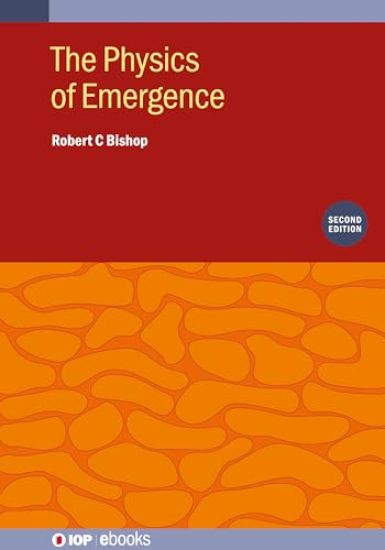
The Physics of Emergence

The Physics of Emergence

Robert C. Bishop

Morgan Claypool Publishers
2019
sidottu
A standard view of elementary particles and forces is that they determine everything else in the rest of physics, the whole of chemistry, biology, geology, physiology and perhaps even human behavior.This reductive view of physics is popular among some physicists. Yet, there are other physicists who argue this is an oversimplified and that the relationship of elementary particle physics to these other domains is one of emergence. Several objections have been raised from physics against proposals for emergence (e.g., that genuinely emergent phenomena would violate the standard model of elementary particle physics, or that genuine emergence would disrupt the lawlike order physics has revealed). Many of these objections rightly call into question typical conceptions of emergence found in the philosophy literature.This book explores whether physics points to a reductive or an emergent structure of the world and proposes a physics-motivated conception of emergence that leaves behind many of the problematic intuitions shaping the philosophical conceptions. Examining several detailed case studies reveal that the structure of physics and the practice of physics research are both more interesting than is captured in this reduction/emergence debate. The results point to stability conditions playing a crucial though underappreciated role in the physics of emergence. This contextual emergence has thought-provoking consequences for physics and beyond, and will be of interest to physics students, researchers, as well as those interested in physics.
The Physics of Emergence

The Physics of Emergence

Robert C. Bishop

Morgan Claypool Publishers
2019
nidottu
A standard view of elementary particles and forces is that they determine everything else in the rest of physics, the whole of chemistry, biology, geology, physiology and perhaps even human behavior.This reductive view of physics is popular among some physicists. Yet, there are other physicists who argue this is an oversimplified and that the relationship of elementary particle physics to these other domains is one of emergence. Several objections have been raised from physics against proposals for emergence (e.g., that genuinely emergent phenomena would violate the standard model of elementary particle physics, or that genuine emergence would disrupt the lawlike order physics has revealed). Many of these objections rightly call into question typical conceptions of emergence found in the philosophy literature.This book explores whether physics points to a reductive or an emergent structure of the world and proposes a physics-motivated conception of emergence that leaves behind many of the problematic intuitions shaping the philosophical conceptions. Examining several detailed case studies reveal that the structure of physics and the practice of physics research are both more interesting than is captured in this reduction/emergence debate. The results point to stability conditions playing a crucial though underappreciated role in the physics of emergence. This contextual emergence has thought-provoking consequences for physics and beyond, and will be of interest to physics students, researchers, as well as those interested in physics.
Understanding Scientific Theories of Origins – Cosmology, Geology, and Biology in Christian Perspective

Understanding Scientific Theories of Origins – Cosmology, Geology, and Biology in Christian Perspective

Robert C. Bishop; Larry L. Funck; Raymond J. Lewis; Stephen O. Moshier; John H. Walton

IVP Academic
2018
sidottu
The question of origins remains a stumbling block for many. But just as the Psalmist gained insight into God's character through the observation of nature, modern scientific study can deepen and enrich our vision of the Creator and our place in his creation. In this often contentious field Bishop, Funck, Lewis, Moshier, and Walton serve as our able guides. Based on over two decades of teaching origins together in the classroom, the authors present a textbook exploring mainstream scientific theories of origins in astronomy, cosmology, chemistry, geology, biology, physical anthropology, and genetics. While many authors engage origins from a Christian perspective, this is the first work offering a full-fledged discussion of the scientific narrative of origins from the Big Bang through humankind, from biblical and theological perspectives accessible to a lay audience. Topics include Principles of biblical interpretationClose readings of relevant Genesis textsA comprehensive Trinitarian doctrine of creationCosmic originsThe geologic history of EarthThe origin of life on EarthThe origin of species and diversity of lifeHuman originsNew creation and creation careScience education Rather than the familiar scenario where science and faith compete, this book seeks to diffuse tensions by taking the inspiration and authority of the Bible seriously while respecting and honoring God's revelation through creation. Understanding Scientific Theories of Origins gives the reader a detailed picture of the sciences of origins along with how they fit into the story of God's creative and redemptive action. BioLogos Books on Science and Christianity invite us to see the harmony between the sciences and biblical faith on issues including cosmology, biology, paleontology, evolution, human origins, the environment, and more.
The Philosophy of the Social Sciences

The Philosophy of the Social Sciences

Robert C. Bishop

Continuum International Publishing Group Ltd.
2007
nidottu
This is the definitive companion to the study of the philosophy of the social sciences. It provides the student with an accessible, comprehensive and philosophically rigorous introduction to all the major philosophical concepts, issues and debates raised by the social sciences. Ideal for use in undergraduate courses, the structure and content of this textbook - the most thorough, clearly argued and up-to-date available - closely reflect the way the philosophy of the social sciences is studied and taught. The text examines key conceptual and methodological questions in the social sciences and illustrates how these shape the practice of research, the interpretation of findings and theory formulation in such disciplines as economics, political science and psychology. The book not only offers lucid and incisive coverage of the philosophy of the social sciences, but also extends the major debates and considers the latest directions in this growing area of philosophical interest. Robert C. Bishop's cogent and rigorous analysis is supplemented by useful pedagogical features, including key examples from philosophical writing; summaries of core debates; sample questions and exercises; and guides for further reading.