Kirjojen hintavertailu. Mukana 12 390 323 kirjaa ja 12 kauppaa.

Kirjailija

Robert C. Fuller

Kirjat ja teokset yhdessä paikassa: 10 kirjaa, julkaisuja vuosilta 1996-2026, suosituimpien joukossa Spiritual But Not Religious. Vertaile teosten hintoja ja tarkista saatavuus suomalaisista kirjakaupoista.

10 kirjaa

Kirjojen julkaisuhaarukka 1996-2026.

Spiritual But Not Religious

Spiritual But Not Religious

Robert C. Fuller; William B. Parsons

TAYLOR FRANCIS LTD
2026
sidottu
Spiritual But Not Religious: The Basics is an accessible guide to the defining attributes of individuals who define themselves as SBNR, who comprise at least 25% of the American population. Topics covered include: What does it mean to consider oneself “religious” or “spiritual”? What historical or cultural forces have prompted people to distinguish between them and identify as “spiritual” but not “religious”? How did today’s expressions of SBNR emerge? What are SBNR beliefs/practices? What are the criticisms of SBNR posed both by those who are nonreligious and those who are more conventionally religious? What is the future of SBNR in economically developed nations? The book introduces the broad spectrum of beliefs and practices associated with individuals who identify as being spiritual but not religious. Featuring portraits of real people’s experiences of being SBNR, the book explains the terminology, historical background, contemporary expressions, and probable future of this enduring strain of American religiosity. This is the “go to” resource for anyone interested in understanding more about the beliefs of those who are spiritual but not religious.
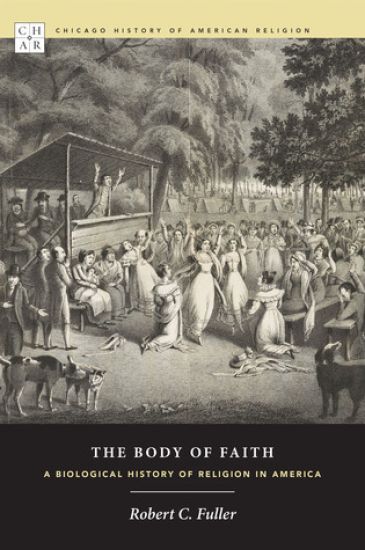
The Body of Faith

The Body of Faith

Robert C. Fuller

University of Chicago Press
2013
sidottu
The postmodern view that human experience is constructed by language and culture has informed historical narratives for decades. Yet newly emerging information about the biological body now makes it possible to supplement traditional scholarly models with insights about the bodily sources of human thought and experience. "The Body of Faith" is the first account of American religious history to highlight the biological body. Robert C. Fuller brings a crucial new perspective to the study of American religion, showing that knowledge about the biological body deeply enriches how we explain dramatic episodes in American religious life. Fuller shows that the body's genetically evolved systems - pain responses, sexual passion, and emotions like shame and fear - have persistently shaped the ways that Americans forge relationships with nature, society, and God. The first new work to appear in the "Chicago History of American Religion" series in decades, "The Body of Faith" offers a truly interdisciplinary framework for explaining the richness, diversity, and endless creativity of American religious life.
The History of New Thought

The History of New Thought

John S. Haller; Robert C. Fuller

Swedenborg Foundation
2012
sidottu
Anything is yours, if you only want it hard enough. Just think of it. ANYTHING. Try it. Try it in earnest and you will succeed. It is the operation of a mighty Law. Does that sound like something from the latest spin-off of The Secret? In fact, those words were written in 1900 by William Walter Atkinson, the man who authored the first book on the "Law of Attraction." Atkinson was only one of the many and varied personalities that make up the movement known as New Thought. Composed of healers, priests, psychologists, and ordinary people from all levels of society, the proponents of New Thought have one thing in common: a belief in the power of the mind. In The History of New Thought, Haller examines the very beginnings of the movement, its early influences (including Swedish seer Emanuel Swedenborg), and how its initial emphasis on healing disease morphed into a vision of the mind's ability to bring us whatever we desire. While most histories of New Thought tend to focus on churches and other formal organizations, Haller reveals that New Thought has had a much broader impact on American culture. Bestselling authors from the late nineteenth century and onward sold books in the millions of copies that were eagerly read and quoted by powerful politicians and wealthy industrialists. The idea that thoughts could become reality is so embedded in American culture that we tell each other to "be positive" without ever questioning why. New Thought has become our thought. Anyone interested in psychology, popular culture, or history will be fascinated by this exploration of a little-known facet of modern culture.
Spirituality in the Flesh

Spirituality in the Flesh

Robert C. Fuller

Oxford University Press Inc
2008
sidottu
It is now generally accepted that the nature of human thought has much to do with the structure and function of the human body. In Spirituality in the Flesh, Robert C. Fuller investigates how our sensory organs, emotional programs, sexual sensibilities, and neural structures shape religious phenomena. Why is it that some religious traditions assign spiritual currency to pain? How do neurochemically-driven emotions such as fear shape our religious actions? What is the relationship between chemically altered states of consciousness and religious innovation? The body has recently become a subject of investigation among scholars of religion. Many such studies focus on the concept of the body as a cultural construct. Whereas these treatments helpfully demonstrate how cultures construct ideas about the body, Fuller asks how the body itself influences religious concepts. Seeking to establish a middle ground between purely materialistic or humanistic arguments, he skillfully pairs scientific findings with religious truths. Both perspectives could learn from the other: Fuller takes scientific interpreters to task for failing to understand the inherently cultural aspects of embodied experience even as he chides most religion scholars for ignoring new knowledge about the biological substrates of human behavior. Comfortable with the language of scientific analysis and sympathetic to the inherently subjective aspects of religious events, Fuller introduces the biological study of religion by joining our unprecedented understanding of bodily states with an experts knowledge of religious phenomena. Culling insights from scientific observations, historical allusions, and literary references, Spirituality in the Flesh provides fresh understandings that promise to enrich our appreciation of the embodied religious experience.
Spiritual, but not Religious

Spiritual, but not Religious

Robert C. Fuller

Oxford University Press Inc
2001
sidottu
Nearly 40% of all Americans have no connection with organized religion. Yet many of these people, even though they might never step inside a house of worship, live profoundly spiritual lives. But what is the nature and value of unchurched spirituality in America? Is it a recent phenomenon, a New Age fad that will soon fade, or a long-standing and essential aspect of the American experience? In Spiritual But Not Religious, Robert Fuller offers fascinating answers to these questions. He shows that alternative spiritual practices have a long and rich history in America, dating back to the colonial period, when church membership rarely exceeded 17% and interest in astrology, numerology, magic, and witchcraft ran high. Fuller traces such unchurched traditions into the mid-nineteenth century, when Americans responded enthusiastically to new philosophies such as Swedenborgianism, Transcendentalism, and mesmerism, right up to the current interest in meditation, channeling, divination, and a host of other unconventional spiritual practices. Throughout, Fuller argues that far from the flighty and narcissistic dilettantes they are often made out to be, unchurched spiritual seekers embrace a mature and dynamic set of basic beliefs. They focus on inner sources of spirituality and on this world rather than the afterlife; they believe in the accessibility of God and in the mind's untapped powers; they see a fundamental unity between science and religion and an equality between genders and races; and they are more willing to test their beliefs and change them when they prove untenable. Timely, sweeping in its scope, and informed by a clear historical understanding, Spiritual But Not Religious offers fresh perspective on the growing numbers of Americans who find their spirituality outside the church.
Naming the Antichrist

Naming the Antichrist

Robert C. Fuller

Oxford University Press Inc
1997
nidottu
The Antichrist, though mentioned a mere four times in the Bible, and then only obscurely, has exercised a tight hold on popular imagination throughout history. This has been particularly true in the U.S., says author Robert C. Fuller, where Americans have tended to view our nation as uniquely blessed by God--a belief that leaves us especially prone to demonizing our enemies. In Naming the Antichrist, Fuller takes us on a fascinating journey through the dark side of the American religious psyche, from the earliest American colonists right up to contemporary fundamentalists such as Pat Robertson and Hal Lindsey. Fuller begins by offering a brief history of the idea of the Antichrist and its origins in the apocalyptic thought in the Judeo-Christian tradition, and traces the eventual 71Gws how the colonists saw Antichrist personified in native Americans and French Catholics, in Anne Hutchinson, Roger Williams, and the witches of Salem, in the Church of England and the King. He looks at the Second Great Awakening in the early nineteenth century, showing how such prominent Americans as Yale president Timothy Dwight and the Reverend Jedidiah Morse (father of Samuel Morse) saw the work of the Antichrist in phenomena ranging from the French Revolution to Masonry. In the twentieth century, he finds a startling array of hate-mongers--from Gerald Winrod (who vilified Roosevelt as a pawn of the Antichrist) to the Ku Klux Klan--who drew on apocalyptic imagery in their attacks on Jews, Catholics, blacks, socialists, and others. Finally, Fuller considers contemporary fundamentalist writers such as Hal Lindsey (author of The Late Great Planet Earth, with some 19 million copies sold), Mary Stewart Relfe (whose candidates for the Antichrist have included such figures as Henry Kissinger, Pope John Paul II, and Anwar Sadat), and a host of others who have found Antichrist in the sinister guise of the European Economic Community, the National Council of Churches, feminism, New Age religions, and even supermarket barcodes and fibre optics (the latter functioning as "the eye of the Antichrist"). Throughout, Fuller reveals in vivid detail how our unique American obsession with the Antichrist reflects the struggle to understand ourselves--and our enemies--within the mythic context of the battle of absolute good versus absolute evil. From the Scofield Reference Bible (no other book had greater impact on the American Antichrist tradition) to the Scopes Monkey Trial, Fuller provides an informative and often startling look at a thread that weaves persistently throughout American religious and cultural life.
Religion and Wine

Religion and Wine

Robert C. Fuller

University of Tennessee Press
1996
nidottu
Wine, more than any other food or beverage, is intimately associated with religious experience and celebratory rituals. Nowhere is this seen more clearly than in American cultural history. From the Pilgrims at Plymouth Rock to the Franciscans and Jesuits who pioneered California's Mission Trail, many American religious groups have required wine to perform their sacraments and enliven their evening meals. This book tells the story of how viniculture in America was started and sustained by a broad spectrum of religious denominations. In the process, it offers new insights into the special relationship between wine production and consumption and the spiritual dimension of human experience.