Kirjojen hintavertailu. Mukana 12 657 676 kirjaa ja 12 kauppaa.

Kirjailija

Robert C. Solomon

Kirjat ja teokset yhdessä paikassa: 59 kirjaa, julkaisuja vuosilta 1981-2024, suosituimpien joukossa What is Justice?. Vertaile teosten hintoja ja tarkista saatavuus suomalaisista kirjakaupoista.

Mukana myös kirjoitusasut: Robert C Solomon

59 kirjaa

Kirjojen julkaisuhaarukka 1981-2024.

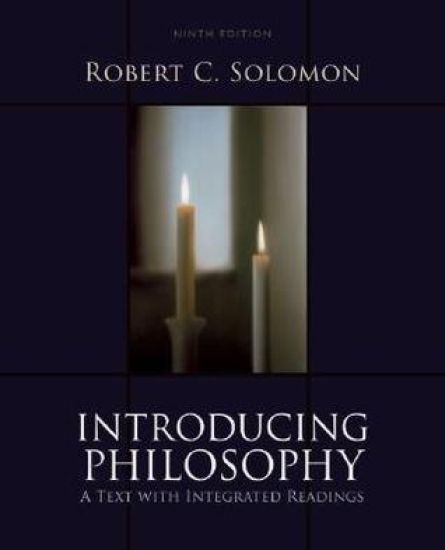
Introducing Philosophy

Introducing Philosophy

Robert C. Solomon

Oxford University Press Inc
2007
nidottu
Introducing Philosophy: A Text with integrated Readings , ninth edition, is an engaging introduction to the basic philosophical problems and their potential alternative solutions. It is a topically organized hybrid that includes Soloman's own discussion along with excerpts from prominent thinkers of the last 2500 years on topics such as the nature of reality, the existence and nature of God, the possibility of human knowledge, the mystery of the self, the nature of truth, and the essence of freedom.
Not Passion's Slave

Not Passion's Slave

Robert C. Solomon

Oxford University Press Inc
2007
nidottu
The idea that we are in some significant sense responsible for our emotions is an idea that Robert Solomon has developed for almost three decades. Here, in a single volume, he traces the development of this theory of emotions and elaborate it in detail. Two themes run through his work: the first presents a "cognitive" theory of emotions in which emotions are construed primarily as evaluative judgments. The second proposes an "existentialist" perspective in which he defends the idea that, as we are responsible for our emotions. Indeed, sometimes it even makes sense to say that we "choose" them. While the first claim has gained increasing currency in the literature, his claim about responsibility for emotions has continued to meet with considerable resistance and misinterpretation. The new emphasis on evolutionary biology and neurology has (mistakenly) reinforced the popular prejudice that emotions "happen" to us and are entirely beyond our control. This volume is also a kind of intellectual memoir of Solomon¹s own development as a thinker. The essays written in the 1980s elaborate the themes of the "intentionality" of emotion and the claim that emotions are "judgments"; in this period, he is also increasingly preoccupied with how emotions vary and are identified in a variety of cultures. In the 1990's, his interests evolve to consider the social and political role of emotions and theories about emotion. The final section presents his current philosophical position on the seeming "passivity" of the passions. Despite his own critical assessment of his earlier work, he continues to argue that, in the final analysis, we are responsible for our emotions and existential quality of our lives.
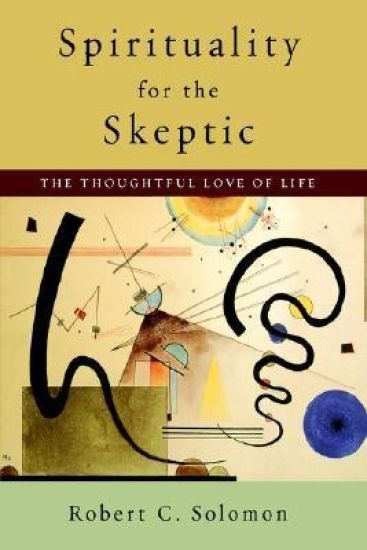
Spirituality for the Skeptic

Spirituality for the Skeptic

Robert C. Solomon

Oxford University Press Inc
2006
nidottu
Is it possible to be spiritual and yet not believe in the supernatural? Can a person be spiritual without belonging to a religious group or organization? In Spirituality for the Skeptic, philosopher Robert Solomon philosopher Robert Solomon explores what it means to be spiritual in today's pluralistic world. Based on Solomon's own struggles to reconcile philosophy with religion, this book offers a model of a vibrant, fulfilling spirituality that embraces the complexities of human existence and acknowledges the joys and tragedies of life. Soloman has forged an enlightened new path that synthesizes spirituality with emotions, intellect, science, and common sense. His new paradigm, "naturalized" spirituality, establishes as its cornerstone the "thoughtful love of life"--a passionate concern for the here-and-now, and not the by-and-by. Being spiritual doesn't mean being holed up as a recluse, spending hours in meditation and contemplation, Solomon argues. It demands involvement and emotional engagement with others in the struggle to find meaning in our lives. As such, this modern-day spirituality encompasses a passionate enthusiasm for the world, the transformation of self, cosmic trust and rationality, coming to terms with fate, and viewing life as a gift, all of which are explored in depth throughout this book. Spirituality for the Skeptic answers the need for a non-institutional, non-dogmatic spirituality that leads to personal fulfillment and satisfaction. By examining the ideas of great thinkers from Socrates and Nietzsche to Buddha to Kafka, Solomon arrives at a practical vision of spirituality that should appeal to many seekers looking to make sense of the human condition.
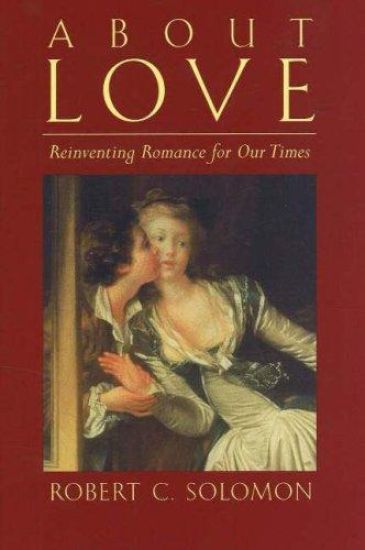
About Love

About Love

Robert C. Solomon

Hackett Publishing Co, Inc
2006
sidottu
Presents a study of the phenomenon of romantic love. Offering observations from a range of sources - literary, historical, and personal - this work explores the crucial ingredients of time and sex in contemporary relationships and discusses whether love 'at first sight' is possible, and whether love that lasts a lifetime is probable.
About Love

About Love

Robert C. Solomon

Hackett Pub Co Inc
2006
pokkari
This title is a reprint of the 1994 Rowman and Littlefield edition. "About Love" is a refreshingly reasonable and engagingly readable study of the phenomenon of romantic love. Offering insightful observations from a broad range of sources - literary, historical, and personal - Robert Solomon explores the crucial ingredients of time and sex in contemporary relationships and discusses whether love 'at first sight' is possible, and whether love that lasts a lifetime is probable.
Living with Nietzsche

Living with Nietzsche

Robert C. Solomon

Oxford University Press Inc
2006
nidottu
Friedrich Nietzsche is one of the most popular and controversial philosophers of the last 150 years. Narcissistic, idiosyncratic, hyperbolic, irreverent--never has a philosopher been appropriated, deconstructed, and scrutinized by such a disparate array of groups, movements, and schools of thought. Adored by many for his passionate ideas and iconoclastic style, he is also vilified for his lack of rigor, apparent cruelty, and disdain for moral decency. In Living with Nietzsche, Solomon suggests that we read Nietzsche from a very different point of view, as a provocative writer who means to transform the way we view our lives. This means taking Nietzsche personally. Rather than focus on the "true" Nietzsche or trying to determine "what Nietzsche really meant" by his seemingly random and often contradictory pronouncements about "the Big Questions" of philosophy, Solomon reminds us that Nietzsche is not a philosopher of abstract ideas but rather of the dazzling personal insight, the provocative challenge, the incisive personal probe. He does not try to reveal the eternal verities but he does powerfully affect his readers, goading them to see themselves in new and different ways. It is Nietzsche's compelling invitation to self-scrutiny that fascinates us, engages us, and guides us to a "rich inner life." Ultimately, Solomon argues, Nietzsche is an example as well as a promulgator of "passionate inwardness," a life distinguished by its rich passions, exquisite taste, and a sense of personal elegance and excellence.
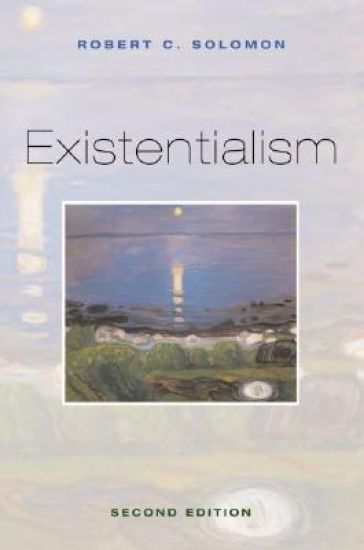
Existentialism

Existentialism

Robert C. Solomon

Oxford University Press Inc
2004
nidottu
Existentialism, Second Edition concentrates on the "big four" existentialists - Kierkegaard, Nietzsche, Heidegger, and Sartre - while providing a strong sense of the breadth and variety of existentialist thought. In this edition, Solomon provides new translations of Kierkegaard, even more extensive Heidegger and Sartre selections, and a bit more Nietzsche. He retains a sense of the rich variety of existentialist thought and writing by adding such world figures as Miguel de Unamuno, Rainer Marie Rilke, Luis Borges, Gabriel Marquez, Keiji Nishitani, Milan Kundera, and a scene from one particularly existentialist film screenplay, Casablanca. In addition, there are new selections from Hazel Barnes, Colin Wilson, and Fyodor Dostoevsky's Brothers Karamazov. The resulting volume is an excellent introduction to the richness of existentialist thought and an outstanding sourcebook for the classic existentialist thought and an outstanding sourcebook for the classic existentialist texts.
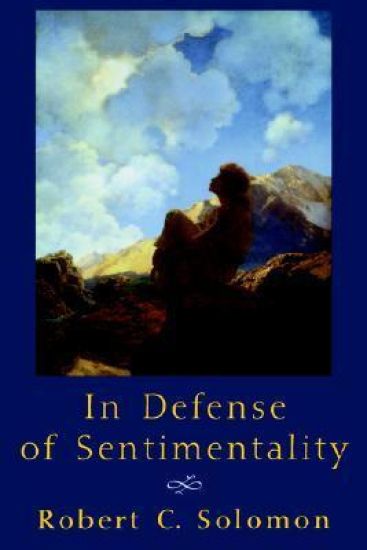
In Defense of Sentimentality

In Defense of Sentimentality

Robert C. Solomon

Oxford University Press Inc
2004
sidottu
Philosophy has as much to do with feelings as it does with thoughts and thinking. Philosophy, accordingly, requires not only emotional sensitivity but an understanding of the emotions, not as curious but marginal psychological phenomena but as the very substance of life. In this, the second book in a series devoted to his work on the emotions, Robert Solomon presents a defense of the emotions and of sentimentality against the background of what he perceives as a long history of abuse in philosophy and social thought and art and literary criticism. The title piece reopens a classic debate about the role of sentimentality in art and literature. In subsequent chapters, Solomon discusses not only such "moral sentiments" as sympathy and compassion but also grief, gratitude, love, horror, and even vengeance. He also defends, with appropriate caution, the "seven deadly sins". The emotions--at least, some emotions--are essential to a well-lived life. They are or can be virtues, features of the human condition without which civilized life would be unimaginable.
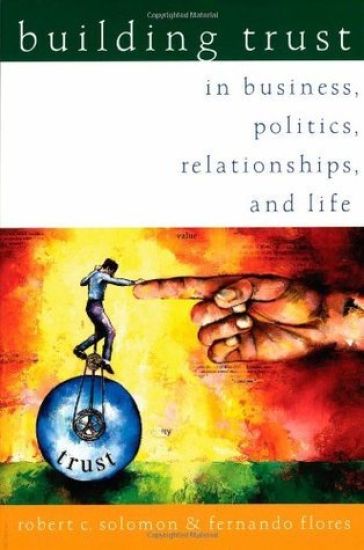
Building Trust

Building Trust

Robert C. Solomon; Fernando Flores

Oxford University Press Inc
2003
nidottu
In business, politics, marriage, indeed in any significant relationship, trust is the essential precondition upon which all real success depends. But what, precisely, is trust? How can it be achieved and sustained? And, most importantly, how can it be regained once it has been broken? In Building Trust, Robert C. Solomon and Fernando Flores offer compelling answers to these questions. They argue that trust is not something that simply exists from the beginning, something we can assume or take for granted; that it is not a static quality or "social glue." Instead, they assert that trust is an emotional skill, an active and dynamic part of our lives that we build and sustain with our promises and commitments, our emotions and integrity. In looking closely at the effects of mistrust, such as insidious office politics that can sabotage a company's efficiency, Solomon and Flores demonstrate how to move from naïve trust that is easily shattered to an authentic trust that is sophisticated, reflective, and possible to renew. As the global economy makes us more and more reliant on "strangers," and as our political and personal interactions become more complex, Building Trust offers invaluable insight into a vital aspect of human relationships.
Spirituality for the Skeptic

Spirituality for the Skeptic

Robert C. Solomon

Oxford University Press Inc
2002
sidottu
Is it possible to be spiritual and yet not believe in the supernatural? Can a person be spiritual without belonging to a religious group or organization? In this book, philosopher Robert Solomon offers challenging answers to these questions as he explodes commonly held myths about what is means to be spiritual in today's pluralistic world. Based on Solomon's own struggles to reconcile philosophy with religion, Spirituality for the Skeptic offers a model of a vibrant, fulfilling spirituality that embraces the complexities of human existence and acknowledges the joys and tragedies of life. Solomon has forged an enlightened new path that synthesizes spirituality with emotions, intellect, science, and common sense. His new paradigm, "naturalized" spirituality, establishes as its cornerstone the "thoughtful love of life"--a passionate concern for the here-and-now, and not the by-and-by. Being spiritual doesn't mean being holed up as a recluse, spending hours in meditation and contemplation, Solomon argues. It demands involvement and emotional engagement with others in the struggle to find meaning in our lives. As such, this modern-day spirituality encompasses a passionate enthusiasm for the world, the transformation of self, cosmic trust and rationality, coming to terms with fate, and viewing life as a gift, all of which are explored in depth throughout this book. Spirituality for the Skeptic answers the need for a non-institutional, non-dogmatic spirituality that leads to personal fulfillment and satisfaction. By examining the ideas of great thinkers from Socrates and Nietzsche to Buddha to Kafka, Solomon arrives at a practical vision of spirituality that should appeal to many seekers looking to make sense of the human condition.
Phenomenology and Existentialism

Phenomenology and Existentialism

Robert C. Solomon

Rowman Littlefield Publishers
2001
nidottu
This anthology of classic essays focuses on the philosophy of Edmund Husserl and the philosophical movement to which his writings gave impetus: phenomenology. Sixty contributions from a wide variety of scholars provide an introduction to phenomenology and existentialist phenomenology. Sections include OGeneral Introduction: What Is Phenomenology,' OThe Phenomenology of Edmund Husserl,' OExistential Phenomenology,' and OSelf and Others.O Among the contributors are Frege, Chisholm, Merleau-Ponty, Schmitt, Tillman, Gendlin, Sellars, Linsky, Dreyfus, Ryle, Solomon, Schlick, Ricoeur, Marcel, Heidegger, Sartre, Brentano, Olafson, Camus, and de Beauvoir.
From Rationalism to Existentialism

From Rationalism to Existentialism

Robert C. Solomon

Rowman Littlefield Publishers
2001
nidottu
In this enduring text, renowned philosopher Robert C. Solomon provides students with a detailed introduction to modern existentialism. He reveals how this philosophy not only connects with, but derives from, the thought of traditional philosophers through the works of Nietzsche, Kierkegaard, Husserl, Heidegger, Sartre, and Merleau-Ponty. Thus, existentialism emerges from the school of rational thought as a logical evolution of respected philosophy.
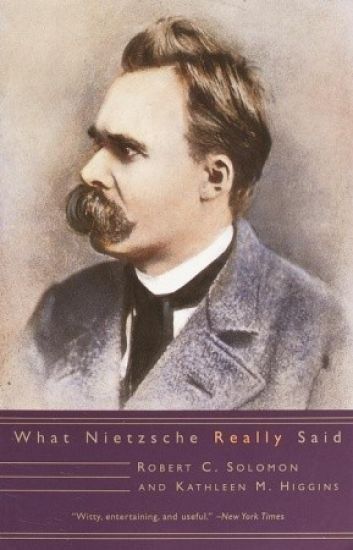
What Nietzsche Really Said

What Nietzsche Really Said

Robert C. Solomon; Kathleen M. Higgins

Schocken Books
2001
pokkari
What Nietzsche Really Said gives us a lucid overview — both informative and entertaining — of perhaps the most widely read and least understood philosopher in history.Friedrich Nietzsche's aggressive independence, flamboyance, sarcasm, and celebration of strength have struck responsive chords in contemporary culture. More people than ever are reading and discussing his writings. But Nietzsche's ideas are often overshadowed by the myths and rumors that surround his sex life, his politics, and his sanity. In this lively and comprehensive analysis, Nietzsche scholars Robert C. Solomon and Kathleen M. Higgins get to the heart of Nietzsche's philosophy, from his ideas on "the will to power" to his attack on religion and morality and his infamous Übermensch (superman).What Nietzsche Really Said offers both guidelines and insights for reading and understanding this controversial thinker. Written with sophistication and wit, this book provides an excellent summary of the life and work of one of history's most provocative philosophers.