Kirjojen hintavertailu. Mukana 12 390 323 kirjaa ja 12 kauppaa.

Kirjailija

Robert C. Stebbins

Kirjat ja teokset yhdessä paikassa: 6 kirjaa, julkaisuja vuosilta 1997-2022, suosituimpien joukossa Birds of Yosemite National Park: Yosemite Nature Notes V33, No. 8, August, 1954. Vertaile teosten hintoja ja tarkista saatavuus suomalaisista kirjakaupoista.

6 kirjaa

Kirjojen julkaisuhaarukka 1997-2022.

Desert Journal

Desert Journal

Raymond B. Cowles; Robert C. Stebbins

University of California Press
2022
pokkari
Desert Journal: A Naturalist Reflects on Arid California is both a tribute to the life and work of Raymond B. Cowles and a call to reflect on humanity's relationship with nature. Born in 1896 in South Africa, Cowles developed a lifelong fascination with wildlife during his boyhood, which shaped his pioneering work in reptilian thermoregulation—a field he helped establish. His research extended far beyond academia, influencing generations of students and laying the foundation for ecological awareness in California and beyond. Cowles was a visionary, deeply concerned about the impact of human population growth on biodiversity. Long before these ideas gained mainstream attention, he identified the intrinsic link between overpopulation and environmental degradation. Though his book on the subject was never published, the themes resonate throughout his writings, particularly in Chapter 23 of this volume. Cowles’ holistic perspective embraced the biosphere as an interconnected entity, and his ethical framework extended to all life forms. He was not only a scientist but also a humanist, reveling in the sensory experiences of nature and mourning their loss in an increasingly mechanized world. His poetic reflections, like a letter written shortly before his death, reveal his enduring love for the natural world and his plea for others to preserve its beauty. His life was one of dedication and insight, as exemplified in his final public discussions about overpopulation and resource scarcity. Even in his later years, he demonstrated vitality, intellectual sharpness, and a profound ability to connect with people. His legacy, captured in this book and in the memories of those he inspired, underscores the urgency of harmonizing human aspirations with the needs of the planet. This title is part of UC Press's Voices Revived program, which commemorates University of California Press’s mission to seek out and cultivate the brightest minds and give them voice, reach, and impact. Drawing on a backlist dating to 1893, Voices Revived makes high-quality, peer-reviewed scholarship accessible once again using print-on-demand technology. This title was originally published in 1977.

Desert Journal

Desert Journal

Raymond B. Cowles; Robert C. Stebbins

University of California Press
2022
sidottu
Desert Journal: A Naturalist Reflects on Arid California is both a tribute to the life and work of Raymond B. Cowles and a call to reflect on humanity's relationship with nature. Born in 1896 in South Africa, Cowles developed a lifelong fascination with wildlife during his boyhood, which shaped his pioneering work in reptilian thermoregulation—a field he helped establish. His research extended far beyond academia, influencing generations of students and laying the foundation for ecological awareness in California and beyond. Cowles was a visionary, deeply concerned about the impact of human population growth on biodiversity. Long before these ideas gained mainstream attention, he identified the intrinsic link between overpopulation and environmental degradation. Though his book on the subject was never published, the themes resonate throughout his writings, particularly in Chapter 23 of this volume. Cowles’ holistic perspective embraced the biosphere as an interconnected entity, and his ethical framework extended to all life forms. He was not only a scientist but also a humanist, reveling in the sensory experiences of nature and mourning their loss in an increasingly mechanized world. His poetic reflections, like a letter written shortly before his death, reveal his enduring love for the natural world and his plea for others to preserve its beauty. His life was one of dedication and insight, as exemplified in his final public discussions about overpopulation and resource scarcity. Even in his later years, he demonstrated vitality, intellectual sharpness, and a profound ability to connect with people. His legacy, captured in this book and in the memories of those he inspired, underscores the urgency of harmonizing human aspirations with the needs of the planet. This title is part of UC Press's Voices Revived program, which commemorates University of California Press’s mission to seek out and cultivate the brightest minds and give them voice, reach, and impact. Drawing on a backlist dating to 1893, Voices Revived makes high-quality, peer-reviewed scholarship accessible once again using print-on-demand technology. This title was originally published in 1977.
Peterson Field Guide to Western Reptiles & Amphibians, Fourth Edition

Peterson Field Guide to Western Reptiles & Amphibians, Fourth Edition

Robert C. Stebbins; Samuel M. McGinnis

Mariner Books
2018
nidottu
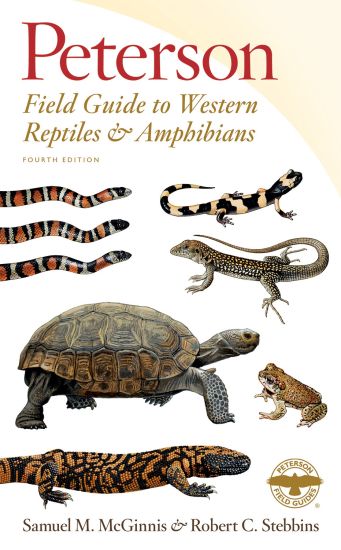
PETERSON: The best-selling field guides of all time This is the most comprehensive and trusted guide to reptiles and amphibians of western North America. The new edition retains the realistic and accurate paintings by Robert Stebbins and includes 160 color photographs for additional detail. All range maps are up to date and placed within their species accounts. Family, genus, species, and subspecies names have been updated to the currently accepted usage. Illustrations of eggs and larvae, which can aid in identifying salamanders and frogs, are a particularly helpful feature. The area covered includes Alaska, Arizona, California, Colorado, Idaho, Montana, Nevada, New Mexico, Oregon, Utah, Washington, Wyoming, Alberta, British Columbia, Saskatchewan, Northwest Territories, the western corner of Nunavut, Yukon, and Baja California. Sponsored by the National Audubon Society, the National Wildlife Federation, and the Roger Tory Peterson Institute
Field Guide to Amphibians and Reptiles of California

Field Guide to Amphibians and Reptiles of California

Robert C. Stebbins; Samuel M. McGinnis

University of California Press
2012
pokkari
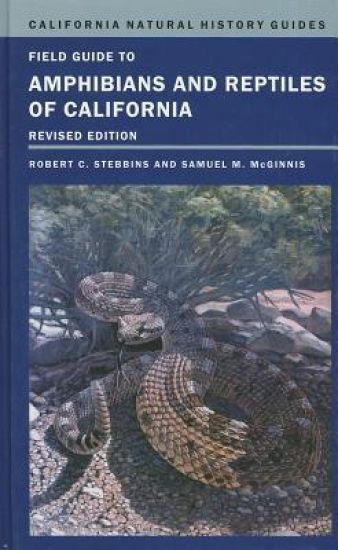
This user-friendly guide is the only complete resource that identifies and describes all the amphibians and reptiles - salamanders, frogs and toads, lizards, snakes, and tortoises and turtles - that live in California. The species are described in richly detailed accounts that include range maps, lifelike color paintings by Robert C. Stebbins, clear drawings of various life stages including eggs, notes on natural history, and conservation status. Easy-to-use keys for every order help identify species, and informative chapters cover more general topics including evolution, habitat loss, and photography. Throughout, anecdotes and observations reveal new insights into the lives of California's abundant but often hidden amphibians and reptiles.
A Natural History of Amphibians

A Natural History of Amphibians

Robert C. Stebbins; Nathan W. Cohen

Princeton University Press
1997
pokkari
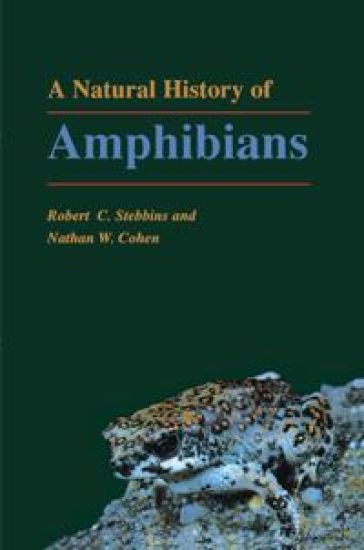
This is a book for all readers who want to learn about amphibians, the animal group that includes frogs, toads, salamanders, and caecilians. It draws on many years of classroom teaching, laboratory experience, and field observation by the authors. Robert Stebbins and Nathan Cohen lead readers on a fascinating odyssey as they explore some of nature's most interesting creatures, interspersing their own observations throughout the book. A Natural History of Amphibians can serve as a textbook for students and independent learners, as an overview of the field for professional scientists and land managers, and as an engaging introduction for general readers. The class Amphibia contains more than 4,500 known living species. New species are being discovered so rapidly that the number may grow to more than 5,000 during our lifetimes. However, their numbers are being rapidly decimated around the globe, largely due to the encroachment of humans on amphibian habitats and from growing human-caused environmental pollution, discussed at length in the final chapter. The authors focus our attention on the "natural history" of amphibians worldwide and emphasize their interactions with their environments over time: where they live; how they reproduce; how they have been affected by evolutionary processes; what factors will determine their destinies over time. Through the experienced eyes of the authors, who are skilled observers, we come to see and understand the place of amphibians in the natural world around us.