Kirjojen hintavertailu. Mukana 12 542 876 kirjaa ja 12 kauppaa.

Kirjailija

Robert D. Ballard

Kirjat ja teokset yhdessä paikassa: 7 kirjaa, julkaisuja vuosilta 1993-2025, suosituimpien joukossa Volcanoes in Human History. Vertaile teosten hintoja ja tarkista saatavuus suomalaisista kirjakaupoista.

7 kirjaa

Kirjojen julkaisuhaarukka 1993-2025.

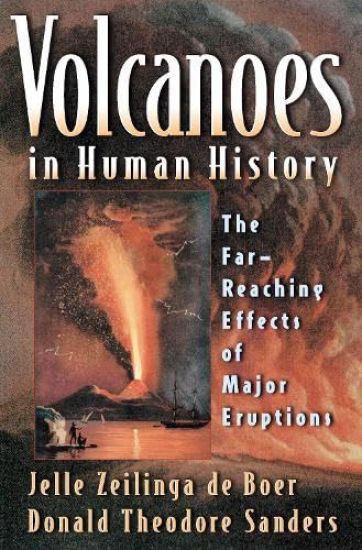
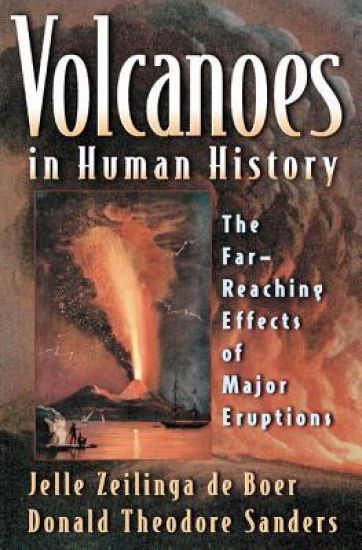
Volcanoes in Human History

Volcanoes in Human History

Jelle Zeilinga de Boer; Donald Theodore Sanders; Robert D. Ballard

PRINCETON UNIVERSITY PRESS
2025
pokkari
The classic account of how volcanism has shaped human culture and science, from the Bronze Age eruption that destroyed Minoan Crete to Mount St. HelensWhen the volcano Tambora erupted in Indonesia in 1815, as many as one hundred thousand people perished from the blast and ensuing famine. Gases and dust particles ejected into the atmosphere changed weather patterns around the world, resulting in the infamous “year without a summer” in North America, food riots in Europe, and a widespread cholera epidemic. And the gloomy weather inspired Mary Shelley to write the gothic novel Frankenstein. This panoramic book tells the story of nine such epic volcanic events, explaining the related geology and exploring the myriad ways our planet’s volcanism has affected human history.
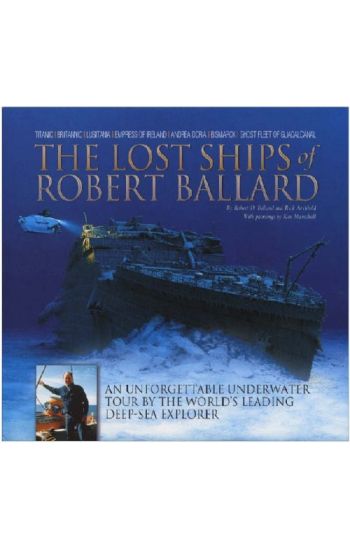
The Lost Ships of Robert Ballard

The Lost Ships of Robert Ballard

Robert D. Ballard; Rick Archbold

Sutton Publishing Ltd
2006
sidottu
In the first decades of the twentieth century, luxurious liners and warships ruled the waves. Many of these fabled ships - Titanic, Britannic, Bismarck and others - shared a common bond: their wrecks have been located or visited by the world-renowned deep-sea explorer, Robert D. Ballard. Together, the legendary ships lost during the Second World War and the glory days of the luxury liner comprise an extraordinary underwater museum, around which world-renowned deep-sea explorer, Robert Ballard gives us a guided tour. The book is illustrated throughout with specially commissioned paintings by Ken Marschall, the world's foremost painter of the Titanic, her contemporaries and other famous maritime wrecks. In crisp detail, Marschall depicts the great ships, both in their prime and on the ocean floor in eerie repose. Complementing Marschall's paintings is a vast collection of modern day underwater photography, archival images, illustrations and memorabilia that recall the ships' former glory. In May 2004, Ballard returned to the site of his most famous underwater discovery, the Titanic, to map the ship and analyse the causes and rate of its decay. This latest expedition, documented in a new epilogue, also underscores Ballard's ongoing commitment to the preservation of this unique underwater legacy.
Volcanoes in Human History

Volcanoes in Human History

Jelle Zeilinga de Boer; Donald Theodore Sanders; Robert D. Ballard

Princeton University Press
2004
pokkari
When the volcano Tambora erupted in Indonesia in 1815, as many as 100,000 people perished as a result of the blast and an ensuing famine caused by the destruction of rice fields on Sumbawa and neighboring islands. Gases and dust particles ejected into the atmosphere changed weather patterns around the world, resulting in the infamous "year without a summer" in North America, food riots in Europe, and a widespread cholera epidemic. And the gloomy weather inspired Mary Shelley to write the gothic novel Frankenstein. This book tells the story of nine such epic volcanic events, explaining the related geology for the general reader and exploring the myriad ways in which the earth's volcanism has affected human history. Zeilinga de Boer and Sanders describe in depth how volcanic activity has had long-lasting effects on societies, cultures, and the environment. After introducing the origins and mechanisms of volcanism, the authors draw on ancient as well as modern accounts--from folklore to poetry and from philosophy to literature. Beginning with the Bronze Age eruption that caused the demise of Minoan Crete, the book tells the human and geological stories of eruptions of such volcanoes as Vesuvius, Krakatau, Mount Pelee, and Tristan da Cunha. Along the way, it shows how volcanism shaped religion in Hawaii, permeated Icelandic mythology and literature, caused widespread population migrations, and spurred scientific discovery. From the prodigious eruption of Thera more than 3,600 years ago to the relative burp of Mount St. Helens in 1980, the results of volcanism attest to the enduring connections between geology and human destiny.
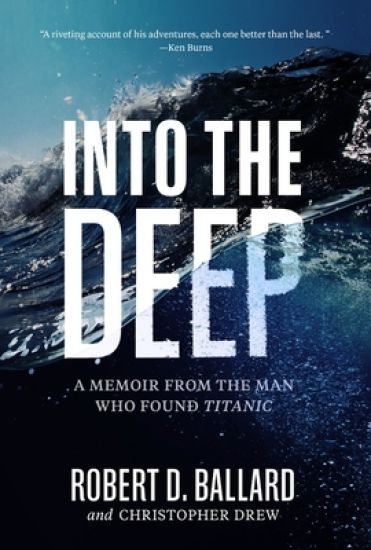
Into the Deep

Into the Deep

Robert D. Ballard

National Geographic Society
2021
sidottu
The legendary explorer of Titanic and Lusitania reveals the secret military missions behind his famous exploits and unveils a major new discovery on the occasion of the 35th anniversary of the Titanic find. Best known for finding the wreck of the Titanic, celebrated adventurer Robert Ballard has a lifetime of stories about exploring the ocean depths. From discovering new extremophile life-forms thriving at 750°F hydrothermal vents in 1977 to finding famous shipwrecks including the Bismarck and PT 109, Ballard has made history. Now the captain of E/V Nautilus, a state-of-the-art scientific exploration vessel rigged for research in oceanography, geology, biology, and archaeology, he leads young scientists as they map the ocean floor, collect artifacts from ancient shipwrecks, and relay live-time adventures from remote-controlled submersibles to reveal amazing sea life. Now, for the first time, Robert Ballard gets personal, telling the inside stories of his adventures and challenges as a midwestern kid with dyslexia who became an internationally renowned ocean explorer. Here is the definitive story of the danger and discovery, conflict and triumph that make up his remarkable life.
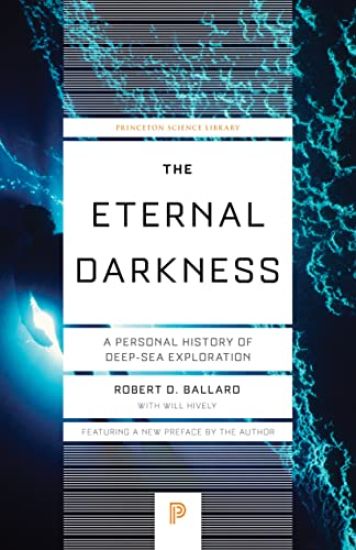
The Eternal Darkness

The Eternal Darkness

Robert D. Ballard; Will Hively

Princeton University Press
2017
pokkari
Until a few decades ago, the ocean depths were almost as mysterious and inaccessible as outer space. Oceans cover two-thirds of the earth's surface with an average depth of more than two miles--yet humans had never ventured more than a few hundred feet below the waves. One of the great scientific and archaeological feats of our time has been finally to cast light on the "eternal darkness" of the deep sea. This is the story of that achievement, told by the man who has done more than any other to make it possible: Robert Ballard. Ballard discovered the wreck of the Titanic. He led the teams that discovered hydrothermal vents and "black smokers"--cracks in the ocean floor where springs of superheated water support some of the strangest life-forms on the planet. He was a diver on the team that explored the mid-Atlantic ridge for the first time, confirming the theory of plate tectonics. Today, using a nuclear submarine from the U.S. Navy, he's exploring the ancient trade routes of the Mediterranean and the Black Sea for the remains of historic vessels and their cargo. In this book, he combines science, history, spectacular illustrations, and first-hand stories from his own expeditions in a uniquely personal account of how twentieth-century explorers have pushed back the frontiers of technology to take us into the midst of a world we could once only guess at. Ballard begins in 1930 with William Beebe and Otis Barton, pioneers of the ocean depths who made the world's first deep-sea dives in a cramped steel sphere. He introduces us to Auguste and Jacques Piccard, whose "Bathyscaph"descended in 1960 to the lowest point on the ocean floor. He reviews the celebrated advances made by Jacques Cousteau. He describes his own major discoveries--from sea-floor spreading to black smokers--as well as his technical breakthroughs, including the development of remote-operated underwater vehicles and the revolutionary search techniques that led to the discovery and exploration of the Titanic, the Nazi battleship Bismarck, ancient trading vessels, and other great ships. Readers will come away with a richer understanding of history, earth science, biology, and marine technology--and a new appreciation for the remarkable men and women who have explored some of the most remote and fascinating places on the planet.