Kirjojen hintavertailu. Mukana 12 246 639 kirjaa ja 12 kauppaa.

Kirjailija

Robert D. Putnam

Kirjat ja teokset yhdessä paikassa: 14 kirjaa, julkaisuja vuosilta 1981-2021, suosituimpien joukossa The Upswing. Vertaile teosten hintoja ja tarkista saatavuus suomalaisista kirjakaupoista.

Mukana myös kirjoitusasut: Robert D Putnam

14 kirjaa

Kirjojen julkaisuhaarukka 1981-2021.

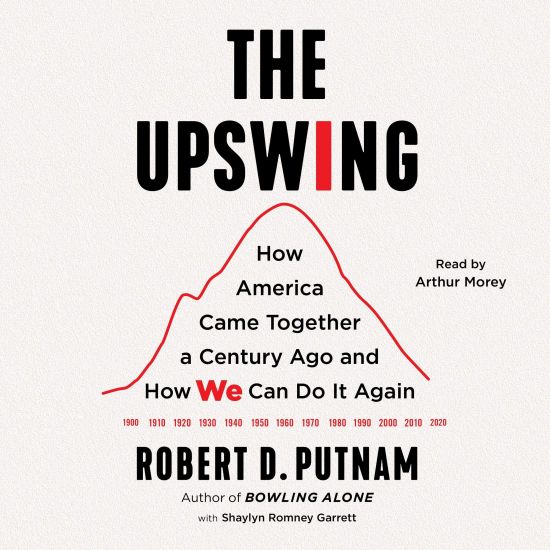
The Upswing

The Upswing

Robert D Putnam; Shaylyn Romney Garrett

Swift Press
2021
pokkari
'The most important book in social science for many years' Paul Collier, TLS Books of the Year The Upswing is Robert D. Putnam's brilliant analysis of economic, social, cultural and political trends from the Gilded Age to the present, showing how America went from an individualistic ‘I’ society to a more communitarian ‘We’ society and then back again, and how we can all learn from that experience. In the late nineteenth century, America was highly individualistic, starkly unequal, fiercely polarised and deeply fragmented, just as it is today. However, as the twentieth century dawned, America became - slowly, unevenly, but steadily - more egalitarian, more cooperative, more generous; a society 'on the upswing,' more focused on responsibilities to each other and less focused on narrow self-interest. Over the course of the 1960s, however, these trends reversed once again, leading to today's disarray. In a sweeping overview of more than a century of history, Putnam and Romney Garrett draw on inspiring lessons for our time from an earlier era, when a dedicated group of reformers righted the ship, creating once again a society based on community. Engaging, revelatory and timely, this is Putnam's most ambitious work yet, with a relevance right across the anglophone world. It is an unmissable contribution to the debate about where we want society to go.
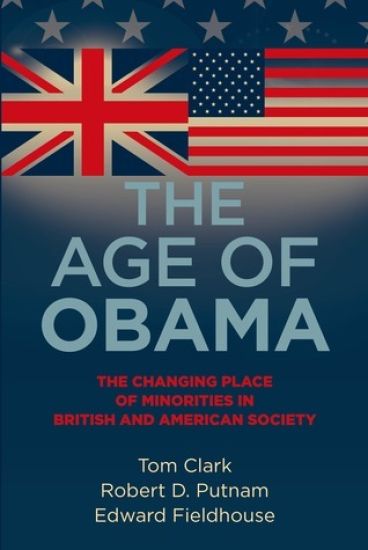
The Age of Obama

The Age of Obama

Tom Clark; Robert D. Putnam; Edward Fieldhouse

Manchester University Press
2010
sidottu
Drawing on collaborative research from a distinguished team at Harvard and Manchester universities, The age of Obama asks how two very different societies are responding to the tide of diversity that is being felt around the rich world. Guardian journalist Tom Clark, Robert D. Putnam – best-selling author of Bowling alone – and Manchester’s Edward Fieldhouse offer a wonderfully readable account. Like Bowling alone, The age of Obama mixes social scientific rigor with accessible charts and lively arguments. It will be enjoyed by politics, sociology and geography students, as well as by anyone else with an interest in ethnic relations.Injustice, it turns out, still blight lives of many UK and US minorities – particularly African Americans. And there are signs the new diversity strains community life. Yet in both countries, public opinion is running irreversibly in favour of tolerance. That augurs well for the future – and suggests a British Obama cannot be ruled out.
The Age of Obama

The Age of Obama

Tom Clark; Robert D. Putnam; Edward Fieldhouse

Manchester University Press
2010
nidottu
Drawing on collaborative research from a distinguished team at Harvard and Manchester universities, The age of Obama asks how two very different societies are responding to the tide of diversity that is being felt around the rich world. Guardian journalist Tom Clark, Robert D. Putnam – best-selling author of Bowling alone – and Manchester’s Edward Fieldhouse offer a wonderfully readable account. Like Bowling alone, The age of Obama mixes social scientific rigor with accessible charts and lively arguments. It will be enjoyed by politics, sociology and geography students, as well as by anyone else with an interest in ethnic relations.Injustice, it turns out, still blight lives of many UK and US minorities – particularly African Americans. And there are signs the new diversity strains community life. Yet in both countries, public opinion is running irreversibly in favour of tolerance. That augurs well for the future – and suggests a British Obama cannot be ruled out.
Making Democracy Work

Making Democracy Work

Robert D. Putnam; Robert Leonardi; Raffaella Y. Nanetti

Princeton University Press
1994
pokkari
Why do some democratic governments succeed and others fail? In a book that has received attention from policymakers and civic activists in America and around the world, Robert Putnam and his collaborators offer empirical evidence for the importance of "civic community" in developing successful institutions. Their focus is on a unique experiment begun in 1970 when Italy created new governments for each of its regions. After spending two decades analyzing the efficacy of these governments in such fields as agriculture, housing, and health services, they reveal patterns of associationism, trust, and cooperation that facilitate good governance and economic prosperity.
The Upswing: How America Came Together a Century Ago and How We Can Do It Again
From the author of Bowling Alone and Our Kids, a "sweeping yet remarkably accessible" (The Wall Street Journal) analysis that "offers superb, often counterintuitive insights" (The New York Times) to demonstrate how we have gone from an individualistic "I" society to a more communitarian "We" society and then back again, and how we can learn from that experience to become a stronger more unified nation.Deep and accelerating inequality; unprecedented political polarization; vitriolic public discourse; a fraying social fabric; public and private narcissism--Americans today seem to agree on only one thing: This is the worst of times. But we've been here before. During the Gilded Age of the late 1800s, America was highly individualistic, starkly unequal, fiercely polarized, and deeply fragmented, just as it is today. However as the twentieth century opened, America became--slowly, unevenly, but steadily--more egalitarian, more cooperative, more generous; a society on the upswing, more focused on our responsibilities to one another and less focused on our narrower self-interest. Sometime during the 1960s, however, these trends reversed, leaving us in today's disarray. In a "magnificent and visionary book" (The New Republic) drawing on his inimitable combination of statistical analysis and storytelling, Robert Putnam analyzes a remarkable confluence of trends that brought us from an "I" society to a "We" society and then back again. He draws on inspiring lessons for our time from an earlier era, when a dedicated group of reformers righted the ship, putting us on a path to becoming a society once again based on community. This is Putnam's most "remarkable" (Science) work yet, a fitting capstone to a brilliant career.
Bowling Alone: The Collapse and Revival of American Community
*The basis for the documentary Join or Die--now streaming on Netflix * Updated to include a new chapter about the influence of social media and the Internet--the 20th anniversary edition of Bowling Alone remains a seminal work of social analysis, and its examination of what happened to our sense of community remains more relevant than ever in today's fractured America. Twenty years, ago, Robert D. Putnam made a seemingly simple observation: once we bowled in leagues, usually after work; but no longer. This seemingly small phenomenon symbolized a significant social change that became the basis of the acclaimed bestseller, Bowling Alone, which The Washington Post called "a very important book" and Putnam, "the de Tocqueville of our generation." Bowling Alone surveyed in detail Americans' changing behavior over the decades, showing how we had become increasingly disconnected from family, friends, neighbors, and social structures, whether it's with the PTA, church, clubs, political parties, or bowling leagues. In the revised edition of his classic work, Putnam shows how our shrinking access to the "social capital" that is the reward of communal activity and community sharing still poses a serious threat to our civic and personal health, and how these consequences have a new resonance for our divided country today. He includes critical new material on the pervasive influence of social media and the internet, which has introduced previously unthinkable opportunities for social connection--as well as unprecedented levels of alienation and isolation. At the time of its publication, Putnam's then-groundbreaking work showed how social bonds are the most powerful predictor of life satisfaction, and how the loss of social capital is felt in critical ways, acting as a strong predictor of crime rates and other measures of neighborhood quality of life, and affecting our health in other ways. While the ways in which we connect, or become disconnected, have changed over the decades, his central argument remains as powerful and urgent as ever: mending our frayed social capital is key to preserving the very fabric of our society.
The Upswing: How America Came Together a Century Ago and How We Can Do It Again
An eminent political scientist's brilliant analysis of economic, social, and political trends over the past century demonstrating how we have gone from an individualistic "I" society to a more communitarian "We" society and then back again, and how we can learn from that experience to become a stronger, more unified nation--from the author of Bowling Alone and Our Kids.Deep and accelerating inequality; unprecedented political polarization; vitriolic public discourse; a fraying social fabric; public and private narcissism--Americans today seem to agree on only one thing: This is the worst of times. But we've been here before. During the Gilded Age of the late 1800s, America was highly individualistic, starkly unequal, fiercely polarized, and deeply fragmented, just as it is today. However as the twentieth century opened, America became--slowly, unevenly, but steadily--more egalitarian, more cooperative, more generous; a society on the upswing, more focused on our responsibilities to one another and less focused on our narrower self-interest. Sometime during the 1960s, however, these trends reversed, leaving us in today's disarray. In a sweeping overview of more than a century of history, drawing on his inimitable combination of statistical analysis and storytelling, Robert Putnam analyzes a remarkable confluence of trends that brought us from an "I" society to a "We" society and then back again. He draws inspiring lessons for our time from an earlier era, when a dedicated group of reformers righted the ship, putting us on a path to becoming a society once again based on community. Engaging, revelatory, and timely, this is Putnam's most ambitious work yet, a fitting capstone to a brilliant career.
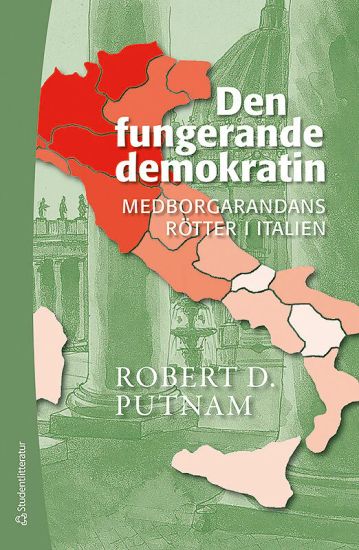
Den fungerande demokratin : medborgarandans rötter i Italien
Varför lyckas somliga demokratiska regeringar och varför misslyckas andra? Det är en gammal fråga men väl på sin plats i dag när människor överallt i världen söker lösningar på gemensamma problem samtidigt som misstron mot offentliga institutioner växer. Med denna bok vill den amerikanske statsvetaren Robert D. Putnam bidra till vår förståelse av hur demokratiska institutioner fungerar.Utgångspunkten för Putnam och hans forskarkolleger var det naturliga experiment som Italien gav samhällsforskningen på 1970-talet då nya institutioner infördes i landets olikartade regioner. Det erbjöd ett sällsynt tillfälle att systematiskt undersöka hur institutioner utvecklas och anpassar sig till sin sociala miljö.Ju fler människor som är engagerade i frivilligorganisationer – exempelvis sångkörer, fågelskådarklubbar och idrottsföreningar – desto bättre fungerar demokratin. Medborgarna måste hysa förtroende för varandra och våga samarbeta. En väl fungerande demokrati bygger på en utvecklad medborgaranda. Putnams analys visar också att en god medborgaranda bidrar till ekonomisk tillväxt.Den fungerande demokratin används som lärobok i statsvetenskap världen över och har blivit en modern samhällsvetenskaplig klassiker.Den fungerande demokratin – Medborgarandans rötter i Italien ges numera ut av Studentlitteratur AB. Denna tredje upplaga innehåller dock inga förändringar av innehållet jämfört med den andra upplagan.
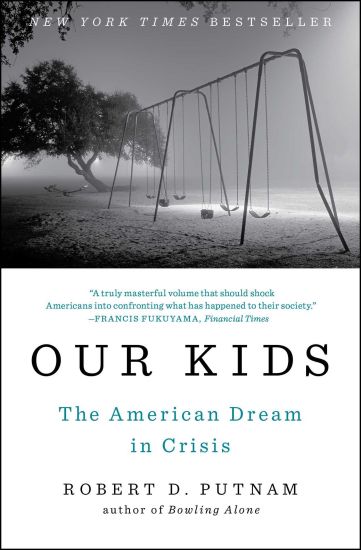
Our Kids

Our Kids

Robert D. Putnam

Simon Schuster
2016
pokkari
A New York Times bestseller and “a passionate, urgent” (The New Yorker) examination of the growing inequality gap from the bestselling author of Bowling Alone: why fewer Americans today have the opportunity for upward mobility. Central to the very idea of America is the principle that we are a nation of opportunity. But over the last quarter century we have seen a disturbing “opportunity gap” emerge. We Americans have always believed that those who have talent and try hard will succeed, but this central tenet of the American Dream seems no longer true or at the least, much less true than it was. In Our Kids, Robert Putnam offers a personal and authoritative look at this new American crisis, beginning with the example of his high school class of 1959 in Port Clinton, Ohio. The vast majority of those students went on to lives better than those of their parents. But their children and grandchildren have faced diminishing prospects. Putnam tells the tale of lessening opportunity through poignant life stories of rich, middle class, and poor kids from cities and suburbs across the country, brilliantly blended with the latest social-science research. “A truly masterful volume” (Financial Times), Our Kids provides a disturbing account of the American dream that is “thoughtful and persuasive” (The Economist). Our Kids offers a rare combination of individual testimony and rigorous evidence: “No one can finish this book and feel complacent about equal opportunity”
American Grace: How Religion Divides and Unites Us

American Grace: How Religion Divides and Unites Us

Robert D. Putnam; David E. Campbell

SIMON SCHUSTER
2012
nidottu
American Grace is "perhaps the most sweeping look yet at contemporary American religion. It lays out the broad trends of the past fifty years, assesses their sociological causes, and then does a bit of fortune-telling" (The Washington Post). Unique among nations, America is deeply religious, religiously diverse, and remarkably tolerant. In recent decades, however, the nation's religious landscape has undergone several seismic shocks. American Grace is an authoritative, fascinating examination of what precipitated these changes and the role that religion plays in contemporary American society. Although there is growing polarization between religious conservatives and secular liberals today, at the same time personal interfaith ties are strengthening. Interfaith marriage has increased, and religious identities have become more fluid. More people than ever are friendly with someone of a different faith or no faith at all. Putnam and Campbell show how this denser web of personal ties brings greater interfaith tolerance, despite the so-called culture wars. Based on two of the most comprehensive surveys ever conducted on religion and public life in America (and with a new epilogue based on a third survey), American Grace is an indispensable book about American religious life, essential for understanding our nation today.
Better Together

Better Together

Robert D. Putnam; Lewis Feldstein

Simon Schuster
2005
pokkari
For his new book Robert Putnam visited a number of places across America where individuals and groups are engaged in unusual forms of social activism and civic renewal. These are people who are renewing their communities and investing in new forms of 'social capital.' Approximately a dozen such stories of civic innovation are told in this book. They range from a mentoring and reading programme in Philadelphia that brings together retirees and primary school children to a revitalised neighbourhood association and revitalised neighbourhoods in Boston to a successful community organising effort in the impoverished Rio Grande Valley. All across America and the UK such organizations are starting up and thriving, giving hope that the message of BOWLING ALONE has reached people and that civic institutions are taking new forms to adapt to new times and new needs.
Can Nations Agree?

Can Nations Agree?

Richard N. Cooper; Barry Eichengreen; Gerald Holtham; Robert D. Putnam; C. Randall Henning

Brookings Institution
1989
nidottu
In the age of Three Mile Island and Chernobyl, a new international trade in industrial and human waste, the depletion of the ozone layer, and the greenhouse effect, the importance of international cooperation is supremely evident. In the economic arena, such problems include speculative instability in financial and primary commodities markets, competition in tax regimes, and the greatly enhanced scope for tax evasion. Can Nations Agree? examines the crucial issues surrounding international cooperation-conditions that foster cooperation toward common goals; ways to handle the friction arising from conflicting goals; and the structures that best promote cooperation. Although nations recognize the value of cooperation in an independent world, a variety of conditions inhibit the process. In recent decades the number of independent nations has risen rapidly, and so has the variety of decisionmakers and national interests to be reconciled. At the same time, the economic power of the United States has declined in relation to other successful capitalist countries. In the chapters on the 1978 Bonn economic summit, German macroeconomic policy, international cooperation on public health issues, and hegemony and stability, the scholars contributing to this volume analyze the history and process of international cooperation to offer fresh insight for future efforts.
Hanging Together

Hanging Together

Robert D. Putnam; Nicholas Bayne

Harvard University Press
1988
pokkari
For nearly a decade the leaders of the seven major industrial countries--the United States, Japan, Germany, France, Britain, Italy, and Canada--have met annually to discuss international economic and political issues. Regular summitry of this sort is virtually unprecedented in modern diplomacy. Proponents see the Western summits as providing collective leadership that is vital in a turbulent world, while critics dismiss summitry as distracting and even damaging to political and economic stability.Hanging Together charts the modern dilemma between economic interdependence and national sovereignty. It assesses the history, decisions, successes, and failures of the seven-power summits from Rambouillet in 1975 to the 1983 meeting at Williamsburg, and looks forward to the 1984 summit in London. The authors show how the growing importance of international commerce and finance has caused national and international politics to become entangled, and how national borders have become more permeable. Born in an era of waning American hegemony, the summits reveal the tension between American leadership and collective Western management of the world economy. The authors also trace the struggles of heads of state to balance the conflicting imperatives of personal authority and bureaucratic expertise. Because summits involve the power and prestige of each country's highest authorities, summitry reveals in concentrated form how these conflicts are expressed and managed.As a blend of contemporary history and political economy, Hanging Together demonstrates that summits are not isolated annual encounters, but part of a continuous process of international and domestic negotiation about the most important and controversial issues facing all governments today.
Bureaucrats and Politicians in Western Democracies

Bureaucrats and Politicians in Western Democracies

Joel D. Aberbach; Robert D. Putnam; Bert A. Rockman

Harvard University Press
1981
nidottu
In uneasy partnership at the helm of the modern state stand elected party politicians and professional bureaucrats. This book is the first comprehensive comparison of these two powerful elites. In seven countries—the United States, Great Britain, France, Germany, Sweden, Italy, and the Netherlands—researchers questioned 700 bureaucrats and 6OO politicians in an effort to understand how their aims, attitudes, and ambitions differ within cultural settings.One of the authors’ most significant findings is that the worlds of these two elites overlap much more in the United States than in Europe. But throughout the West bureaucrats and politicians each wear special blinders and each have special virtues. In a well-ordered polity, the authors conclude, politicians articulate society’s dreams and bureaucrats bring them gingerly to earth.