Kirjojen hintavertailu. Mukana 12 595 353 kirjaa ja 12 kauppaa.
Kirjailija
Robert D. Richardson
Kirjat ja teokset yhdessä paikassa: 11 kirjaa, julkaisuja vuosilta 1988-2026, suosituimpien joukossa Henry Thoreau. Vertaile teosten hintoja ja tarkista saatavuus suomalaisista kirjakaupoista.
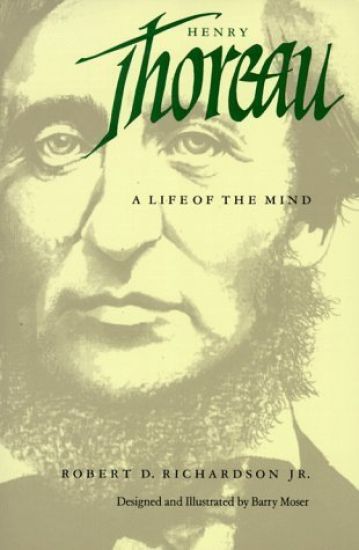
The two years Thoreau spent at Walden Pond and the night he spent in the Concord jail are among the most familiar features of the American intellectual landscape. In this new biography, based on a reexamination of Thoreau's manuscripts and on a retracing of his trips, Robert Richardson offers a view of Thoreau's life and achievement in their full nineteenth century context.
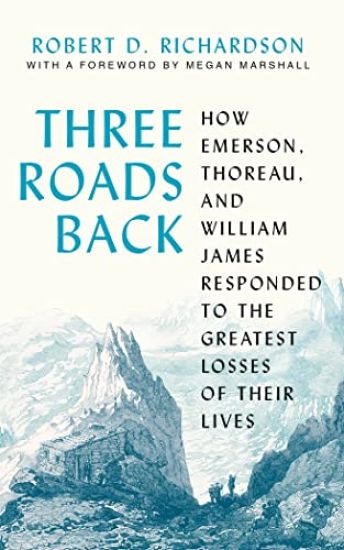
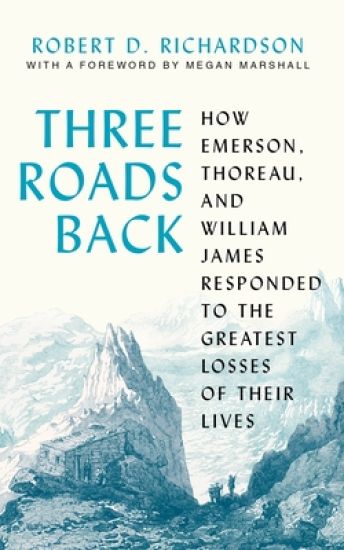
From their acclaimed biographer, a final, powerful book about how Emerson, Thoreau, and William James forged resilience from devastating loss, changing the course of American thought In Three Roads Back, Robert Richardson, the author of magisterial biographies of Ralph Waldo Emerson, Henry David Thoreau, and William James, tells the connected stories of how these foundational American writers and thinkers dealt with personal tragedies early in their careers. For Emerson, it was the death of his young wife and, eleven years later, his five-year-old son; for Thoreau, it was the death of his brother; and for James, it was the death of his beloved cousin Minnie Temple. Filled with rich biographical detail and unforgettable passages from the journals and letters of Emerson, Thoreau, and James, these vivid and moving stories of loss and hard-fought resilience show how the writers’ responses to these deaths helped spur them on to their greatest work, influencing the birth and course of American literature and philosophy. In reaction to his traumatic loss, Emerson lost his Unitarian faith and found solace in nature. Thoreau, too, leaned on nature and its regenerative power, discovering that “death is the law of new life,” an insight that would find expression in Walden. And James, following a period of panic and despair, experienced a redemptive conversion and new ideas that would drive his work as a psychologist and philosopher. As Richardson shows, all three emerged from their grief with a new way of seeing, one shaped by a belief in what Emerson called “the deep remedial force that underlies all facts.” An inspiring book about resilience and the new growth and creativity that can stem from devastating loss, Three Roads Back is also an extraordinary account of the hidden wellsprings of American thought.
From their acclaimed biographer, a final, powerful book about how Emerson, Thoreau, and William James forged resilience from devastating loss, changing the course of American thoughtIn Three Roads Back, Robert Richardson, the author of magisterial biographies of Ralph Waldo Emerson, Henry David Thoreau, and William James, tells the connected stories of how these foundational American writers and thinkers dealt with personal tragedies early in their careers. For Emerson, it was the death of his young wife and, eleven years later, his five-year-old son; for Thoreau, it was the death of his brother; and for James, it was the death of his beloved cousin Minnie Temple. Filled with rich biographical detail and unforgettable passages from the journals and letters of Emerson, Thoreau, and James, these vivid and moving stories of loss and hard-fought resilience show how the writers’ responses to these deaths helped spur them on to their greatest work, influencing the birth and course of American literature and philosophy.In reaction to his traumatic loss, Emerson lost his Unitarian faith and found solace in nature. Thoreau, too, leaned on nature and its regenerative power, discovering that “death is the law of new life,” an insight that would find expression in Walden. And James, following a period of panic and despair, experienced a redemptive conversion and new ideas that would drive his work as a psychologist and philosopher. As Richardson shows, all three emerged from their grief with a new way of seeing, one shaped by a belief in what Emerson called “the deep remedial force that underlies all facts.”An inspiring book about resilience and the new growth and creativity that can stem from devastating loss, Three Roads Back is also an extraordinary account of the hidden wellsprings of American thought.
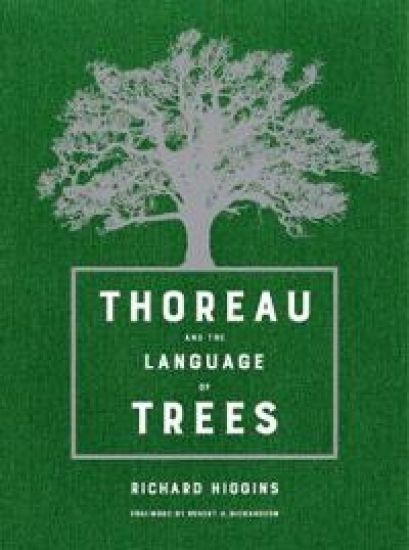
Trees were central to Henry David Thoreau's creativity as a writer, his work as a naturalist, his thought, and his inner life. His portraits of them were so perfect, it was as if he could see the sap flowing beneath their bark. When Thoreau wrote that the poet loves the pine tree as his own shadow in the air, he was speaking about himself. In short, he spoke their language. In this original book, Richard Higgins explores Thoreau's deep connections to trees: his keen perception of them, the joy they gave him, the poetry he saw in them, his philosophical view of them, and how they fed his soul. His lively essays show that trees were a thread connecting all parts of Thoreau's being-heart, mind, and spirit. Included are one hundred excerpts from Thoreau's writings about trees, paired with over sixty of the author's photographs. Thoreau's words are as vivid now as they were in 1890, when an English naturalist wrote that he was unusually able to "to preserve the flashing forest colors in unfading light." Thoreau and the Language of Trees shows that Thoreau, with uncanny foresight, believed trees were essential to the preservation of the world.
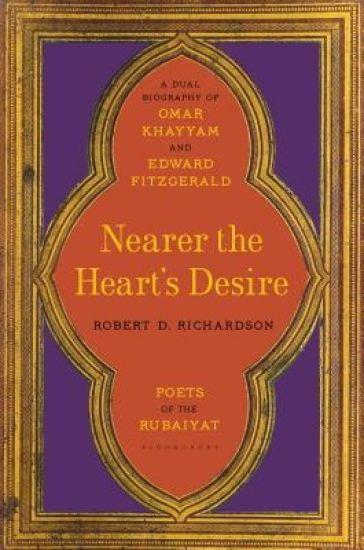
Written in Persian in the eleventh century, Omar Khayyam's quatrains, known as "rubai," were written individually for an audience at court, and explored the meanings of life, love, and friendship. They were almost completely unknown in the West until Edward FitzGerald--himself a relatively obscure critic--translated and organized some one hundred of them into a unified whole that he called "The Rubaiyat of Omar Khayyam," which he published anonymously in 1859. Ignored initially, it soon became a sensation--and FitzGerald with it, his work now translated into seventy languages--and one of the most-read works of literature of all time.Deftly and eloquently recounting in turn the life stories of Khayyam and FitzGerald, linking them over the span of eight centuries, acclaimed biographer Robert Richardson has crafted the story of the legendary "Rubaiyat" itself, illuminating a literary classic and reinforcing its place in the canon of great world literature.
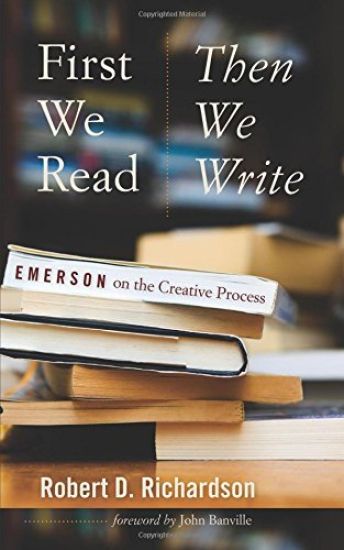
Writing was the central passion of Emerson’s life. While his thoughts on the craft are well developed in “The Poet,” “The American Scholar,” Nature, “Goethe,” and “Persian Poetry,” less well known are the many pages in his private journals devoted to the relationship between writing and reading. Here, for the first time, is the Concord Sage’s energetic, exuberant, and unconventional advice on the idea of writing, focused and distilled by the preeminent Emerson biographer at work today.Emerson advised that “the way to write is to throw your body at the mark when your arrows are spent.” First We Read, Then We Write contains numerous such surprises—from “every word we speak is million-faced” to “talent alone cannot make a writer”—but it is no mere collection of aphorisms and exhortations. Instead, in Robert Richardson’s hands, the biographical and historical context in which Emerson worked becomes clear. Emerson’s advice grew from his personal experience; in practically every moment of his adult life he was either preparing to write, trying to write, or writing. Richardson shows us an Emerson who is no granite bust but instead is a fully fleshed, creative person disarmingly willing to confront his own failures. Emerson urges his readers to try anything—strategies, tricks, makeshifts—speaking not only of the nuts and bolts of writing but also of the grain and sinew of his determination. Whether a writer by trade or a novice, every reader will find something to treasure in this volume. Fearlessly wrestling with “the birthing stage of art,” Emerson’s counsel on being a reader and writer will be read and reread for years to come.
" . . . peerless . . . " —The Key Reporter " . . . this book is a first. It will be a standard . . . Comprehensiveness as well as the clarity of the headnotes should make it endure." —Choice " . . . so good as it stands . . . one should simply be happy to have it." —The Journal of the History of Ideas " . . . an original, compendious, and highly useful contribution to historical and mythographical scholarship." —The American Scholar "The Rise of Modern Mythology is a voice of reason in the contemporary maelstrom of international religious violence and American pluralism; more than any book I know, it exposes the roots of the Western appropriation of non-Western mythologies, from Lawrence of Arabia and Omar Khayyam to Tibetan Buddhism in Hollywood and Krishna Consciousness in airports. This is a book that we need now." —Wendy Doniger, Mircea Eliade Distinguished Service Professor of the History of Religions, The University of Chicago
Ralph Waldo Emerson is one of the most important figures in the history of American thought, religion, and literature. The vitality of his writings and the unsettling power of his example continue to influence us more than a hundred years after his death. Now Robert D. Richardson Jr. brings to life an Emerson very different from the old stereotype of the passionless Sage of Concord. Drawing on a vast amount of new material, including correspondence among the Emerson brothers, Richardson gives us a rewarding intellectual biography that is also a portrait of the whole man. These pages present a young suitor, a grief-stricken widower, an affectionate father, and a man with an abiding genius for friendship. The great spokesman for individualism and self-reliance turns out to have been a good neighbor, an activist citizen, a loyal brother. Here is an Emerson who knew how to laugh, who was self-doubting as well as self-reliant, and who became the greatest intellectual adventurer of his age. Richardson has, as much as possible, let Emerson speak for himself through his published works, his many journals and notebooks, his letters, his reported conversations.This is not merely a study of Emerson's writing and his influence on others; it is Emerson's life as he experienced it. We see the failed minister, the struggling writer, the political reformer, the poetic liberator. The Emerson of this book not only influenced Thoreau, Fuller, Whitman, Dickinson, and Frost, he also inspired Nietzsche, William James, Baudelaire, Marcel Proust, Virginia Woolf, and Jorge Luis Borges. Emerson's timeliness is persistent and striking: his insistence that literature and science are not separate cultures, his emphasis on the worth of every individual, his respect for nature. Richardson gives careful attention to the enormous range of Emerson's readings - from Persian poets to George Sand - and to his many friendships and personal encounters - from Mary Moody Emerson to the Cherokee chiefs in Boston - evoking both the man and the times in which he lived. Throughout this book, Emerson's unquenchable vitality reaches across the decades, and his hold on us endures.