Kirjojen hintavertailu. Mukana 12 595 353 kirjaa ja 12 kauppaa.

Kirjailija

Robert Danisch

Kirjat ja teokset yhdessä paikassa: 8 kirjaa, julkaisuja vuosilta 2007-2024, suosituimpien joukossa Radically Civil. Vertaile teosten hintoja ja tarkista saatavuus suomalaisista kirjakaupoista.

8 kirjaa

Kirjojen julkaisuhaarukka 2007-2024.

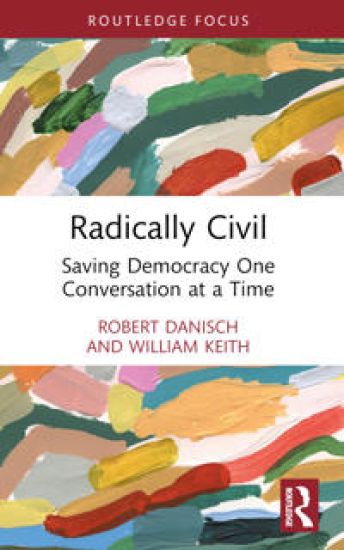
Radically Civil

Radically Civil

Robert Danisch; William Keith

TAYLOR FRANCIS LTD
2024
nidottu
If you feel like the world has gone to hell in a handbasket, you’re not alone. If you often feel there’s nothing you can do about it, you’re also not alone. Along with this increasing anger, fear, and frustration, much confusion still prevails on the appropriate communication practices for responding to difficult situations and improving our lives. Communication experts Robert Danisch and William Keith explain why and how we can practice radical civility in this practical guide to everyday “political” communication.This guide begins with examples of radical civility to show the potential of this kind of communication to change minds and bridge differences. The authors then unpack the three foundational principles of radical civility as useful theoretical tools for thinking throughout interactions with others in civic spaces. This is then followed by a three-step process for practicing radical civility drawing on research into active listening and its importance for creating connections, validating other views, and opening up possibilities for future conversation. The guide concludes with evidence-based communication practices and prescriptive recommendations for how to do each and show examples of each in action.Radically Civil: Saving Democracy One Conversation at a Time is a much-needed communication-based antidote to polarization, preparing students, researchers, and community leaders to be responsible participants in today’s society.
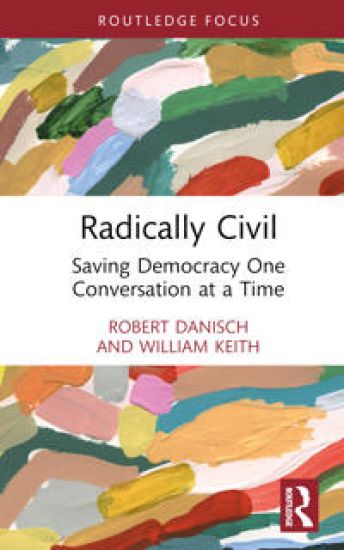
Radically Civil

Radically Civil

Robert Danisch; William Keith

TAYLOR FRANCIS LTD
2023
sidottu
If you feel like the world has gone to hell in a handbasket, you’re not alone. If you often feel there’s nothing you can do about it, you’re also not alone. Along with this increasing anger, fear, and frustration, much confusion still prevails on the appropriate communication practices for responding to difficult situations and improving our lives. Communication experts Robert Danisch and William Keith explain why and how we can practice radical civility in this practical guide to everyday “political” communication.This guide begins with examples of radical civility to show the potential of this kind of communication to change minds and bridge differences. The authors then unpack the three foundational principles of radical civility as useful theoretical tools for thinking throughout interactions with others in civic spaces. This is then followed by a three-step process for practicing radical civility drawing on research into active listening and its importance for creating connections, validating other views, and opening up possibilities for future conversation. The guide concludes with evidence-based communication practices and prescriptive recommendations for how to do each and show examples of each in action.Radically Civil: Saving Democracy One Conversation at a Time is a much-needed communication-based antidote to polarization, preparing students, researchers, and community leaders to be responsible participants in today’s society.

Rhetorical Democracy

Rhetorical Democracy

Robert Danisch

BLOOMSBURY PUBLISHING PLC
2024
sidottu
Rhetorical Democracy: How Communication Shapes Political Culture offers an explanation and diagnosis of the current state of American democracy rooted in the American pragmatist tradition. Robert Danisch analyzes the characteristics of communication systems and communication practices that inhibit or enhance democratic life. In doing so, this book provides a detailed explanation of the ways in which the communication systems and practices that constitute democratic life are currently fostering polarization and how they might be made to foster cooperation. Scholars of communication, rhetorical studies, political science, and media studies will find this book of particular interest.
Beyond Civility

Beyond Civility

William Keith; Robert Danisch

Pennsylvania State University Press
2020
pokkari
From the pundits to the polls, nearly everyone seems to agree that US politics have rarely been more fractious, and calls for a return to “civil discourse” abound. Yet it is also true that the requirements of polite discourse effectively silence those who are not in power, gaming the system against the disenfranchised. What, then, should a democracy do?This book makes a case for understanding civility in a different light. Examining the history of the concept and its basis in communication and political theory, William Keith and Robert Danisch present a clear, robust analysis of civil discourse. Distinguishing it from politeness, they claim that civil argument must be redirected from the goal of political comity to that of building and maintaining relationships of minimal respect in the public sphere. They also take into account how civility enables discrimination, indicating conditions under which uncivil resistance is called for. When viewed as a communication practice for uniting people with differences and making them more equal, civility is transformed from a preferable way of speaking into an essential component of democratic life. Guarding against uncritical endorsement of civility as well as skepticism, Keith and Danisch show with rigor, nuance, and care that the practice of civil communication is both paradoxical and sorely needed. Beyond Civility is necessary reading for our times.
Beyond Civility

Beyond Civility

William Keith; Robert Danisch

Pennsylvania State University Press
2020
sidottu
From the pundits to the polls, nearly everyone seems to agree that US politics have rarely been more fractious, and calls for a return to “civil discourse” abound. Yet it is also true that the requirements of polite discourse effectively silence those who are not in power, gaming the system against the disenfranchised. What, then, should a democracy do?This book makes a case for understanding civility in a different light. Examining the history of the concept and its basis in communication and political theory, William Keith and Robert Danisch present a clear, robust analysis of civil discourse. Distinguishing it from politeness, they claim that civil argument must be redirected from the goal of political comity to that of building and maintaining relationships of minimal respect in the public sphere. They also take into account how civility enables discrimination, indicating conditions under which uncivil resistance is called for. When viewed as a communication practice for uniting people with differences and making them more equal, civility is transformed from a preferable way of speaking into an essential component of democratic life. Guarding against uncritical endorsement of civility as well as skepticism, Keith and Danisch show with rigor, nuance, and care that the practice of civil communication is both paradoxical and sorely needed. Beyond Civility is necessary reading for our times.
What Effect Have I Had?: 100 Communication Practices to Help You Be a Better Partner, Teammate, Writer, Speaker, and Leader
This is a book about improving communication skills in a range of different settings. Instead of thinking about communication as the transmission of information from one person to another, this book shows that we ought to think about communication as a practical art of producing effects on others. Once we start to ask "What effect have I had?" then we are in a better position to improve our communication skills. In thinking about interpersonal communication, small group communication, writing, public speaking, and leadership through questions about the effects we produce on others anyone can significantly improve their communication competencies. Through one hundred small lessons this book provides practical tools to immediately be a better partner, teammate, writer, speaker, and leader.
Building a Social Democracy

Building a Social Democracy

Robert Danisch

Lexington Books
2015
sidottu
Building a Social Democracy offers an alternative intellectual history of American pragmatism, one that tries to reclaim the middle of the twentieth century in order to push neo-pragmatism beyond its philosophical limitations. Danisch argues that the major entailment of the invention of American pragmatism at the beginning of the twentieth century is that rhetorical practices are the rightful object of study and means of improving democratic life. Pragmatism entails a commitment to rhetoric. Rhetorical pragmatism is intended to be more faithful to the project of first generation pragmatism, to offer insight into the ways in which rhetoric operates in contemporary democratic cultures, to recommend practices, methods, and modes of action for improving contemporary democratic cultures, and to subordinate philosophy to rhetoric by reimagining appropriate ways for pragmatist scholarship and social research to advance.
Pragmatism, Democracy, and the Necessity of Rhetoric

Pragmatism, Democracy, and the Necessity of Rhetoric

Robert Danisch

University of South Carolina Press
2007
sidottu
In ""Pragmatism, Democracy, and the Necessity of Rhetoric"", Robert Danisch examines the search by America's first generation of pragmatists for a unique set of rhetorics that would serve the needs of a developing democracy. Digging deep into pragmatism's historical development, Danisch sheds light on its association with an alternative but significant and often overlooked tradition. He draws parallels between the rhetorics of such American pragmatists as John Dewey and Jane Addams and those of the ancient Greek tradition. Danisch contends that, while building upon a classical foundation, pragmatism sought to determine rhetorical responses to contemporary irresolutions. Danisch highlights the similarities between pragmatism and classical rhetoric, including pragmatism's rejection of philosophy with its traditional assumptions and practices. Grounding his argument on an alternative interpretation of pragmatism and its antifoundationalist commitments, he discusses the need to find appropriate rhetorics for American democracy and to delineate the intellectual conditions for the realization of such rhetorics. Danisch suggests that first-generation pragmatists articulated an orientation to the world that necessitates the practice of rhetoric. To establish such claims, he addresses William James's philosophy of pluralism, Dewey's attention to the practical arts, Addams's belief in a social democracy, Alain Locke's celebration of African American art, and Oliver Wendell Holmes's judicial decisions. In each instance, Danisch shows how different iterations of pragmatism point to and recommend the development of unique rhetorics capable of shaping particular forms of democratic life.