Kirjojen hintavertailu. Mukana 12 595 353 kirjaa ja 12 kauppaa.

Kirjailija

Robert Desourdis

Kirjat ja teokset yhdessä paikassa: 5 kirjaa, julkaisuja vuosilta 2001-2015, suosituimpien joukossa Achieving Interoperability in Critical IT and Communication Systems. Vertaile teosten hintoja ja tarkista saatavuus suomalaisista kirjakaupoista.

5 kirjaa

Kirjojen julkaisuhaarukka 2001-2015.

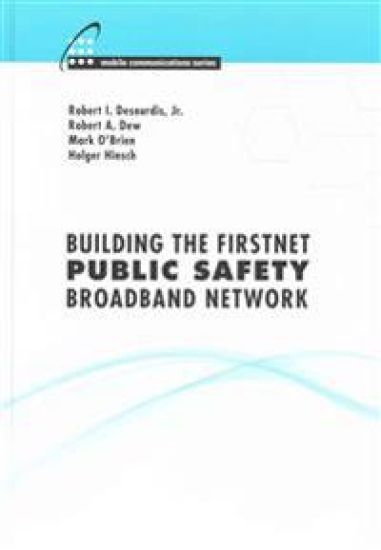
Building the FirstNet Public Safety Broadband Network

Building the FirstNet Public Safety Broadband Network

Robert Desourdis; Robert Dew; Holger Hinsch; Mark O'Brien

Artech House Publishers
2015
sidottu
This new resource describes how to build and operate mobile wireless systems in the United States and internationally, including executive-level "do's and don'ts" for sustaining a commercial wireless networks. This includes HF radio, land mobile radio, broadcast radio/digital TV, commercial wireless, and sitcom. This book not only addresses the latest technology and capabilities, but it also provides details on the critical steps involved in planning, designing, implementing, and sustaining these wireless systems. In addition, it addresses the FirstNet (public safety) LTE network in the US from two important perspectives. Readers are also presented with a variety of emerging technologies and their rapid impact on wireless networks, such as DTV datacast and its introduction into the smart phone for both commercial and public safety applications.
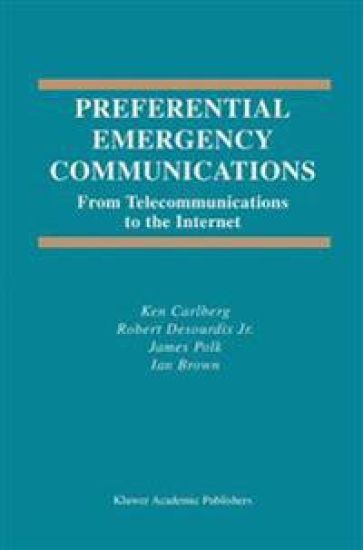
Preferential Emergency Communications

Preferential Emergency Communications

Ken Carlberg; Robert Desourdis; James Polk; Ian Brown

Springer-Verlag New York Inc.
2012
nidottu
Preferential Emergency Communications: From Telecommunications to the Internet, a professional monograph, is divided into three sections. The first describes systems and protocols that have been deployed as private networks for use by government agencies like the U.S. Department of Defense. This section also presents an in-depth discussion on MLPP. We then present current work in the area of Land Mobile Radio, commonly used by local emergency personnel such as police and fireman. This second section also describes systems that have been deployed over the public switched telephone network. Finally, the third section presents insights on trying to support emergency communications over TCP/IP networks and the Internet. In this last item we look into what IETF protocols can be considered candidates for change, as well as those protocols and applications that should not be altered.
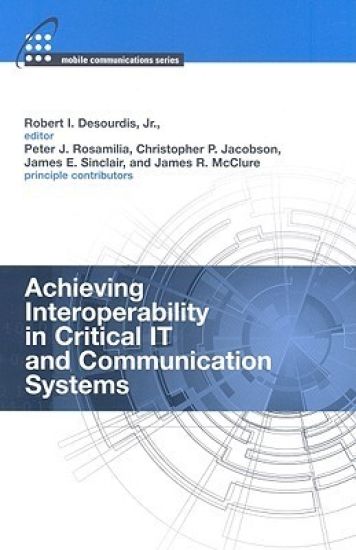
Achieving Interoperability in Critical IT and Communication Systems

Achieving Interoperability in Critical IT and Communication Systems

Robert Desourdis; Holger Hinsch; Eric Johnson

Artech House Publishers
2009
sidottu
Addressing several misconceptions and misunderstandings about communications interoperability that continue to limit capabilities in the field, this unique book provides a detailed examination of the subject, focusing on the use of voice, data, and video systems for public safety and emergency response. This practical resource makes in-depth recommendations spanning technical, planning, and procedural approaches to provide efficient public safety response performance. Readers find coverage of the many approaches used to achieve interoperability, including a synopsis of the enabling technologies and systems intended to provide radio interoperability. Featuring specific examples nationwide, the book takes practitioners from strategy to proper implementation, using enterprise architecture, systems engineering, and systems integration planning.
Preferential Emergency Communications

Preferential Emergency Communications

Ken Carlberg; Robert Desourdis; James Polk; Ian Brown

Springer-Verlag New York Inc.
2003
sidottu
Preferential Emergency Communications: From Telecommunications to the Internet, a professional monograph, is divided into three sections. The first describes systems and protocols that have been deployed as private networks for use by government agencies like the U.S. Department of Defense. This section also presents an in-depth discussion on MLPP. We then present current work in the area of Land Mobile Radio, commonly used by local emergency personnel such as police and fireman. This second section also describes systems that have been deployed over the public switched telephone network. Finally, the third section presents insights on trying to support emergency communications over TCP/IP networks and the Internet. In this last item we look into what IETF protocols can be considered candidates for change, as well as those protocols and applications that should not be altered.
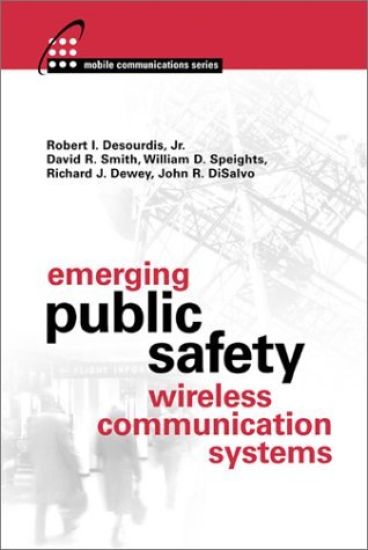
Emerging Public Safety Wireless Communication Systems

Emerging Public Safety Wireless Communication Systems

Robert Desourdis; Richard Dewey; John DiSalvo; David Smith; William Speights

Artech House
2001
sidottu
With the increasing need for more effective and efficient responses to man-made and natural public safety threats, the necessity for improved private mobile and commercial wireless digital communication systems has become apparent. This one-of-a-kind resource describes today's public safety communication requirements and radio systems from a technical perspective, and explains how communication systems are evolving to meet the growing demands of multimedia wireless applications.