Kirjojen hintavertailu. Mukana 12 595 353 kirjaa ja 12 kauppaa.

Kirjailija

Robert E. May

Kirjat ja teokset yhdessä paikassa: 11 kirjaa, julkaisuja vuosilta 1985-2024, suosituimpien joukossa John A. Quitman. Vertaile teosten hintoja ja tarkista saatavuus suomalaisista kirjakaupoista.

11 kirjaa

Kirjojen julkaisuhaarukka 1985-2024.

Howard Pyle

Howard Pyle

Jill P. May; Robert E. May

University of Illinois Press
2011
sidottu
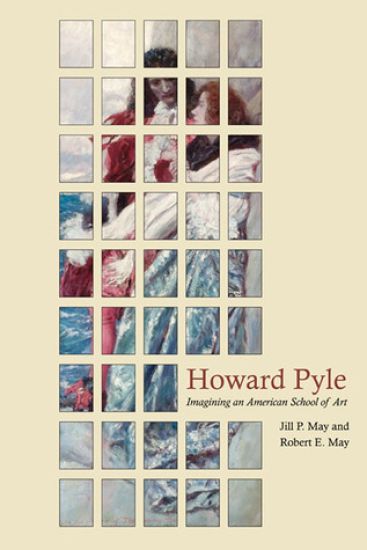
Best remembered as an influential illustrator and teacher, Howard Pyle (1853–1911) produced magnificent artwork and engrossing books and magazine stories about King Arthur, Robin Hood, swashbuckling pirates, and the American Revolution. He also completed public murals and trained many famous artists and illustrators at the turn of the twentieth century, including N. C. Wyeth and Jessie Willcox Smith. This engaging portrait of the influential American artist, teacher, author, and muralist is the first fully documented treatment of Pyle's life and career.Drawing on numerous archival sources including Pyle's own letters to provide new perspectives on his life, Jill P. May and Robert E. May reveal Pyle to be a passionate believer that art should be understood and appreciated by the general public. His genteel values and artistic tastes shaped not only his own creative output but his influential work as a teacher, first at the Drexel Institute of Art, Science and Industry in Philadelphia and later at his own school in Delaware's Brandywine River Valley. May and May also show him to be far more supportive of women artists than is generally believed, explaining how he deployed club memberships and relationships with publishers and politicians to advance the prospects of his students. Duly measuring his influence on later artists, May and May detail his quest to lead a distinctively American school of art freed from European models.Amply illustrated with evocative photographs and color reproductions of his own and his students' work, this exceptional volume presents Howard Pyle's creative career and legacy for American popular culture as it has never been seen before.
John A. Quitman

John A. Quitman

Robert E. May

Louisiana State University Press
1985
nidottu
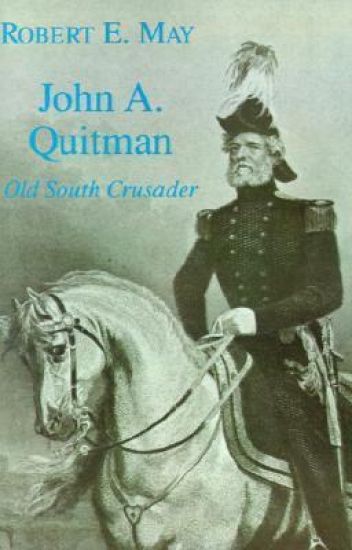
The premier secessionist of antebellum Mississippi, John A. Quitman was one of the half-dozen or so most prominent radicals in the entire South. In this full-length biography, Robert E. May takes issue with the recent tendency to portray secessionists as rabble-rousing, maladjusted outsiders bent on the glories of separate nationhood. May reveals Quitman to have been an ambitious but relatively stable insider who reluctantly advocated secession because of a despondency over slavery's long-range future in the Union and a related conviction that northerners no longer respected southern claims to equality as American citizens.A fervent disciple of South Carolina ""radical"" John C. Calhoun's nullification theories, Quitman also gained notoriety as his region's most strident slavery imperialist. He articulated the case for new slaver territory, participated in the Texas Revolution, won national acclaim as a volunteer general in the Mexican War, and organised a private military, or ""filibustering"", expedition with the intent of liberating Cuba from Spanish rule and making the island a new slave state. In 1850, while governor of Mississippi during the California crisis, Quitman wielded his influence in a vain attempt to induce Mississippi secession. Later, in Congress, he marked out an extreme southern position on Kansas. Mississippi's most vehement ""fire-eater,"" Quitman played a significant role in the North-South estrangement that led to the American Civil War.The first critical biography of this important figure, May's study sheds light on such current historical controversies as whether antebellum southerners were peculiarly militaristic or ""antibourgeois"" and helps illuminate the slave-master relations, mobility, intraregional class and geographic friction, partisan politics, and family customs of the Old South.
Debunking the Yule Log Myth

Debunking the Yule Log Myth

Robert E. May

BLOOMSBURY PUBLISHING PLC
2024
sidottu
A powerful new book that corrects a false myth in African American history that Kirkus Reviews calls "a thoughtful antidote to white Southern propaganda.” According to an oft repeated legend, during Christmas before the Civil War, all enslaved people in the American South enjoyed lengthy vacations of a week or more depending on how long an oversized “Yule log” burned in their master’s fireplace. As long as the log held out, slaves escaped heavy labor and their masters’ whips and enjoyed a rare freedom of movement to go and do what they wished as well as gorge themselves on food and drink they never got the rest of the year. No wonder they soaked those logs in swamps to make them burn even longer. But is it true? In this book, historian Robert May takes readers on a detective caper as he investigates a story that reaches back to colonial America and continues today. May finds no evidence of the Yule log tradition in the historical record, instead showing that it originated with pro-Confederate Lost Cause propagandists attempting to present the South’s prewar system of human bondage in as soft tones as possible. Tales about good-natured masters and unresentful slaves jovially sharing Christmases played to this impulse beautifully. Debunking the Yule Log Myth does more than correct the historical record. It serves as a highly instructive case study in the process of historical mythmaking. This captivating tale will appeal to all readers interested in African American history and the long struggle to support white supremacy by creating a mythical antebellum American South.
Spearheading Environmental Change

Spearheading Environmental Change

Jill P. May; Robert E. May

PURDUE UNIVERSITY PRESS
2022
nidottu
Spearheading Environmental Change: The Legacy of Indiana Congressman Floyd J. Fithian describes the life of a four-term United States congressman, focusing on his role in the emerging environmental movement in late twentieth-century America. Spearheading Environmental Change highlights Fithian's legislative efforts regarding three water-related issues that profoundly concerned Hoosier and midwestern voters: creating a national park on the Indiana shoreline of Lake Michigan; canceling dam construction near Purdue University; and mitigating flooding in the Kankakee River Basin. The book also covers Fithian's positions on ecologically sensitive issues such as pesticides, noise pollution, fossil fuels, and nuclear power. Largely remembered for his participation in the Democratic reform wave that took over Congress in 1975 post-Watergate (the so-called Class of '74) and as an advocate for Hoosier farmers, Fithian has been overlooked for his role as a force to be reckoned with on the House floor when it came to the nation's environmental challenges. Fithian was a highly ethical, pragmatic reformer bent on preserving his country's natural resources. Spearheading Environmental Change gives Fithian the credit he deserves as an environmental warrior on the national stage.
Spearheading Environmental Change

Spearheading Environmental Change

Jill P. May; Robert E. May

PURDUE UNIVERSITY PRESS
2022
sidottu
Spearheading Environmental Change: The Legacy of Indiana Congressman Floyd J. Fithian describes the life of a four-term United States congressman, focusing on his role in the emerging environmental movement in late twentieth-century America. Spearheading Environmental Change highlights Fithian's legislative efforts regarding three water-related issues that profoundly concerned Hoosier and midwestern voters: creating a national park on the Indiana shoreline of Lake Michigan; canceling dam construction near Purdue University; and mitigating flooding in the Kankakee River Basin. The book also covers Fithian's positions on ecologically sensitive issues such as pesticides, noise pollution, fossil fuels, and nuclear power. Largely remembered for his participation in the Democratic reform wave that took over Congress in 1975 post-Watergate (the so-called Class of '74) and as an advocate for Hoosier farmers, Fithian has been overlooked for his role as a force to be reckoned with on the House floor when it came to the nation's environmental challenges. Fithian was a highly ethical, pragmatic reformer bent on preserving his country's natural resources. Spearheading Environmental Change gives Fithian the credit he deserves as an environmental warrior on the national stage.
Yuletide in Dixie

Yuletide in Dixie

Robert E. May

University of Virginia Press
2020
pokkari
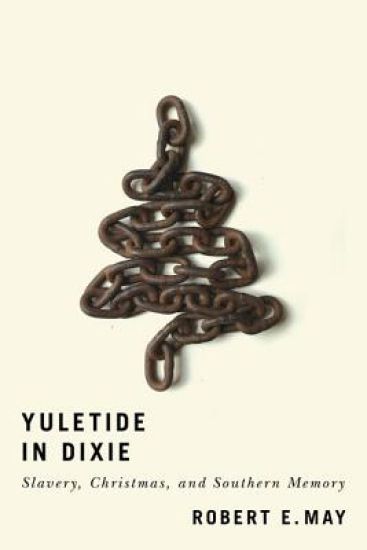
How did enslaved African Americans in the Old South really experience Christmas? Did Christmastime provide slaves with a lengthy and jubilant respite from labor and the whip, as is generally assumed, or is the story far more complex and troubling? In this provocative, revisionist, and sometimes chilling account, Robert E. May chides the conventional wisdom for simplifying black perspectives, uncritically accepting southern white literary tropes about the holiday, and overlooking evidence not only that countless southern whites passed Christmases fearful that their slaves would revolt but also that slavery's most punitive features persisted at holiday time.In Yuletide in Dixie, May uncovers a dark reality that not only alters our understanding of that history but also sheds new light on the breakdown of slavery in the Civil War and how false assumptions about slave Christmases afterward became harnessed to myths undergirding white supremacy in the United States. By exposing the underside of slave Christmases, May helps us better understand the problematic stereotypes of modern southern historical tourism and why disputes over Confederate memory retain such staying power today. A major reinterpretation of human bondage, Yuletide in Dixie challenges disturbing myths embedded deeply in our culture.
Yuletide in Dixie

Yuletide in Dixie

Robert E. May

University of Virginia Press
2019
sidottu
How did enslaved African Americans in the Old South really experience Christmas? Did Christmastime provide slaves with a lengthy and jubilant respite from labor and the whip, as is generally assumed, or is the story far more complex and troubling? In this provocative, revisionist, and sometimes chilling account, Robert E. May chides the conventional wisdom for simplifying black perspectives, uncritically accepting southern white literary tropes about the holiday, and overlooking evidence not only that countless southern whites passed Christmases fearful that their slaves would revolt but also that slavery’s most punitive features persisted at holiday time.In Yuletide in Dixie, May uncovers a dark reality that not only alters our understanding of that history but also sheds new light on the breakdown of slavery in the Civil War and how false assumptions about slave Christmases afterward became harnessed to myths undergirding white supremacy in the United States. By exposing the underside of slave Christmases, May helps us better understand the problematic stereotypes of modern southern historical tourism and why disputes over Confederate memory retain such staying power today. A major reinterpretation of human bondage, Yuletide in Dixie challenges disturbing myths embedded deeply in our culture.
The Cowboy Capitalist

The Cowboy Capitalist

Charles Van Onselen; Robert E. May

University of Virginia Press
2018
nidottu
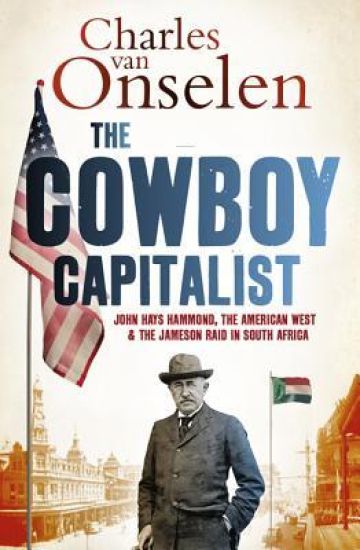
The Jameson Raid was a pivotal moment in the history of South Africa, linking events from the Anglo-Boer War to the declaration of the Union of South Africa in 1910. For more than a century, the failed revolution has been interpreted through the lens of British imperialism, with responsibility laid at the feet of Cecil Rhodes. Yet, the raid was less a serious attempt to overthrow a Boer government than a wild adventure with transnational roots in American filibustering.In The Cowboy Capitalist, renowned South African historian Charles van Onselen challenges a historiography of over 120 years, locating the raid in American rather than British history and forcing us to rethink the histories of at least three nations. Through a close look at the little-remembered figure of John Hays Hammond, a confidant of both Rhodes and Jameson, he discovers the American Old West on the South African Highveld. This radical reinterpretation challenges the commonly held belief that the Jameson Raid was quintessentially British and, in doing so, drives splinters into our understanding of events as far forward as South Africa’s critical 1948 general election, with which the foundations of Grand Apartheid were laid.
Slavery, Race, and Conquest in the Tropics

Slavery, Race, and Conquest in the Tropics

Robert E. May

Cambridge University Press
2013
sidottu
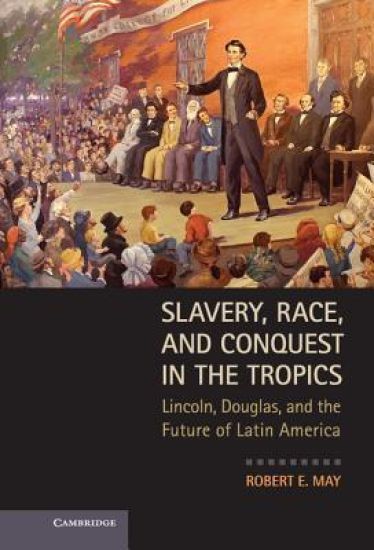
Slavery, Race, and Conquest in the Tropics challenges the way historians interpret the causes of the American Civil War. Using Abraham Lincoln and Stephen Douglas's famed rivalry as a prism, Robert E. May shows that when Lincoln and fellow Republicans opposed slavery in the West, they did so partly from evidence that slaveholders, with Douglas's assistance, planned to follow up successes in Kansas by bringing Cuba, Mexico, and Central America into the Union as slave states. A skeptic about 'Manifest Destiny', Lincoln opposed the war with Mexico, condemned Americans invading Latin America, and warned that Douglas's 'popular sovereignty' doctrine would unleash US slaveholders throughout Latin America. This book internationalizes America's showdown over slavery, shedding new light on the Lincoln-Douglas rivalry and Lincoln's Civil War scheme to resettle freed slaves in the tropics.
Slavery, Race, and Conquest in the Tropics

Slavery, Race, and Conquest in the Tropics

Robert E. May

Cambridge University Press
2013
pokkari
Slavery, Race, and Conquest in the Tropics challenges the way historians interpret the causes of the American Civil War. Using Abraham Lincoln and Stephen Douglas's famed rivalry as a prism, Robert E. May shows that when Lincoln and fellow Republicans opposed slavery in the West, they did so partly from evidence that slaveholders, with Douglas's assistance, planned to follow up successes in Kansas by bringing Cuba, Mexico, and Central America into the Union as slave states. A skeptic about 'Manifest Destiny', Lincoln opposed the war with Mexico, condemned Americans invading Latin America, and warned that Douglas's 'popular sovereignty' doctrine would unleash US slaveholders throughout Latin America. This book internationalizes America's showdown over slavery, shedding new light on the Lincoln-Douglas rivalry and Lincoln's Civil War scheme to resettle freed slaves in the tropics.
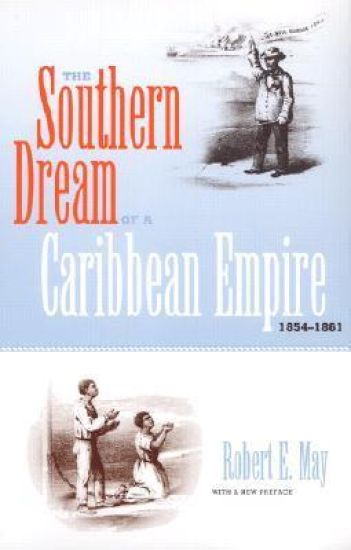
The Southern Dream of a Caribbean Empire, 1854-1861

The Southern Dream of a Caribbean Empire, 1854-1861

Robert E. May; John David Smith

University Press of Florida
2002
nidottu
A path-breaking work when first published in 1973, The Southern Dream remains the standard work on attempts by the South to spread American slavery into the tropics - Cuba, Mexico, and Central America in particular - before the Civil War. Robert May shows that the South's expansionists had no more success than when they tried to extend slavery westward. As one after another of their plots failed, southern imperialists lost hope that their labor system might survive in the Union. Blaming northern Democrats and antislavery Republicans alike for their disappointed dreams, alienated southerners embraced secession as an alternative means to achieving a tropical slave empire. Had war not erupted at Fort Sumter, Confederates might have attempted to conquer the Caribbean basin. May's book serves as an important reminder that foreign policy cannot be divorced from the writing of American history, even in regard to seemingly domestic matters like the causes of the Civil War. Contending that America's Manifest Destiny became ""sectionalized"" in the 1850s, he explains why southerners considered Caribbean expansion so important and shows how southerners used their clout in Washington to initiate diplomatic schemes like the notorious Ostend Manifesto and presidential attempts to buy the slaveholding island of Cuba from Spain. He also relates how Caribbean plots affected American public opinion and ignited sectional friction in congressional debates. May argues that President-elect Abraham Lincoln might have saved the Union in the winter of 1860-61, had he agreed to last minute concessions facilitating slavery's future expansion towards the tropics.