Kirjojen hintavertailu. Mukana 12 595 353 kirjaa ja 12 kauppaa.
Kirjailija
Robert E. Wood
Kirjat ja teokset yhdessä paikassa: 22 kirjaa, julkaisuja vuosilta 1990-2026, suosituimpien joukossa Heidegger in Dialogue. Vertaile teosten hintoja ja tarkista saatavuus suomalaisista kirjakaupoista.
Comparative readings offer an accessible introduction and shed light on Heidegger’s thought by examining it in the context of the work of other philosophers. This collection of comparative essays by the late Robert E. Wood puts Martin Heidegger in dialogue with a number of other thinkers, such as Martin Buber, Max Scheler, Edith Stein, John Dewey, and Maurice Merleau-Ponty, as well as thinkers whose relation to Heidegger has been more commonly examined (Plato, Hegel, Jean-Paul Sartre). A number of recurrent themes stand out, indicative of the issues that anchor the author’s general interpretation of Heidegger. These include: the distinction between meditative and calculative thinking; Heidegger as a thinker of the heart; releasement (Gelassenheit); the prominence of concealment (lethe) and the mystery of Being; the importance of art and poetic thinking; the relation to the Other; mortals and the divine; and the significance of attunements or dispositions, ranging from shock and horror to wonder and awe. Wood’s perspective emerges as a distinctively Catholic reading of Heidegger, emphasizing common ground and a relation to the whole throughout.
This book traces the evolution of concessional financing to Third World countries from its postwar origins in the Marshall Plan to the debt crisis that engulfed virtually the entire Third World in the early 1980s. It documents the evolution of a system of aid provision, of structured access to concessional external financing. The central focus is on how this structure of access to aid has changed over time and shaped development options an choices in the Third World. From this perspective, the emergence of the debt crisis is closely connected to the role of aid in the world economy. Although the debt crisis had other roots as well, this book elucidates an important set of determinants, generally overlooked, within the systems of aid provision itself. It further seeks to show that the debt crisis defines a new era, not simply a set of discrete and extraordinary events beween, say, Mexico's request for rescheduling in August 1982 and Argentina's coming to terms with the International Monetary Fund in September 1984. The debt crisis has profoundly altered the international environment tha Third Wold countries face, and the legacy of debt will continue to be a central focus of international relations and development choices for years to come. This title is part of UC Press's Voices Revived program, which commemorates University of California Press’s mission to seek out and cultivate the brightest minds and give them voice, reach, and impact. Drawing on a backlist dating to 1893, Voices Revived makes high-quality, peer-reviewed scholarship accessible once again using print-on-demand technology. This title was originally published in 1987.
Being Human is the fruit of many years teaching Philosophical Anthropology, conducting Phenomenological Workshops, and reading classic texts in the light of a reflective awareness of the field of experience. Being Human is intended to look to what is typically assumed but not examined in much of current philosophical literature.Today what typically appear as philosophical are textual studies that draw upon wide-ranging scholarship to learn how past thinkers used to think; or works that tend either to be "high-flying," operating at levels of abstraction far removed from experience and written in arcane style, and thus, for both reasons, difficult to assess (much of Continental thought); or minutely focused upon particular claims and the arguments that can be advanced for and against them (Analytical thought); or deconstructing texts to show how they do not fully work (the followers of Jacques Derrida). Scholarly study, abstract constructions, refined arguments, and deconstructive strategies are each important in their own way; but all take place within the structure of the field of experience which is typically assumed without paying explicit attention to it. Especially in philosophy of mind, the overall field of experience has too often been ignored, usually in favor of some conjecture as to how our ordinary categories would have to be changed when neuro-physiology will be far enough advanced to explain all our behavior.Robert E. Wood claims that it is best to understand what it is that is supposed to be explained before conjecturing about possible explanations. But when you do that, you will have to come to terms with what it means to seek explanation, what a Who is that seeks it, and why it is sought.
SO, YOU THOUGHT YOU KNEW EVERYTHING ABOUT SPACE: 1999? HOLD MY COMMLOCK ...The cult classic science fiction series Space: 1999 has legions of fans around the world and has been researched and documented in comprehensive books and documentaries, so fans can be forgiven for thinking there's nothing new under the 'Black Sun' ... But they'd be wrong. Did you know ... - That actors on casting lists for Commander Koenig included Larry Hagman, Doug McClure, Robert Culp, and even William Shatner?- The first title for the pilot episode was 'The Last of the Earth Men'?- The Chief Medical Officer was going to be male, and Professor Bergman could have been Professor Danilo Sabatini?- That life on the Moon was intended to be a powder keg of fear and dissatisfaction, with Moon City constantly at war with alien races?- That there were indeed discussions about a possible spin-off series? This book takes you back to the beginning, to the genesis of the series, and to early themes, characters, and story outlines. It uncovers a treasure trove of previously unknown information, correspondence, casting lists, production information, and long-lost documents charting alternative realities of what might have been had the series taken any multitude of different forks in the road. And throughout, this book features extensive input from series story consultant and scriptwriter Christopher Penfold. Any self-respecting Alphan who thinks they know it all needs to read this book and explore the lost universe of Space: 1999
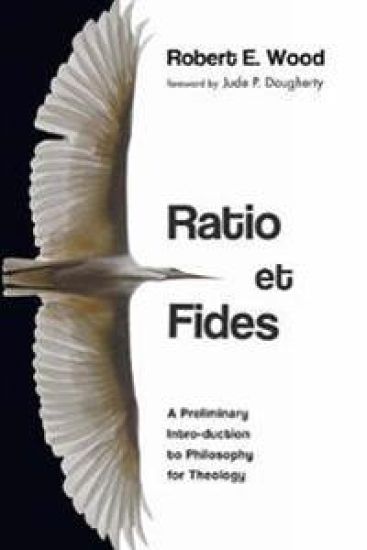
In the face of growing skepticism and relativism, ""believe in reason"" is the central message in Pope John Paul II's Fides et Ratio. Only by the two wings of reason and faith together can the human spirit soar. The current work, Ratio et Fides, is its philosophical counterpart. It is not a watered-down introduction but a ""leading-into"" the heart of philosophic thinking. Firmly rooted in the phenomenological description of an ordinary artifact, a mailbox, the book uses the principles involved in the description to examine key figures in the history of thought. We focus on three areas: the Soul, Morality, and God. We consider seven thinkers. Plato and Aristotle, who founded the tradition, were taken up by Augustine and Aquinas in developing their theologies. Descartes launched the distinctively modern tradition, culminating in Hegel's systematic presentation of the whole Western tradition, philosophical and religious. More recently, Heidegger approached that tradition in terms of its hidden ground in the Mystery of Being, recalling us to meditative thinking as the secular counterpart to prayer. Armed with this background, students will be able to approach with profit the Fathers of the Church and major theologians and philosophers, past and recent. ""Rooted in a lifetime of reflection of, and teaching of, the philosophical tradition, Robert Wood's Ratio et Fides is an accessible and engaging presentation of philosophical themes directly relevant to the study of theology. The occasion for its composition is Wood's teaching of seminarians for whom it is an indispensable guide, but the audience here is much wider, including all those reflective believers who desire to anchor their thinking, their prayer, and their active lives in a tradition of wisdom about life's most important questions."" --Thomas Hibbs, Honors College Dean and Distinguished Professor of Ethics and Culture, Baylor University ""More than an introduction to philosophy for students of theology, this is also a probing study of some of the great texts of the tradition, shaped by a constant sense that profound philosophical work finds itself in kinship with theology. Wood is a careful reader and thinker, and moves easily from text to text without his reader ever being in doubt about the nature of each step. His thinking is Catholic and it is catholic, as indeed is reason itself, according to a central thrust of the book. Strongly recommended for students of theology and philosophy, and their teachers."" --Jeffrey Bloechl, Department of Philosophy, Boston College Robert E. Wood is Professor of Philosophy in the Institute of Philosophic Studies at the University of Dallas. He has written ninety articles and eight books, his most recent being The Beautiful, the True, and the Good: Studies in the History of Thought, a collection of papers from 1966 to 2012. He is a past president of the American Catholic Philosophical Association and for twenty years was the editor of American Catholic Philosophical Quarterly.
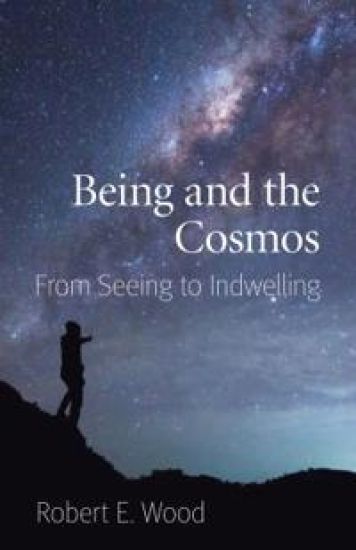
Robert Wood's aim in Being and Cosmos is to reestablish a speculative view of the cosmos that goes back to the ancient Greeks and that corresponds to the holism of contemporary physics. There are two sets of problems in contemporary thought that militate against any such attempt. Most widespread is scientific reductionism in biology and neuroscience that explains awareness in terms of the mechanisms that underlie it. The second is the widespread attack in philosophy itself on speculative holism by deconstruction and anti-foundationalism. In Being and Cosmos, the tack against both is to make explicit the character of the mind that sees and thinks, that actively takes up commitment to the truth available in the disciplines involved. The basic ground of this position rests upon the functioning of the notion of Being that opens up the question of the character of the Whole and the human being's place in it. Thus position the treatment of the notion of Being as foundation and as orientation toward the Whole between the attack on reductionism and on deconstruction and anti-foundationalism. Wood concludes with a multidimensional sketch of an evolutionary view of the cosmos whose initial phases contain the potentialities for life, sensibility, and intellect as cosmic telos. The holism of contemporary physics has to be reconfigured in terms of this observation. Both reductionists and dualists should know that matter itself has to be re-minded and that mind itself matters.
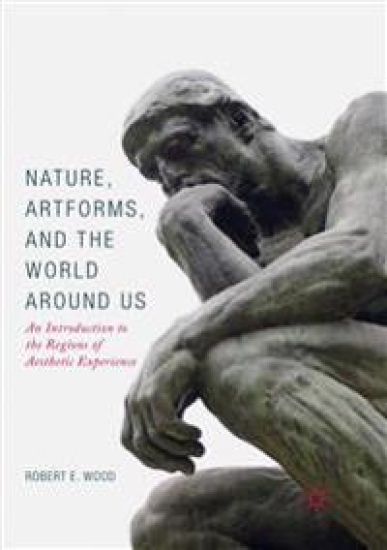
This book provides a comprehensive view of the aesthetic realm, placing the various major artforms within the setting of nature and the built environment as they arise within the field of experience. Each chapter displays the regional ontology of the form considered: the comprehensive set of eidetic features that limn the space of the art. It draws upon artists' statements, writings of key figures in the history of philosophy--including Plato, Hegel, Dewey, and Heidegger—and writings from various commentators on art. This volume is unique in its systematic and phenomenological approach, and in how it addresses aesthetics writ large.
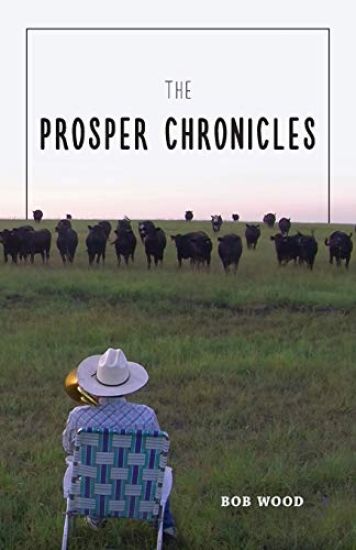
Step inside a slightly off-center world populated by cowboys, cotton farmers, oil heiresses and small-town merchants. The Prosper Chronicles explores the fictional West Texas town of Prosper, a town that is "seriously overnamed." Along the way there is plenty of coffee, wild plum pie, wry observations, unique characters and, of course, Beloved Rest Cemetery.Part Garrison Keillor, part John Henry Faulk, Bob Wood, with his keen ear for the vernacular and sharp eye for detail, admits that many characters and events in the Chronicles have a kernel of truth at their core. Prosper may or may not remind you of your hometown, but chances are you will recognize some of the colorful characters or traces of them in people with whom you have crossed paths.Meaningful because it's hilarious. Hilarious because it's true. A little too true. There are some real treasures hidden within: pop culture meets Old West, subtle wordplay meets authentic dialect, ironic twists within mind-bending plots. Enjoy. Read 'til you smile and your side hurts.
This book traces the evolution of concessional financing to Third World countries from its postwar origins in the Marshall Plan to the debt crisis that engulfed virtually the entire Third World in the early 1980s. It documents the evolution of a system of aid provision, of structured access to concessional external financing. The central focus is on how this structure of access to aid has changed over time and shaped development options an choices in the Third World. From this perspective, the emergence of the debt crisis is closely connected to the role of aid in the world economy. Although the debt crisis had other roots as well, this book elucidates an important set of determinants, generally overlooked, within the systems of aid provision itself. It further seeks to show that the debt crisis defines a new era, not simply a set of discrete and extraordinary events beween, say, Mexico's request for rescheduling in August 1982 and Argentina's coming to terms with the International Monetary Fund in September 1984. The debt crisis has profoundly altered the international environment tha Third Wold countries face, and the legacy of debt will continue to be a central focus of international relations and development choices for years to come. This title is part of UC Press's Voices Revived program, which commemorates University of California Press’s mission to seek out and cultivate the brightest minds and give them voice, reach, and impact. Drawing on a backlist dating to 1893, Voices Revived makes high-quality, peer-reviewed scholarship accessible once again using print-on-demand technology. This title was originally published in 1987.
This book provides a comprehensive view of the aesthetic realm, placing the various major artforms within the setting of nature and the built environment as they arise within the field of experience. Each chapter displays the regional ontology of the form considered: the comprehensive set of eidetic features that limn the space of the art. It draws upon artists' statements, writings of key figures in the history of philosophy--including Plato, Hegel, Dewey, and Heidegger—and writings from various commentators on art. This volume is unique in its systematic and phenomenological approach, and in how it addresses aesthetics writ large.
How do we understand the notions of the beautiful, the true, and the good, and how do they help us to know, to understand? Philosopher Robert E. Wood considers appeal respectively to the heart, to the intellect, and to the will. In our minds, their interplay beckons each of us to assimilate one’s past, and look forward towards further endeavours. They also set up what Wood calls a ""dialogical imperative"" to speak from where we stand and to stand in place of the Other, the person facing us, as well. The order follows Plato's claim that the love of Beauty is the light of the Good that grounds our pursuit of the True.Human experience, according to Wood, has a ""magnetically bipolar"" character, rooted in organically based desires. Yet that experience is aimed, through the all-encompassing notion of Being, at the absolute totality of what is. The notion of Being affords a distance that grounds both understanding and choice. Culture enters in as well. Its developments, initially empty in relation to the totality, come to occupy the space of meaning between the here-and-now and the totality. Each human being's genetic endowments interplay with one's cultural shaping. Taking them up, each individual sets up a unique field of attractions and repulsions belonging to the heart as one’s radically individual center.Wood proceeds from this phenomenological basis to consider key thinkers from Heraclitus and Parmenides, to Heidegger, Buber, and Marcel. He seeks, in this collection of essays from the past forty years, to develop a ""fusion of horizons"" with them, as part of an on-going broader philosophical dialogue that constitutes the history of thought, now and to come.
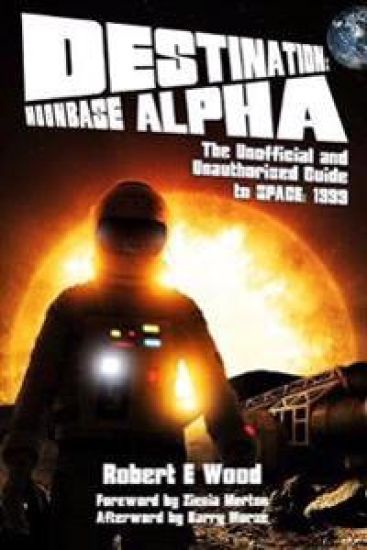
13 September 1999... A massive nuclear explosion blasts the Moon out of Earth orbit, sending Moonbase Alpha's 311 inhabitants on an uncontrollable odyssey through deep space. Now, Destination: Moonbase Alpha takes you back to a future billed as "the most spectacular space science fiction series ever produced for television." Destination: Moonbase Alpha is the most comprehensive book ever published on Space: 1999, including extensive cast lists and detailed reviews of all 48 episodes, as well as the Message from Moonbase Alpha short film. Destination: Moonbase Alpha presents the incredible story of the making of a science fiction classic, told by the actors, writers and production crew who created it. Including commentary from: Martin Landau (Commander John Koenig), Barbara Bain (Doctor Helena Russell), Barry Morse (Professor Victor Bergman), Sylvia Anderson (Producer - Year One), Catherine Schell (Maya), Fred Freiberger (Producer - Year Two), Zienia Merton (Sandra Benes), Gerry Anderson (Executive Producer), Prentis Hancock (Paul Morrow), Johnny Byrne (Writer), Nick Tate (Alan Carter), Christopher Penfold (Writer), Anton Phillips (Bob Mathias), Keith Wilson (Production Designer), John Hug (Bill Fraser) - and many more Destination: Moonbase Alpha also includes - for the first time ever - the complete story behind the disappearance of Barry Morse and Professor Victor Bergman ... It's a true story no fan has ever known - until now Destination: Moonbase Alpha is the essential guide to Space: 1999 - from critical reaction then and now, through the triumphant 35 year odyssey of Moonbase Alpha since the show's worldwide debut in 1975, and finally to plans for its return. Keep this indispensable guide with you, and escape into worlds beyond belief For more information on this title please visit: www.destinationmoonbasealpha.net 412pp. Also contains black and white photographs. 6 9 format paperback book.
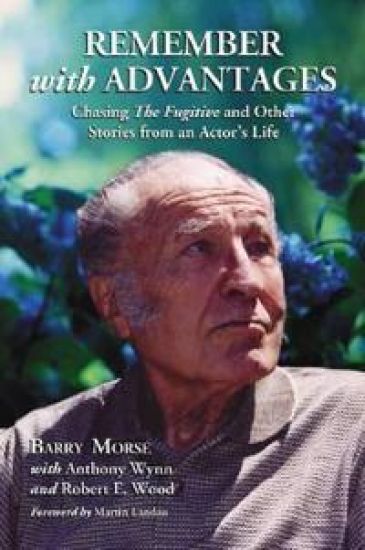
"In this memoir Morse traces his life and career, including his years at the Royal Academy of Dramatic Art, his radio jobs with the BBC, his 60-year marriage to actress Sydney Sturgess and their years together in the Court Players, his roles on television shows and his acquaintance with literary lights and screen stars"--Provided by publisher.