Kirjailija
Robert E Wright
Kirjat ja teokset yhdessä paikassa: 45 kirjaa, julkaisuja vuosilta 2001-2025, suosituimpien joukossa Little Business on the Prairie. Vertaile teosten hintoja ja tarkista saatavuus suomalaisista kirjakaupoista.
Mukana myös kirjoitusasut: Robert E. Wright
45 kirjaa
Kirjojen julkaisuhaarukka 2001-2025.

During his presidency, FDR led the American public to believe that the US government could set policy that would transform the economy. This book argues that this assumption, which ultimately became embedded into the general American psyche, has impacted our economy today in more ways than one. Robert E. Wright breaks down the negative societal impact of the New Deal throughout this book. The chapters highlight the lasting influence of these policies, providing new perspectives and never-before-seen archival research related to FDR's policies. The book provides insight into how assumptions of governmental intervention in the economy have shifted the direction of the economy over time. It also dives into socioeconomic topics related to social justice, critiquing the New Deal in its original and historical contexts. Wright brings a long-term public-choice perspective to the New Deal, providing interdisciplinary insights into socioeconomic topics such as gender, race, and climate. The resulting book is ideal for those interested in economics, American history, law, and policy.

Debating Universal Basic Income
Robert E. Wright; Aleksandra Przegalinska
Springer International Publishing AG
2023
nidottu
This book presents the most compelling arguments for and against implementing a basic income guarantee today, in the voice of proponents and critics, in alternating chapters. Tables, figures, and pictures illustrate the key concepts and evidence, which include benefit cliffs and disincentive deserts, time series macroeconomic data, business, economic, and technological change (BETC), artificial intelligence and other general purpose technologies, along with advanced robotics, the environmental Kuznets Curve, income distributions, democracy, social justice, dependence, autonomy, and economic freedom. A neutral, non-partisan tone introduction defines UBI and covers the history of universal income plans, while the conclusion summarizes the main arguments for and against UBI before surveying alternative policies, including universal basic asset, credit, service, job, and training plans.

"Weapons of War'' is an amazing story of a young African American, who was drafted, trained as a combat soldier and deployed to the Republic of South Viet Nam. Assigned to the 101st Airborne Division (Alpha Co. 2/506 3rd Platoon), he soon discovered that the North Vietnamese Regulars, the Viet Cong Guerillas and the environmental conditions were not his only adversaries in this faraway war. Written from the soldier's actual letters sent home to his fiancee, the author offers readers a fascinating account of his service in the United Army and how he survived the enemies of war--danger, despair, temptation, fear and doubt-- armed with his training, his M-16 rifle, his writings (pen, paper and pictures) and his faith. Written in a captivating writing style "you" the reader will be drawn physically and emotionally into every moment of each letter. The book gives a clear understanding of what a combat soldier experiences (physically, emotionally and spiritually) during wartime. From "Boot Camp" to "Final Discharge" it is the author's story of how service, love and faith shaped his character for the rest of his life. "Weapons of War" is an excellent book to read for personal growth and development. It offers thoughtful insight into the human spirit and what it takes to remain strong and focused in difficult times and situations. It is an inspirational testament to the power of faith, love and hope.
Turn Crisis Into CashMoney matters got a lot scarier in 2020 and there is no end to the volatility in sight. Crisis means danger but also opportunity. To turn a profit during the next bust, or the next burst of inflation, individual investors and businesspeople must understand the economics of money, banking, and finance.That's what this book provides, in concise and understandable prose, with pictures. Understand inflation and interest rates, stock prices, money and monetary policy, and the basics of information and macroeconomic theory in short order.You might not beat the market after reading just this book, but if you learn its lessons the market won't beat up your business or investment portfolio the next time the economy tanks due to pandemic, war, high taxes, or alien invasion.
Turn Crisis Into CashMoney matters got a lot scarier in 2020 and there is no end to the volatility in sight. Crisis means danger but also opportunity. To turn a profit during the next bust, or the next burst of inflation, individual investors and businesspeople must understand the economics of money, banking, and finance.That's what this book provides, in concise and understandable prose, with pictures. Understand inflation and interest rates, stock prices, money and monetary policy, and the basics of information and macroeconomic theory in short order.You might not beat the market after reading just this book, but if you learn its lessons the market won't beat up your business or investment portfolio the next time the economy tanks due to pandemic, war, high taxes, or alien invasion.

Debating Universal Basic Income
Robert E. Wright; Aleksandra Przegalinska
Springer International Publishing AG
2022
sidottu
This book presents the most compelling arguments for and against implementing a basic income guarantee today, in the voice of proponents and critics, in alternating chapters. Tables, figures, and pictures illustrate the key concepts and evidence, which include benefit cliffs and disincentive deserts, time series macroeconomic data, business, economic, and technological change (BETC), artificial intelligence and other general purpose technologies, along with advanced robotics, the environmental Kuznets Curve, income distributions, democracy, social justice, dependence, autonomy, and economic freedom. A neutral, non-partisan tone introduction defines UBI and covers the history of universal income plans, while the conclusion summarizes the main arguments for and against UBI before surveying alternative policies, including universal basic asset, credit, service, job, and training plans.

Shareholder activist Wilma Soss rocketed to fame in the 1950s fighting for the rights of the individual investor. But over the years, her legacy was almost forgotten. Based on archival documents, this is the true story of how a disparate group of activist investors-from a PR star to a Holocaust survivor-found each other and became the advocates Fortune 500 management loved to hate. Soss and her band of activists, including the incomparable Evelyn Y. Davis, leveraged the media to promote the rights of small shareholders. The idea was simple: buy one share of stock to gain access to shareholder meetings and remind management whom they really serve. These "corporate gadflies" were determined to speak their minds, even if it meant bringing their own megaphones or being dragged out of public meetings. But their message was undeniable, and ultimately changed corporate America for the better. Increased opportunities in the workplace, improved shareholder voting rights and greater corporate transparency were just some of the reforms Wilma Soss and her Federation kicked off in the post-war era. If you're looking for the intellectual heritage of 2021's WallStreetBets phenomenon or the reason Fearless Girl stands as a symbol of American optimism today, look no further than the life, times and efforts of the fearless shareholder activist, Wilma Soss.

The History and Evolution of the North American Wildlife Conservation Model
Robert E. Wright
Springer International Publishing AG
2022
sidottu
This book explains how six policies collectively called the North American Wildlife Conservation Model (NAWCM), put in place around the turn of the twentieth century, saved numerous iconic big game species from extinction. Rigid adherence to the NAWCM, however, especially its ban on the commercial sale of wild game meat, has allowed deer and some other species to become overabundant pests in areas where hunting pressure recently declined and habitat rebounded. Texas and South Africa have proven that scientific insight and market incentives can combine to prevent game overabundance and decrease the fragility and extend the range of iconic mammal game species. This book outlines how intermediate steps, like proxy hunting and other wildlife regulation reforms, could be used to lure more hunters into the field and move other states towards the Texas model incrementally, thereby minimizing risks to wildlife or human stakeholders.


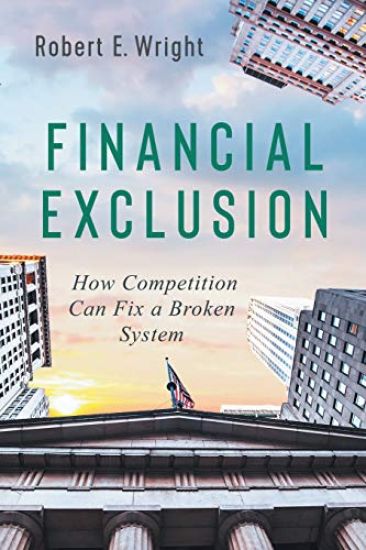
Financial Exclusion: How Competition Can Fix a Broken System
Robert E. Wright
American Institute for Economic Research
2019
nidottu
Like mass incarceration and slavery, financial exclusion, discrimination, and predation serve the interests of the few at the expense of their direct victims and overall economic efficiency. Yet those banes persist, evolve, and even thrive because governments often foster them with one hand while ineffectually combatting them with another.In Financial Exclusion, Robert E. Wright shows that America once ameliorated financial discrimination by leveraging the power of competition, allowing people who felt they were irrationally deprived of loans, insurance, or other financial services for reasons of ethnicity, gender, race, or religion to form their own financial institutions. Abandonment of that tradition for top-down government regulation in the 1990s led inevitably to the financial crisis of 2008. More regulation or direct government provision of financial services will not aid the those living in the hopeless, hungry side of town as much as a return to America's free market traditions will.Robert E. Wright has served Augustana University as the inaugural Nef Family Chair of Political Economy since 2009. After receiving his Ph.D. in economic history from SUNY Buffalo in 1997, Wright taught economics at the University of Virginia and New York University's Stern School of Business. His 18 previous books include Mutually Beneficial, The First Wall Street, Financial Founding Fathers, One Nation Under Debt, Bailouts, Fubarnomics, Corporation Nation, Little Business on the Prairie, and The Poverty of Slavery.
This ground-breaking book adds an economic angle to a traditionally moral argument, demonstrating that slavery has never promoted economic growth or development, neither today nor in the past. While unfree labor may be lucrative for slaveholders, its negative effects on a country’s economy, much like pollution, drag down all members of society. Tracing the history of slavery around the world, from prehistory through the US Antebellum South to the present day, Wright illustrates how slaveholders burden communities and governments with the task of maintaining the system while preventing productive individuals from participating in the economy.Historians, economists, policymakers, and anti-slavery activists need no longer apologize for opposing the dubious benefits of unfree labor. Wright provides a valuable resource for exposing the hidden price tag of slaving to help them pitch antislavery policies as matters of both human rights and economic well-being.
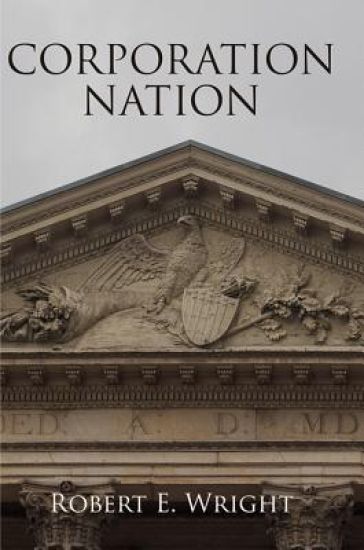
From bank bailouts and corporate scandals to the financial panic of 2008 and its lingering effects, corporate governance in America has been wracked by crises. Amid a weakening system of checks and balances in which corporate executives have little incentive to protect shareholder interests, U.S. corporations are growing larger and more irresponsible at the same time. But dependence on corporate profit was crucial to the early republic's growth, success, and security: despite protests that incorporated business was an inefficient and potentially corrupting system, U.S. state governments chartered more corporations per capita than any other nation-including Britain-effectively making the United States a "corporation nation." Drawing on legal and economic history, Robert E. Wright traces the development and decline of corporate institutions in America, connecting today's financial failures to deteriorating corporate law. In the nineteenth century, checks and balances kept managerial interests aligned with those of stockholders, and public opinion grew supportive as corporations raised billions of dollars to finance infrastructure such as transportation networks, financial systems, and manufacturing operations. But many of these checks and balances were dismantled after the Civil War, creating a space for the managerial malfeasance that spiraled into economic crisis in the twenty-first century. Bolstered with archival and original data, including the first complete count of American business corporations before the Civil War, Corporation Nation makes a compelling argument for improved internal governance and more effective external government regulation.
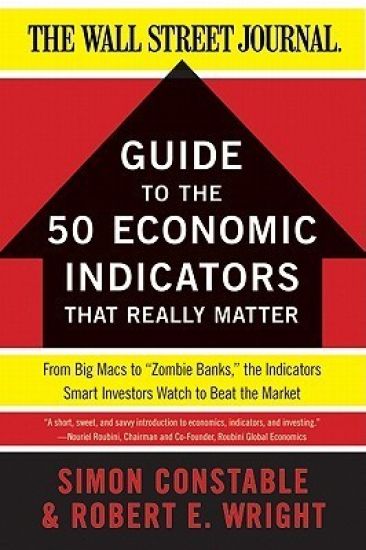
The WSJ Guide to the 50 Economic Indicators That Really Matter
Simon Constable; Robert E. Wright
HarperBusiness
2011
nidottu
The Wall Street Journal Guide to the 50 Economic Indicators that Really Matter is a must-have guide for investors. Dow Jones columnist Simon Constable and respected financial historian Robert E. Wright offer valuable tips and insight to help investors forecast and exploit sea changes in the global macroeconomic climate. Unlike other investment handbooks, Constable and Wright's guide explores the not widely known economic indicators that the smartest investors watch closely in order to beat the stock market-from "Big Macs" to "Zombie Banks." Not only valuable and informative, The Wall Street Journal Guide to the 50 Economic Indicators that Really Matter is also wonderfully irreverent and endlessly entertaining, making it the most fun to read investors' guide on the market.
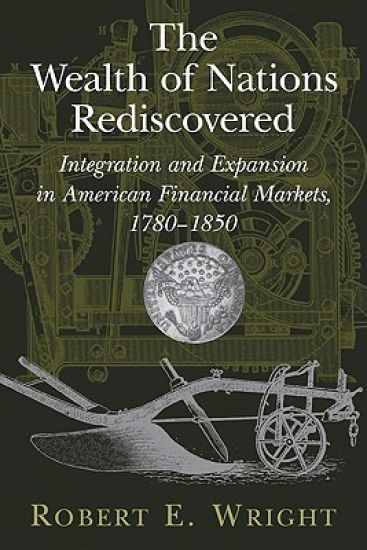
In The Wealth of Nations Rediscovered: Integration and Expansion in American Financial Markets, 1780–1850, Robert E. Wright portrays the development of a modern financial sector - with a central bank, a national monetary system, and efficient capital markets - as the driving force behind America's economic transition from agricultural colony to industrial juggernaut. This study applies the economic theory of information asymmetry to our understandings of early US financial development, expanding on scholarship of finance-led economic growth. The book's research is original, incorporating little-used archival material and data on early US securities prices, trading volumes, and stockholder patterns. The topics covered - securities trading, market liquidity, intermediation, banking reform, emerging market success, and foreign investment - are relevant to discussions in today's business community. Drawing from and building upon Adam Smith's lesser-known insights into financial relationships, The Wealth of Nations Rediscovered positions itself on the cusp of emerging paradigm shifts in history and economics.
Knowledge for Generations
Robert E. Wright; Timothy C. Jacobson; George David Smith
John Wiley Sons Inc
2008
sidottu
A lively history of one of America's oldest publishing houses, published in conjunction with Wiley's bicentennial Founded in New York City when Thomas Jefferson was president, Wiley has been a significant player in the publishing industry for two centuries. Now, on the occasion of Wiley's bicentennial, a distinguished team of authors brings Wiley's rich history to life, showing how the company has reacted to trends within the publishing industry as well as to larger economic, social, and cultural forces. Knowledge for Generations sheds light on the long-term strengths and weaknesses of Wiley's business, illuminates the continuities and changes over time, and shows how family ownership has influenced the company's strategies, values, and corporate culture. Drawing on unrestricted access to company archives and interviews with key executives, the authors capture a story of sustained business success, intriguing personalities, and dramatic changes in the industry. Illustrated throughout with illuminating photographs and graphics, Knowledge for Generations is a must-read for anyone interested in the history of publishing.