Kirjojen hintavertailu. Mukana 12 519 547 kirjaa ja 12 kauppaa.

Kirjailija

Robert Edgar

Kirjat ja teokset yhdessä paikassa: 13 kirjaa, julkaisuja vuosilta 2010-2025, suosituimpien joukossa Thomas Hardy and the Folk Horror Tradition. Vertaile teosten hintoja ja tarkista saatavuus suomalaisista kirjakaupoista.

13 kirjaa

Kirjojen julkaisuhaarukka 2010-2025.

Thomas Hardy and the Folk Horror Tradition

Thomas Hardy and the Folk Horror Tradition

Alan G. Smith; Robert Edgar; John Marland

BLOOMSBURY PUBLISHING PLC
2024
nidottu
Thomas Hardy and the Folk Horror Tradition takes the uncanny and unsettling fiction of Thomas Hardy as fundamental in examining the lineage of ‘Hardyan Folk Horror’. Hardy’s novels and his short fiction often delve into a world of folklore and what was, for Hardy the recent past. Hardy’s Wessex plays out tensions between the rational and irrational, the pagan and the Christian, the past and the 'enlightened' future. Examining these tensions in Hardy's life and his work provides a foundation for exploring the themes that develop in the latter half of the 20th century and again in the 21st century into a definable genre, folk horror. This study analyses the subduing function of heritage drama via analysis of adaptations of Hardy's work to this financially lucrative film market. This is a market in which the inclusion of the weird and the eerie does not fit with the construction of a past and its function in creating a nostalgia of a safe and idyllic picture of England’s rural past. However, there are some lesser-known adaptations from the 1970s that sit alongside the unholy trinity of folk horror: the adaptation for television of the Wessex Tales. From a consideration of the epistemological fissure that characterize Hardy’s world, the book draws parallels between then and now and the manifestation of writing on conceptual borders. Through this comparative analysis, Thomas Hardy and the Folk Horror Tradition posits that we currently exist on a moment of fracture, when tradition sits as a seductive threat.

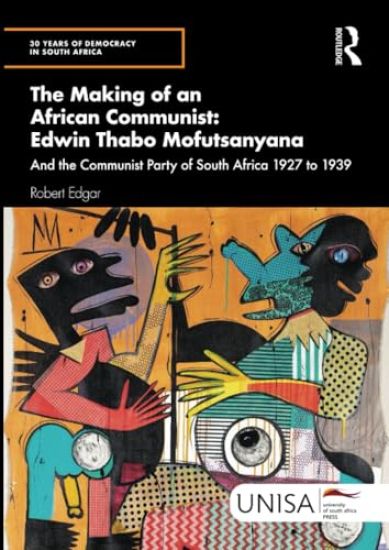
The Making of an African Communist: Edwin Thabo Mofutsanyana
This book is a short biography of the life of Edwin Thabo Mofutsanyana – the General Secretary of the Communist Party of South Africa. Set against the backdrop of political crisis in South Africa, the subject matter in this book discusses Mofutsanyana’s political endeavors and his service and contribution to the freedom struggle.Print editions not for sale in Sub-Saharan Africa. This book is part of Routledge’s co-published series 30 Years of Democracy in South Africa, in collaboration with UNISA Press, which reflects on the past years of a democratic South Africa and assesses the future opportunities and challenges.
Thomas Hardy and the Folk Horror Tradition

Thomas Hardy and the Folk Horror Tradition

Alan G. Smith; Robert Edgar; John Marland

BLOOMSBURY PUBLISHING PLC
2023
sidottu
Thomas Hardy and the Folk Horror Tradition takes the uncanny and unsettling fiction of Thomas Hardy as fundamental in examining the lineage of ‘Hardyan Folk Horror’. Hardy’s novels and his short fiction often delve into a world of folklore and what was, for Hardy the recent past. Hardy’s Wessex plays out tensions between the rational and irrational, the pagan and the Christian, the past and the 'enlightened' future. Examining these tensions in Hardy's life and his work provides a foundation for exploring the themes that develop in the latter half of the 20th century and again in the 21st century into a definable genre, folk horror. This study analyses the subduing function of heritage drama via analysis of adaptations of Hardy's work to this financially lucrative film market. This is a market in which the inclusion of the weird and the eerie does not fit with the construction of a past and its function in creating a nostalgia of a safe and idyllic picture of England’s rural past. However, there are some lesser-known adaptations from the 1970s that sit alongside the unholy trinity of folk horror: the adaptation for television of the Wessex Tales. From a consideration of the epistemological fissure that characterize Hardy’s world, the book draws parallels between then and now and the manifestation of writing on conceptual borders. Through this comparative analysis, Thomas Hardy and the Folk Horror Tradition posits that we currently exist on a moment of fracture, when tradition sits as a seductive threat.
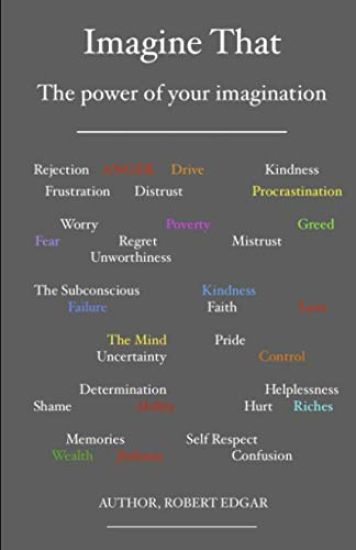
Imagine That

Imagine That

Robert Edgar

Robert Seay
2020
nidottu
Your subconscious mind is your personal servant for as long as you live. Always prepared and ready. Always standing by to serve only you and only at your command. Your imagination, limitless in its scope, proves that nothing is impossible when combined.The combination of these two entities under your control is more powerful than any other combination constructively or destructively, known to mankind, and when you fully understand this and recognize the power you alone hold as an individual, then you alone must know that this power must never be left to chance. Humanity as we know it, would never survive in the hands of evil or be more welcomed in the hands of the responsible and moral. - Robert Edgar
Revel Access Code for Civilizations Past and Present, Volume 2

Revel Access Code for Civilizations Past and Present, Volume 2

Robert Edgar; Neil Hackett; George Jewsbury; Barbara Molony; Matthew Gordon

Pearson
2020
lisenssiavain
For courses in world history.A narrative exploration of world history and culturesRevel™ Civilizations Past and Present presents a survey of world history, treating the development and growth of civilization as a global phenomenon involving the interaction of all of the world’s cultures. The text includes all the elements of history — social, economic, political, military, religious, aesthetic, legal, and technological — to illustrate this global interaction. The 13th Edition has been substantially revised and made more concise while emphasizing world trends and carefully avoiding placing these trends within a Western conceptual basis.Revel is Pearson’s newest way of delivering our respected content. Fully digital and highly engaging, Revel replaces the textbook and gives students everything they need for the course. Informed by extensive research on how people read, think, and learn, Revel is an interactive learning environment that enables students to read, practice, and study in one continuous experience — for less than the cost of a traditional textbook.NOTE: Revel is a fully digital delivery of Pearson content. This ISBN is for the standalone Revel access card. In addition to this access card, you will need a course invite link, provided by your instructor, to register for and use Revel.
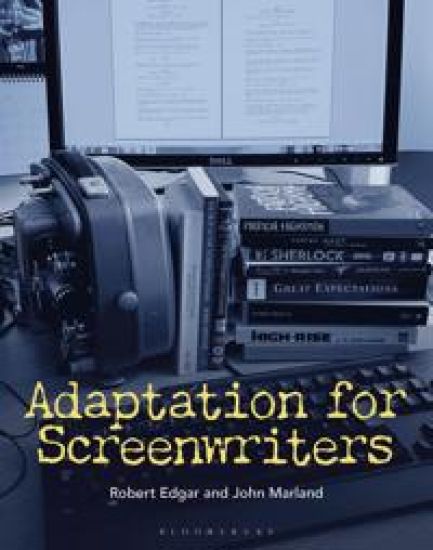
Adaptation for Screenwriters

Adaptation for Screenwriters

Robert Edgar; John Marland

Bloomsbury Academic
2019
nidottu
Develop the critical and creative skills to ‘translate’ a story from page to screen with this step-by-step guide to the process of screen adaptation you'll learn to: - interrogate a novel or short story to release its ‘inner film’ - convert fictional prose into visual drama - overcome the obstacles presented by different media ‘languages’ - approach key strategic decisions - both technical and interpretive - draft and re-draft your plot, characters and dialogue - professionally format and submit your finished script In addition to examples taken from ‘literary classics’, contemporary novels, genre fiction, short stories, and biographical material, Marland and Edgar embrace the wider phenomenon of re-telling and updating existing stories, such as the ‘appropriation’ of popular figures, inter-film adaptation (sequels and ‘reboots’), and development into other visual forms including graphic fiction and video games. Whether you are producing a faithful adaptation of Tolstoy’s War and Peace, or planning to pair up the crime-fighting duo of Sherlock Holmes and Batman, Adaptation for Screenwriters will be your guide.
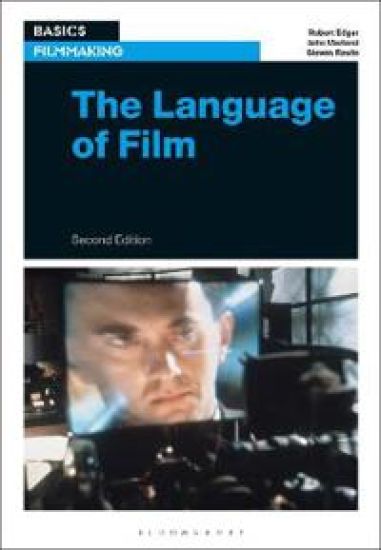
The Language of Film

The Language of Film

Robert Edgar; John Marland; Steven Rawle

Bloomsbury Academic USA
2018
nidottu
An effective filmmaker needs to have a good understanding of how film language works, and more importantly, how to actively influence an audience’s thoughts and feelings and guide their gaze around the screen.Packed with examples from classic and contemporary cinema, The Language of Film reveals the essential building blocks of film and explains how the screen communicates meaning to its audience. You will learn about fundamental theories and concepts, including film semiotics, narrative structures, ideology, and genre, as well as how elements such as shot size, camera movement, editing technique, and color come together to create the cinematic image.With insightful case studies and discussion questions, dozens of practical tips and exercises, and a new chapter on film sound, this new edition of The Language of Film is a must-have guide for aspiring filmmakers.
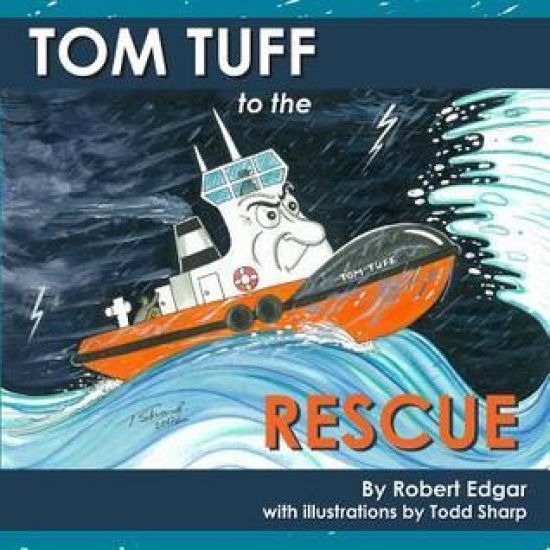
Tom Tuff to the Rescue

Tom Tuff to the Rescue

Robert Edgar

Moshpit Publishing
2013
pokkari
Can Tom Tuff rescue the big ship in time?The story of Tom Tuff to the Rescue is about a little tug boat who could - a brave boat who had to venture out of his comfort zone, who had to try really, really hard to help another ship out, and who made it home, saving the container ship from sinking during a terrible storm.Youngsters will love this pre-schooler and early childhood adventure story from Robert Edgar, author of SOS from Rhodon Valley, and the wonderfully detailed, yet humanistic, illustrations from artist Todd Sharp.Ideal for children aged 4 to 7, and boys in particular, Tom Tuff is a pre reader for pre-school children and a solid early reader for the beginning readers.
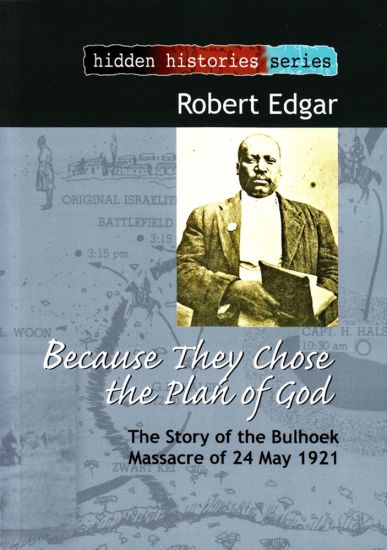
Because they chose the plan of God

Because they chose the plan of God

Robert Edgar

Unisa Press
2010
nidottu
On the morning of 24 May 1921, a force of 800 white policemen and soldiers marched to a place called Bulhoek, about 25 kilometres southwest of Queenstown in the Eastern Cape. The white government had instructed them to confront an African prophet, Enoch Mgijima, and his followers, called the Israelites, who refused to leave their holy village Ntabelanga (`The Mountain Of The Rising Sun’) where they had gathered to await the end of the world. The government was not prepared to allow them to pray and worship in peace, because it claimed the Israelites were illegally squatting on land that was not theirs. After many months of negotiating, it finally sent out an armed force to expel the Israelites. They did not want to fight the Israelites, but, if it came to that, they had modern weapons and they were prepared to use them. When the Israelites and the police did not settle their differences, they clashed. The police were armed with rifles, machine guns, and cannons, while the Israelites had only sticks, swords, and spears to defend themselves. After the 20-minute skirmish nearly 200 Israelites lay dead and many others were wounded. This event would soon be called the `Bulhoek Massacre’. To understand why this clash at Bulhoek happened we will look at the life history of Enoch Mgijima and the religous group he founded, the Israelites. We discuss the political, economic, and social background to the massacre. We try to understand why the Israelites settled at Ntabelanga and why the government opoposed them. We explore why the two sides were not able to find a solution to their differences. We examine why the government decided to send an armed force to expel the Israelites from their holdy village and why the Israelites were prepared to face the policemen's guns on the plain outside Ntabelanga. Finally we learn about how people have written and spoken about the Bulhoek massacre over the years and how the South African government before and after 1994 represented the event in museums and memorials.