Kirjailija
Robert Evans
Kirjat ja teokset yhdessä paikassa: 36 kirjaa, julkaisuja vuosilta 1994-2026, suosituimpien joukossa The Last Elder. Vertaile teosten hintoja ja tarkista saatavuus suomalaisista kirjakaupoista.
36 kirjaa
Kirjojen julkaisuhaarukka 1994-2026.
My book has lots of twist and turns that will make a person keep reading from cover to cover and still want more, because the story to this book was written way before the birth of Crist. Throughout my life I kept asking myself why I was spared, why was I saved? I am sure it wasn t because I lived the life of an angle. I asked myself this question all of my life until I reached the age of 80. Then it hit me like a ton of bricks. I was destined to be here to tell this story. That s why this book is going to captivate a reader.
Veritocracy: Truth, Science, and How to Preserve Democracy
Harry Collins; Robert Evans
BLOOMSBURY ACADEMIC
2025
sidottu
Western democracies are suffering from populism, verging on fascism because of the erosion of truth. This book argues that truth can grow out of citizenship education in how science really works, allied with an explicit culture of truth among politicians. While science is outside the timescale of politics, it can be an object lesson for political decision-making and constitute one of the branches of democracy. Using the examples of disease prevention and climate change, the book presents demarcation criteria fordistinguishing between real expertise and populist claims and also for distinguishing betweenreal science and contenders for that title that do not deserve the moniker. It also argues that the discipline of economics, as currently constituted, does notdeserve the title of science because it does not seek correspondence truth but instead works in acircular way within its own models without concern for how those models with their assumptionsactually map onto reality. The solution the authors propose - veritocracy, a democracy with truth at its heart - is incompatible with either left or right totalitarianism.
When curiosity doesn’t kill the cat… the cat might just kill you.In the quiet of the Scottish countryside, a young boy has been killed.Nobody is sure how... or by what.This inexplicable death piques the interest of field biologist Steph Patel who, motivated by the chance of a money maker, pursues the boy's story.Discovered near the secret location of a rewilding project, where geneticists are working to bring back once-extinct predators, the boy's death is suspicious to say the least. But when Steph probes further, things rapidly go south, and she soon finds herself fighting for her life against enemies far more dangerous than anything resurrected from the past.
King's Cross
Bob Allies; Robert Evans; Graham Morrison; Demetri Porphyrios
LUND HUMPHRIES PUBLISHERS LTD
2025
sidottu
This book provides the most accurate and most complete account of the evolution of King's Cross Central, one of Europe’s most successful, and most significant, urban regeneration projects. It is already the subject of considerable international interest, attracting the attention of planners, politicians and urban designers both at home and abroad. The four authors of this book all played key roles in the development of the project and together they describe how and why King’s Cross Central came about. Beginning by setting out King's Cross’s rich and complex history, the book then provides fascinating insights from the main protagonists, from initial concept, based on an innovative mixed-use approach based on ten guiding principles which set out the ‘human city’; through its evolution with various stakeholders involved; the complex negotiations regarding planning, conservation and financing; to the development and creation of the public spaces and landscapes and the selection of individual architects and buildings which, together with the renovation of historical buildings, has created King's Cross’s unique and successful character. Throughout, it is generously illustrated with historic photos and maps, drawings and diagrams, photographs recording the construction phase and specially commissioned graphics summarising key data and images of the site today.
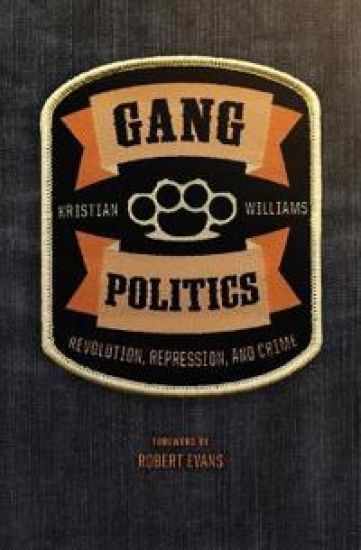
Demystifying forces of the state, gangs, and revolutionary violence.In Gang Politics, Kristian Williams examines our society's understanding of social and political violence, what gets romanticized, misunderstood, or muddled. He explores the complex intersections between "gangs" of all sorts--cops and criminals, Proud Boys and Antifa, Panthers and skinheads--arguing that government and criminality are intimately related, often sharing critical features. As society becomes more polarized and conflict more common, Williams's analysis is a crucial corrective to our usual ideas about the role violence might or should play in our social struggles.
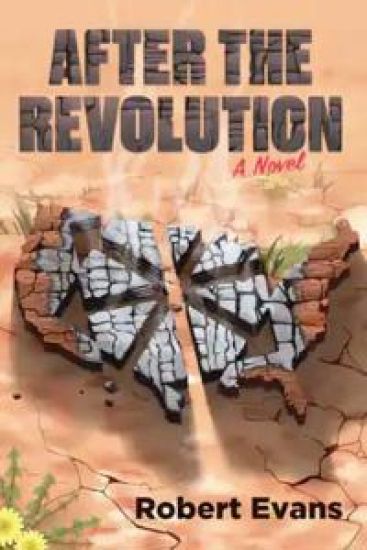
A chronicle of serendipitous alliances in a dystopia that's right around the corner. What will the fracturing of the United States look like? After the Revolution is an edge-of-your-seat answer to that question. In the year 2070, twenty years after a civil war and societal collapse of the "old" United States, extremist militias battle in the crumbling Republic of Texas. As the violence spreads like wildfire and threatens the Free City of Austin, three unlikely allies will have to work together in an act of resistance to stop the advance of the forces of the Christian ethnostate known as the "Heavenly Kingdom." Our three protagonists include Manny, a fixer that shuttles journalists in and out of war zones and provides footage for outside news agencies. Sasha is a teenage woman that joins the Heavenly Kingdom before she discovers the ugly truths behind their movement. Finally, we have Roland: A US Army vet kitted out with cyberware (including blood that heals major trauma wounds and a brain that can handle enough LSD to kill an elephant), tormented by broken memories, and 12,000 career kills under his belt. In the not-so-distant world Evans conjures we find advanced technology, a gender expansive culture, and a roving Burning Man-like city fueled by hedonistic excess. This powerful debut novel from Robert Evans is based on his investigative reporting from international conflict zones and on increasingly polarized domestic struggles. It is a vision of our very possible future.
The Face-to-Face Principle
Harry Collins; Robert Evans; Martin Innes
Ubiquity Press (Cardiff University Press)
2022
pokkari
Robert W. Evans takes you on a soulful journey, through the eyes of a young black man growing up on the sixties. Through the creative expression of poetry and lyrics combined from years of writing, Robert will prompt you to think, feel and experience what he has. Take a look From the Windows of My Soul
Experts and the Will of the People
Harry Collins; Robert Evans; Darrin Durant; Martin Weinel
Springer Nature Switzerland AG
2019
sidottu
The rise of populism in the West has led to attacks on the legitimacy of scientific expertise in political decision making. This book explores the differences between populism and pluralist democracy and their relationship with science. Pluralist democracy is characterised by respect for minority choices and a system of checks and balances that prevents power being concentrated in one group, while populism treats minorities as traitorous so as to concentrate power in the government. The book argues that scientific expertise – and science more generally -- should be understood as one of the checks and balances in pluralist democracies. It defends science as ‘craftwork with integrity’ and shows how its crucial role in democratic societies can be rethought and that it must be publicly explained. This book will be of value to scholars and practitioners working across STS as well as to anyone interested in decoding the populist agenda against science.
Just Keep Moving Forward is an inspirational work by RWE, the Writer and Editor of the Key Awareness newspaper publication for over 20 years. This book describes his motivational journey traveling through life. Hopefully each reader will be influenced positively along their earthly journey.
Ezekiel Robinson is not your typical young man. He is smart, educated and driven. His father and step-mother moved him from the Deep South to New York City, so they could provide the family with a better opportunity. His mother and her eight- month fetus were killed at the hands of three vicious men for slapping the farm owner after he slapped her. His father and stepmother finally saved enough money to buy a train ticket to New York City. They always heard the big train late at night but never saw it. Ezekiel was taught early in life to believe in God and hard work. He worked hard to be an excellent student in high school and college. He obtained a Masters' degree but was still tormented by the senseless murder of his mother in the south. He was enraged that his father did nothing to revenge his mother's death until his father explained to him why he could not do anything and asked him for forgiveness. His family and friends told him not to internalize others bad behavior, but does he listen. Will his refusal to ignore what he feels are injustices directed at him, cause him to lose focus and jeopardize his accomplishments and possibly his health?
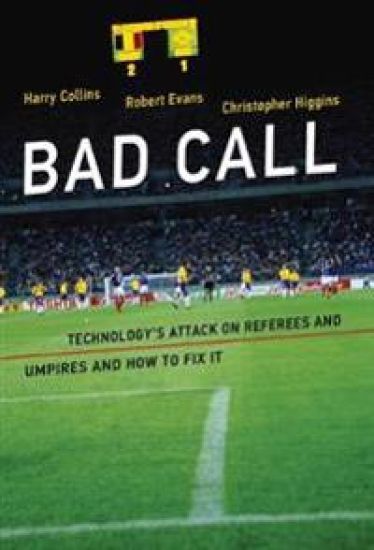
How technologies can get it wrong in sports, and what the consequences are-referees undermined, fans heartbroken, and the illusion of perfect accuracy maintained.Good call or bad call, referees and umpires have always had the final say in sports. Bad calls are more visible: plays are televised backward and forward and in slow motion. New technologies-the Hawk-Eye system used in tennis and cricket, for example, and the goal-line technology used in English football-introduced to correct bad calls sometimes get it right and sometimes get it wrong, but always undermine the authority of referees and umpires. Bad Call looks at the technologies used to make refereeing decisions in sports, analyzes them in action, and explains the consequences.Used well, technologies can help referees reach the right decision and deliver justice for fans: a fair match in which the best team wins. Used poorly, however, decision-making technologies pass off statements of probability as perfect accuracy and perpetuate a mythology of infallibility. The authors re-analyze three seasons of play in English Premier League football, and discover that goal line technology was irrelevant; so many crucial wrong decisions were made that different teams should have won the Premiership, advanced to the Champions League, and been relegated. Simple video replay could have prevented most of these bad calls. (Major League baseball learned this lesson, introducing expanded replay after a bad call cost Detroit Tigers pitcher Armando Galarraga a perfect game.)What matters in sports is not computer-generated projections of ball position but what is seen by the human eye-reconciling what the sports fan sees and what the game official sees.
We live in times of increasing public distrust of the main institutions of modern society. Experts, including scientists, are suspected of working to hidden agendas or serving vested interests. The solution is usually seen as more public scrutiny and more control by democratic institutions – experts must be subservient to social and political life. In this book, Harry Collins and Robert Evans take a radically different view. They argue that, rather than democracies needing to be protected from science, democratic societies need to learn how to value science in this new age of uncertainty. By emphasizing that science is a moral enterprise, guided by values that should matter to all, they show how science can support democracy without destroying it and propose a new institution – The Owls – that can mediate between science and society and improve technological decision-making for the benefit of all.
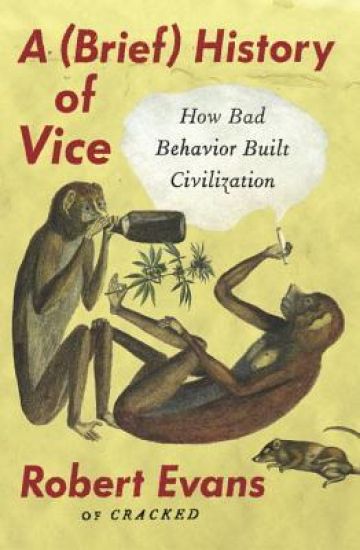
From an editor at the popular humor site Cracked.com""and one of the writers of the bestselling"You Might Be a Zombie"and"The De-Textbook," a rollicking look at vice throughout history, complete with instructions for re-creating debauchery at home. Part history lesson, part how-to guide, "A Brief History of Vice"includes interviews with experts and original experimentation to bring readers a history of some of humanity's most prominent vices, along with explanations for how each of them helped humans rise to the top of the food chain. Evans connects the dots between coffee and its Islamic origins, the drug ephedra and Mormons, music and Stonehenge, and much more. Chapters also include step-by-step guides for re-creating prehistoric debauchery in your modern life based on Evans's firsthand fieldwork. Readers won't just learn about the beer that destroyed South America's first empire; they'll learn how to make it."