Kirjojen hintavertailu. Mukana 12 390 323 kirjaa ja 12 kauppaa.

Kirjailija

Robert Farris Thompson

Kirjat ja teokset yhdessä paikassa: 11 kirjaa, julkaisuja vuosilta 1984-2021, suosituimpien joukossa BAT: Bridging Art + Text. Vertaile teosten hintoja ja tarkista saatavuus suomalaisista kirjakaupoista.

11 kirjaa

Kirjojen julkaisuhaarukka 1984-2021.

BAT: Bridging Art + Text

BAT: Bridging Art + Text

Michelle Eistrup; Anders Juhl; Bárbaro Martìnez-Ruìz; C. Daniel Dawson; Carlos Moore; Christopher Cozier; Dudley Joseph Thompson; Ebony G. Patterson; Ery Cámara; James Muriuki; Joseph Adandé; Kenneth Dossar; Nicholas Laughlin; Robert Farris Thompson; Britt Kramvig; Catherine Lefebvre; Charl Landvreugd; Gillion Grantsaan; Jeannette Ehlers; Noufel Bouzeboudja; Patricia Kaersenhout; Sasha Huber; Søren Assenholt; Temi Odumosu; Yo-Yo Gonthier; Yvette Brackman m.fl.

Hurricane
2017
muu
BAT: Bridging Art + Text viser komplekse historiske og nutidige forbindelser med værker og tekster af over 50 internationale kunstnere, forskere, kuratorer og forfattere.Bind I præsenterer kunst og performance med spiritualitet. Bind II præsenterer kunstnerne, som modarbejder racisme og diskrimination, og fremmer forskellige stemmer og identiteter. Bind III fokuserer på kritik af historiske hændelser og deres påvirkning af vores samtid.Med: Anders Juhl, Britt Kramvig, Catherine Lefebvre, Charl Landvreugd, Gillion Grantsaan, Jeannette Ehlers, Noufel Bouzeboudja, Patricia Kaersenhout, Sasha Huber, Søren Assenholt, Temi Odumosu, Yo-Yo Gonthier, Yvette Brackman m.fl.
Joan Myers Brown and the Audacious Hope of the Black Ballerina

Joan Myers Brown and the Audacious Hope of the Black Ballerina

Brenda Dixon Gottschild; Robert Farris Thompson

Palgrave Macmillan
2012
nidottu
Founder of the Philadelphia Dance Company (PHILADANCO) and the Philadelphia School of Dance Arts, Joan Myers Brown's personal and professional histories reflect the hardships as well as the advances of African-Americans in the artistic and social developments of the second half of the twentieth and the early twenty-first centuries.
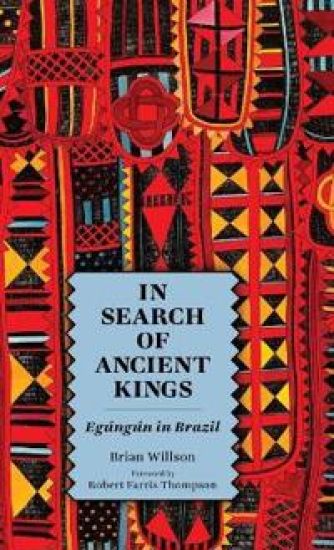
In Search of Ancient Kings

In Search of Ancient Kings

Brian Willson; Robert Farris Thompson

University Press of Mississippi
2021
sidottu
The Egúngún society is one of the least-studied and written-about aspects of African diasporic spiritual traditions. It is the society of the ancestors, the society of the dead. Its primary function is to facilitate all aspects of ancestor veneration. Though it is fundamental to Yorùbá culture and the Ifa?ü/Òrìß?úà tradition of the Yorùbá, it did not survive intact in Cuba or the US during the forced migration of the Yorùbá in the Middle Passage. Taking hold only in Brazil, the Egúngún cult has thrived since the early 1800s on the small island of Itaparica, across the Bay of Saints from Salvador, Bahia. Existing almost exclusively on this tiny island until the 1970s (migrating to Rio de Janeiro and, eventually, Recife), this ancient cult was preserved by a handful of families and flourished in a strict, orthodox manner. Brian Willson spent ten years in close contact with this lineage at the Candomble temple Xango Cá Te Espero in Rio de Janeiro and was eventually initiated as a priest of Egúngún. Representing the culmination of his personal involvement, interviews, research, and numerous visits to Brazil, this book relates the story of Egúngún from an insider's view. Very little has been written about the cult of Egúngún, and almost exclusively what is written in English is based on research conducted in Africa and falls into the category of descriptive and historical observations. Part personal journal, part metaphysical mystery, part scholarly work, part field research, and part reportage, In Search of Ancient Kings illuminates the nature of Egúngún as it is practiced in Brazil.
In Search of Ancient Kings

In Search of Ancient Kings

Brian Willson; Robert Farris Thompson

University Press of Mississippi
2021
nidottu
The Egúngún society is one of the least-studied and written-about aspects of African diasporic spiritual traditions. It is the society of the ancestors, the society of the dead. Its primary function is to facilitate all aspects of ancestor veneration. Though it is fundamental to Yorùbá culture and the Ifa?ü/Òrìß?úà tradition of the Yorùbá, it did not survive intact in Cuba or the US during the forced migration of the Yorùbá in the Middle Passage. Taking hold only in Brazil, the Egúngún cult has thrived since the early 1800s on the small island of Itaparica, across the Bay of Saints from Salvador, Bahia. Existing almost exclusively on this tiny island until the 1970s (migrating to Rio de Janeiro and, eventually, Recife), this ancient cult was preserved by a handful of families and flourished in a strict, orthodox manner. Brian Willson spent ten years in close contact with this lineage at the Candomble temple Xango Cá Te Espero in Rio de Janeiro and was eventually initiated as a priest of Egúngún. Representing the culmination of his personal involvement, interviews, research, and numerous visits to Brazil, this book relates the story of Egúngún from an insider's view. Very little has been written about the cult of Egúngún, and almost exclusively what is written in English is based on research conducted in Africa and falls into the category of descriptive and historical observations. Part personal journal, part metaphysical mystery, part scholarly work, part field research, and part reportage, In Search of Ancient Kings illuminates the nature of Egúngún as it is practiced in Brazil.
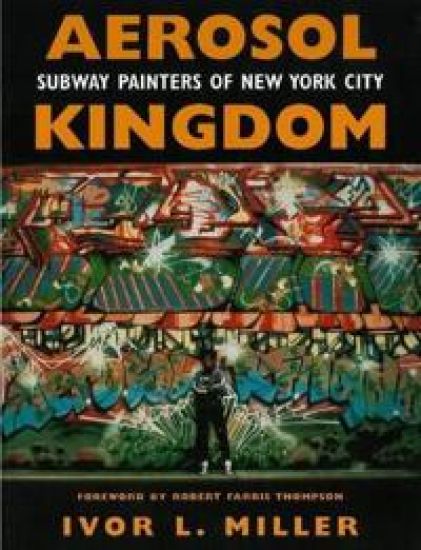
Aerosol Kingdom

Aerosol Kingdom

Ivor L Miller; Robert Farris Thompson

University Press of Mississippi
2012
nidottu
Hailed as the seminal study of spray can art of the 1970s and 1980s, Aerosol Kingdom explores the origins and aesthetics of graffiti writings. From a vast array of inherited traditions and gritty urban lifestyles talented and renegade young New Yorkers spawned a culture of their own, a balloon-lettered shout heralding the coming of hip-hop. Though helpless in checking its spreading appeal, city fathers immediately went on the attack and denounced it as vandalism. Many aficionados, however, recognized its trendy aesthetic immediately. By the 1980s spray-paint art hit the mainstream, and subway painters, mostly from marginal barrios of the city, became art world darlings. Their proliferating, ephemeral art was spotlighted in downtown galleries, in the media, and thereafter throughout the land. Not only did the practice of ""public signaturing"" take over New York City, but also, as the images moved through the neighborhoods on the subway cars, it also grabbed hold in the suburbs. Soon it stirred worldwide imitation and helped spark the hip-hop revolution. As the artists wielded their spray cans, they expressed their acute social consciousness. Aerosol Kingdom documents their careers and records the reflections of key figures in the movement. It examines converging forces that made aerosol art possible--the immigration of Caribbean peoples, the reinforcing presence of black American working-class styles and fashions, the effects of advertising on children, the mass marketing of spray cans, and the popular protests of the 1960s and 1970s against racism, sexism, classism, and war. The creative period of the movement lasted for over twenty years, but most of the original works have vanished. Official cleanup of public sites erased great pieces of the heyday. They exist now only in photographs, in the artists' sketchbooks, and now in Aerosol Kingdom.
Joan Myers Brown and the Audacious Hope of the Black Ballerina

Joan Myers Brown and the Audacious Hope of the Black Ballerina

Brenda Dixon Gottschild; Robert Farris Thompson

Palgrave Macmillan
2012
sidottu
Founder of the Philadelphia Dance Company (PHILADANCO) and the Philadelphia School of Dance Arts, Joan Myers Brown's personal and professional histories reflect the hardships as well as the advances of African-Americans in the artistic and social developments of the second half of the twentieth and the early twenty-first centuries.
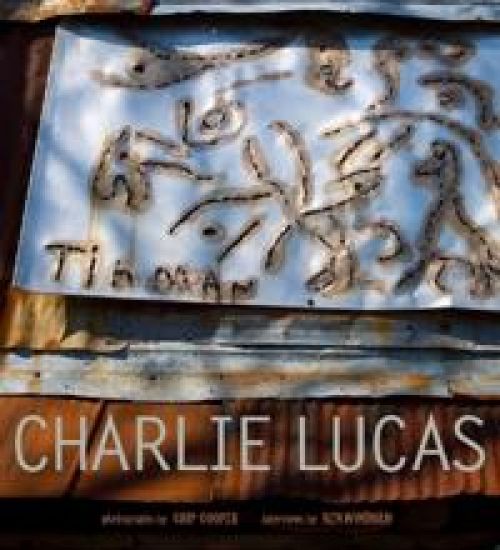
Tin Man

Tin Man

Charlie Lucas; Robert Farris Thompson

The University of Alabama Press
2009
sidottu
Charlie Lucas is a self-taught artist. Although he has made art since childhood, only since a debilitating accident in 1984 did Lucas turn to art seriously as a form of personal expression. He has since become recognized nationally and internationally as a great innovator in the field of American folk art. From his workshop in Pink Lily, Alabama - a rural wonderland of objects, sculptures, paintings, buildings, and installations - Charlie Lucas makes his art from materials that others have discarded (as he himself believes he was once discarded): old tin, bicycle wheels, shovels, car mufflers, tractor seats, metal banding, wire, and gears. His work is visionary, in every sense of the word, each creation the result of an intense communion with his heritage, ancestors, race, family, and his own choices in life. Every work is imbued with a story. With more than 200 vivid color photographs - of the artist at work, his studio environments, and his finished creations - ""Tin Man"" presents Lucas through his own words and stories - his troubled and impoverished childhood, his self-awakening to the depths of his own artistic vision, his perseverance through years of derision and misapprehension, and the salvation that has come through international acclaim and recognition, love of family, and his role as a teacher of children.
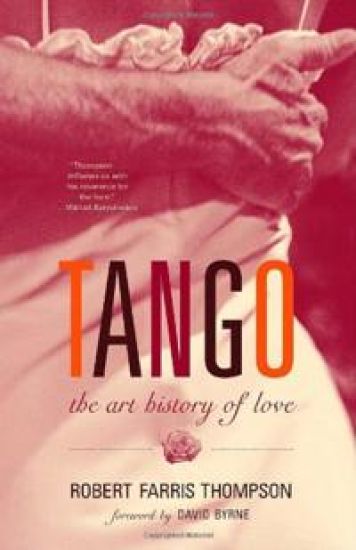
Tango

Tango

Robert Farris Thompson

Three Rivers Press
2006
nidottu
Tracing the origins and evolution of the most enduring dance form of the twentieth century, the author of The Flash of the Spirit looks at the diverse influences that led to the creation of the tango and examines the tango as a musical form, philosophy of life, art, and expression of Latin American culture. Reprint.
Art from Africa

Art from Africa

Pamela McClusky; Robert Farris Thompson; Seattle Art Museum (COR)

Princeton University Press
2002
sidottu
"This innovative work allows the objects it covers to breathe as living things. McClusky has evolved what appears to be a new way of writing a catalogue on African art. The writing is interesting, the stories surrounding the objects often fascinating. Thompson's essay is wonderfully composed. This is a work that can be enjoyed by the non-specialist reader for the tales it tells alone. Further, the objects are impressive, often spectacular."--Simon Ottenberg, University of Washington
Art from Africa

Art from Africa

Pamela McClusky; Robert Farris Thompson; Seattle Art Museum (COR)

Princeton University Press
2002
pokkari
This strikingly unusual and beautifully illustrated book represents a turning point in African art history. The authors draw on personal memories, interviews, and oral narratives to present twelve "case histories" of objects—or clusters of objects—in the Seattle Art Museum's renowned collection of African art. Each case history is enriched by comments from artists, art historians, writers, community members, and patrons who guide readers back into the markets, palaces, ceremonies, shrines, and streets where African art originated. Often sitting still and silent in a museum display case, African art is frozen in an alien frame. Vibrant music, movement, debate, and cryptic voices are among the missing elements that once surrounded the mask, sculpture, ring, or stool. Reframing the objects, Art from Africa proposes looking at what was once done with them while also listening carefully to what was once said in their presence. As the case histories reveal, the gross mislabeling of objects as "fetishes," "idols," and "devil masks" dissolves as art becomes better known as medicine, philosophy, personality correctives, and blessings for the future. Known for his scintillating analyses of African art, Robert Farris Thompson devotes his opening essay to introducing the missing dimension of motion, exploring the meaning of postures and gestures in various African cultures. A curator dedicated to telling the stories behind such art, Pamela McClusky explores subjects ranging from royal art of the Kom and Asante kingdoms, masquerades from the Yoruba, Dan, and Mende cultures, hunters' shirts from the Mande empire, sculpture from the Kongo kingdom, Mercedes-Benz coffins from the streets of Ghana, photographs from Mali, and Maasai body ornaments. This book accompanies a special exhibition of the museum's collection, but, as all art lovers who look beyond museum walls will appreciate, it is much more than an exhibition catalogue. EXHIBITION SCHEDULE Seattle Art MuseumFebruary 7, 2002-May 19, 2002 Author Biography: Pamela McClusky founded the Seattle Art Museum's Department of the Arts of Africa, Oceania, and the Americas in 1980, and she is currently Curator of African and Oceanic Art there. She has published African Masks and Muses: Selections of African Art in the Seattle Art Museum. Robert Farris Thompson is Professor of African and African American Art History at Yale University. His publications include The Four Moments of the Sun: Kongo Art in Two Worlds and Flash of the Spirit: African and Afro-American Art and Philosophy (Random House).
Flash of the Spirit

Flash of the Spirit

Robert Farris Thompson

Random House USA Inc
1984
pokkari
This book reveals how five distinct African civilizations have shaped the specific cultures of their New World descendants. "Robert Farris Thompson is the art historian of Africa who has turned his talents to Afro-America and sketched the course that creative new work is likely to follow." -- Eugene GenoveseThis landmark book shows how five African civilizations -- Yoruba, Kongo, Ejagham, Mande and Cross River -- have informed and are reflected in the aesthetic, social and metaphysical traditions (music, sculpture, textiles, architecture, religion, idiogrammatic writing) of black people in the United States, Cuba, Haiti, Trinidad, Mexico, Brazil and other places in the New World."A wonderfully enthusiastic book...Mr. Thompson is a professor of art history, but he takes his subject in the round, not in any specialized or compartmentalized manner. He is part anthropologist, part art critic, part musicologist, part student of religion and philosophy, and entirely an enthusiastic partisan of what he writes about."-- The New York Times Book Review"Centuries of racist assumptions go packing it in Flash of the Spirit." -- The Village Voice"This is art history to dance by." -- The Philadelphia Inquirer