
Kirjailija
Robert Fleck
Kirjat ja teokset yhdessä paikassa: 12 kirjaa, julkaisuja vuosilta 2014-2025, suosituimpien joukossa Kunst und Ökologie. Vertaile teosten hintoja ja tarkista saatavuus suomalaisista kirjakaupoista.
12 kirjaa
Kirjojen julkaisuhaarukka 2014-2025.
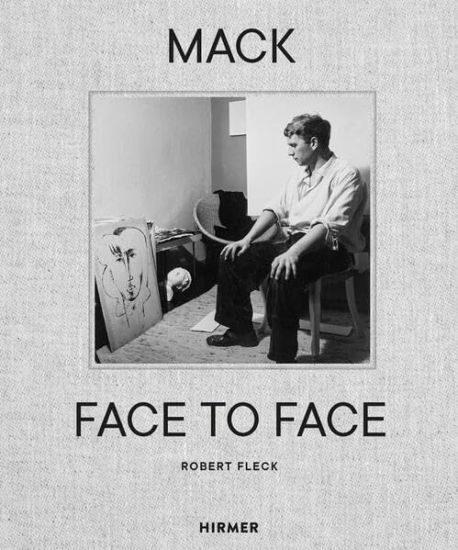
Much has been written about Heinz Mack, but this book truly stands out. Recounting his life through the pen of Robert Fleck, the artist himself gives us deep insights into the motivations and goals of his artistic work – almost as if we were sitting in conversation with this fascinating and renowned figure. A world-class artist is at once simple and very complex. On the one hand, a human being, like all of us, on the other, permeated by a web of motifs and ideas that one can scarcely guess at. Based on numerous conversations since 2020, the present volume explores this charged duality in Heinz Mack. We follow the artist closely through his eventful life, from the years of the Second World War to the present day. Like a second voice, original quotes placed in the margin accompany the narrative and lend this unusual biography its unique charm.

Franz Grabmayr. Opera 1970-1980: Cat. Vienna State Opera
Franz Grabmayr; Robert Fleck
Snoeck Publishing Company
2025
sidottu
" I paint the movement. Then it's dance Dance is dynamic " said Franz Grabmayr (1927- 2015) in the 1980s about his " dance paintings" . The post-abstract Viennese painter started his own group of works around 1971 at the Vienna State Opera during ballet training and in the evenings during shows, where he could stand in a corridor next to the stage, virtually between two different curtains, with a view of the performances. Using charcoal and colored inks, he captured the shapes of moving human bodies on paper.

This concise and accessible book explains one of the most profound and inspiring discoveries ever made, namely, the fact that we ourselves—and all we see around us—are a natural product of the workings and wonders of the Universe, tied directly to distant events spread across space and time reaching back to the beginning, back to the Big Bang, and continuing through the birth and death of successive generations of stars. Modern science has shown that, in a very real and profound way, we are intimately connected to the Cosmos: we are, as Joni Mitchell tells us in her song Woodstock, stardust—in a very real sense, children of the stars—star folk made from chemical elements (“starstuff”) cooked by nuclear reactions in stellar furnaces throughout the various stages of stellar evolution. Life as we know it is an inevitable consequence of the life cycle of the stars. Our story begins at the beginning with the Big Bang some 13.8 billion years ago when, during the first three minutes in the history of the Universe, all of the hydrogen and most of the helium, by far the most abundant elements in the Universe, formed from a cooling plasma of protons, neutrons, and electrons. We then trace the life cycles of the stars from birth to death highlighting the synthesis in the stars of the heavier chemical elements so essential to life, along the way touching on many of the hot topics in astrophysics today including exoplanets, supernovae, pulsars, black holes, white dwarfs, and, since these conditions are found throughout the Galaxy, life in the Universe. The reader, awed by the power and beauty of this cosmic perspective, will leave with a better understanding and appreciation of our true cosmic connection. Surprisingly, despite its significance, this fascinating story of our connection to the stars has largely gone unnoticed outside a small circle of scientists. Understanding that the stuff we are made of traces its origin to nuclear processes accompanying the Big Bang, and thereafter to billions of years of the birth and death of generation after generation of stars, is an important and beautiful story that deserves more attention. Intended for a broad audience, this book provides inspiring reading for all students and afficionados of science.
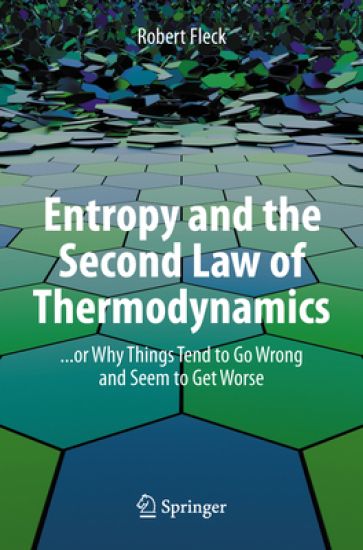
Entropy and the Second Law of Thermodynamics
Robert Fleck
Springer International Publishing AG
2023
nidottu
This book is a brief and accessible popular science text intended for a broad audience and of particular interest also to science students and specialists. Using a minimum of mathematics, a number of qualitative and quantitative examples, and clear illustrations, the author explains the science of thermodynamics in its full historical context, focusing on the concepts of energy and its availability and transformation in thermodynamic processes. His ultimate aim is to gain a deep understanding of the second law—the increase of entropy—and its rather disheartening message of a universe descending inexorably into chaos and disorder. It also examines the connection between the second law and why things go wrong in our daily lives. Readers will enhance their science literacy and feel more at home on the science side of author C. P. Snow's celebrated two-culture, science-humanities divide, and hopefully will feel more at home in the universe knowing that the disorder we deal with in our daily lives is not anyone's fault but Nature's.
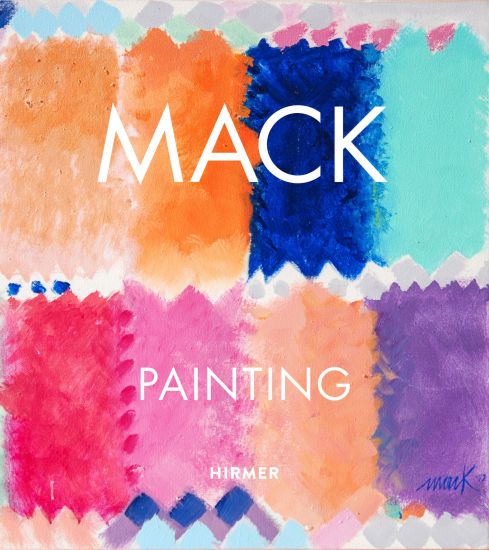
“There is no substitute for the happiness which colours give me.” After a long break, Heinz Mack has been focusing intensively on painting again for over thirty years. A cross-section of his "Chromatische Konstellationen" from 1991 until the present day shows how he translates the greatest possible purity of colour, light and immateriality into a broad spectrum of colour sequences and structures. Texts by Heinz Mack and Robert Fleck illuminate the essence of these colour worlds. Colour as light and light as colour – this represents, as it were, the nucleus of Mack’s painting. Within this premise he offers us a wide variety: chapters on, for example, the primacy of colour, atmosphere and nature, space, movement and geometric forms show the fascinating bandwidth of his work. The volume closes with an unusual undertaking: in a personal juxtaposition with works from art history from Duccio to Barnett Newman, the artist grants us an insight into his collective pictorial memory.
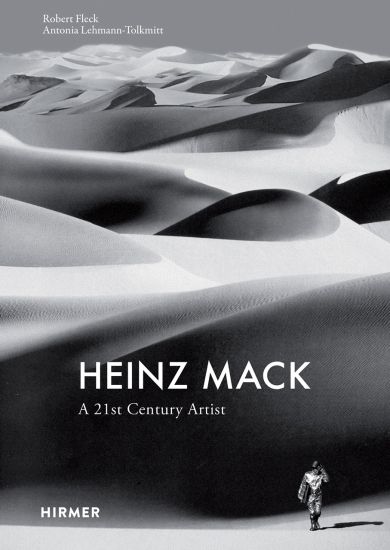
Heinz Mack (*1931) has been working as a sculptor and painter for more than sixty years. From the ZERO period in around 1960 to the present day he has created a wide-ranging work whose essential aspects, such as the significance of light, structure and colour are portrayed with often surprising perspectives. The authors accompany Mack in his constant search for a new concept of art, thereby discovering little-known connections to Minimal Art, Land Art, Yves Klein and Constantin Brancusi. The journey through Mack’s rich oeuvre culminates finally in his passionate plea for the “idea of beauty in the 21st century”.Heinz Mack is an artist who has left his mark on our times. He has made a pioneering contribution to the question of a new concept of art, which has been of fundamental importance since the post-war period. This volume offers for the first time a monograph with an overview of Mack’s philosophy of art as well as his multi-faceted oeuvre: from ZERO and the legendary Sahara Project to light art and his most recent paintings.
Heinz Mack
Robert Fleck; U. Fleckner; E. Blume; C.-P. Haase; U. Schmitt; F. Jacobi
Hirmer Verlag
2014
sidottu
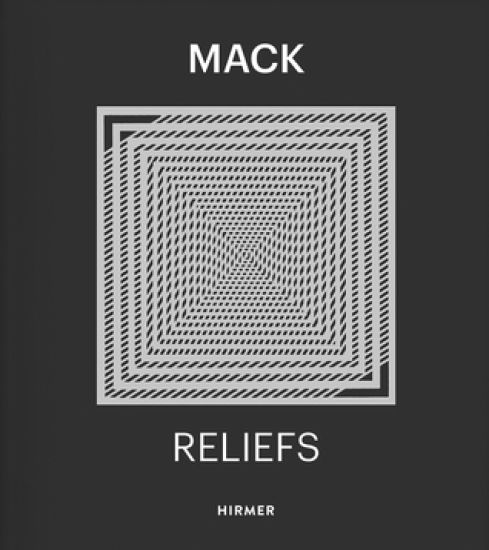
The sculptural relief technique is an integral part of Heinz Mack’s extensive oeuvre. With his so-called “light-reliefs” he examines what is at the core of his artistic practice: the interaction of light and surface. This publication provides a comprehensive overview of Mack’s reliefs from 1952 to the present day. Heinz Mack, born in 1931, is one of Germany’s most important artists. As the co-founder of the ZERO art movement, he is deeply rooted in the European avant-garde and his oeuvre is an essential part of recent art history. Mack coined the expression “light-relief” as early as 1958. These reliefs play an important role in his wide-ranging work, and they allow him to explore the interplay of light and surface, space and structure, and colour and rhythm. This generously designed volume shows more than 250 works by Heinz Mack, complemented with enlightening articles by renowned art historians.