Kirjailija
Robert Fraser
Kirjat ja teokset yhdessä paikassa: 32 kirjaa, julkaisuja vuosilta 1986-2026, suosituimpien joukossa A Social Philosophy for Fabians. Vertaile teosten hintoja ja tarkista saatavuus suomalaisista kirjakaupoista.
32 kirjaa
Kirjojen julkaisuhaarukka 1986-2026.

"Without Contraries is no progression." - William BlakeBertram and Eustace are brothers. Bertram is extroverted, practical, a celebrity and a social success. Eustace is introverted, scholarly and shyly oblique. They understand neither themselves nor one another. Instead, they tell one another stories.Only two people see through their defences: their cousin Mimi, a retired violinist who lives in 'Tartini's Rest', and Kariba, a literary genius from Africa, Bertram's nemesis and Eustace's fraternal friend...

This work has been selected by scholars as being culturally important and is part of the knowledge base of civilization as we know it.This work is in the public domain in the United States of America, and possibly other nations. Within the United States, you may freely copy and distribute this work, as no entity (individual or corporate) has a copyright on the body of the work.Scholars believe, and we concur, that this work is important enough to be preserved, reproduced, and made generally available to the public. To ensure a quality reading experience, this work has been proofread and republished using a format that seamlessly blends the original graphical elements with text in an easy-to-read typeface.We appreciate your support of the preservation process, and thank you for being an important part of keeping this knowledge alive and relevant.
Marrying life-writing with classical reception, this book examines ancient biography and its impact on subsequent ages. Close readings of ancient texts are framed by an assessment of their influence on the age of the French Revolution and Napoleon, and on the nineteenth, twentieth, and twenty-first centuries, of responses to ancient biography of modern critics, and of its visible legacy in art and film. Crucially it asks what modern biographers can learn from their ancient predecessors. Are the challenges involved in life-writing still the same? Have working methods changed, and in what ways? What in the context of biographical writing is truth, and how are its interests best served? How is it possible, now as then, honestly to convey a life?
Autumn in London, Thatcher's Britain. As the rooms of the National Gallery echo to strange footsteps, and a bomb explodes in distant Brighton, a young painter receives a bizarre commission from his ailing and obsessive uncle. Gradually the past returns to engulf him, freighted by scenes and personalities he has long hoped to forget.
Marrying life-writing with classical reception, this book examines ancient biography and its impact on subsequent ages. Close readings of ancient texts are framed by an assessment of their influence on the age of the French Revolution and Napoleon, and on the nineteenth, twentieth, and twenty-first centuries, of responses to ancient biography of modern critics, and of its visible legacy in art and film. Crucially it asks what modern biographers can learn from their ancient predecessors. Are the challenges involved in life-writing still the same? Have working methods changed, and in what ways? What in the context of biographical writing is truth, and how are its interests best served? How is it possible, now as then, honestly to convey a life?
Wto And Environment-related International Trade Disputes, The: Biosecurity And Ecosystem Services Risks
Robert Fraser; David Charles Cook; Janet Haddock-fraser
World Scientific Europe Ltd
2019
sidottu
'This well-written and highly readable book makes a major contribution to advancing our understanding of the contribution that economics can make to analysing the impact of international trade policies for environmental risks … Regardless of the likelihood that the current WTO dispute settlement procedures can be changed in the way suggested by the authors of this book, it is essential reading for those interested in the contribution that economics can make to advancing our understanding of the implications of international trade law for environmental issues.'Journal of Agricultural EconomicsWe live in a world that is increasingly dependent on international trade in a context of substantial regional/national political tensions. Adding to this is an emerging understanding and concern about the social impact of biosecurity and ecosystem services risks associated with such trade. As the key international trade 'arbiter', the World Trade Organization (WTO) has never before faced such complexity within its decision-making remit.With increasing numbers of bilateral and regional agreements, as well as new developments emerging such as the Comprehensive and Progressive Agreement for Trans-Pacific Partnership (CPTPP) initiated by multi-national corporations in 2018, the WTO needs to implement ways of reinforcing its legitimacy and enhancing its relevance.This book provides an original analysis of these linked developments and delivers a timely contribution to resolving environment-related international trade disputes. It provides a clear roadmap for improving WTO trade dispute resolution procedures so both biosecurity and ecosystem services risks are considered in evaluating the social, economic and environmental impacts of international trade proposals. In so doing, the WTO should deliver enhanced multilateral social welfare.

Literature, Music and Cosmopolitanism
Robert Fraser
Springer International Publishing AG
2019
nidottu
This book focuses on the twin arts of literature and music, supporting the notion that cosmopolitanism is the natural condition of all the arts, and that all culture - without exception - is migrant culture. It draws on examples ranging from the first to the twenty-first centuries AD, on locations as remote as Alexandria and Australia, on writers as different as Virgil and V.S.Naipaul, Arnold and Achebe, and on musicians as diverse as Bach and Bartok, Purcell and Steve Reich. Across thirteen chapters, the study explores the interpenetration of all forms of human expression, the fallacy of 'national' traditions and limiting conceptions of regional character. The result is an exploration of artistic and intellectual endeavour that is particularly welcome in the current political climate, encouraging us to view history in ways informed by our contemporary demographic and cultural concerns. Taken either as a series of interrelated case studies, or else as an evolving and sequential argument, this book is vital reading for scholars of music, literature, and cultural and social history.

Poetical Remains of the Late Robert Fraser. with a Memoir of the Author
Robert Fraser
Trieste Publishing
2018
nidottu
Trieste Publishing has a massive catalogue of classic book titles. Our aim is to provide readers with the highest quality reproductions of fiction and non-fiction literature that has stood the test of time. The many thousands of books in our collection have been sourced from libraries and private collections around the world.The titles that Trieste Publishing has chosen to be part of the collection have been scanned to simulate the original. Our readers see the books the same way that their first readers did decades or a hundred or more years ago. Books from that period are often spoiled by imperfections that did not exist in the original. Imperfections could be in the form of blurred text, photographs, or missing pages. It is highly unlikely that this would occur with one of our books. Our extensive quality control ensures that the readers of Trieste Publishing's books will be delighted with their purchase. Our staff has thoroughly reviewed every page of all the books in the collection, repairing, or if necessary, rejecting titles that are not of the highest quality. This process ensures that the reader of one of Trieste Publishing's titles receives a volume that faithfully reproduces the original, and to the maximum degree possible, gives them the experience of owning the original work.We pride ourselves on not only creating a pathway to an extensive reservoir of books of the finest quality, but also providing value to every one of our readers. Generally, Trieste books are purchased singly - on demand, however they may also be purchased in bulk. Readers interested in bulk purchases are invited to contact us directly to enquire about our tailored bulk rates.
General View of the County of Cornwall. With Observations on the Means of its Improvement. By Robert Fraser, A.M. Drawn up for the Consideration of the Board of Agriculture and Internal Improvement
Robert Fraser
Gale Ecco, Print Editions
2018
sidottu
The 18th century was a wealth of knowledge, exploration and rapidly growing technology and expanding record-keeping made possible by advances in the printing press. In its determination to preserve the century of revolution, Gale initiated a revolution of its own: digitization of epic proportions to preserve these invaluable works in the largest archive of its kind. Now for the first time these high-quality digital copies of original 18th century manuscripts are available in print, making them highly accessible to libraries, undergraduate students, and independent scholars.Delve into what it was like to live during the eighteenth century by reading the first-hand accounts of everyday people, including city dwellers and farmers, businessmen and bankers, artisans and merchants, artists and their patrons, politicians and their constituents. Original texts make the American, French, and Industrial revolutions vividly contemporary.++++The below data was compiled from various identification fields in the bibliographic record of this title. This data is provided as an additional tool in helping to insure edition identification: ++++British LibraryT040702A different issue, with the note "To the reader" reset, dated March 1794, and the addition of a "Postscript" dated: May 31, 1794. With a half-title.London: printed by C. Macrae, 1794. 75, 1]p.; 4
Plant Biosecurity Policy Evaluation: The Economic Impacts Of Pests And Diseases
David Charles Cook; Robert Fraser; Andrew Wilby
World Scientific Europe Ltd
2017
sidottu
Good biosecurity policy decisions, particularly in relation to plant industry protection, are of ever increasing importance. Growth in the speed and diversity of trade, the effects of climate change and the resultant spread of pests and diseases continue to highlight this. This book contains an introduction to the issues confronting plant biosecurity policymakers and how the economic risks of invasive species can be assessed over time. It describes both probability models that show what might happen if species 'invade' a region and values models that help decide what management actions should be taken.As the first book of its kind focusing on a comprehensive range of policies, case studies and applications, Plant Biosecurity Policy Evaluation is perfect for biosecurity policy makers, decision-support specialists, advanced students of agricultural studies, public policy and invasive species research.
Applications Of Principal-agent Theory To Agricultural Land Use Policy: Lessons From The European Union
Robert Fraser
Imperial College Press
2015
sidottu
This book is based on the author's published research and uses the principal-agent methodology as a consistent framework for analysing and evaluating the development of the European Union's agricultural land use policy as it has evolved over the last two decades from voluntary set-aside to 'compliance' set-aside to environmental stewardship. The book begins with an introduction to the principal-agent methodology and to the historical development of agricultural land use policy in the CAP (Common Agricultural Policy). There are also literature-based introductions which contextualise each major part of the book (Parts A and B). The book concludes with some reflections and forward-looking comments on policy design lessons from this research, which will be of use to students, academics and policymakers.
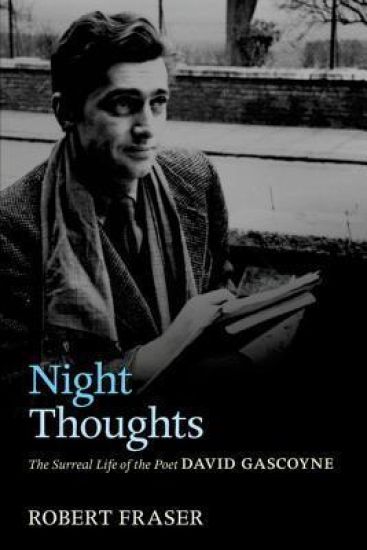
The poet David Gascoyne (1916-2001) led a life as surreal as his early poems. At eighteen he drafted the manifesto of the English Surrealist Group and at nineteen he published what remains an authoritative account of the international movement. He translated for Salvador Dalì and crossed swords with André Breton; the 1936 International Surrealist Exhibition in London was largely his brainchild. During the war he toured as an actor, embraced religious existentialism and became, in the words of John Lehmann, 'the most important philosophic poet of our time'. After the war he wrote for radio, painted, cooked, and went mad. The journals he kept during his periods of mental instability are masterpieces of the bizarre. Gascoyne found unexpected happiness in late middle age, emerging as an elder statesman of British poetry. Robert Fraser contends that, through all the twists and turns of his variegated existence, Gascoyne strove for candour and truth of self-expression. With equivalent candour this pioneering biography describes his creative work and multifarious translations, his inconvenient addictions, his tormented private life, and his many friendships in England and in France.
Northwest Review, V5, No. 3, Summer, 1962
Edward Van Aelstyn; Robert Fraser; Robert L. Curry
Literary Licensing, LLC
2011
nidottu