Kirjailija
Robert G. Athearn
Kirjat ja teokset yhdessä paikassa: 20 kirjaa, julkaisuja vuosilta 1972-2021, suosituimpien joukossa War With Mexico. Vertaile teosten hintoja ja tarkista saatavuus suomalaisista kirjakaupoista.
20 kirjaa
Kirjojen julkaisuhaarukka 1972-2021.
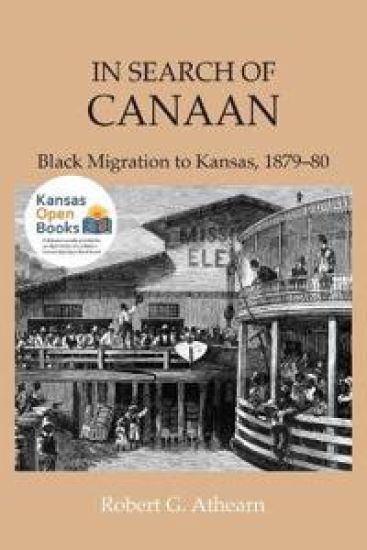
Word spread across the southern farm country, and into the minds of those who labored over cotton or sugar crops, that the day of reckoning was near at hand, that the Lord had answered black prayers with the offer of deliverance in a western Eden. In this vast state where Brown had caused blood to flow in his righteous wrath, there was said to be land for all, and land especially for poor blacks who for so long had cherished the thought of a tiny patch of America that they could call their own. The soil was said to be free for the taking, and even better, passage to the prairie Canaan was rumored to be available to all. . . . Thus began a pell-mell land rush to Kansas, an unreasoned, almost mindless exodus from the South toward some vague ideal, some western paradise, where all cares would vanish.In Search of Canaan tells the story of the Black migration from areas of the South to Kansas and other Midwestern and Western states that occurred soon after the end of Reconstruction. Working almost entirely from primary sources—letters of some of the black migrants, government investigative reports, and black newspapers—Robert G. Athearn describes and explains the “Exoduster” movement and sets it into perspective as a phenomenon in Western history.The book begins with details of Exodusters on the move. Athearn then fills in the background of why they were moving; relates how other people—Black and white, Northern and Southern—felt about the movement; examines political considerations; and finally, evaluates the episode and provides an explanation as to why it failed. According to Athearn, the exodus spoke in a narrower sense of Black emigrants who sought frontier farms, but in the main it told more about a nation whose wounds had been bound but had not yet healed. The Republicans, without any issues of consequence in 1880, gave the flight national importance in the hope that it would gain votes for them and, at the same time, reduce the South's population and hence its representation in Congress. Thousands of Black Americans, many of them former slaves, were deluded by false promises made by individual interests. As the hawkers of glad tidings beckoned to the easily convinced, the word “Kansas” became equated with the word “freedom.” Emotional, often biblical, overtones gave the movement millenarian flavor, and Kansas became the unwilling focus of a revitalized national campaign for Black rights.Athearn describes the social, political, economic, and even agricultural difficulties that Exodusters had in adapting to white culture. He evaluates the activities of Black leaders such as Benjamin “Pap” Singleton, northern politicians such as Kansas Governor John P. St. John, and refugee aid organizations such as the Kansas Freedmen’s Relief Association. He tells the Exoduster story not just as a southern story—the turmoil in Dixie and flight from the scenes of a struggle—but especially as a western story, a meaningful segment of the history of a frontier state. His remarkably objective, as well as suspenseful, account of this unusual episodes contributes significantly to Kansas history, to western history, and to the history of Black people in America.

This work has been selected by scholars as being culturally important and is part of the knowledge base of civilization as we know it.This work is in the public domain in the United States of America, and possibly other nations. Within the United States, you may freely copy and distribute this work, as no entity (individual or corporate) has a copyright on the body of the work.Scholars believe, and we concur, that this work is important enough to be preserved, reproduced, and made generally available to the public. To ensure a quality reading experience, this work has been proofread and republished using a format that seamlessly blends the original graphical elements with text in an easy-to-read typeface.We appreciate your support of the preservation process, and thank you for being an important part of keeping this knowledge alive and relevant.
High Country Empire; the High Plains and Rockies
Robert G. Athearn
Hassell Street Press
2021
sidottu
This work has been selected by scholars as being culturally important and is part of the knowledge base of civilization as we know it.This work is in the public domain in the United States of America, and possibly other nations. Within the United States, you may freely copy and distribute this work, as no entity (individual or corporate) has a copyright on the body of the work.Scholars believe, and we concur, that this work is important enough to be preserved, reproduced, and made generally available to the public. To ensure a quality reading experience, this work has been proofread and republished using a format that seamlessly blends the original graphical elements with text in an easy-to-read typeface.We appreciate your support of the preservation process, and thank you for being an important part of keeping this knowledge alive and relevant.
A World Power
Robert G. Athearn; Robert L. Andrew Carnegie Heilbroner; Schirmer Collection (Brown University
Hassell Street Press
2021
nidottu
This work has been selected by scholars as being culturally important and is part of the knowledge base of civilization as we know it.This work is in the public domain in the United States of America, and possibly other nations. Within the United States, you may freely copy and distribute this work, as no entity (individual or corporate) has a copyright on the body of the work.Scholars believe, and we concur, that this work is important enough to be preserved, reproduced, and made generally available to the public. To ensure a quality reading experience, this work has been proofread and republished using a format that seamlessly blends the original graphical elements with text in an easy-to-read typeface.We appreciate your support of the preservation process, and thank you for being an important part of keeping this knowledge alive and relevant.
A World Power
Robert G. Athearn; Robert L. Andrew Carnegie Heilbroner; Schirmer Collection (Brown University
Hassell Street Press
2021
sidottu
This work has been selected by scholars as being culturally important and is part of the knowledge base of civilization as we know it.This work is in the public domain in the United States of America, and possibly other nations. Within the United States, you may freely copy and distribute this work, as no entity (individual or corporate) has a copyright on the body of the work.Scholars believe, and we concur, that this work is important enough to be preserved, reproduced, and made generally available to the public. To ensure a quality reading experience, this work has been proofread and republished using a format that seamlessly blends the original graphical elements with text in an easy-to-read typeface.We appreciate your support of the preservation process, and thank you for being an important part of keeping this knowledge alive and relevant.
High Country Empire; the High Plains and Rockies
Robert G. Athearn
Hassell Street Press
2021
nidottu
This work has been selected by scholars as being culturally important and is part of the knowledge base of civilization as we know it.This work is in the public domain in the United States of America, and possibly other nations. Within the United States, you may freely copy and distribute this work, as no entity (individual or corporate) has a copyright on the body of the work.Scholars believe, and we concur, that this work is important enough to be preserved, reproduced, and made generally available to the public. To ensure a quality reading experience, this work has been proofread and republished using a format that seamlessly blends the original graphical elements with text in an easy-to-read typeface.We appreciate your support of the preservation process, and thank you for being an important part of keeping this knowledge alive and relevant.
High Country Empire: The High Plains and Rockies
Robert G. Athearn
Literary Licensing, LLC
2013
nidottu
Railroad Renaissance in the Rockies: Utah Historical Quarterly V25, January, 1957
Robert G. Athearn; A. R. Mortensen
Literary Licensing, LLC
2011
nidottu
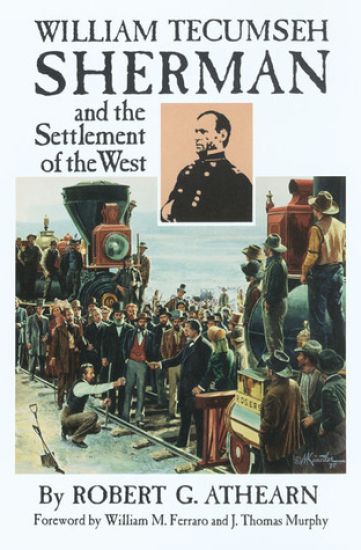
William Tecumseh Sherman and the Settlement of the West
Robert G. Athearn; William M. Ferraro; J. Thomas Murphy
University of Oklahoma Press
1995
nidottu
William Tecumseh Sherman is known primarily for having cut a swath of destruction through Georgia and the Carolinas during the Civil War. From the fame of these years, however, he moved into an eighteen-year phase of ""insuring the tranquility"" of the vast region of the American West. As commander of the Division of the Missouri from 1865 to 1869 and General of the Army of the United States under President Grant from 1869 to 1883, Sherman facilitated expansion and settlement in the West while suppressing the raids of the Cheyenne, Arapahoe, Kiowa, Comanche, and Crow Indians. Robert G. Athearn explores Sherman's and his army's roles in the settling of the West, especially within the broad framework of railroad construction, Indian policy, political infighting, and popular opinion.
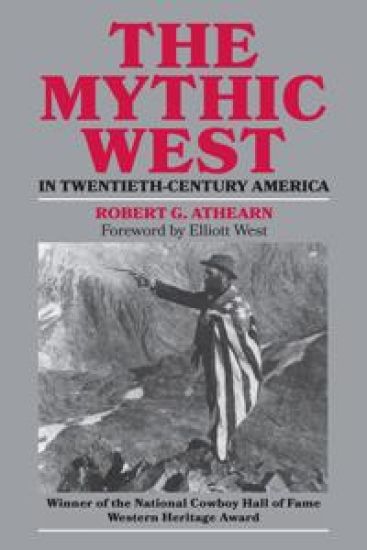
The Mythic West in Twentieth-century America
Robert G. Athearn
University Press of Kansas
1986
nidottu
Just what and where is the West? Why have so many been so obsessed with finding and saving that mythic time and place? What has the West meant to those who have lived there and to the millions more who have journeyed there only in their imaginations? And how have the answers to these questions changed with the years? The issues involved here--the place of the West and the frontier experience in our search for a national identity--have inspired a small library of important books during the last thirty years or so. Most of these writers have given their attention to those confident and aggressive years of the nineteenth century when the frontier was sweeping across the continent. Athearn's contribution, in part, is to pursue the shifting perceptions of the West into the present century. There the story has taken new twists as Americans have confronted hard lessons about themselves and their land. Again and again the message of events has been much the same: We are running short of resources and of room to grow. The region that once seemed endlessly bountiful and forever wild has become a land of narrowing limits. With this realization, popular feelings about the West, 'the most American part of America, ' have swung erratically between hope and disillusionment, affection and anger. Yet the myth has survived, however battered and bent into new shapes. . . . The Mythic West is by no means meant as a full treatment of its subject. Instead Athearn uses each chapter to consider from a different angle certain developments that have shaped the modern West and some of the ways these transformations have in turn molded what people have thought and dreamed about that land. . . . It is informed by his characteristic intelligence and graced by the humor and felicity of style his readers have come to expect. As do his other works, it leaves us with a deeper, richer understanding of that elusive and complex place, the West, which he knew as well as anyone ever will.--from the Foreword
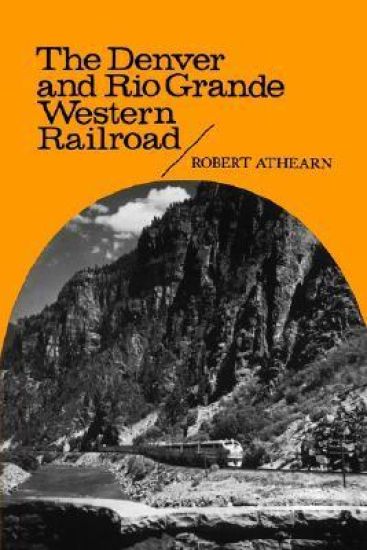
Nowhere better than in the history of its railroads is the growth of the Old West revealed, and for Colorado the development of the Denver and Rio Grande Western epitomizes the changes that took place between 1870 and the present. Robert G. Athearn's intimate knowledge of the West has enabled him to write a gripping account of the famous narrow-gauge Denver and Rio Grande as it inched its way south, then turned west into the Rockies. By f1883 it had joined with the Rio Grande Western to become Colorado's only line across the mountains. The Dotsero Cutoff and the six-mile Moffat Tunnel put Denver on a transcontinental line for the first time. Twelve maps and fifty-five illustrations help tell the story.
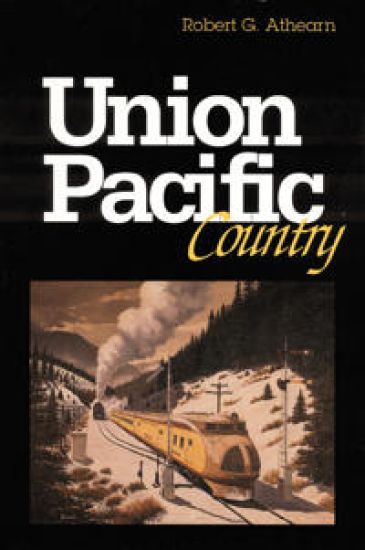
"No one has done before what Athearn has done in this volume. He has utilized company records and a variety of other sources to write a very attractive and readable, but scholarly account of the impact of the Union Pacific and its branch line son the country it served from the 1860s to the 1890s...Everyone from railroad buffs to Western history scholars will like the book."--Choice. "This highly readable book is an excellent history of the heart-breaking efforts to build the Union Pacific into a viable enterprise before the end of the nineteenth century...Throughout this attractive reprint edition, Athearn provides insights and fresh perspectives not only on the Union Pacific but on other railroads in the West and their significance in frontier America."--David Dary, Overland Journal. "A superb contribution by a master historian, Union Pacific Country is a model chapter in the epic story of how the American West was penetrated, settled, and developed with the aid of steam and iron. The research is massive; the writing style is inviting; the photographs, maps, and documents are helpful; and the story is compelling."--Journal of the West. The Denver and Rio Grande Western Railroad: Rebel of the Rockies by Robert G. Athearn is also available.
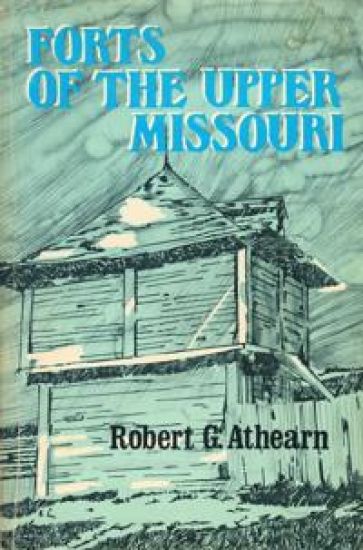
This book brings to life one of the most exciting eras in American history. In late 1819 Colonel Henry Atkinson led an expedition to explore the wilderness of the Upper Missouri and establish sites for a string of military posts, which would extend successful contacts with the Indians as well as exploit trade with British companies. The result of his efforts was a fort system which played a dramatic and significant role in the opening of the territories of the upper plains and the Rockies.