Kirjojen hintavertailu. Mukana 12 595 353 kirjaa ja 12 kauppaa.

Kirjailija

Robert G. Boatright

Kirjat ja teokset yhdessä paikassa: 17 kirjaa, julkaisuja vuosilta 2011-2026, suosituimpien joukossa Money, Partisanship and Power in Local Politics. Vertaile teosten hintoja ja tarkista saatavuus suomalaisista kirjakaupoista.

Mukana myös kirjoitusasut: Robert G Boatright

17 kirjaa

Kirjojen julkaisuhaarukka 2011-2026.

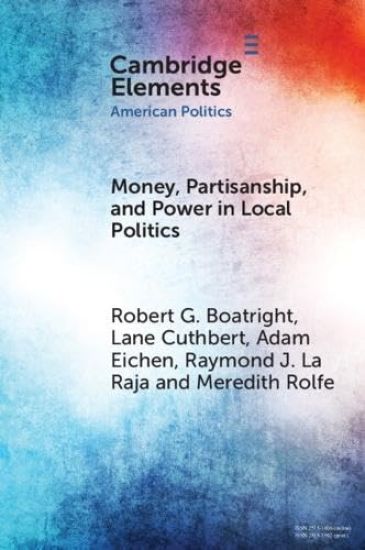
Money, Partisanship and Power in Local Politics

Money, Partisanship and Power in Local Politics

Robert G. Boatright; Lane Cuthbert; Adam Eichen; Raymond J. La Raja; Meredith Rolfe

Cambridge University Press
2025
pokkari
This Element presents an analysis of campaign finance in city council elections in four midsize Massachusetts cities. It shows that while money does not determine local election outcomes it plays a gatekeeping role – especially for nonincumbents. Moreover, this money comes from a very unrepresentative segment of the electorate. Although elections in these cities are nonpartisan, individual donors and interest groups are sorted into networks that function like political parties. The Element also shows that donors tend to be substantially more liberal than city residents. This can lead cities to adopt policies that are at odds with the views and needs of cities' less-wealthy inhabitants, including racial minorities. Despite low financial stakes relative to national races, campaign finance in midsize city elections reflects and reinforces broader patterns of political inequality. The result is a campaign finance system that disadvantages city residents who lack the cues that exist in other elections.
Money, Partisanship and Power in Local Politics

Money, Partisanship and Power in Local Politics

Robert G. Boatright; Lane Cuthbert; Adam Eichen; Raymond J. La Raja; Meredith Rolfe

Cambridge University Press
2025
sidottu
This Element presents an analysis of campaign finance in city council elections in four midsize Massachusetts cities. It shows that while money does not determine local election outcomes it plays a gatekeeping role – especially for nonincumbents. Moreover, this money comes from a very unrepresentative segment of the electorate. Although elections in these cities are nonpartisan, individual donors and interest groups are sorted into networks that function like political parties. The Element also shows that donors tend to be substantially more liberal than city residents. This can lead cities to adopt policies that are at odds with the views and needs of cities' less-wealthy inhabitants, including racial minorities. Despite low financial stakes relative to national races, campaign finance in midsize city elections reflects and reinforces broader patterns of political inequality. The result is a campaign finance system that disadvantages city residents who lack the cues that exist in other elections.
American Corruption Talk

American Corruption Talk

Robert G. Boatright; Molly Brigid McGrath

TEMPLE UNIVERSITY PRESS,U.S.
2025
sidottu
Americans often worry about political corruption-not only about specific officials misusing their powers, but also more broadly about political, cultural, moral decay or deterioration. Underneath our talk about corruption lie deeper claims and concerns about how we organize our common life. American Corruption Talk presents a study of corruption and corruption talk that seeks to understand those deeper claims and concerns. Robert Boatright and Molly Brigid McGrath focus on the role corruption talk plays in American political discourse. They distinguish between two ways people speak about corruption-corruption talk in the style of a purifier, who wishes to expunge the evil forces or drain the swamp, and corruption talk in the style of the mender, who thinks of managing, replacing, or repairing. American Corruption Talk begins by tracing how the concept of political corruption was developed by philosophers and political thinkers, leading up to its use in the American context, especially in the Progressive Era. It also compares modes of contemporary corruption talk in different areas of public life. In doing so, the authors hope to resolve confusion and partisan disagreements about what corruption is and to discourage the tendency to label actions, events, and ideas that we merely disagree with as corrupt.
American Corruption Talk

American Corruption Talk

Robert G. Boatright; Molly Brigid McGrath

TEMPLE UNIVERSITY PRESS,U.S.
2025
nidottu
Americans often worry about political corruption-not only about specific officials misusing their powers, but also more broadly about political, cultural, moral decay or deterioration. Underneath our talk about corruption lie deeper claims and concerns about how we organize our common life. American Corruption Talk presents a study of corruption and corruption talk that seeks to understand those deeper claims and concerns. Robert Boatright and Molly Brigid McGrath focus on the role corruption talk plays in American political discourse. They distinguish between two ways people speak about corruption-corruption talk in the style of a purifier, who wishes to expunge the evil forces or drain the swamp, and corruption talk in the style of the mender, who thinks of managing, replacing, or repairing. American Corruption Talk begins by tracing how the concept of political corruption was developed by philosophers and political thinkers, leading up to its use in the American context, especially in the Progressive Era. It also compares modes of contemporary corruption talk in different areas of public life. In doing so, the authors hope to resolve confusion and partisan disagreements about what corruption is and to discourage the tendency to label actions, events, and ideas that we merely disagree with as corrupt.
Reform and Retrenchment

Reform and Retrenchment

Robert G. Boatright

OXFORD UNIVERSITY PRESS INC
2024
sidottu
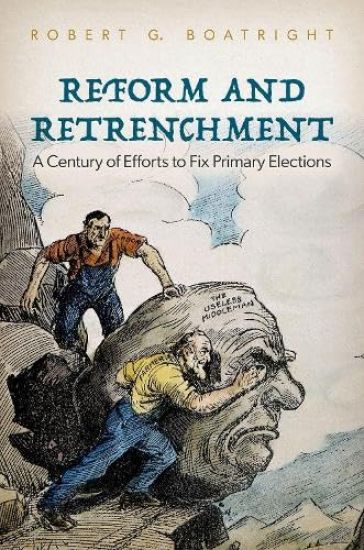
The direct primary, in which voters rather than party leaders or convention delegates select party nominees for state and federal offices, was one of the most widely adopted political reforms of the early twentieth century. Yet after decades of practice and study, scholars have found little clear evidence that direct primaries changed the outcomes of party nominations. The conventional wisdom has always been that once the Progressive movement declined and voters became distracted by more pressing issues, parties slowly reasserted their control over candidate selection. This book shows that the conventional wisdom is wrong. Exploring changes in American primary election laws from the 1920s to the 1970s, Robert G. Boatright argues in Reform and Retrenchment that the introduction of the direct primary created far more chaos in American elections than most scholars realize. As he shows, political parties, factions, and reform groups manipulated primary election laws in order to gain an advantage over their opponents, often under the guise of enhancing democracy. Today there is widespread dissatisfaction with primaries, and we are again in a period of experimentation. Boatright looks at how this history can help us understand the reform ideas before us today, ultimately suggesting that, for all of its flaws, there is likely little that can be done to improve primaries, and those who would seek to change American politics are best off exploring reforms to other areas of elections and governance.
Expressive Politics

Expressive Politics

Robert G Boatright

Ohio State University Press
2021
pokkari
The advantage incumbent members of Congress hold over their opponents in campaigns for office has steadily grown over the past five decades. While students of congressional politics have analyzed the effect of this advantage on members' behavior in office, little is known of its effect on their opponents. Sitting members of the House frequently face underfinanced and obscure challengers. Conventional theories of electoral competition assume that the only hope those candidates have of even coming close to making such an election competitive is to align their policy positions as closely as possible to those of the median voter. Yet challengers to incumbents often run on quite extreme position platforms. In the majority of these uncompetitive races, Robert G. Boatright explains, a new type of politics is emerging-a politics of expressive campaigning, where challengers seek to use their campaigns as a platform for their own views and as a means of helping their party achieve goals other than winning the election at hand. This research makes two types of contributions to existing political science literature. On a theoretical level, it argues for a reconceptualization of the motives of candidates and parties in rational choice analysis. On a practical level, it seeks to enrich our understanding of the role that challengers play in American elections and of the reason why different types of challengers emerge in different types of elections. Boatright argues that the role of challengers in the American electoral process can be understood only if we broaden our theories about rational candidate behavior.
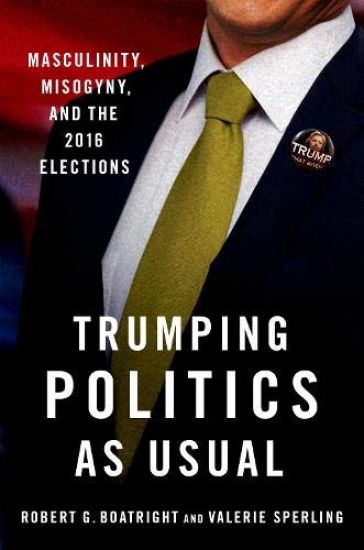
Trumping Politics as Usual

Trumping Politics as Usual

Robert G. Boatright; Valerie Sperling

Oxford University Press Inc
2019
sidottu
In many elections, candidates frame their appeals in gendered ways--they compete, for instance, over who is more "masculine." This is the case for male and female candidates alike. In the 2016 presidential election, however, the stark choice between the first major-party female candidate and a man who exhibited a persistent pattern of misogyny made the use of gender more prominent than in any previous election in the United States. Presidential campaigns often have an impact on downballot Congressional races, but the 2016 election provided a new opportunity to see the effects of misogyny. While much has been written about the 2016 election--and the shadow of 2016 clearly affected the pool of candidates in the 2018 midterms--this book looks at how the Trump and Clinton campaigns actually changed the behavior of more conventional candidates for Congress in 2016 and 2018. Over the past decade, those who study political parties have sought to understand changes in the relationship between groups and parties and how these changes have affected the ability of parties to develop coherent campaign strategies. The clear need for rapid adjustments in party strategy in the 2016 election provides an ideal means of testing whether today's political parties are more able or less able to respond to unexpected events. This book argues that Donald Trump's candidacy radically altered the nature of the 2016 congressional campaigns in two ways. First, it changed the issues of contention in many of these races. Trump's provocative calls for building a wall along the Mexican border and temporarily prohibiting immigration from Muslim countries inserted issues of race and ethnicity into elections and forced candidates to respond to his proposals. Most consequentially, however, Trump's attacks on women--including television personalities, politicians, and, at times, private citizens--alienated numerous potential supporters and placed many of his supporters (and downballot Republican candidates in particular) on the defensive. Second, expectations that Trump would lose the election influenced how candidates for lower office campaigned and how willing they were to connect their fortunes to those of their party's nominee. The fact that Trump was expected to lose--and was expected to lose in large part because of his misogyny--caused both major parties to direct more of their resources toward congressional races, and led many Republican candidates, especially women, to distance themselves from Trump. This book explores how the Trump and Clinton campaigns used gender as a political weapon, and how the presidential race changed the ways in which House and Senate campaigns were waged in 2016 and 2018.
Trumping Politics as Usual

Trumping Politics as Usual

Robert G. Boatright; Valerie Sperling

Oxford University Press Inc
2019
nidottu
In many elections, candidates frame their appeals in gendered ways--they compete, for instance, over who is more "masculine." This is the case for male and female candidates alike. In the 2016 presidential election, however, the stark choice between the first major-party female candidate and a man who exhibited a persistent pattern of misogyny made the use of gender more prominent than in any previous election in the United States. Presidential campaigns often have an impact on downballot Congressional races, but the 2016 election provided a new opportunity to see the effects of misogyny. While much has been written about the 2016 election--and the shadow of 2016 clearly affected the pool of candidates in the 2018 midterms--this book looks at how the Trump and Clinton campaigns actually changed the behavior of more conventional candidates for Congress in 2016 and 2018. Over the past decade, those who study political parties have sought to understand changes in the relationship between groups and parties and how these changes have affected the ability of parties to develop coherent campaign strategies. The clear need for rapid adjustments in party strategy in the 2016 election provides an ideal means of testing whether today's political parties are more able or less able to respond to unexpected events. This book argues that Donald Trump's candidacy radically altered the nature of the 2016 congressional campaigns in two ways. First, it changed the issues of contention in many of these races. Trump's provocative calls for building a wall along the Mexican border and temporarily prohibiting immigration from Muslim countries inserted issues of race and ethnicity into elections and forced candidates to respond to his proposals. Most consequentially, however, Trump's attacks on women--including television personalities, politicians, and, at times, private citizens--alienated numerous potential supporters and placed many of his supporters (and downballot Republican candidates in particular) on the defensive. Second, expectations that Trump would lose the election influenced how candidates for lower office campaigned and how willing they were to connect their fortunes to those of their party's nominee. The fact that Trump was expected to lose--and was expected to lose in large part because of his misogyny--caused both major parties to direct more of their resources toward congressional races, and led many Republican candidates, especially women, to distance themselves from Trump. This book explores how the Trump and Clinton campaigns used gender as a political weapon, and how the presidential race changed the ways in which House and Senate campaigns were waged in 2016 and 2018.
The Deregulatory Moment?

The Deregulatory Moment?

Robert G Boatright

The University of Michigan Press
2015
sidottu
For those who assume that increased regulation of political spending is inevitable in democratic nations, recent developments in U.S. campaign finance law appear puzzling. Is deregulation, exemplified by the U.S. Supreme Court’s decision in Citizens United v. FEC, a harbinger of things to come elsewhere or further evidence that the United States remains an anomaly? In this volume, experts on the United States, Canada, Great Britain, Australia, Germany, Sweden, France, and several other European nations explore what deregulation means in the context of political campaigns and demonstrate how such comparisons can inform the study of campaign finance in the U.S. Whereas the contributors do not settle on any single theory of change in campaign finance law or any single perspective on the relationship between changes seen in the U.S. and those in other nations over the past decade, they do concur that the U.S. is rapidly retreating from the types of regulations that defined campaign finance law in most democratic nations during the latter decades of the twentieth century. By tracing and analyzing the recent history of regulation, the contributors shed light on many pressing topics, including the relationship between public opinion and campaign finance law, the role of scandals in inspiring reform, and the changing incentives of political parties, interest groups, and the courts.
The Deregulatory Moment?

The Deregulatory Moment?

Robert G Boatright

The University of Michigan Press
2015
nidottu
For those who assume that increased regulation of political spending is inevitable in democratic nations, recent developments in U.S. campaign finance law appear puzzling. Is deregulation, exemplified by the U.S. Supreme Court’s decision in Citizens United v. FEC, a harbinger of things to come elsewhere or further evidence that the United States remains an anomaly? In this volume, experts on the United States, Canada, Great Britain, Australia, Germany, Sweden, France, and several other European nations explore what deregulation means in the context of political campaigns and demonstrate how such comparisons can inform the study of campaign finance in the U.S. Whereas the contributors do not settle on any single theory of change in campaign finance law or any single perspective on the relationship between changes seen in the U.S. and those in other nations over the past decade, they do concur that the U.S. is rapidly retreating from the types of regulations that defined campaign finance law in most democratic nations during the latter decades of the twentieth century. By tracing and analyzing the recent history of regulation, the contributors shed light on many pressing topics, including the relationship between public opinion and campaign finance law, the role of scandals in inspiring reform, and the changing incentives of political parties, interest groups, and the courts.
Congressional Primary Elections

Congressional Primary Elections

Robert G. Boatright

Routledge
2014
nidottu
Congressional primaries are increasingly being blamed for polarization and gridlock in Congress. Most American states adopted congressional primaries during the first decades of the 20th century as a means of breaking the hold of political "bosses" on the nomination of candidates. Yet now, many contend that primaries have become a means by which the most dedicated party activists choose candidates unrepresentative of the electorate, and so general election voters are forced to choose between two ideologically extreme candidates. Consequently, there have been recent instances in both parties where nominees were chosen who were clearly not preferred by party leaders, and who arguably lost elections that their parties should have won. This book is the first to focus solely upon congressional primary elections, and to do so for a student readership. Boatright organizes his text around the contention that there are important differences between types of primaries, and these differences prevent us from making blanket statements about primary competition. He focuses on explanations of two sources of difference: differences in electoral structure and differences brought about by the presence or absence of an incumbent seeking reelection. The first three chapters introduce these differences, explore how they came to exist, and outline some of the strategic considerations for candidates, parties, interest groups, and voters in primary elections. The subsequent four chapters explore different types of primary elections, and the final chapter evaluates actual and proposed primary reforms.Congressional Primary Elections is the first book to provide a history and analysis of congressional primary elections and will serve as a crucial part of courses on political parties and campaigns and elections. The book gives students the tools for understanding arguments for and against the reform of primary elections and for understanding the differences between types of primaries.
Congressional Primary Elections

Congressional Primary Elections

Robert G. Boatright

Routledge
2014
sidottu
Congressional primaries are increasingly being blamed for polarization and gridlock in Congress. Most American states adopted congressional primaries during the first decades of the 20th century as a means of breaking the hold of political "bosses" on the nomination of candidates. Yet now, many contend that primaries have become a means by which the most dedicated party activists choose candidates unrepresentative of the electorate, and so general election voters are forced to choose between two ideologically extreme candidates. Consequently, there have been recent instances in both parties where nominees were chosen who were clearly not preferred by party leaders, and who arguably lost elections that their parties should have won. This book is the first to focus solely upon congressional primary elections, and to do so for a student readership. Boatright organizes his text around the contention that there are important differences between types of primaries, and these differences prevent us from making blanket statements about primary competition. He focuses on explanations of two sources of difference: differences in electoral structure and differences brought about by the presence or absence of an incumbent seeking reelection. The first three chapters introduce these differences, explore how they came to exist, and outline some of the strategic considerations for candidates, parties, interest groups, and voters in primary elections. The subsequent four chapters explore different types of primary elections, and the final chapter evaluates actual and proposed primary reforms.Congressional Primary Elections is the first book to provide a history and analysis of congressional primary elections and will serve as a crucial part of courses on political parties and campaigns and elections. The book gives students the tools for understanding arguments for and against the reform of primary elections and for understanding the differences between types of primaries.
Getting Primaried

Getting Primaried

Robert G Boatright

The University of Michigan Press
2014
nidottu
Each of the past few election cycles has featured at least one instance of "primarying," a challenge to an incumbent on the grounds that he or she is not sufficiently partisan. For many observers, such races signify an increasingly polarized electorate and an increasing threat to moderates of both parties.In Getting Primaried, Robert G. Boatright shows that primary challenges are not becoming more frequent; they wax and wane in accordance with partisan turnover in Congress. The recent rise of primarying corresponds to the rise of national fundraising bases and new types of partisan organizations supporting candidates around the country. National fundraising efforts and interest group–supported primary challenges have garnered media attention disproportionate to their success in winning elections. Such challenges can work only if groups focus on a small number of incumbents.Getting Primaried makes several key contributions to congressional scholarship. It presents a history of congressional primary challenges over the past forty years, measuring the frequency of competitive challenges and distinguishing among types of challenges. It provides a correction to accounts of the link between primary competition and political polarization. Further, this study offers a new theoretical understanding of the role of interest groups in congressional elections.
Getting Primaried

Getting Primaried

Robert G Boatright

The University of Michigan Press
2013
sidottu
Each of the past few election cycles has featured at least one instance of "primarying," a challenge to an incumbent on the grounds that he or she is not sufficiently partisan. For many observers, such races signify an increasingly polarized electorate and an increasing threat to moderates of both parties.In Getting Primaried, Robert G. Boatright shows that primary challenges are not becoming more frequent; they wax and wane in accordance with partisan turnover in Congress. The recent rise of primarying corresponds to the rise of national fundraising bases and new types of partisan organizations supporting candidates around the country. National fundraising efforts and interest group–supported primary challenges have garnered media attention disproportionate to their success in winning elections. Such challenges can work only if groups focus on a small number of incumbents.Getting Primaried makes several key contributions to congressional scholarship. It presents a history of congressional primary challenges over the past forty years, measuring the frequency of competitive challenges and distinguishing among types of challenges. It provides a correction to accounts of the link between primary competition and political polarization. Further, this study offers a new theoretical understanding of the role of interest groups in congressional elections.
Interest Groups and Campaign Finance Reform in the United States and Canada

Interest Groups and Campaign Finance Reform in the United States and Canada

Robert G Boatright

The University of Michigan Press
2011
sidottu
In the early 2000s, the United States and Canada implemented new campaign finance laws restricting the ability of interest groups to make political contributions and to engage in political advertising. Whereas both nations' legislative reforms sought to reduce the role of interest groups in campaigns, these laws have had opposite results in the two nations. In the United States, interest groups remained influential by developing broad coalitions aimed at mobilizing individual voters and contributors. In Canada, interest groups largely withdrew from election campaigns, and, thus, important voices in elections have gone silent. Robert G. Boatright explains such disparate results by placing campaign finance reforms in the context of ongoing political and technological changes.Robert G. Boatright is Associate Professor of Political Science at Clark University.Cover photo: © iStockphoto.com / alfabravoalpharomeo
Interest Groups and Campaign Finance Reform in the United States and Canada

Interest Groups and Campaign Finance Reform in the United States and Canada

Robert G Boatright

The University of Michigan Press
2011
nidottu
In the early 2000s, the United States and Canada implemented new campaign finance laws restricting the ability of interest groups to make political contributions and to engage in political advertising. Whereas both nations' legislative reforms sought to reduce the role of interest groups in campaigns, these laws have had opposite results in the two nations. In the United States, interest groups remained influential by developing broad coalitions aimed at mobilizing individual voters and contributors. In Canada, interest groups largely withdrew from election campaigns, and, thus, important voices in elections have gone silent. Robert G. Boatright explains such disparate results by placing campaign finance reforms in the context of ongoing political and technological changes.Robert G. Boatright is Associate Professor of Political Science at Clark University.Cover photo: © iStockphoto.com / alfabravoalpharomeo