Kirjailija
Robert G. Sutter
Kirjat ja teokset yhdessä paikassa: 28 kirjaa, julkaisuja vuosilta 1998-2024, suosituimpien joukossa Foreign Relations of the PRC. Vertaile teosten hintoja ja tarkista saatavuus suomalaisista kirjakaupoista.
Mukana myös kirjoitusasut: Robert G Sutter
28 kirjaa
Kirjojen julkaisuhaarukka 1998-2024.
This book considers Chinese foreign policy and China's future role in world affairs in the context of the country's recent past. Robert Sutter shows that although it appears to be in U.S. interests for post-Mao leaders to continue moving toward international norms, a post-Deng leadership backed by growing economic and military power and reflecting profound changes in China's economy and society could move in markedly different directions. Most foreign powers appear willing to accommodate China, avoiding actions that could prompt a sharp shift in Chinese foreign policy, but Sutter argues that current U.S. policy intrudes on so many issues that are particularly sensitive for Beijing and for China's future that it represents perhaps the most critical variable determining how China will position itself in world affairs. Concluding that there is no guarantee the United States will use this influence wisely, Sutter examines the uncertainty and unpredictability of U.S. foreign policy in the post-Cold War environment that work against the creation of an effective U.S. policy toward China.
Traditionally, Taiwan has been viewed as the passive pawn of more aggressive powers, yet now it has begun to assert its voice in world affairs—especially through economic influence. This volume brings together leading scholars to examine the origins and implications of Taiwan's global role and the ramifications of its growing strength for such crucial policy issues as China's reunification and U.S. policy in East Asia.
Congress and China Policy: Past Episodic, Recent Enduring Influence supports findings that bipartisan majorities in Congress have been instrumental in driving the fundamental shift in American policy toward China carried out during the past six years. Filling major gaps in the inadequate treatment of Congress in assessments of US policy toward China, this book compares recent Congressional influence with the episodes of Congressional activism in China policy over the past 200 years, showing Congress recently has been more important than ever. The findings also show that partisan politics, Congressional-executive competition for policy control, swings in public and media opinion, and influences by special interests—longstanding drivers of past Congressional involvement in China policy—have been of secondary or lesser importance as the Congressional members have grappled with the acute dangers posed by Chinese economic, security and governance challenges. Steady and determined efforts by this cohort of bipartisan Congressional majorities to defend America from Chinese challenges have proven more resolute than the erratic practices of President Trump and previously dismissive Joseph Biden who came late to a tougher policy. This volume forecasts that US policy will remain heavily influenced by these members as they serve out their terms in the years ahead.
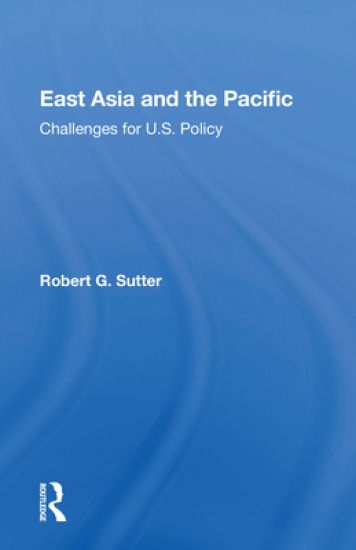
This book focuses on issues in U.S. policy concerning specific Asian-Pacific policy areas, namely Japan, China, Taiwan and Hong Kong; Korea, Cambodia and Vietnam; the Philippine bases; and Australia, New Zealand, and the Pacific islands. It assesses the implications for U.S. policy in these areas.
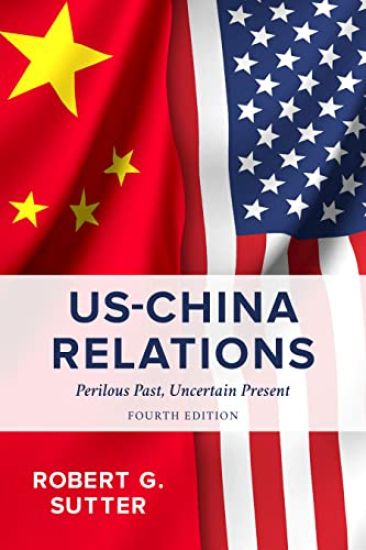
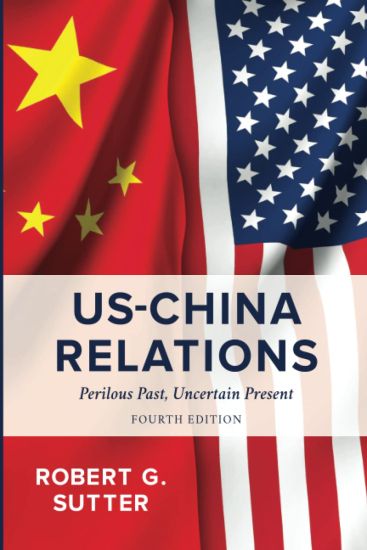
Much has changed in US-China relations since the first edition of this book over a decade ago alerted readers to balance outwardly positive discourse in multiple bilateral dialogues with an understanding of important differences. This fourth edition provides a comprehensive assessment of historical and contemporary determinants of Sino-American relations up to the present, giving special focus to the recent dramatic hardening amid acute competition between the world’s leading powers. The catalyst and main driver of this negative change remains a unique bipartisan Congressional-Administration consensus that sees multiple challenges from China now posing an overall existential threat. Urgency to counter these challenges dominates US policy making toward China. The consensus came about despite acute partisanship and erratic presidential leadership during the Trump administration and it continues strong with the more consistent foreign policy of President Biden. China remains uncompromising, forecasting continued trouble ahead.Leading expert Robert G. Sutter has written the only book on the subject that combines assessment of the historical evolution, in-depth analysis of the many issues determining recent developments, and likely prospects for US-China relations going forward. His balanced study will be an essential resource for all concerned with the globe's most crucial bilateral partnership.
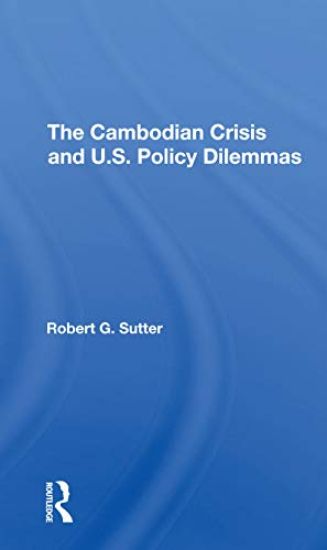
This book introduces the current U.S. policy issues and interests concerning the crisis in Cambodia. It provides an overview of the impasse in the Cambodian conflict that prevailed throughout much of the 1980s and looks at U.S. policy concerns in both Cambodia and Vietnam.
Chinese foreign policy has changed radically since the Cultural Revolution of 1966-1969. This book focuses on turning points in China's policy and looks at the influence of foreign pressures on China. It assesses the impact of internal political struggles on the conduct of Chinese foreign affairs.
Although the United States has established formal diplomatic relations with the People's Republic of China (PRC), achieving major advances in economic and cultural relations, it continues to be bedevilled by serious dilemmas regarding such issues as future relations with Taiwan, U.S.-PRC military ties, the extent and type of U.S. aid to China, and the need for secrecy in U.S. China policy versus traditional American demands for "open" diplomacy. U.S. scholars have been clear about the international factors influencing current U.S.-PRC relations; however, the domestic political factors that have contributed in a major way to the creation of the dilemmas we face in formulating China policy today remain poorly understood. This book concentrates on these domestic determinants of recent U.S. China policy. Pointing to the compromises and contradictions in policy choices made by leaders who have sharply differing conceptions of the goals of policy and their appropriate implementation, Dr. Sutter draws on a wide array of recent U.S. government publications and more than one hundred interviews with officials of the Carter and Reagan administrations and Congress to examine differences in views, divergencies in policy approaches, and the confusion that results. He specifically treats key issues such as the Taiwan Relations Act and possible U.S. arms sales to China, as well as summarizing and assessing domestic and foreign policy interests of the United States in relation to China and offering policy options for the problems that lie ahead.
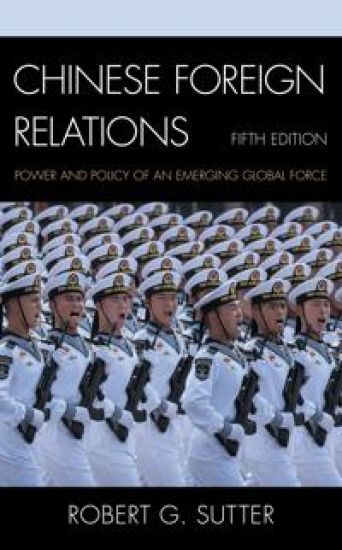
This leading text provides a comprehensive and balanced introduction to Chinese foreign relations. Robert G. Sutter assesses China’s growing international political and economic assertiveness and considers the causes and grave consequences of tensions with the United States.
Traditionally, Taiwan has been viewed as the passive pawn of more aggressive powers, yet now it has begun to assert its voice in world affairs—especially through economic influence. This volume brings together leading scholars to examine the origins and implications of Taiwan's global role and the ramifications of its growing strength for such crucial policy issues as China's reunification and U.S. policy in East Asia.
As the cold war ends, the United States is being forced to reassess the dominant role it has played in East and Southeast Asia and the Pacific during the decades that followed World War II. Bringing readers up to date on policy trends in the area, the author provides a general overview as well as detailed analyses of key issues in individual nations and regions. The author concludes by placing these regional developments in the context of the ongoing debate in the United States over an appropriate foreign policy in the post-cold war world.
Now in a fully revised and updated edition, this cogent book overviews the historical context and enduring patterns of US relations with Asia. Noted scholar Robert G. Sutter provides a balanced analysis of post–Cold War dynamics in Asia, which involve interrelated questions of security, economics, national identity, and regional institution building. He demonstrates how these critical concerns manifest a complex mix of realist, liberal, and constructivist tendencies that define the regional order. He describes how the United States has responded to Asia’s growing strength and importance while at the same time trying to maintain its leading position as an Asian power despite China’s rising influence. Considering the most important transition in American policy toward Asia since the end of the Cold War, Sutter assesses the growing US-China rivalry that now dominates regional dynamics in the Asia-Pacific and US policy in the region.
This book introduces the current U.S. policy issues and interests concerning the crisis in Cambodia. It provides an overview of the impasse in the Cambodian conflict that prevailed throughout much of the 1980s and looks at U.S. policy concerns in both Cambodia and Vietnam.
Chinese Foreign Policy after the Cultural Revolution, 1966-1977
Robert G. Sutter
Routledge
2019
sidottu
Chinese foreign policy has changed radically since the Cultural Revolution of 1966-1969, but until now there has been no comprehensive review of developments in Chinese foreign affairs over the past ten years, Robert Sutter, making extensive use of recently declassified U.S. government reports, focuses on turning points in China's policy and analyzes the reasons for Peking's policy choices. Dr. Sutter looks at the influence of foreign pressures on China and assesses the impact of ongoing internal political struggles on the conduct of Chinese foreign affairs. His conclusions offer insights into the implications of the purge of four leftist Chinese Politburo members following the death of Mao Τsetung in September 1976. Written for both the China specialist and the general reader, this book presents first an overview of the course of Chinese foreign policy during the decade, and then a detailed examination of Chinese policy on significant foreign issues. The result is a rare and authoritative guide to scholars and others interested in recent developments in China and other communist-ruled states.
This book considers Chinese foreign policy and China's future role in world affairs in the context of the country's recent past. Robert Sutter shows that although it appears to be in U.S. interests for post-Mao leaders to continue moving toward international norms, a post-Deng leadership backed by growing economic and military power and reflecting profound changes in China's economy and society could move in markedly different directions. Most foreign powers appear willing to accommodate China, avoiding actions that could prompt a sharp shift in Chinese foreign policy, but Sutter argues that current U.S. policy intrudes on so many issues that are particularly sensitive for Beijing and for China's future that it represents perhaps the most critical variable determining how China will position itself in world affairs. Concluding that there is no guarantee the United States will use this influence wisely, Sutter examines the uncertainty and unpredictability of U.S. foreign policy in the post-Cold War environment that work against the creation of an effective U.S. policy toward China.
The American reconciliation with the People's Republic of China (PRC) begun by President Richard Nixon and developed by succeeding U.S. presidents has enjoyed wide support in the United States as one of the most important breakthroughs in U.S. foreign policy since the cold war. In broad terms, each American administration, from Richard Nixon's to Ronald Reagan's, has sought to use better relations with China as a means to position the United States favorably in the U.S.- Soviet-PRC triangular relationship; to stabilize Asian affairs, secure a balance of forces in the region favorable to the United States and its allies and friends, and foster a peaceful and prosperous future for Taiwan; to build beneficial economic, cultural, and other bilateral ties; and to work more closely with the PRC on issues of global importance such as world food supply, population control, and arms limitations. China has supported the opening of relations with the United States as a means to strengthen China's national security against the Soviet threat and to oppose the expansion of Soviet power in Asian and world affairs; to obtain U.S. and other Western economic commodities, investment, and technology; and to benefit from cultural, educational, and tourist exchanges.
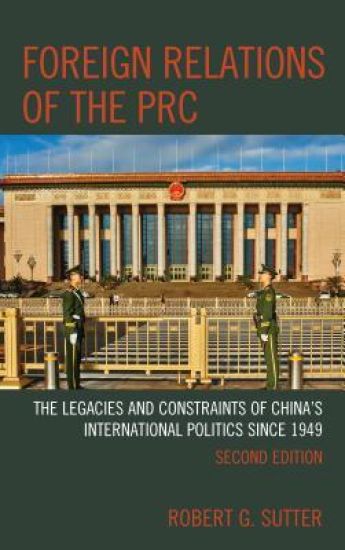
Now in a fully updated edition, this cogent but comprehensive book examines the international relations of the People’s Republic of China since its founding in 1949. Noted scholar Robert G. Sutter provides a balanced assessment of the country’s recent successes and advances as well as the important legacies and constraints that hamper it, especially in nearby Asia—long the focus of China’s foreign policy attention. Sutter demonstrates how Beijing has carefully created an image of a China that follows consistent policies based on morally correct principles, but its record shows repeated episodes of sometime surprising change and frequent use of violence, intimidation, and coercion. China’s leaders, he argues, still fail to manage the desire for productive foreign relations with their aspirations to build Chinese security and sovereignty interests. Image-building efforts condition Chinese public and elite opinion to be extraordinarily sensitive, self-righteous, and often alarmist in dealing with the many disputes China has with its Asian neighbors and the United States. Advances that the PRC has made in other parts of the world focus mainly on commercial interests, limiting its actual impact on world affairs. Sutter shows readers how to use China’s rise in nearby Asia as a reliable barometer of how important and effective the country will actually become internationally.