Kirjojen hintavertailu. Mukana 12 390 323 kirjaa ja 12 kauppaa.

Kirjailija

Robert H. Jackson

Kirjat ja teokset yhdessä paikassa: 20 kirjaa, julkaisuja vuosilta 1993-2025, suosituimpien joukossa The Bourbon Reforms and the Remaking of Spanish Frontier Missions. Vertaile teosten hintoja ja tarkista saatavuus suomalaisista kirjakaupoista.

20 kirjaa

Kirjojen julkaisuhaarukka 1993-2025.

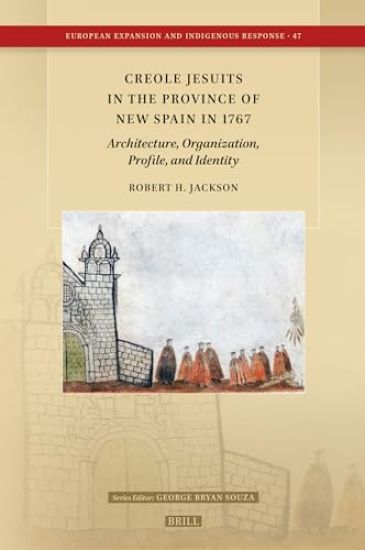
Creole Jesuits in the Province of New Spain in 1767: Architecture, Organization, Profile, and Identity
In 1767, King Carlos III of Spain ordered the expulsion of the Jesuits from his dominions. This study examines the Jesuits in the Province of New Spain (Mexico, Cuba, Guatemala) at the time of the expulsion, their urban educational and spiritual role, and their administration of frontier missions. The King sent the exiled Jesuits to live out their lives in the Papal States. The book also explores the profile (i.e. the collective biography) of the Jesuits, and their fate following the expulsion. At the time of the expulsion, the majority of the Jesuits in New Spain were born in the Americas, mostly in Mexico. The Jesuits invested large sums of money in the construction of urban colegios, which are here analyzed together with the rest of the Jesuit architectural patrimony.
Frontiers of Evangelization

Frontiers of Evangelization

Robert H. Jackson

UNIVERSITY OF OKLAHOMA PRESS
2025
nidottu
The Spanish crown wanted native peoples in its American territories to be evangelized and, to that end, facilitated the establishment of missions by various Catholic orders. Focusing on the Franciscan missions of the Sierra Gorda in Northern New Spain (Mexico) and the Jesuit missions of Chiquitos in what is now Bolivia, Frontiers of Evangelization takes a comparative approach to understanding the experiences of indigenous populations in missions on the frontiers of Spanish America. Marshaling a wealth of data from sacramental, military, and census records, Robert H. Jackson explores the many factors that influenced the stability of mission settlements, including the indigenous communities' previous subsistence patterns and family structures, the evangelical techniques of the missionary orders, the social and political organization within the mission communities, and epidemiology in relation to population density and mobility. The two orders, Jackson's research shows, organized and administered their missions very differently. The Franciscans took a heavy-handed approach and implemented disruptive social policies, while the Jesuits engaged in a comparatively 'kinder and gentler' form of colonization. Yet the most critical factor to the missions' success, Jackson finds, was the indigenous peoples' existing demographic profile - in particular, their mobility. Nonsedentary populations, like the Pames and Jonaces of the Sierra Gorda, were more prone to demographic collapse once brought into the mission system, whereas sedentary groups, like the Guaraní of Chiquitos, experienced robust growth and greater resistance to disease and natural disaster. Drawing on more than three decades of scholarly work, this analysis of crucial archival material augments our understanding of the role of missions in colonization, and the fate of indigenous peoples in Spanish America.
Urban Plan, Architecture, and the Geography of the Sacred in Colonial Morelos
In the sixteenth century, Franciscan, Dominican, and Augustinian missionaries attempted to evangelize the indigenous peoples of central Mexico. Indigenous peoples incorporated the new faith into their belief system on their own terms, and continued to conceptualize a sacred geography that ordered their world and regulated time. At the same time, the missionaries had new sacred complexes built, but the question remains, why did indigenous peoples dedicate labor and community resources to these projects? This study analyzes the urban plan of indigenous communities, the construction of new sacred complexes, and the ways in which the urban plan conformed to the notion of sacred geography.
A Visual Catalog of the Building Complexes of the Male Religious Orders in Mexico's Colonial Cities
The first male missionary religious order, the Franciscans, arrived in Nueva España (Mexico) in 1524, and were followed by others. The male missionary religious orders played an important role in the evangelization of indigenous peoples, but also had a presence in urban centers where they had churches and large complexes built. This book surveys what remains of these complexes in Mexico City, Puebla, and other selected colonial cities, and briefly discusses the history of the complexes. This study will be of interest to historians, architects, and art historians interested in the role of the male orders in urban development, and the state of this unique architectural patrimony.
Personal Rule in Black Africa

Personal Rule in Black Africa

Robert H. Jackson; Carl G. Rosberg

University of California Press
2022
sidottu
This title is part of UC Press's Voices Revived program, which commemorates University of California Press’s mission to seek out and cultivate the brightest minds and give them voice, reach, and impact. Drawing on a backlist dating to 1893, Voices Revived makes high-quality, peer-reviewed scholarship accessible once again using print-on-demand technology. This title was originally published in 1982.
Personal Rule in Black Africa

Personal Rule in Black Africa

Robert H. Jackson; Carl G. Rosberg

University of California Press
2022
pokkari
This title is part of UC Press's Voices Revived program, which commemorates University of California Press’s mission to seek out and cultivate the brightest minds and give them voice, reach, and impact. Drawing on a backlist dating to 1893, Voices Revived makes high-quality, peer-reviewed scholarship accessible once again using print-on-demand technology. This title was originally published in 1982.
The Bourbon Reforms and the Remaking of Spanish Frontier Missions
The Bourbon monarchs who ascended the Spanish throne in 1700 attempted to reform the colonial system they had inherited, and, in particular, to make administration more efficient and cost-effective. This book analyses one aspect of the Bourbon reforms, which was the efforts to transform frontier missions, to make the missions more cost-effective, and to accelerate the integration of indigenous peoples in northern Mexico to European cultural norms. In some instances, the Crown had funded missions for more than a century, but with minimal results. The book attempts to show how the mission programs changed, and what the consequences – especially demographic – were for the indigenous peoples brought to live on the missions.
Jesuits in Spanish America before the Suppression
From the late sixteenth century until their expulsion in 1767, members of the Society of Jesus played an important role in the urban life of Spanish America and as administrators of frontier missions. This study examines the organization of the Society of Jesus in Spanish America in large provinces, as well as the different urban institutions such as colegios and frontier missions. It outlines the spiritual and educational activities in cities. The Jesuits supported the royal initiative to evangelize indigenous populations on the frontiers, but the outcomes that did not always conform to expectations. One reason for this was the effect of diseases such as smallpox on the indigenous populations. Finally, it examines the 1767 expulsion of the Jesuits from Spanish territories. Some died before leaving the Americas or at sea. The majority reached Spain and were later shipped to exile in the Papal States.
Regional Conflict and Demographic Patterns on the Jesuit Missions among the Guaraní in the Seventeenth and Eighteenth Centuries
In the 17th and 18th centuries Spain and Portugal contested control of the disputed Rio de la Plata borderlands. The Jesuit missions among the Guarani played an important role in regional conflict through the provision of manpower for campaigns and supplies. However, regional conflict and particularly the mobilization of the mission militia and the movement of soldiers on campaign had demographic consequences for the populations of the missions such as the spread of contagion. This study documents regional conflict in the Rio de la Plata, the militarization of the Jesuit missions, and the demographic consequences of conflict for the mission populations.
Frontiers of Evangelization

Frontiers of Evangelization

Robert H. Jackson

University of Oklahoma Press
2017
sidottu
The Spanish crown wanted native peoples in its American territories to be evangelized and, to that end, facilitated the establishment of missions by various Catholic orders. Focusing on the Franciscan missions of the Sierra Gorda in Northern New Spain (Mexico) and the Jesuit missions of Chiquitos in what is now Bolivia, Frontiers of Evangelization takes a comparative approach to understanding the experiences of indigenous populations in missions on the frontiers of Spanish America. Marshaling a wealth of data from sacramental, military, and census records, Robert H. Jackson explores the many factors that influenced the stability of mission settlements, including the indigenous communities' previous subsistence patterns and family structures, the evangelical techniques of the missionary orders, the social and political organization within the mission communities, and epidemiology in relation to population density and mobility. The two orders, Jackson's research shows, organized and administered their missions very differently. The Franciscans took a heavy-handed approach and implemented disruptive social policies, while the Jesuits engaged in a comparatively ""kinder and gentler"" form of colonization. Yet the most critical factor to the missions' success, Jackson finds, was the indigenous peoples' existing demographic profile - in particular, their mobility. Nonsedentary populations, like the Pames and Jonaces of the Sierra Gorda, were more prone to demographic collapse once brought into the mission system, whereas sedentary groups, like the Guaraní of Chiquitos, experienced robust growth and greater resistance to disease and natural disaster. Drawing on more than three decades of scholarly work, this analysis of crucial archival material augments our understanding of the role of missions in colonization, and the fate of indigenous peoples in Spanish America.
Demographic Change and Ethnic Survival among the Sedentary Populations on the Jesuit Mission Frontiers of Spanish South America, 1609-1803
Beginning in 1609, Jesuit missionaries established missions (reductions) among sedentary and non-sedentary native populations in the larger region defined as the Province of Paraguay (Rio de la Plata region, eastern Bolivia). One consequence of resettlement on the missions was exposure to highly contagious old world crowd diseases such as smallpox and measles. Epidemics that occurred about once a generation killed thousands. Despite severe mortality crises such as epidemics, warfare, and famine, the native populations living on the missions recovered. An analysis of the effects of epidemics and demographic patterns shows that the native populations living on the Paraguay and Chiquitos missions survived and retained a unique ethnic identity. A comparative approach that considers demographic patterns among other mission populations place the case study of the Paraguay and Chiquitos missions into context, and show how patterns on the Paraguay and Chiquitos missions differed from other mission populations. The findings challenge generally held assumptions about Native American historical demography.
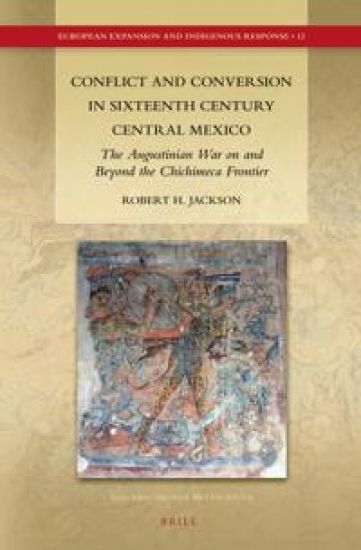
Conflict and Conversion in Sixteenth Century Central Mexico
In the sixteenth century Franciscan, Dominican, and Augustinian missionaries attempted to convert the native populations of central Mexico. The native peoples generally viewed the new religion in terms very different from that of the missionaries. As conflict broke out after 1550 as Spaniards invaded the Chichimeca frontier (the frontier between sedentary and nomadic natives), the missionaries faced new challenges on both sides of the frontier. Some sedentary natives resisted evangelization, and the missionaries saw themselves in a war against Satan and his minions. The Augustinians assumed a pivotal role in the evangelization campaign on both sides of the Chichimeca frontier, and employed different methods in the effort to convince the natives to embrace the new faith and to defeat Satan’s designs. They used graphic visual aids and the threat of an eternity of suffering in hell to bring recalcitrant natives, such as the Otomi of the Mezquital Valley, into the fold.
The Nuremberg Trial and Aggressive War

The Nuremberg Trial and Aggressive War

Sheldon Glueck; Robert H. Jackson

Literary Licensing, LLC
2012
sidottu
""The Nuremberg Trial and Aggressive War"" is a comprehensive historical account of the landmark Nuremberg Trials, written by Sheldon Glueck. The book delves into the legal and moral implications of the trials, which were held in the aftermath of World War II to prosecute top Nazi officials for war crimes, crimes against humanity, and crimes against peace. Glueck examines the legal framework of the trials, which established the principle of individual criminal responsibility for acts of aggression, and discusses the philosophical and ethical debates surrounding the concept of aggressive war. He also provides a detailed analysis of the evidence presented during the trials and the legal arguments made by the prosecution and defense teams. In addition, the book offers a critical evaluation of the impact of the trials on international law and the development of the modern concept of human rights. Glueck argues that the Nuremberg Trials represented a turning point in the history of international justice, and that they set a precedent for holding individuals accountable for crimes committed in the name of the state. Overall, ""The Nuremberg Trial and Aggressive War"" is a thought-provoking and insightful work that sheds light on one of the most significant events in modern legal history. It is a must-read for anyone interested in the history of international law, human rights, and the aftermath of World War II.This scarce antiquarian book is a facsimile reprint of the old original and may contain some imperfections such as library marks and notations. Because we believe this work is culturally important, we have made it available as part of our commitment for protecting, preserving, and promoting the world's literature in affordable, high quality, modern editions, that are true to their original work.
From Savages to Subjects

From Savages to Subjects

Robert H. Jackson

Routledge
2001
nidottu
Incorporating recent findings by leading Southwest scholars as well as original research, this book takes a fresh new look at the history of Spanish missions in northern Mexico/the American Southwest during the 17th and 18th centuries. Far from a record of heroic missionaries, steadfast soldiers, and colonial administrators, it examines the experiences of the natives brought to live on the missions, and the ways in which the mission program attempted to change just about every aspect of indigenous life. Emphasizing the effect of the missions on native populations, demographic patterns, economics, and socio-cultural change, this path-breaking work fills a major gap in the history of the Southwest.
From Savages to Subjects

From Savages to Subjects

Robert H. Jackson

Routledge
2000
sidottu
Incorporating recent findings by leading Southwest scholars as well as original research, this book takes a fresh new look at the history of Spanish missions in northern Mexico/the American Southwest during the 17th and 18th centuries. Far from a record of heroic missionaries, steadfast soldiers, and colonial administrators, it examines the experiences of the natives brought to live on the missions, and the ways in which the mission program attempted to change just about every aspect of indigenous life. Emphasizing the effect of the missions on native populations, demographic patterns, economics, and socio-cultural change, this path-breaking work fills a major gap in the history of the Southwest.
Indians, Franciscans and Spanish Colonization

Indians, Franciscans and Spanish Colonization

Robert H. Jackson; Edward Castillo

University of New Mexico Press
1996
nidottu
This ethnohistory examines Indian life in the twenty-one missions Franciscans established in Alta California. In describing how the missions functioned between 1769 and 1848, the authors draw on previously unused sources to analyse change and continuity in Indian material culture and religious practices. The twin goals of Franciscans were to mould Indians into a work force that would produce surplus grain for military garrisons and to regulate their moral conduct and religious practices.
Regional Markets and Agrarian Transformation in Bolivia

Regional Markets and Agrarian Transformation in Bolivia

Robert H. Jackson

University of New Mexico Press
1994
sidottu
In a groundbreaking volume, Professor Jackson seeks to discover when and how modernity supplanted the colonial era in Bolivia. The rural economy, structure of land tenure, and hacienda labour arrangements in the Andean region are carefully delineated through a case study of Cochabamba, a key region in the central valley of Bolivia, to trace changes in patterns present since the sixteenth century. Between 1840 and 1930, shifts in regional markets and changes in government policies resulted in hacienda owners earning less and incurring greater debt, which inevitably led to the insolvency of many hacienda owners, resale of colonial-era estates, and an increase in the number of peasant landowners. These changes, in turn, set in motion events leading to the 1953 agrarian reform movement.
Quasi-States

Quasi-States

Robert H. Jackson

Cambridge University Press
1993
pokkari
In this book, Professor Robert Jackson develops an original interpretation of Third World underdevelopment, explaining it in terms of international relations and law. He describes Third World countries as ‘quasi-states’, arguing that they are states in name only, demonstrating how international changes during the post-1945 period made it possible for many quasi-states to be created and to survive despite the fact that they are usually inefficient, illegitimate and domestically unstable.