Kirjojen hintavertailu. Mukana 12 595 353 kirjaa ja 12 kauppaa.

Kirjailija

Robert H. Logie

Kirjat ja teokset yhdessä paikassa: 7 kirjaa, julkaisuja vuosilta 1994-2019, suosituimpien joukossa Working Memory and Thinking. Vertaile teosten hintoja ja tarkista saatavuus suomalaisista kirjakaupoista.

7 kirjaa

Kirjojen julkaisuhaarukka 1994-2019.

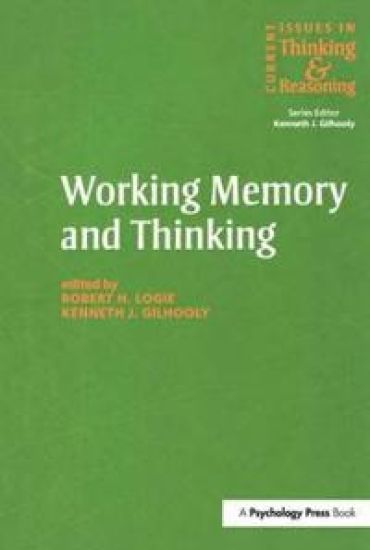
Working Memory and Thinking

Working Memory and Thinking

Kenneth Gilhooly; Robert H. Logie

Routledge
2019
nidottu
Thinking and memory are inextricably linked. However, a "divide and rule" approach has led cognitive psychologists to study these two areas in relative isolation. With contributions from some of the leading international researchers on working memory and thinking, the present volume aims to break down the scientific divisions and foster scientific integration in the connections between these two core functions of cognition. Broadly defined, thinking comprises mentally driven change in current representations. The processes involved in such change include application of logical rules, heuristics, problem solving strategies, decision making, planning and comprehension of complex material. Memory involves the encoding, retention and retrieval of information, and the retention may be temporary or in a long-term knowledge base.; Thinking cannot occur in a vacuum; it relies on the long-term memory base and a temporary mental workspace. Despite the apparent limitations on mental workspace, humans can drive a car and hold a conversation, or store partial solutions while tackling other aspects of a problem. So too, some aspects of thinking are relatively resilient in the face of quite extensive brain damage, yet other aspects are remarkably vulnerable to neuroanatomical insults. Humans can solve complex problems with many alternative choice points and yet seem to be able to consider only a few hypotheses at any one time. These apparent paradoxes present significant scientific challenges as to how humans can be such successful thinkers despite their very limited working memory. The chapters herein represent a diversity of views as regards the nature or working memory and forms of human thinking. The links between working memory and thinking are directly addressed and made explicit, and in so doing this volume offers an increasingly integrated understanding of human thinking and memory.
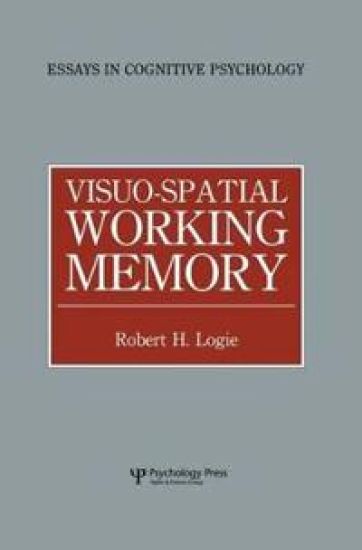
Visuo-spatial Working Memory

Visuo-spatial Working Memory

Robert H. Logie

Psychology Press Ltd
2015
nidottu
Representation of the visual and spatial properties of our environment is a pivotal requirement of everyday cognition. We can mentally represent the visual form of objects. We can extract information from several of the senses as to the location of objects in relation to ourselves and to other objects nearby. For some of those objects we can reach out and manipulate them. We can also imagine ourselves manipulating objects in advance of doing so, or even when it would be impossible to do so physically. The problem posed to science is how these cognitive operations are accomplished, and proffered accounts lie in two essentially parallel research endeavours, working memory and imagery. Working memory is thought to pervade everyday cognition, to provide on-line processing and temporary storage, and to update, moment to moment, our representation of the current state of our environment and our interactions with that environment. There is now a strong case for the claims of working memory in the area of phonological and articulatory functions, all of which appear to contribute to everyday activities such as counting, arithmetic, vocabulary acquisition, and some aspects of reading and language comprehension. The claims for visual and spatial working memory functions are less convincing. Most notable has been the assumption that visual and spatial working memory are intimately involved in the generation, retention and manipulations of visual images. There has until recently been little hard evidence to justify that assumption, and the research on visual and spatial working memory has focused on a relatively restricted range of imagery tasks and phenomena. In a more or less independent development, the literature on visual imagery has now amassed a voluminous corpus of data and theory about a wide range of imagery phenomena. Despite this, few books on imagery refer to the concept of working memory in any detail, or specify the nature of the working memory system that might be involved in mental imagery. This essay follows a line of reconciliation and positive critiquing in exploring the possible overlap between mental imagery and working memory. Theoretical development in the book draws on data from both cognitive psychology and cognitive neuropsychology. The aim is to stimulate debate, to address directly a number of assumptions that hitherto have been implicit, and to assess the contribution of the concept of working memory to our understanding of these intriguing core aspects of human cognition.
Working Memory and Thinking

Working Memory and Thinking

Kenneth Gilhooly; Robert H. Logie

Psychology Press Ltd
1998
sidottu
Thinking and memory are inextricably linked. However, a "divide and rule" approach has led cognitive psychologists to study these two areas in relative isolation. With contributions from some of the leading international researchers on working memory and thinking, the present volume aims to break down the scientific divisions and foster scientific integration in the connections between these two core functions of cognition. Broadly defined, thinking comprises mentally driven change in current representations. The processes involved in such change include application of logical rules, heuristics, problem solving strategies, decision making, planning and comprehension of complex material. Memory involves the encoding, retention and retrieval of information, and the retention may be temporary or in a long-term knowledge base.; Thinking cannot occur in a vacuum; it relies on the long-term memory base and a temporary mental workspace. Despite the apparent limitations on mental workspace, humans can drive a car and hold a conversation, or store partial solutions while tackling other aspects of a problem. So too, some aspects of thinking are relatively resilient in the face of quite extensive brain damage, yet other aspects are remarkably vulnerable to neuroanatomical insults. Humans can solve complex problems with many alternative choice points and yet seem to be able to consider only a few hypotheses at any one time. These apparent paradoxes present significant scientific challenges as to how humans can be such successful thinkers despite their very limited working memory. The chapters herein represent a diversity of views as regards the nature or working memory and forms of human thinking. The links between working memory and thinking are directly addressed and made explicit, and in so doing this volume offers an increasingly integrated understanding of human thinking and memory.
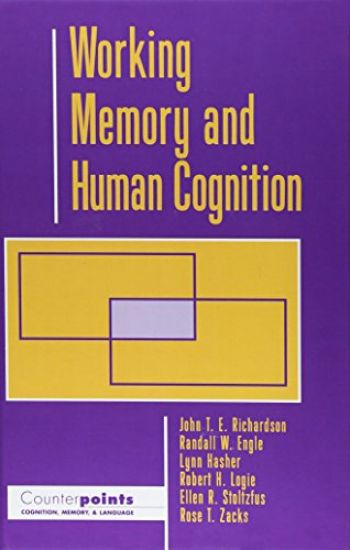
Working Memory and Human Cognition

Working Memory and Human Cognition

John T. E. Richardson; Randall W. Engle; Lynn Hasher; Robert H. Logie; Ellen R. Stoltzfus; Rose T. Zacks

Oxford University Press Inc
1996
sidottu
This book compares and contrasts different conceptions of working memory. This is one of the most important notions to have informed cognitive psychology over the last 20 years or so. Primarily, 'working memory' has referred to the human cognitive system responsible for temporary storage of verbal information, but this book goes further and includes proponents of several different yet dominant views of working memory. Contents include: The Seven Ages of Working Memory, Working Memory and Aging, Working Memory and Retrieval. Both the conceptual and methodological basis of the study of working memory relevant to advanced undergraduates, postgraduates, and research workers in the fields of cognition, intellectual development, and cognitive neuropsychology are covered.
Working Memory and Human Cognition

Working Memory and Human Cognition

John T. E. Richardson; Randall W. Engle; Lynn Hasher; Robert H. Logie; Ellen R. Stoltzfus; Rose T. Zacks

Oxford University Press Inc
1996
nidottu
The purpose of this contribution to the Counterpoints series is to compare and contrast different conceptions of working memory. This is one of the most important notions to have informed cognitive psychology over the last 20 years or so, and yet it has been used in a wide variety of ways. This, in part, is undoubtedly because contemporary usage of the phrase `working memory, encapsulates various themes that have appeared at different points in the history of research into human memory and cognition. This book presents three dominant views of working memory.
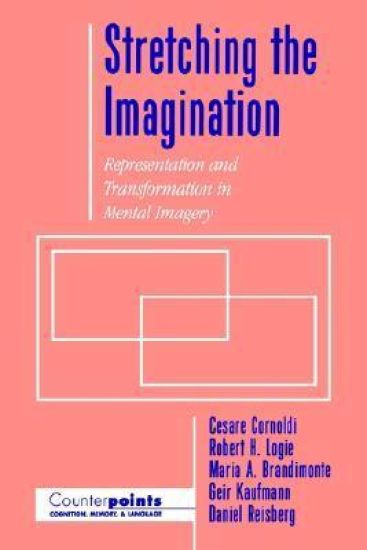
Stretching the Imagination

Stretching the Imagination

Cesare Cornoldi; Robert H. Logie; Maria A. Brandimonte; Geir Kaufmann; Daniel Reisberg

Oxford University Press Inc
1996
nidottu
One of the most lively areas of debate in psychology today concerns the relationship between perception and mental representation. This issue spans virtually all domains of psychological investigation, from development to perception, from computer to neuropsychological models of human cognition. Recent studies have shown that there is a strong relationship between memory and mental representation, but others have shown that images are open to reinterpretation and manipulation, and therefore are not merely static images or mental representations of memories. Core chapters by three researchers in the midst of this debate, Maria Brandimonte, Geir Kaufmann, and Dan Reisberg, make up the central portion of this fascinating book.
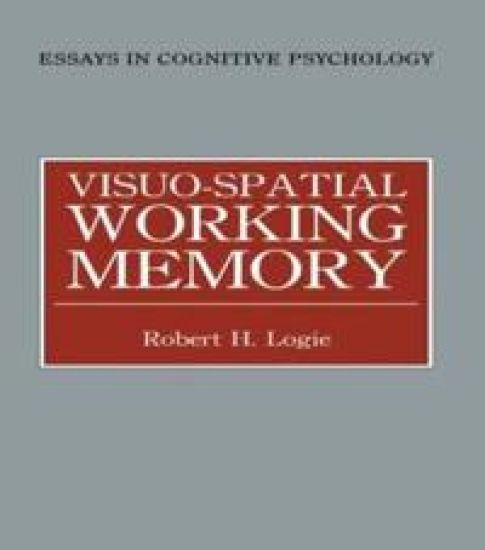
Visuo-spatial Working Memory

Visuo-spatial Working Memory

Robert H. Logie

Psychology Press Ltd
1994
sidottu
Representation of the visual and spatial properties of our environment is a pivotal requirement of everyday cognition. We can mentally represent the visual form of objects. We can extract information from several of the senses as to the location of objects in relation to ourselves and to other objects nearby. For some of those objects we can reach out and manipulate them. We can also imagine ourselves manipulating objects in advance of doing so, or even when it would be impossible to do so physically. The problem posed to science is how these cognitive operations are accomplished, and proffered accounts lie in two essentially parallel research endeavours, working memory and imagery. Working memory is thought to pervade everyday cognition, to provide on-line processing and temporary storage, and to update, moment to moment, our representation of the current state of our environment and our interactions with that environment. There is now a strong case for the claims of working memory in the area of phonological and articulatory functions, all of which appear to contribute to everyday activities such as counting, arithmetic, vocabulary acquisition, and some aspects of reading and language comprehension. The claims for visual and spatial working memory functions are less convincing. Most notable has been the assumption that visual and spatial working memory are intimately involved in the generation, retention and manipulations of visual images. There has until recently been little hard evidence to justify that assumption, and the research on visual and spatial working memory has focused on a relatively restricted range of imagery tasks and phenomena. In a more or less independent development, the literature on visual imagery has now amassed a voluminous corpus of data and theory about a wide range of imagery phenomena. Despite this, few books on imagery refer to the concept of working memory in any detail, or specify the nature of the working memory system that might be involved in mental imagery. This essay follows a line of reconciliation and positive critiquing in exploring the possible overlap between mental imagery and working memory. Theoretical development in the book draws on data from both cognitive psychology and cognitive neuropsychology. The aim is to stimulate debate, to address directly a number of assumptions that hitherto have been implicit, and to assess the contribution of the concept of working memory to our understanding of these intriguing core aspects of human cognition.