Kirjojen hintavertailu. Mukana 12 595 353 kirjaa ja 12 kauppaa.

Kirjailija

Robert H. Myers

Kirjat ja teokset yhdessä paikassa: 4 kirjaa, julkaisuja vuosilta 1999-2018, suosituimpien joukossa Self-Governance and Cooperation. Vertaile teosten hintoja ja tarkista saatavuus suomalaisista kirjakaupoista.

4 kirjaa

Kirjojen julkaisuhaarukka 1999-2018.

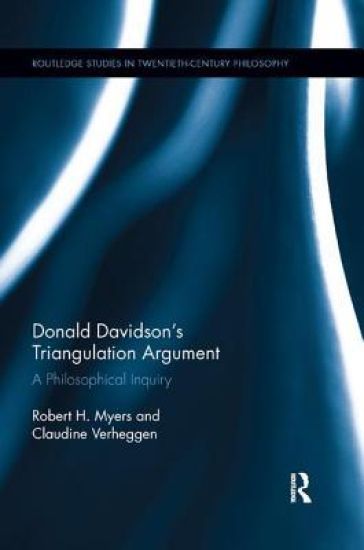
Donald Davidson’s Triangulation Argument

Donald Davidson’s Triangulation Argument

Robert H. Myers; Claudine Verheggen

Routledge
2018
nidottu
According to many commentators, Davidson’s earlier work on philosophy of action and truth-theoretic semantics is the basis for his reputation, and his later forays into broader metaphysical and epistemological issues, and eventually into what became known as the triangulation argument, are much less successful. This book by two of his former students aims to change that perception. In Part One, Verheggen begins by providing an explanation and defense of the triangulation argument, then explores its implications for questions concerning semantic normativity and reductionism, the social character of language and thought, and skepticism about the external world. In Part Two, Myers considers what the argument can tell us about reasons for action, and whether it can overcome skeptical worries based on claims about the nature of motivation, the sources of normativity and the demands of morality. The book reveals Davidson’s later writings to be full of innovative and important ideas that deserve much more attention than they are currently receiving.
Donald Davidson’s Triangulation Argument

Donald Davidson’s Triangulation Argument

Robert H. Myers; Claudine Verheggen

Routledge
2016
sidottu
According to many commentators, Davidson’s earlier work on philosophy of action and truth-theoretic semantics is the basis for his reputation, and his later forays into broader metaphysical and epistemological issues, and eventually into what became known as the triangulation argument, are much less successful. This book by two of his former students aims to change that perception. In Part One, Verheggen begins by providing an explanation and defense of the triangulation argument, then explores its implications for questions concerning semantic normativity and reductionism, the social character of language and thought, and skepticism about the external world. In Part Two, Myers considers what the argument can tell us about reasons for action, and whether it can overcome skeptical worries based on claims about the nature of motivation, the sources of normativity and the demands of morality. The book reveals Davidson’s later writings to be full of innovative and important ideas that deserve much more attention than they are currently receiving.

Self-Governance and Cooperation

Self-Governance and Cooperation

Robert H. Myers

Oxford University Press
2003
nidottu
Robert Myers presents an original moral theory which charts a course between the extremes of consequentialism and contractualism. He puts forward a radically new case for the existence of both agent-neutral and agent-relative values, and gives an innovative answer to the question how such disparate values can be weighed against each other. Practical judgement is shown to be guided in this by two very different ideals: an ideal of cooperation, which is held to shape the content of morality's demands, and one of self-governance, which is held to determine the nature of reason's requirements. Examination of the ideal of cooperation reveals that principles of impartial beneficence and rights protecting individual freedoms are equally fundamental to morality. Examination of the ideal of self-governance reveals that morality's dictates, though not necessarily overriding, are always in an important sense inescapable. The result is a theory of morality which combines a balanced account of its content with a ringing affirmation of its authority.
Self-Governance and Cooperation

Self-Governance and Cooperation

Robert H. Myers

Oxford University Press
1999
sidottu
Robert Myers presents an original moral theory which charts a course between the extremes of consequentialism and contractualism. He puts forward a radically new case for the existence of both agent-neutral and agent-relative values, and gives an innovative answer to the question how such disparate values can be weighed against each other. Practical judgement is shown to be guided in this by two very different ideals: an ideal of cooperation, which is held to shape the content of morality's demands, and one of self-governance, which is held to determine the nature of reason's requirements. Examination of the ideal of cooperation reveals that principles of impartial beneficence and rights protecting individual freedoms are equally fundamental to morality. Examination of the ideal of self-governance reveals that morality's dictates, though not necessarily overriding, are always in an important sense inescapable. The result is a theory of morality which combines a balanced account of its content with a ringing affirmation of its authority.