Kirjojen hintavertailu. Mukana 12 595 353 kirjaa ja 12 kauppaa.

Kirjailija

Robert H. Webb

Kirjat ja teokset yhdessä paikassa: 4 kirjaa, julkaisuja vuosilta 1996-2014, suosituimpien joukossa Grand Canyon, a Century of Change. Vertaile teosten hintoja ja tarkista saatavuus suomalaisista kirjakaupoista.

4 kirjaa

Kirjojen julkaisuhaarukka 1996-2014.

Requiem for the Santa Cruz

Requiem for the Santa Cruz

Robert H. Webb; Julio L. Betancourt; R. Roy Johnson; Raymond M Turner; Bernard L. Fontana

University of Arizona Press
2014
sidottu
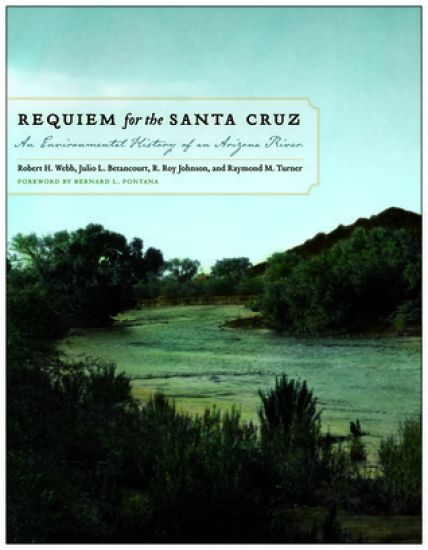
In prehistoric times, the Santa Cruz River in what is now southern Arizona saw many ebbs, flows, and floods. It flowed on the surface, meandered across the floodplain, and occasionally carved deep channels or arroyos into valley fill. Groundwater was never far from the surface, in places outcropping to feed marshlands or cienegas. In these wet places, arroyos would heal quickly as the river channel revegetated, the thriving vegetation trapped sediment, and the channel refilled. As readers of Requiem for the Santa Cruz learn, these aridland geomorphic processes also took place in the valley as Tucson grew from mud-walled village to modern metropolis, with one exception: historical water development and channel changes proceeded hand in glove, each taking turns reacting to the other, eventually lowering the water table and killing a unique habitat that can no longer recover or be restored.Authored by an esteemed group of scientists, Requiem for the Santa Cruz thoroughly documents this river—the premier example of historic arroyo cutting during the late nineteenth and early twentieth centuries, when large floodflows cut down through unconsolidated valley fill to form deep channels in the major valleys of the American Southwest. Each chapter provides a unique opportunity to chronicle the arroyo legacy, evaluate its causes, and consider its aftermath. Using more than a century of observations and collections, the authors reconstruct the circumstances of the river's entrenchment and the groundwater mining that ultimately killed the marshlands, a veritable mesquite forest, and a birdwatcher's paradise.Today, communities everywhere face this conundrum: do we manage ephemeral rivers through urban areas for flood control, or do we attempt to restore them to some previous state of naturalness? Requiem for the Santa Cruz carefully explores the legacies of channel change, groundwater depletion, flood control, and nascent attempts at river restoration to give a long-term perspective on management of rivers in arid lands. Tied together by authors who have committed their life's work to the study of aridland rivers, this book offers a touching and scientifically grounded requiem for the Santa Cruz and every southwestern river.
Damming Grand Canyon

Damming Grand Canyon

Diane E Boyer; Robert H. Webb

Utah State University Press
2007
sidottu
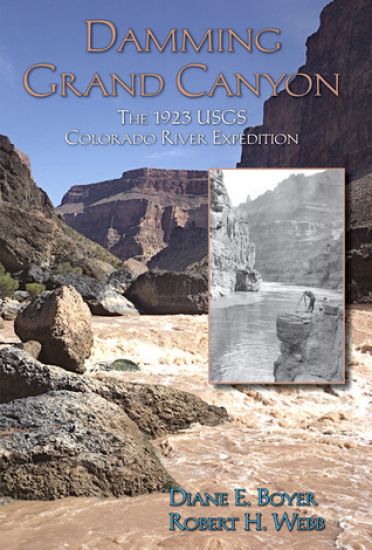
In 1923, America paid close attention, via special radio broadcasts, newspaper headlines, and cover stories in popular magazines, as a government party descended the Colorado to survey Grand Canyon. Fifty years after John Wesley Powell's journey, the canyon still had an aura of mystery and extreme danger. At one point, the party was thought lost in a flood. Something important besides adventure was going on. Led by Claude Birdseye and including colorful characters such as early river-runner Emery Kolb, popular writer Lewis Freeman, and hydraulic engineer Eugene La Rue, the expedition not only made the first accurate survey of the river gorge but sought to decide the canyon's fate. The primary goal was to determine the best places to dam the Grand. With Boulder Dam not yet built, the USGS, especially La Rue, contested with the Bureau of Reclamation over how best to develop the Colorado River. The survey party played a major role in what was known and thought about Grand Canyon. The authors weave a narrative from the party's firsthand accounts and frame it with a thorough history of water politics and development and the Colorado River.The recommended dams were not built, but the survey both provided base data that stood the test of time and helped define Grand Canyon in the popular imagination.
Floods, Droughts, and Climate Change

Floods, Droughts, and Climate Change

Michael Collier; Robert H. Webb

University of Arizona Press
2002
nidottu
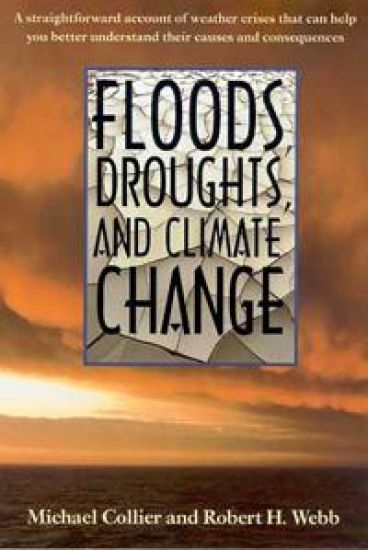
No one in America would deny that the weather has changed drastically in our lifetime. We read about El Nino and La Nina, but how many of us really understand the big picture beyond our own front windows or even the headlines on the Weather Channel? Hydrologists and climatologists have long been aware of the role of regional climate in predicting floods and understanding droughts. But with our growing sense of a variable climate, it is important to reassess these natural disasters not as isolated events but as related phenomena. This book shows that floods and droughts don't happen by accident but are the products of patterns of wind, temperature, and precipitation that produce meteorologic extremes. It introduces the mechanics of global weather, puts these processes into the longer-term framework of climate, and then explores the evolution of climatic patterns through time to show that floods and droughts, once considered isolated "acts of God," are often related events driven by the same forces that shape the entire atmosphere. Michael Collier and Robert Webb offer a fresh, insightful look at what we know about floods, droughts, and climate variability and their impact on people in an easy-to-read text, with dramatic photos, that assumes no previous understanding of climate processes. They emphasize natural, long-term mechanisms of climate change, explaining how floods and droughts relate to climate variability over years and decades. They also show the human side of some of the most destructive weather disasters in history. As Collier and Webb ably demonstrate, "climate" may not be the smooth continuum of meteorologic possibilities we supposed but rather the sum of multiple processes operating both regionally and globally on different time scales. Amid the highly politicized discussion of our changing environment, Floods, Droughts, and Climate Change offers a straightforward scientific account of weather crises that can help students and general readers better understand the causes of climate variability and the consequences for their lives.
Grand Canyon, a Century of Change

Grand Canyon, a Century of Change

Robert H. Webb

University of Arizona Press
1996
nidottu
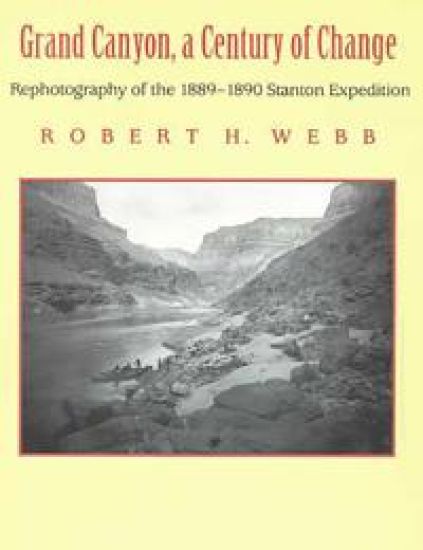
Photographs made in Grand Canyon a century ago may provide us today with a sense of history; photographs made a century later from the same vantage points give us a more precise picture of change in this seemingly timeless place. Between 1889 and 1890, Robert Brewster Stanton made photographs every 1-2 miles through the river corridor for the purpose of planning a water-level railroad route and produced the largest collection of photographs of the Colorado River at one point in time. Robert Webb, a USGS hydrologist conducting research on debris flows in the Canyon, obtained the photographs and from 1989 to 1995 replicated all 445 of the views captured by Stanton, matching as closely as possible the original camera positions and lighting conditions. Grand Canyon, a Century of Change assembles the most dramatic of these paired photographs to demonstrate both the persistence of nature and the presence of humanity. Unexpected longevity of some plant species, effects of animal grazing, and expansion of cacti are all captured by the replicate photographs. More telling is evidence of the impact of Glen Canyon Dam: increased riparian vegetation, new marshes, aggraded debris fans, and eroded sand bars. In the accompanying text, Webb provides a thorough analysis of what each pair of photographs shows and places the project in its historical context. Complementing his narrative are six sidebar articles by authorities on Canyon natural history that further attest to a century of change. The level of detail obtained from the photographs represents one of the most extensive long-term monitoring efforts ever conducted in a national park; it is the most detailed documentation effort ever performed using repeat photography. Much more than simply a picture book, Grand Canyon, a Century of Change is an environmental history of the river corridor, a fascinating book that clearly shows the impact of human influence on Grand Canyon and warns us that its future is very much in our hands.