

Kirjailija
Robert Hampson
Kirjat ja teokset yhdessä paikassa: 11 kirjaa, julkaisuja vuosilta 1992-2026, suosituimpien joukossa Tinker, Tailor, Bio, Spy. Vertaile teosten hintoja ja tarkista saatavuus suomalaisista kirjakaupoista.
11 kirjaa
Kirjojen julkaisuhaarukka 1992-2026.
In 1908, Joseph Conrad was criticised by a reviewer for being a man ‘without either country or language’: even his shipboard communities were the product of a ‘cosmopolitan’ vision. This book takes off from that criticism and begins by exploring the history and meanings of the term ‘cosmopolitan’. It then considers the multinational world of Conrad’s ships – and of the Merchant Marine more generally – to differentiate multinationalism from cosmopolitanism. Subsequent chapters then address nationalism, nation-formation and the concept of the nation through a reading of Nostromo; cosmopolitanism and internationalism in The Secret Agent; nationalism, internationalism and transnational activism in relation to Under Westen Eyes; and Conrad’s own transnational activism in his later essays. While drawing distinctions between cosmopolitanism, internationalism and transnationalism as the appropriate conceptual framings for Conrad’s works, this book traces Conrad’s own engagement with nationalism, cosmopolitanism, and transnational activism in relation to the political events of his time.
In 1908, Joseph Conrad was criticised by a reviewer for being a man ‘without either country or language’: even his shipboard communities were the product of a ‘cosmopolitan’ vision. This book takes off from that criticism and begins by exploring the history and meanings of the term ‘cosmopolitan’. It then considers the multinational world of Conrad’s ships – and of the Merchant Marine more generally – to differentiate multinationalism from cosmopolitanism. Subsequent chapters then address nationalism, nation-formation and the concept of the nation through a reading of Nostromo; cosmopolitanism and internationalism in The Secret Agent; nationalism, internationalism and transnational activism in relation to Under Westen Eyes; and Conrad’s own transnational activism in his later essays. While drawing distinctions between cosmopolitanism, internationalism and transnationalism as the appropriate conceptual framings for Conrad’s works, this book traces Conrad’s own engagement with nationalism, cosmopolitanism, and transnational activism in relation to the political events of his time.

The Tedd Roberts CollectionHere are six stories of science...fantasy?From alien teachers, to a social media wolfpack, to students with a bit of extra talent; from artificially intelligent faculty to a professor who's a bit...vitally-challenged. The stories in this collection combine a bit of science, with a bit of fantasy and campus shenanigans.These tales of Teddy's RatLab are now published in one place by the head LabRat himself, without a pen-name

This is a sequence of nineteen experimental odes. The sequence offers a documentation of the last year in the form of a fragmented, multi-perspectival 'public voice' poetry. With its roots in the socio-historical context of the pandemic - from stripped supermarket-shelves or clapping for the NHS workers through to the Trump presidency and the closure of Philip Green's Arcadia - the sequence opens onto post-apocalyptic, dystopian fantasies. The locations range from warehouses on the Essex estuary and deserted university campuses to barbecues in Portland and bush-fires in Australia, registering the new awareness of the fragility of supply chains and a larger awareness of climate catastrophe. At the same time, the sequence also explores the experience of lockdown through the evocation of a series of enclosed spaces as if the experience of Covid were a bunker, a submarine, a space-station, a colony on Mars, while also attending to the necessarily mediated experiences produced by lockdown and the corresponding reliance on the technologies of video-conferencing, Instagram, zoom.
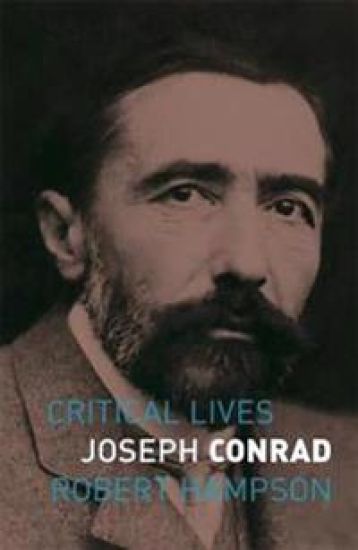
Joseph Conrad is widely recognized as one of the greatest writers of the early twentieth century. Robert Hampson traces Conrad’s life from his childhood in a Russian penal colony, through his early manhood in Marseille and his years in the British Merchant Navy, to his career as a novelist. It describes how these experiences inspired Conrad’s work, from his early Malay novels to his best-known work, Heart of Darkness. Robert Hampson also discusses Conrad’s important relations with other writers, in particular Ford Madox Ford, as well as his late-life political engagements and his relationships with women. Featuring new interpretations of all of Conrad’s major works, this is an original interpretation of Conrad’s life of writing.
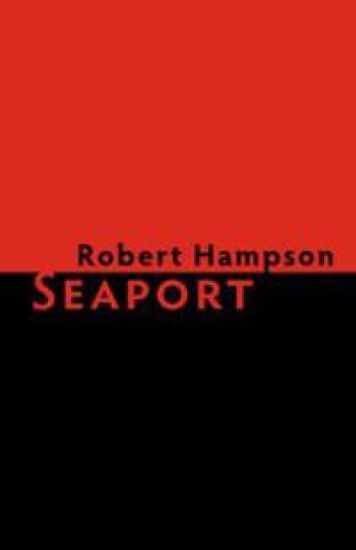
'Seaport' deals with many aspects of the history and development of Liverpool, drawing on a wide range of documentary sources, and culminating with a vivid account of what the national press called the 'Toxteth Riots' of 1981. This event is seen in the context of the repressive policing methods of the day, especially as directed at black youths ...[and] ...in the historical context of Liverpool's notorious role in the slave trade, and of subsequent patterns of racial discrimination ...(Peter Barry)
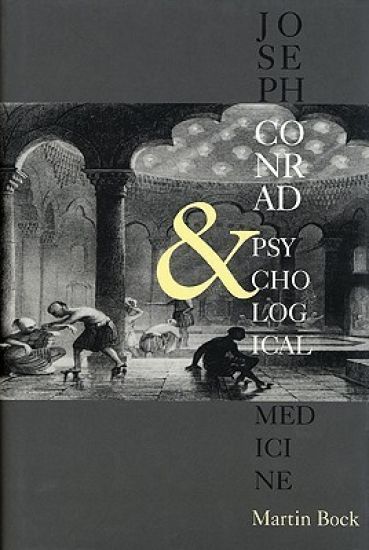
Joseph Conrad and Psychological Medicine
Martin Bock; Robert Hampson
Texas Tech Press,U.S.
2002
sidottu
Conrads life and fiction are often read through the lens of Freudian thought, though Conrad understood his own health from a pre-Freudian perspective. ""Joseph Conrad and Psychological Medicine"" recovers that perspective, revises our understanding of Conrads life, and rethinks the dominant themes of his work in light of pre-Freudian medical psychology. Beginning with a social history of late-nineteenth-century medical psychology and hysteria studies, Bocks study presents a clear and readable synopsis of fin-de-sicle theories of nervous disorder and moral insanity, shows how Conrads doctors were trained in medical theories that privilege the physiological over the psychological, and describes what Conrad endured during his water cures at Champel-les-Bains and in an English culture that constructed nervous disease - particularly his diagnosed neurasthenia - as a feminine disorder. ""Joseph Conrad and Psychological Medicine"" reads Conrads fiction medically, showing how Conrads work focuses on such narrative strategies as Conrads rhetoric of hysteria and enervation and his vivid, nervous descriptions, and it shows how major tropes such as restraint, seclusion, and water all treatments for insanity - were important issues in the medical discourse of Conrads day and are themes that run through Conrads fiction. Bocks study also suggests that Conrads major breakdown of 1910 was an epiphany, an event Conrad feared for decades but that afterwards allowed him to shift the interests of his fiction. The post-breakdown fiction offers less brooding and more allegorized narrations of Conrads medical history as he moves towards a greater acceptance, late in his life, of his gender and sexuality.

Through attention to incidents of betrayal and self-betrayal in his fiction, this book traces the development of Conrad's conception of identity through the three phases of his career: the self in isolation, the self in society and the sexualised self. It shows how the early fiction negotiates the opposed dangers of the self-ideal and the surrender to passion; how the middle fiction tests the ideal code psychologically and ideologically; and how the late fiction probes sexuality and morbid psychology.

Through attention to incidents of betrayal and self-betrayal in his fiction, this book traces the development of Conrad's conception of identity through the three phases of his career: the self in isolation, the self in society and the sexualised self. It shows how the early fiction negotiates the opposed dangers of the self-ideal and the surrender to passion; how the middle fiction tests the ideal code psychologically and ideologically; and how the late fiction probes sexuality and morbid psychology.