Kirjojen hintavertailu. Mukana 12 595 353 kirjaa ja 12 kauppaa.

Kirjailija

Robert Hardy

Kirjat ja teokset yhdessä paikassa: 7 kirjaa, julkaisuja vuosilta 2005-2024, suosituimpien joukossa Longbow. Vertaile teosten hintoja ja tarkista saatavuus suomalaisista kirjakaupoista.

7 kirjaa

Kirjojen julkaisuhaarukka 2005-2024.

Longbow

Longbow

Robert Hardy

THE HISTORY PRESS LTD
2024
nidottu
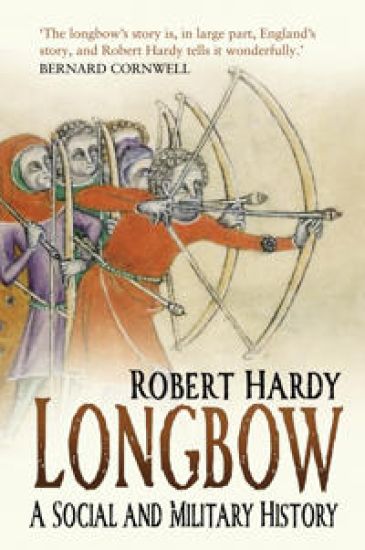
‘The longbow’s story is, in large part, England’s story, and Robert Hardy tells it wonderfully.’ – Bernard CornwellThe late Robert Hardy was famous throughout the world as an actor. Not so widely known was his deep interest and expertise on the subject of archery and its history.In this meticulously researched book, Hardy begins by describing the earliest known examples of the longbow, revealing that it was in use worldwide at least 8,000 years ago.With drama, vigour and enthusiasm, he chronicles the arrival of the longbow in Britain, its curious temporary disappearance, its return and gradual adoption as the most important weapon in the English military arsenal, and its coming of age at the battles of Crecy, Poitiers and Agincourt.Longbow describes the archers themselves, where they came from, their equipment, training, uniform, way of life and terms of service; the fact and fiction of the Robin Hood legend; the reasons why the French never took to the weapon; the devastating effects of longbow against longbow in the Wars of the Roses; and the eventual decline of the bow and Henry VIII’s campaign to maintain it. Also examined is the longbow as a sporting and hunting weapon, and its status in Britain today.Beautifully illustrated, and with a detailed account of how to make a longbow from scratch, Longbow is a compelling story and a major contribution to the history of archery.
Agincourt 1415: The Archers' Story

Agincourt 1415: The Archers' Story

Anne Curry; Robert Hardy

THE HISTORY PRESS LTD
2024
pokkari
‘Attempts to see the conflict from the perspectives of those who fought.’ – History TodayThe Battle of Agincourt still rings down through the centuries as a quite incredible victory by the outnumbered, happy few of England, enfeebled by disease and exhaustion, against the might of French chivalry. For many commentators then and now, it was the English archers who won the day for Henry V. This history re-tells the story of the battle and Henry V’s Normandy campaign from the perspective of the reputed commander of the English archers, Sir Thomas Erpingham.Sir Thomas, an experienced warrior from Norfolk with military experience dating back 40 years, is known for his brief but pivotal appearances in Shakespeare’s Henry V, where he is correctly portrayed as an elderly, white-haired veteran. At 57 he was one of the oldest there and a close personal confident of the King. But what was his background? How did he command his archers to such a place in history? And what role did the longbow and battlefield tactics play in the final analysis of victory?Copiously illustrated with reproductions of original muster rolls and other material, Agincourt 1415: The Archers’ Story steers the reader through the history of the most important battle of the Hundred Years War from an entirely fresh perspective.
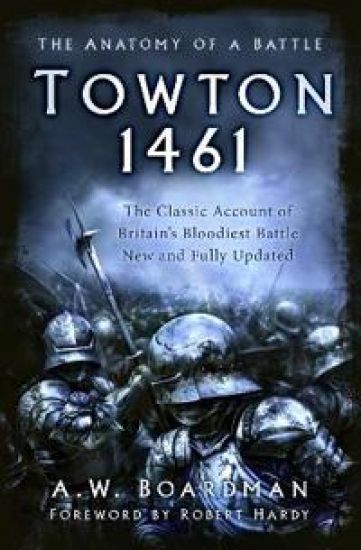
Towton 1461

Towton 1461

A.W. Boardman; Robert Hardy

THE HISTORY PRESS LTD
2022
nidottu
‘Towton, the bloodbath that changed the course of our history . . . an invaluable book.’ - A.A. Gill, The Sunday Times Magazine.‘Boardman has unrivalled knowledge of the ground and the record, such as it is, of the battle fought there.’ - Times Higher Education Supplement.‘an admirably comprehensive account’ - Yorkshire Post.‘a marvel of evocation.’ - Robert Hardy.Palm Sunday 1461 was the date of a ruthless and bitterly contested battle fought by two massive armies on an exposed Yorkshire plateau for the prize of the Crown of England. This singular engagement of the Wars of the Roses has acquired the auspicious title of the longest, biggest and bloodiest battle ever fought on British soil. The slaughter left an indelible mark on the population that has been largely forgotten until relatively recent times: Shakespeare likened the struggle to the wind and tide of a mighty sea that set father against son and son against father. But what drove the contending armies of York and Lancaster to fight at Towton? And what is the truth behind the legends about this terrible battle where contemporaries record rivers ran red with blood?A.W. Boardman answers these questions and many more in this new and fully updated fourth edition of his classic account of Towton. Illustrated throughout with contemporary artwork, modern photographs and specially drawn maps, Towton 1461: The Anatomy of a Battle is a fascinating insight into the reality of the battlefield and the men who fought there in a blinding snowstorm over half a millennium ago.
Yew

Yew

Fred Hageneder; Robert Hardy; David Bellamy

The History Press Ltd
2011
nidottu
The yew is one of the most fascinating and versatile life forms on Earth, botanically rich and intriguing, and culturally almost without comparison. In history, mythology, religion, folklore, medicine and warfare, this tree bears timeless witness to a deep relationship with mankind. Yew was the wood chosen to make some of mankind's oldest artefacts: spears, bows and musical instruments. These include items like the prehistoric spear found near Clacton, the 2,000-year-old wooden pipes from Greystones, County Wicklow and, of course, the famous medieval English longbow. In modern medicine, too, yew has proved a boon. Since 1992 taxol/paclitaxel has helped revolutionise the treatment of certain types of cancer. In botanical terms, yew is a mass of contradictions. It is a conifer which bears scarlet 'berries' with sweet juicy pulp instead of cones. It is highly poisonous in all its parts except the red fruit pulp, and yet both wild and domesticated animals feed upon it. It can live for thousands of years with the potential to renew itself. A new tree from an interior root can grow slowly within the hollow trunk of an ancient yew and centuries later 'take over' the older tree.When it comes to habitat, the yew tree is nothing if not versatile. It can grown on different continents at a wide range of altitudes: from rainy Edinburgh to sultry Istanbul, from Canada to Mexico, Scandinavia to North Africa and Sumatra, Japan and the Himalayas. Fred Hageneder's fascinating book is the first to cover all aspects of the botany as well as the cultural history and mythology of the genus Taxus. This is the remarkable story of the oldest living things in Europe.
Yew

Yew

Fred Hageneder; Robert Hardy; David Bellamy

The History Press Ltd
2007
sidottu
The yew is one of the most fascinating and versatile life forms on Earth, botanically rich and intriguing and culturally almost without comparison. In history, mythology, religion, folklore, medicine and in warfare, the yew bears timeless witness to a deep relationship with mankind. It is the tree that Darwin often rested beneath and under which he wanted to be buried until public opinion decreed a higher-status interment in Westminster Abbey. It was under the great Ankerwyke yew at Runnymede in Buckinghamshire that Magna Carta is believed to have been sworn by the barons in 1215. In 1803, Wordsworth celebrated the great yew in Lorton Vale, 'single, in the midst of its own darkness', a tree under which both the great Quaker George Fox and John Wesley preached. In many cultures it is the Tree of Life, and its association with churchyards in Britain and Europe has given it a particular claim on the popular imagination as a living link between our landscapes and those of the distant past.
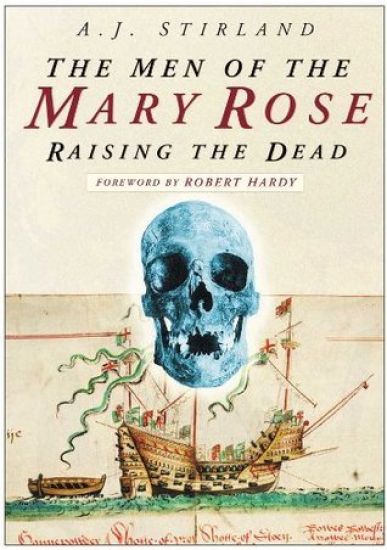
The Men of the Mary Rose

The Men of the Mary Rose

A J Stirland; Robert Hardy

The History Press Ltd
2005
nidottu
The Mary Rose was one of King Henry VIII's favourite warships until she sank during an engagement with the French fleet on 19 July 1545. Her rediscovery and raising were seminal events in the history of nautical archaeology. Apart from the Captain and the Vice Admiral, nothing is known about the crew of the Mary Rose - the only evidence about her complement of 415 men rests with their skeletal remains. In The Men of the Mary Rose A.J. Stirland uses archaeological and skeletal evidence to give the reader a welcome insight into the soldiers of the Mary Rose, from their ages and height to their health, diet and physical condition.This book examines the building, sinking and raising of the Mary Rose and her historical context, before moving on to the examination of what the remain of the crew can reveal to us about the fighting men of that period. Many new findings have been made through analysis of their bones, including the effects of some activities and occupations on the skeletons of the men. This is the first book to deal with the men who made up the crew of the Mary Rose. It provides an exciting glimpse of Tudor life and the Tudor navy, relating archaeological findings to existing documentary evidence, opening a fascinating window into one of Henry VIII's great ships and a frozen moment of sixteenth-century time. This book will appeal both to professionals in the area, and to those for whom Tudor history holds a general fascination.
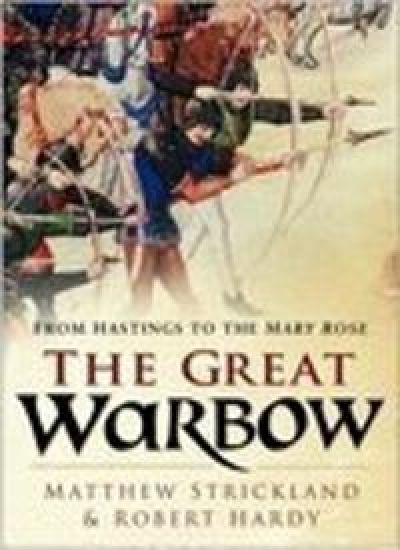
The Great Warbow

The Great Warbow

Robert Hardy; Matthew Strickland

The History Press Ltd
2005
sidottu
An exploration of the bow and arrow as weapons of war, this study takes us on a journey through history from before the Domesday Book, through Anglo-Saxon England, medieval Wales and Ireland, the crusades, until the time of the Tudors. Tactics, myths, origins, defence and armour are all discussed; as are the different types of bow.