
Kirjailija
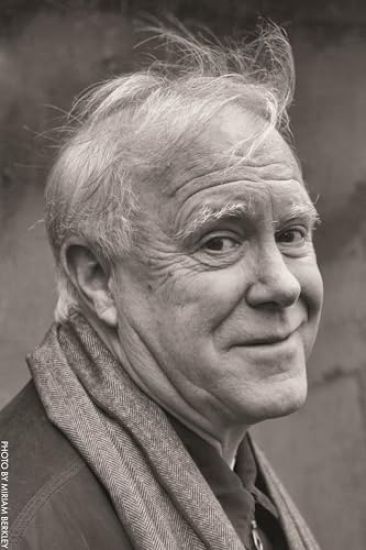
Robert Hass
Kirjat ja teokset yhdessä paikassa: 25 kirjaa, julkaisuja vuosilta 1998-2026, suosituimpien joukossa Modernist Women Poets. Vertaile teosten hintoja ja tarkista saatavuus suomalaisista kirjakaupoista.
25 kirjaa
Kirjojen julkaisuhaarukka 1998-2026.
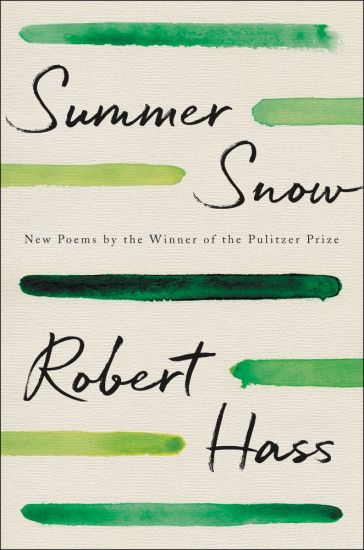
A major collection of entirely new poems from the Pulitzer Prize and National Book Award-winning author of Time and Materials and The Apple Trees at OlemaA new volume of poetry from Robert Hass is always an event. In Summer Snow, his first collection of poems since 2010, Hass further affirms his position as one of our most highly regarded living poets. Hass's trademark careful attention to the natural world, his subtle humor, and the delicate but wide-ranging eye he casts on the human experience are fully on display in his masterful collection. Touching on subjects including the poignancy of loss, the serene and resonant beauty of nature, and the mutability of desire, Hass exhibits his virtuosic abilities, expansive intellect, and tremendous readability in one of his most ambitious and formally brilliant collections to date.
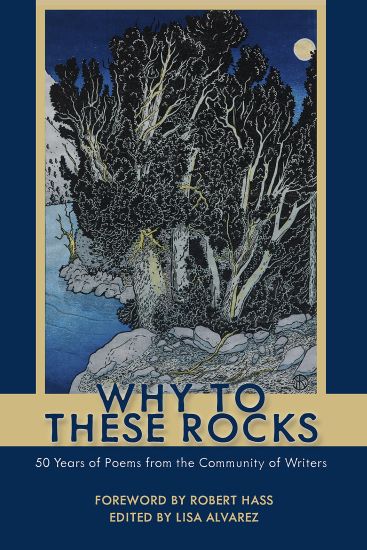
Fifty years of poems from the Community of Writers’ poetry workshop The Community of Writers (formerly Community of Writers at Squaw Valley) celebrates fifty years of its annual summer poetry workshop in Olympic Valley, California, with this collection of one hundred and forty poems first composed there. Edited by writers workshop codirector Lisa Alvarez and introduced by longtime poetry director Robert Hass, the book is divided into three sections: poems that evoke the Valley’s physical setting, with its granite-and-pine mountain beauty; poems that peer into the poetic process, filled with inspiration and idiosyncrasy; and poems of all shapes and kinds that owe their origins to the workshop and its productive morning review sessions. Contributors include both workshop staff and participants, among them Lucille Clifton, Sharon Olds, Al Young, Matthew Zapruder, Harryette Mullen, Galway Kinnell, Rita Dove, Cornelius Eady, Robert Hass, and Forrest Gander. The title of the collection comes from a question posed by original poetry director Galway Kinnell: “Then why to these rocks / Do I keep coming back why.” It speaks to the special community nurtured in this stunning setting, one that has inspired poets worldwide—many of whom developed significant bodies of award-winning work in its creative and generative atmosphere.

Robert Hass räknas bland USA:s mest betydande poeter och i sin diktning reflekterar han över vardagliga händelser då reflektionen blir ett slags sjätte sinne som ger erfarenheten en djupare mening. Att läsa Hass lär en uppmärksamhetens konst. Urvalet i den bok är ur Hass samtliga sju diktsamlingar sedan debuten 1973. Han är även översättare och essäist, har översatt bland andra Tomas Tranströmer och Czeslaw Milosz.
A major collection of entirely new poems from the Pulitzer Prize and National Book Award-winning author of Time and Materials and The Apple Trees at OlemaA new volume of poetry from Robert Hass is always an event. In Summer Snow, his first collection of poems since 2010, Hass further affirms his position as one of our most highly regarded living poets. Hass’s trademark careful attention to the natural world, his subtle humor, and the delicate but wide-ranging eye he casts on the human experience are fully on display in his masterful collection. Touching on subjects including the poignancy of loss, the serene and resonant beauty of nature, and the mutability of desire, Hass exhibits his virtuosic abilities, expansive intellect, and tremendous readability in one of his most ambitious and formally brilliant collections to date.

"This is an important book for anyone interested in the ethical interrelationships of things, places, and people, and it is a book that is not just read but taken in." --Library Journal Featuring a new introduction by Robert Hass, the nine captivatingly meditative essays in The Practice of the Wild display the deep understanding and wide erudition of Gary Snyder in the ways of Buddhist belief, wildness, wildlife, and the world. These essays, first published in 1990, stand as the mature centerpiece of Snyder's work and thought, and this profound collection is widely accepted as one of the central texts on wilderness and the interaction of nature and culture.
A study at many levels of Scott’s long poem Coming to Jakarta, a book-length response to a midlife crisis triggered in part by the author’s initial inability to share his knowledge and horror about American involvement in the great Indonesian massacre of 1965. Interviews with Ng supply fuller information about the poem’s discussions of: a) how this psychological trauma led to an explorations of violence in American society and then, after a key recognition, in the poet himself; b) the poem's look at east-west relations through the lens of the yin-yang, spiritual-secular doubleness of the human condition; c) how the process of writing the poem led to the recovery of memories too threatening at first to be retained by his normal presentational self, and d) the mystery of right action, guided by the Bhagavad Gita and the maxim in the Gospel of Thomas that "If you bring forth what is within you, what you bring forth will save you.” Led by the interviews to greater self-awareness, Scott then analyses his poem as also an elegy, not just for the dead in Indonesia, but “for the passing of the Sixties era, when so many of us imagined that a Movement might achieve major changes for a better America.” Subsequent chapters develop how human doubleness can lead to an inner tension between the needs of politics and the needs of poetry, and how some poetry can serve as a non-violent higher politics, contributing to the evolution of human culture and thus our “second nature.” The book also reproduces a Scott prose essay, inspired by the poem, on the U.S. involvement in and support for the 1965 massacre. It then discusses how this essay was translated into Indonesian and officially banned by the Indonesian dictatorship, and how ultimately it and the poem helped inspire the ground-breaking films of Josh Oppenheimer that have led to the first official discussions in Indonesia of what happened in 1965.
A study at many levels of Scott’s long poem Coming to Jakarta, a book-length response to a midlife crisis triggered in part by the author’s initial inability to share his knowledge and horror about American involvement in the great Indonesian massacre of 1965. Interviews with Ng supply fuller information about the poem’s discussions of: a) how this psychological trauma led to an explorations of violence in American society and then, after a key recognition, in the poet himself; b) the poem's look at east-west relations through the lens of the yin-yang, spiritual-secular doubleness of the human condition; c) how the process of writing the poem led to the recovery of memories too threatening at first to be retained by his normal presentational self, and d) the mystery of right action, guided by the Bhagavad Gita and the maxim in the Gospel of Thomas that "If you bring forth what is within you, what you bring forth will save you.” Led by the interviews to greater self-awareness, Scott then analyses his poem as also an elegy, not just for the dead in Indonesia, but “for the passing of the Sixties era, when so many of us imagined that a Movement might achieve major changes for a better America.” Subsequent chapters develop how human doubleness can lead to an inner tension between the needs of politics and the needs of poetry, and how some poetry can serve as a non-violent higher politics, contributing to the evolution of human culture and thus our “second nature.” The book also reproduces a Scott prose essay, inspired by the poem, on the U.S. involvement in and support for the 1965 massacre. It then discusses how this essay was translated into Indonesian and officially banned by the Indonesian dictatorship, and how ultimately it and the poem helped inspire the ground-breaking films of Josh Oppenheimer that have led to the first official discussions in Indonesia of what happened in 1965.
From the former U.S. Poet Laureate, Pulitzer Prize and National Book Award-winner, an illuminating dissection of poetic form for students, enthusiasts, and newcomers alikeA Little Book on Form brilliantly synthesizes Hass’s formidable gifts as both a poet and essayist. In it he takes up the central tension between poetry as genre and the poetics of the imagination. A wealth of vocabulary exists with which to talk about poetry in traditional formal terms. But the more intuitive, creative parts of a poet’s work and processes are more elusive: if the most interesting aspect of form is the shaping power of the essential, expressive gestures inside it, how do we come to a language in which to speak about form as the search for the radiant shapes— the wholeness or brokenness—we experience inside powerful works of art? In suggestive, informal “notes,” Haas thinks through the idea of a poem from its barest building blocks—the one line haiku, the brief epigram or prayer—to the complex villanelle and sonnet, and beyond them, to the grand forms of elegy and ode through which poets across human cultures have investigated the shapes of grieving and desiring. His approach singularly employs postmodern perspectives on shape, thought, feeling, content, and movement, calling on Catullus and Allen Ginsberg, Kobayashi Issa and Czeslaw Milosz. Begunb as a project for students of poetry, A Little Book on Form is anything but—Hass investigates the ancient roots of the poetic impulse, taking a wide-ranging look at the most intense experience of human thought and feeling in language.

Essential for all poetry collections. . . . Translator Joseph Cadora renders a beautiful new edition complete with commentary on each poem, based on Rilke's letters, numerous biographies, and related works as well as an introduction outlining his approach to the translation. --Library Journal, starred review The] renderings of the canonical poems, such as The Panther, Orpheus, Eurydice, Hermes, and Archaic Torso of Apollo (to name a few), are worthwhile additions to the enormous body of Rilke's work already translated by others. --BooklistRanier Maria Rilke is one of the world's best-selling poets, and Rilke: New Poems contains many of his most iconic pieces. Translator Joseph Cadora has created the definitive English-language version through meticulous faithfulness to Rilke's German and insightful commentary on each of the 400-plus poems. Bilingual, with an introduction by Robert Hass.The PantherFrom endless passing of the bars his gazehas wearied--there is no more it can hold.There seem to be a thousand bars always, and past those thousand bars there is no world.The soft pad of his brawny, rippling paceturns itself in a tightening circle till, like a mighty dance around a tiny space, it centers a numb but still enormous will.But at times the shades of his pupils rise, grasping an image he cannot resist;through his tense, unmoving limbs it flies, and within his heart it ceases to exist.Rainer Maria Rilke (1875-1926) is one of the world's most beloved poets.Joseph Cadora is a guitarist, writer, and translator. He lives in Berkeley, California.
Black Light is a voyage of discovery and transformation. Set in Iran, it tells the story of Jamshid, a quiet simple carpet mender, who one day suddenly commits a murder and is forced to flee. With this violent act his old life ends and a strange new existence begins.Galway Kinnell combines his gift for precise imagery with a storyteller's skill in this journey across the Iranian desert away from the fragile self-righteous virtues of adopted moral tradition, into the disorder and sexual confusion of agonizing self-knowledge. First published in 1966 by Houghton Mifflin, this extensively revised paperback edition of Black Light brings a distinguished novel back into print
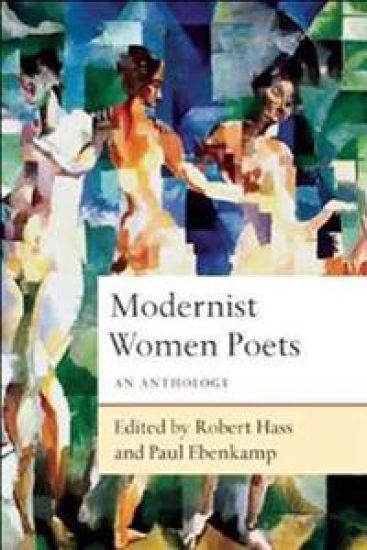
The 20th century was a time of great change, particularly in the arts, but seldom explored were the female poets of that time. Robert Hass and Paul Ebenkamp have put together a comprehensive anthology of poetry featuring the poems of Gertrude Stein, Lola Ridge, Amy Lowell, Elsa Von Freytag-Loringhoven, Adelaide Crapsey, Angelina Weld Grimke, Anne Spencer, Mina Loy, Hazel Hall, Hilda Doolittle, Marianne Moore, Djuna Barnes, and Hildegarde Flanner. With an introduction from Hass and Ebenkamp, as well as detailed annotation through out to guide the reader, this wonderful collection of poems will bring together the great female writers of the modernist period as well as deconstruct the language and writing that surfaced during that period.
The Poetic Species
Edward O. Wilson; Robert Hass; Lee Briccetti
Bellevue Literary Press
2014
sidottu
World Literature Today Editor's Pick "Enchanting...The Poetic Species is a wonderful read in its entirety, short yet infinitely simulating." --MARIA POPOVA, Brain Pickings In this shimmering conversation (the outgrowth of an event co-sponsored by the American Museum of Natural History and Poets House), Edward O. Wilson, renowned scientist and proponent of "consilience" or the unity of knowledge, finds an ardent interlocutor in Robert Hass, whose credo as United States poet laureate was "imagination makes communities." As they explore the many ways that poetry and science enhance each other, they travel from anthills to ancient Egypt and to the heights and depths of human potential. A testament to how science and the arts can join forces to educate and inspire, this book is also a passionate plea for conservation of all the planet's species. Edward O. Wilson, a biologist, naturalist, and bestselling author, has received more than 100 awards from around the world, including the Pulitzer Prize. A professor emeritus at Harvard University, he lives in Lexington, Massachusetts. Robert Hass' poetry is rooted in the landscapes of his native northern California. He has been awarded the MacArthur "Genius" Fellowship, the National Book Critics Circle Award (twice), the Pulitzer Prize, and the National Book Award. He is a professor of English at University of California-Berkeley.

The 20th century was a time of great change, particularly in the arts, but seldom explored were the female poets of that time. Robert Hass and Paul Ebenkamp have put together a comprehensive anthology of poetry featuring the poems of Gertrude Stein, Lola Ridge, Amy Lowell, Elsa Von Freytag-Loringhoven, Adelaide Crapsey, Angelina Weld Grimke, Anne Spencer, Mina Loy, Hazel Hall, Hilda Doolittle, Marianne Moore, Djuna Barnes, and Hildegarde Flanner. With an introduction from Hass and Ebenkamp, as well as detailed annotation through out to guide the reader, this wonderful collection of poems will bring together the great female writers of the modernist period as well as deconstruct the language and writing that surfaced during that period.
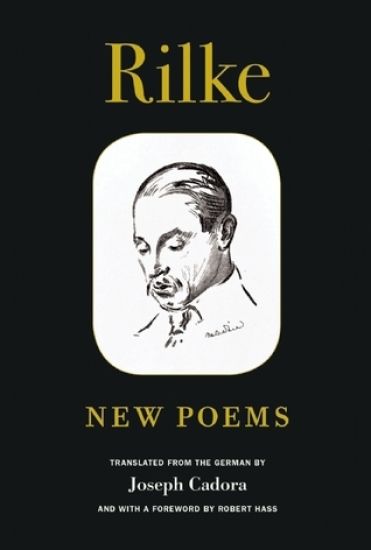
"Essential for all poetry collections...Originally published in 1907 and 1908 in two volumes, the 200 poems contained in this bilingual single volume represent a period of intense creativity in the poet's career. Translator Joseph Cadora renders a beautiful new edition complete with commentary on each poem at the end, based on Rilke's letters, numerous biographies, and related works as well as an introduction outlining his approach to the translation.."--Library Journal, starred review" The] renderings of the canonical poems, such as "The Panther," "Orpheus, Eurydice, Hermes," and "Archaic Torso of Apollo" (to name a few), are worthwhile additions to the enormous body of Rilke's work already translated by others. Cadora's willingness to translate nearly two hundred poems is admirable, since many themes recur and develop."--Booklist "Through him resounds the music of the universe."--Herman Hesse Rainer Maria Rilke is one of the world's best-selling poets, and New Poems contains many of his most iconic pieces. Throughout, Rilke he is obsessed with shapes and different layers of physical containment--from an image held in a panther's eye to a cathedral window. Translator Joseph Cadora has created the definitive English-language version through meticulous faithfulness to Rilke's German and insightful commentary on each of the four hundred-plus poems. As Cadora said in an interview, "I tried to stay true to the vision of Rilke that would invite the reader into his world, not mine." Bilingual, with an introduction by Robert Hass.The Panther: From endless passing of the bars his gazehas wearied--there is no more it can hold. There seem to be a thousand bars always, and past those thousand bars there is no world.The soft pad of his brawny, rippling paceturns itself in a tightening circle till, like a mighty dance around a tiny space, it centers a numb but still enormous will.But at times the shades of his pupils rise, grasping an image he cannot resist; through his tense, unmoving limbs it flies, and within his heart it ceases to exist.Rainer Maria Rilke (1875-1926) is one of the world's most beloved poets. Working at the cusp of the century, Rilke bridged the gap between traditional and modernist poetics. Born in Prague, Rilke traveled widely across Europe and Egypt, and lived for many years in Paris.Joseph Cadora is a guitarist, writer, and translator. He lives in Berkeley, California.
Renowned for his magisterial verse, Robert Hass is also a brilliant essayist. The New York Times hailed him as a writer who is so intelligent that to read his poetry or prose, or to hear him speak, gives one an almost visceral pleasure. Now, with What Light Can Do, Hass' first collection of essays in more than twenty-five years, the lauded author returns to and enlarges the territory of his critically acclaimed and much-loved collection Twentieth Century Pleasures, recipient of the National Book Critics Circle Award. These acute and deeply engaging essays are as much a portrait of the elegant thought processes of an unconventional and virtuoso mind as they are inquiries into their subjects, which range from meditations on how we see and treat the earth to the relationship between literature and religion, from explorations of the works of writers as diverse as Korean poet Ko Un, Wallace Stevens, Cormac McCarthy, and Anton Chekhov to the ways in which photography - much like an essay-embodies a sustained act of attention. A perceptive and evocative mixture of memory, philosophical interrogation, and criticism, the essays in What Light Can Do, finely attuned to the pleasures and pains of being human, are always grounded in the beauty of the material world and its details, and in the larger political and social realities we inhabit.

The Essential Haiku brings together Robert Hass's beautifully fresh translations of the three great masters of the Japanese haiku tradition: Matsuo Basho (1644-94), the ascetic and seeker, and the haiku poet most familiar to English readers; Yosa Buson (1716-83), the artist, a painter renowned for his visually expressive poetry; and Kobayashi Issa (1763-1827), the humanist, whose haiku are known for their poignant or ironic wit. Each haiku master's section of the book is prefaced with an eloquent and informative introduction by Robert Hass, followed by a selection of over 100 poems and then by other poetry or prose by the poet, including journals and nature writing. Opening with Hass's superb introductory essay on haiku, the book concludes with a section devoted to Basho's writings and conversations on poetry. The seventeen-syllable haiku form is rooted in a Japanese tradition of close observation of nature, of making poetry from subtle suggestion. Each haiku is a meditation, a centring, a crystalline moment of realisation. Reading them has a way of bringing about calm and peace within the reader. The symbolism of the seasons and the Japanese habit of mind blend together in these poems to create an alchemy of reflection that is unsurpassed in literature. Infused by its great practitioners with the spirit of Zen Buddhism, the haiku served as an example of the power of direct observation to the first generation of American modernist poets like Ezra Pound and William Carlos Williams as well as an example of spontaneity and Zen alertness to the new poets of post-war America and Britain. Universal in its appeal, Robert Hass's The Essential Haiku is the definitive introduction to haiku and its greatest poets, and has been a bestseller in America for twenty years. 'I know that for years I didn't see how deeply personal these poems were or, to say it another way, how much they have the flavour - Basho might have said "the scent" - of particular human life, because I had been told and wanted to believe that haiku were never subjective. I think it was D.H. Lawrence who said the soul can get to heaven in one leap but that, if it does, it leaves a demon in its place. Better to sink down through the level of these poems - their attention to the year, their ideas about it, the particular human consciousness the poems reflect, Basho's profound loneliness and sense of suffering, Buson's evenness of temper, his love for the materials of art and for the colour and shape of things, Issa's pathos and comedy and anger' - Robert Hass.
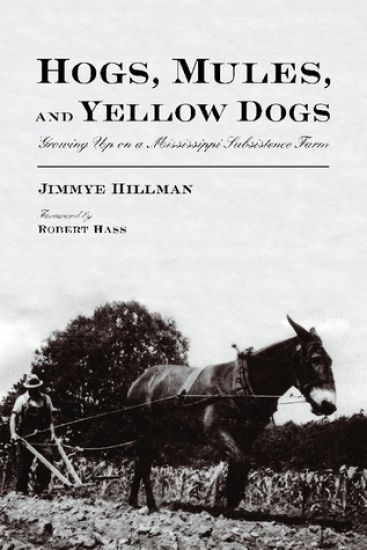
'It's in the nature of things that whole worlds disappear,' writes the poet Robert Hass in the foreword to Jimmye Hillman's insightful memoir. 'Their vanishings, more often than not, go unrecorded or pass into myth, just as they slip from the memory of the living.' To ensure that the world of Jimmye Hillman's childhood in Greene County, Mississippi during the Great Depression doesn't slip away, he has gathered together accounts of his family and the other people of Old Washington village. There are humorous stories of hog hunting and heart-wrenching tales of poverty set against a rural backdrop shaded by the local social, religious, and political climate of the time. Jimmye and his family were subsistence farmers out of bare-bones necessity, decades before discussions about sustainability made such practices laudable. More than just childhood memories and a family saga, though, this book serves as a snapshot of the natural, historical, and linguistic details of the time and place. It is a remarkable record of Southern life. Observations loaded with detail uncover broader themes of work, family loyalty, and the politics of changing times. Hillman, now eighty-eight, went on to a distinguished career as an economist specializing in agriculture. He realizes the importance of his story as an example of the cultural history of the Deep South but allows readers to discover the significance on their own by witnessing the lives of a colorful cast of characters. Hogs, Mules, and Yellow Dogs is unique, a blend of humor and reflection, wisdom and sympathy--but it's also a hard-nosed look at the realities of living on a dirt farm in a vanished world.
"No practicing poet has more talent than Robert Hass."--Atlantic Monthly The National Book Award-winning author of Time and Materials, Robert Hass is one of the most revered of all living poets. With The Apple Trees at Olema, the former Poet Laureate and winner of the 2008 Pulitzer Prize offers twenty new and selected poems grounded in the beauty of the physical world. As with all of the collections of this great artist's work, published far too infrequently, The Apple Trees at Olema is a cause for celebration.
Robert Hass is an American poet of great eloquence, clarity, and force whose work is rooted in the landscapes of his native Northern California. 'The Apple Trees at Olema' includes work from five books - 'Field Guide', 'Praise', 'Human Wishes', 'Sun Under Wood' and 'Time and Materials' - as well as a substantial gathering of new poems, including a suite of elegies, a series of poems in the form of notebook musings on the nature of storytelling, a suite of summer lyrics, and two experiments in pure narrative that meditate on personal relations in a violent world and read like small, luminous novellas. From the beginning, his poems have seemed entirely his own: a complex hybrid of the lyric line, with an unwavering fidelity to human and non-human nature, and formal variety and surprise, and a syntax capable of thinking through difficult things in ways that are both perfectly ordinary and really unusual. Over the years, he has added to these qualities a range and a formal restlessness that seem to come from a sceptical turn of mind, an acute sense of the artifice of the poem and of the complexity of the world of lived experience that a poem tries to apprehend. Hass's work is grounded in the beauty of the physical world. His familiar landscapes - San Francisco, the northern California coast, the Sierra high country - are vividly alive in his work. His themes include art, the natural world, desire, family life, the life between lovers, the violence of history, and the power and inherent limitations of language. He is a poet who is trying to say, as fully as he can, what it is like to be alive in his place and time. His style - formed in part by American modernism, in part by his long apprenticeship as a translator of the Japanese haiku masters and Czeslaw Milosz - combines intimacy of address, a quick intelligence, a virtuosic skill with long sentences, intense sensual vividness, and a light touch.