Kirjojen hintavertailu. Mukana 12 312 833 kirjaa ja 12 kauppaa.

Kirjailija

Robert Hobbs

Kirjat ja teokset yhdessä paikassa: 8 kirjaa, julkaisuja vuosilta 2005-2026, suosituimpien joukossa Chris Dorland. Vertaile teosten hintoja ja tarkista saatavuus suomalaisista kirjakaupoista.

8 kirjaa

Kirjojen julkaisuhaarukka 2005-2026.

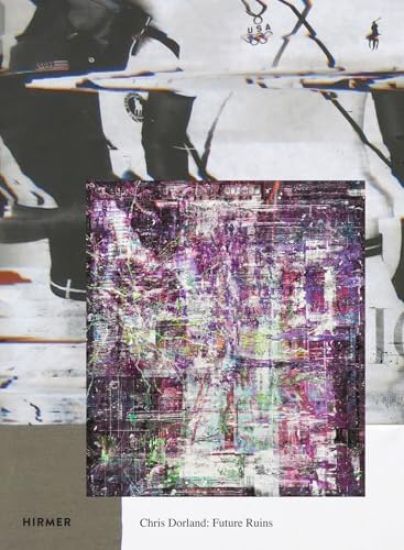
Chris Dorland

Chris Dorland

Robert Hobbs

HIRMER VERLAG
2026
sidottu
Discover Chris Dorland: Future Ruins, the first monograph on the acclaimed artist, featuring a major essay by renowned art historian Robert Hobbs. Published by Hirmer in Spring 2026, this volume delves into Dorland's fusion of digital media and painting, exploring themes of technological decay and post-capitalist aesthetics. Future Ruins explores the cutting-edge vision of Chris Dorland in his debut monograph, the definitive introduction to the acclaimed artist’s dystopian digital aesthetic: a fusion of digital media and painting, exploring themes of technological decay and post-capitalist aesthetics. With a groundbreaking text by leading art historian Robert Hobbs, this richly illustrated volume captures Dorland’s hybrid process—blending digital distortion, surveillance aesthetics, and glitch technologies into a singular, cinematic language. This is a vital document of a practice at the edge of image culture and collapse and is essential for collectors, critics, and curators of postdigital, new media, and contemporary painting.
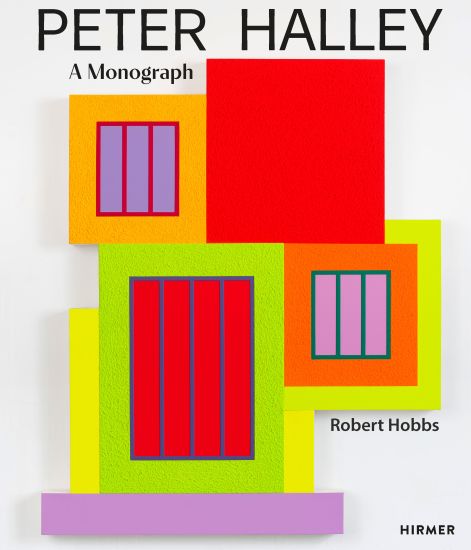
Peter Halley

Peter Halley

Robert Hobbs

HIRMER VERLAG
2024
sidottu
Painting as simulation and hyperreality: Peter Halley and the digital age. In the 1980s, Peter Halley revitalised painting by relying on sociology and science fiction. He employed fluorescent colours and Roll-A-Tex to deconstruct early and mid-twentieth-century transcendent geometric abstraction into abstract cells and prisons and by adding conduits to imaginatively access outside forces. Peter Halley has met many challenges posed by the Information Age and French poststructuralism by situating his painting on the divide separating analogue and digital worlds. Robert Hobbs’s monograph analyses Halley’s geometric and highly keyed art in terms of opportunities provided by the Internet, aesthetic possibilities afforded by Photoshop, timely relevance advanced by Michel Foucault’s and Jean Baudrillard’s sociological theories, and conundrums presented by both science fiction and physics.
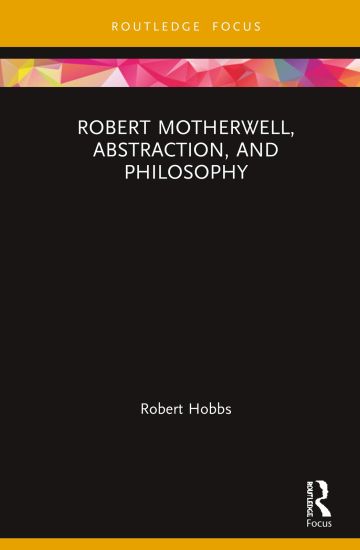
Robert Motherwell, Abstraction, and Philosophy

Robert Motherwell, Abstraction, and Philosophy

Robert Hobbs

TAYLOR FRANCIS LTD
2024
nidottu
Employing an interdisciplinary approach, this book breaks new ground by considering how Robert Motherwell’s abstract expressionist art is indebted to Alfred North Whitehead’s highly original process metaphysics. Motherwell first encountered Whitehead and his work as a philosophy graduate student at Harvard University, and he continued to espouse Whitehead’s processist theories as germane to his art throughout his life. This book examines how Whitehead’s process philosophy—inspired by quantum theory and focusing on the ongoing ingenuity of dynamic forces of energy rather than traditional views of inert substances—set the stage for Motherwell’s future art. This book will be of interest to scholars in twentieth-century modern art, philosophy of art and aesthetics, and art history.
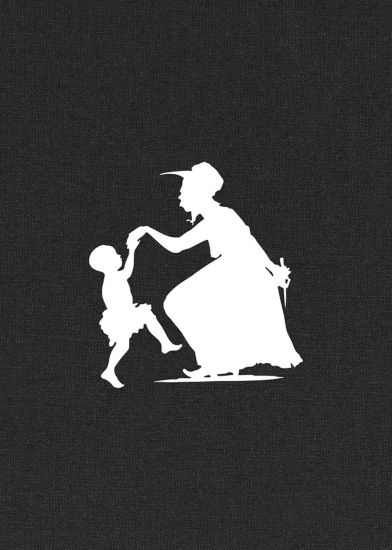
Kara Walker: White Shadows in Blackface
Themes and motifs in the art of Kara Walker, from blackface to abjection, by a leading art historian In 2002, Kara Walker was selected to represent the United States at the prestigious São Paulo Art Biennial. Curator Robert Hobbs wrote extended essays on her work for this exhibition, and also for her show later that year at the Kunstverein Hannover. Because these essays have not been distributed in the US and remain among the most in-depth and essential investigations of her work, Karma is now republishing them in this new clothbound volume. Among the most celebrated artists of the past three decades, with over 93 solo exhibitions to her credit, including a major survey at the Whitney Museum of American Art, Walker is known for her tough, critical, provocative and highly imaginative representations of African Americans and whites reaching back to antebellum times. In his analysis, Hobbs looks at the five main sources of her art: blackface Americana, Harlequin romances, Julia Kristeva’s concept of abjection, Stone Mountain’s racist tourist attraction and the minstrel tradition. Robert Hobbs (born 1946) has written more than 50 books and catalogs, focusing on such artists as Milton Avery, Alice Aycock, Lee Krasner, Robert Smithson and Kehinde Wiley. Since 1991 he has held the Rhoda Thalhimer Endowed Chair of American Art in the School of Arts, Virginia Commonwealth University. Since 2004 he has served as a visiting professor at Yale University. Now based in New York, Kara Walker was born in Stockton, California, in 1969. She received her MFA from the Rhode Island School of Design in 1994; soon afterward, Walker rose to prominence for her large, provocative silhouettes installed directly onto the walls of exhibition spaces.
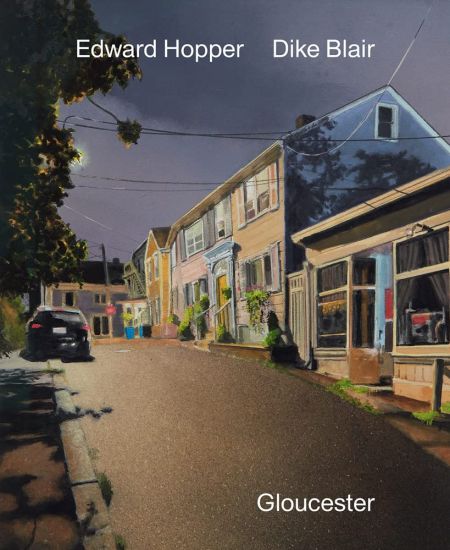
Edward Hopper & Dike Blair: Gloucester
Portraits of the picturesque Massachusetts city, painted a century apart In the late 19th and early 20th centuries, the coastal city of Gloucester, Massachusetts, long a major hub for America’s fishing industry, became a celebrated summer resort for prominent American painters and writers including Winslow Homer, Childe Hassam, Cecilia Beaux and T.S. Eliot. As a young man visiting Gloucester, Edward Hopper (1882–1967) turned away from the allure of its ragged coast line and instead created atmospheric watercolors of homes, lighthouses and street scenes in Gloucester. In this volume, art historian Robert Hobbs revisits these works from the 1920s, which he positions alongside the work of New York–based painter Dike Blair (born 1952), who, a century later, has created a new body of work centered on the small fishing city.
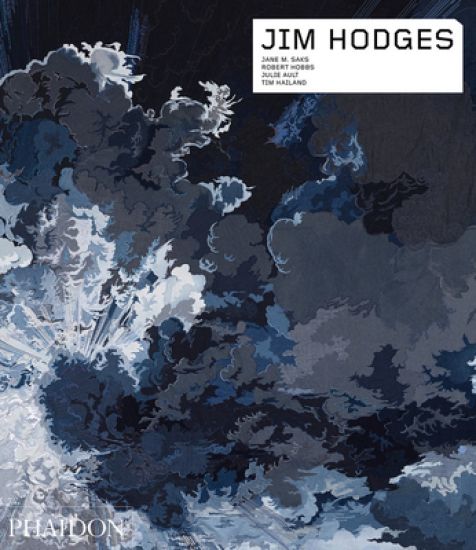
Jim Hodges

Jim Hodges

Jane M. Saks; Robert Hobbs; Julie Ault

Phaidon Press Ltd
2021
nidottu
The first in-depth survey of the life and work of Jim Hodges, one of America's most celebrated contemporary artists Jim Hodges is an artist who addresses issues such as memory, love, and existential struggles through a multifaceted practice that includes photography, screen printing, and sculpture. His use of found materials like rocks and denim, coupled with the adoption of transitory shapes like spiderwebs, speaks of a personal experience that resonates on a collective level filtered through elements available in nature. Mysterious, beautiful, poetic, and conceptually deep, Hodges's work has the rare quality of being simultaneously thought-provoking and visually beautiful.
Robert Motherwell, Abstraction, and Philosophy
Employing an interdisciplinary approach, this book breaks new ground by considering how Robert Motherwell’s abstract expressionist art is indebted to Alfred North Whitehead’s highly original process metaphysics. Motherwell first encountered Whitehead and his work as a philosophy graduate student at Harvard University, and he continued to espouse Whitehead’s processist theories as germane to his art throughout his life. This book examines how Whitehead’s process philosophy—inspired by quantum theory and focusing on the ongoing ingenuity of dynamic forces of energy rather than traditional views of inert substances—set the stage for Motherwell’s future art. This book will be of interest to scholars in twentieth-century modern art, philosophy of art and aesthetics, and art history.
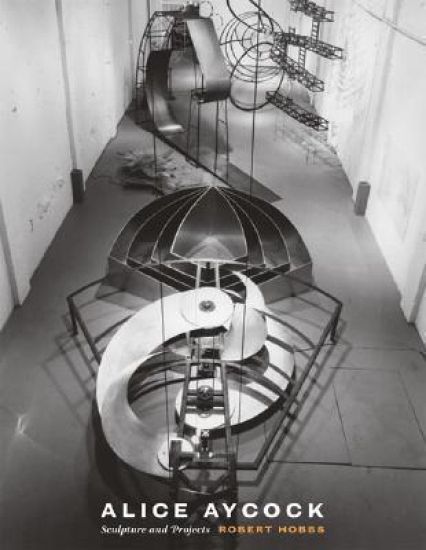
Alice Aycock

Alice Aycock

Robert Hobbs

MIT Press
2005
sidottu
A long-overdue monograph on a sculptor who draws not only on minimalism and conceptualism but on a rich web of intellectual and visual sources to create postmodern work that is a "complex" of juxtapositions.Alice Aycock's large, semi-architectural works deal with the interaction of structure, site, materials, and the psychophysical responses of the viewer. Offered meaningful but contradictory clues by both her images and her texts, viewers attempt to discover not only what the work of art conveys but how it communicates its contents, in investigations that parallel the artist's own. In Alice Aycock: Sculpture and Projects, Robert Hobbs examines the development of Aycock's work over twenty years and her negotiation-along with other artists who came of age in the early 1970s-of the transition from modernism to postmodernism. "The problem," wrote Aycock in 1977, "seems to be how to connect without connecting." Hobbs describes Aycock's strategies for doing just this: for creating a work with disparate image and texts that offer a new perspective on reality. Influenced by the "specific objects" of minimalism's hybrid forms and by conceptualism's emphasis on language, Aycock relies on paradigms, cybernetics, phenomenology, physics, post-structuralism, psychoanalysis, information overload, outdated scientific thinking, and computer programming to create a "complex" that is architectural and sculptural as well as mental and emotional. Schizophrenia and other mental conditions, sometimes considered metaphors for the disconnections of postmodern existence, are specific sources of inspiration in Aycock's work. By exploring the physical and existential positions of isolation, estrangement, disorientation, entrapment and fear, her three-dimensional constructions not only posit alternative states of mind, they suppose possible narratives and suggest multiple truths and lies. Aycock's work invites the viewer to experience sculpture with the entire body and a fully mind. Her sculpture has had a transformative effect on the contemporary art experience.