
Kirjailija
Robert Irwin
Kirjat ja teokset yhdessä paikassa: 51 kirjaa, julkaisuja vuosilta 1899-2026, suosituimpien joukossa Tips & Traps When Mortgage Hunting, 3/e. Vertaile teosten hintoja ja tarkista saatavuus suomalaisista kirjakaupoista.
51 kirjaa
Kirjojen julkaisuhaarukka 1899-2026.

The Annotated Arabian Nights
Omar El Akkad; Robert Irwin
Liveright Publishing Corporation
2021
sidottu
Starting in 1999 with the publication of The Definitive Annotated Alice, the Norton and Liveright annotated books have become the leading series of classic, illustrated works in the English language. The long-anticipated publication of The Annotated Arabian Nights extends this tradition with a strikingly modern translation—the first of Shahrazad’s tales into English by a woman—as well as erudite notes that will illuminate the stories for both dedicated readers and newcomers. Yasmine Seale’s translations from both Arabic and French capture the musicality and rhythm of the Nights’ poetry and prose, while Paulo Lemos Horta’s annotations wrestle with the extraordinarily complex origins and history of the stories, showing that, far from being inventions of French antiquarians or English explorers, they have clear antecedents in Arabic folklore and tradition. This stunningly illustrated edition selects core stories as well as treasured later additions such as “Aladdin” and “Ali Baba” to offer an unparalleled account of a cornerstone of world literature that can be treasured by children, students and literature-lovers alike.

"For Fans of Game of Thrones" (Michael Dirda, Washington Post), An Exhilarating, Magical Blend of History and Fantasy Set during the Original Game of Thrones Beginning with the Palm Sunday battle of Towton, the bloodiest ever fought on English soil, Wonders Will Never Cease relates the fabulous adventures of one man and his noble family amid the chaos and political intrigue that beset England during the War of the Roses, when two great houses battled for control of the throne. Anthony Woodville, Lord Scales and brother to the future queen, Elizabeth Woodville, seems to die during that battle and be resurrected. While dead, he witnesses the Grail ceremony last seen during the age of King Arthur, before England was cursed by war and Hell so filled with bodies that the dead now walk the land. What he wakes to and witnesses for the rest of his life as he defends his king is a ceaseless stream of wonders: a talking head that predicts the future, a miraculous cauldron, a museum of skulls, the Swordsman's Pentacle, alchemists and wizards, and plenty of battles, sieges, swordplay, jousts, treachery, murder, beheadings, and horrific torture. His own family is rumored to be descended from the fairy Melusine and imbued with her dragon's blood. And there are lots of other stories too--some so porous that their characters enter history and threaten their maker.

'Robert Irwin vividly and brilliantly blends the fictional life and all-too-real times of a film star of the Nazi era in this a narrative of diminishing options and the advance to death and destruction. Cultured, clever and funny at times, in a grim Charles Adams way, Robert Irwin's novel is engrossing and enveloping. From a dull Dutch childhood in Dordrecht and a waitressing job, sexy Sonja Heda, cigarette in hand, wangles her way on to the film sets of various independent production companies making the films of the Weimar and Nazi eras. From The Blue Angel, The Gypsy Baron, Jew Suss, Habanera and Munchausen she lands the starring role in the Nazi screwball comedy Bagdad Capers. Although German cinema became a key part of the Nazi war effort, the film industry continued to produce commercial films appealing to the varying film tastes of German filmgoers. Joseph Goebbels at the head of the Ministry of Propaganda propagated Nazi supremacist ideology and indoctrinate the population of Germany though film and radio, not unlike the way reality TV and social media are used today by populist politicians in the US and UK.' Georgia de Chamberet in Ten Books for Independent Minds from Bookblast

Satan Wants Me is a novel for anyone who wants to know what it was like to be young in the 1960s ... amphetamines, weird sex and Devil-worship. '... the Lodge requires him to find a new partner, and they make him fill in the dating agency form that leads to Maud, one of the more memorable characters in recent fiction. Peter's initial contempt for Maud as a straight and boring hairdresser soon gives way to a kinky menage a trois, in which Sally eagerly dons a dog collar and frilly apron and has herself tattoed with the words 'I am Sally, the slave of Maud and Peter'. So extraordinary is Maud, in fact, that she has more than a little to do with the title of the book...... No doubt this contributes to the feel of Satan Wants Me as something to relish and curl up with, capable of inducing sensations rarely felt by people who have to read novels as work. With darkness outside and a drink to hand, I lay back on the sofa in the happy knowledge that I still had half of the book to go. Ah yes, I thought. This is the life.' Phil Baker in The Times Literary Supplement 'Irwin is a writer of immense subtlety and craftmanship, and offers us a vivid and utterly convincing portrait of life on the loopier fringes of the Sixties. Satan Wants Me is black, compulsive and very, very funny.' Christopher Hart in The Daily Telegraph 'Irwin's writing is witty and scabrous but it is also subtle in a way that keeps catching the reader out. The blend of the fantastical with the philosophical has been the defining characteristic of Irwin's fiction and in Peter's drug-drenched, satan-haunted diary, it has found its perfect expression.' Tom Holland in The New Statesman & Society 'Part of the book's fertile comedy stems from the ironic interweaving of the jargons of sociology, hippiedom and magick. It is hard to resist a pot-head mystic who hopes the Apocalypse will come on Wednesday because it will break up the week.' Tom Deveson in The Sunday Times
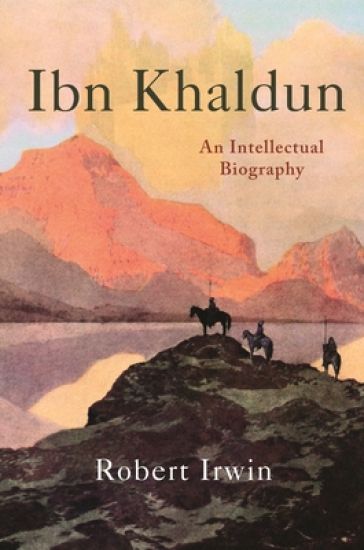
The definitive account of the life and thought of the medieval Arab genius who wrote the MuqaddimaIbn Khaldun (1332–1406) is generally regarded as the greatest intellectual ever to have appeared in the Arab world—a genius who ranks as one of the world's great minds. Yet the author of the Muqaddima, the most important study of history ever produced in the Islamic world, is not as well known as he should be, and his ideas are widely misunderstood. In this groundbreaking intellectual biography, Robert Irwin provides an engaging and authoritative account of Ibn Khaldun's extraordinary life, times, writings, and ideas.
The definitive account of the life and thought of the medieval Arab genius who wrote the MuqaddimaIbn Khaldun (1332-1406) is generally regarded as the greatest intellectual ever to have appeared in the Arab world--a genius who ranks as one of the world's great minds. Yet the author of the Muqaddima, the most important study of history ever produced in the Islamic world, is not as well known as he should be, and his ideas are widely misunderstood. In this groundbreaking intellectual biography, Robert Irwin provides an engaging and authoritative account of Ibn Khaldun's extraordinary life, times, writings, and ideas. Irwin tells how Ibn Khaldun, who lived in a world decimated by the Black Death, held a long series of posts in the tumultuous Islamic courts of North Africa and Muslim Spain, becoming a major political player as well as a teacher and writer. Closely examining the Muqaddima, a startlingly original analysis of the laws of history, and drawing on many other contemporary sources, Irwin shows how Ibn Khaldun's life and thought fit into historical and intellectual context, including medieval Islamic theology, philosophy, politics, literature, economics, law, and tribal life. Because Ibn Khaldun's ideas often seem to anticipate by centuries developments in many fields, he has often been depicted as more of a modern man than a medieval one, and Irwin's account of such misreadings provides new insights about the history of Orientalism.In contrast, Irwin presents an Ibn Khaldun who was a creature of his time-a devout Sufi mystic who was obsessed with the occult and futurology and who lived in an often-strange world quite different from our own.
In Psychopathology: A Social Neuropsychological Perspective, Lee and Irwin demonstrate that mental distress often defies traditional forms of medical classification. Integrating both psychosocial and neuropsychological frameworks, they present a unique and balanced perspective on psychopathology, emphasising the importance of context, relationships and neuroplasticity. Written to support teaching and learning at the undergraduate level, Psychopathology: A Social Neuropsychological Perspective encourages students to explore alternatives to traditional diagnostic models. Pedagogical features such as reflection points in each chapter encourage critical engagement and classroom debate. The result is an original examination of mental distress and a stand-alone resource for students in this area.
In Psychopathology: A Social Neuropsychological Perspective, Lee and Irwin demonstrate that mental distress often defies traditional forms of medical classification. Integrating both psychosocial and neuropsychological frameworks, they present a unique and balanced perspective on psychopathology, emphasising the importance of context, relationships and neuroplasticity. Written to support teaching and learning at the undergraduate level, Psychopathology: A Social Neuropsychological Perspective encourages students to explore alternatives to traditional diagnostic models. Pedagogical features such as reflection points in each chapter encourage critical engagement and classroom debate. The result is an original examination of mental distress and a stand-alone resource for students in this area.
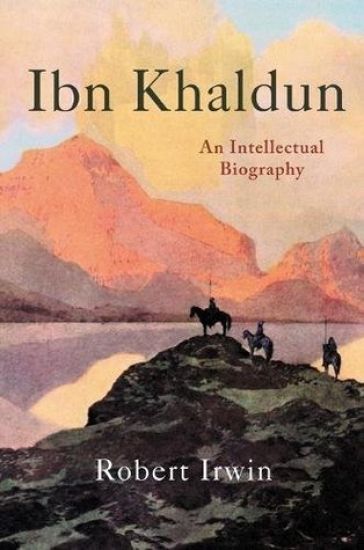
The definitive account of the life and thought of the medieval Arab genius who wrote the MuqaddimaIbn Khaldun (1332–1406) is generally regarded as the greatest intellectual ever to have appeared in the Arab world--a genius who ranks as one of the world's great minds. Yet the author of the Muqaddima, the most important study of history ever produced in the Islamic world, is not as well known as he should be, and his ideas are widely misunderstood. In this groundbreaking intellectual biography, Robert Irwin provides an engaging and authoritative account of Ibn Khaldun's extraordinary life, times, writings, and ideas.Irwin tells how Ibn Khaldun, who lived in a world decimated by the Black Death, held a long series of posts in the tumultuous Islamic courts of North Africa and Muslim Spain, becoming a major political player as well as a teacher and writer. Closely examining the Muqaddima, a startlingly original analysis of the laws of history, and drawing on many other contemporary sources, Irwin shows how Ibn Khaldun's life and thought fit into historical and intellectual context, including medieval Islamic theology, philosophy, politics, literature, economics, law, and tribal life. Because Ibn Khaldun's ideas often seem to anticipate by centuries developments in many fields, he has often been depicted as more of a modern man than a medieval one, and Irwin's account of such misreadings provides new insights about the history of Orientalism.In contrast, Irwin presents an Ibn Khaldun who was a creature of his time—a devout Sufi mystic who was obsessed with the occult and futurology and who lived in an often-strange world quite different from our own.
Fantastic tales of magic and wonder Edited and translated into English for the first time, A Hundred and One Nights is a marvelous example of the rich tradition of popular Arabic storytelling. Like its more famous sibling, the Thousand and One Nights, this collection opens with the frame story of Shahrazad, the gifted vizier's daughter who recounts imaginative tales night after night in an effort to distract the murderous king from taking her life. A Hundred and One Nights features an almost entirely different set of stories, however, each one more thrilling, amusing, and disturbing than the last. In them, we encounter tales of epic warriors, buried treasures, disappearing brides, cannibal demon women, fatal shipwrecks, and clever ruses, where human strength and ingenuity play out against a backdrop of inexorable, inscrutable fate. Although these tales draw on motifs and story elements that circulated across cultures, A Hundred and One Nights is distinctly rooted in Arabic literary culture and the Islamic tradition. It is also likely much older than Thousand and One Nights, drawing on Indian and Chinese antecedents. This careful edition and vibrant translation of A Hundred and One Nights promises to transport readers, new and veteran alike, into its fantastical realms of magic and wonder. A bilingual Arabic-English edition.
Robert Irwin began his career in the 1950s as an abstract painter. As a pioneer of the Light and Space movement in Los Angeles in the 1970s and early '80s, Irwin focused on exploring aesthetic perception as the fundamental feature of art, culminating in what he terms "conditional art" or "site-conditioned work." In addition to being a prolific artist, Irwin has been an active writer throughout his career. This book-now in paperback-includes previously published pieces along with a significant selection of writings published for the first time. The book makes clear that writing as a reflection on aesthetic questions is an integral element of Irwin's multifaceted art practice.
Fantastic tales of magic and wonder Edited and translated into English for the first time, A Hundred and One Nights is a marvelous example of the rich tradition of popular Arabic storytelling. Like its more famous sibling, the Thousand and One Nights, this collection opens with the frame story of Shahrazad, the gifted vizier's daughter who recounts imaginative tales night after night in an effort to distract the murderous king from taking her life. A Hundred and One Nights features an almost entirely different set of stories, however, each one more thrilling, amusing, and disturbing than the last. In them, we encounter tales of epic warriors, buried treasures, disappearing brides, cannibal demon women, fatal shipwrecks, and clever ruses, where human strength and ingenuity play out against a backdrop of inexorable, inscrutable fate. Although these tales draw on motifs and story elements that circulated across cultures, A Hundred and One Nights is distinctly rooted in Arabic literary culture and the Islamic tradition. It is also likely much older than Thousand and One Nights, drawing on Indian and Chinese antecedents. This careful edition and vibrant translation of A Hundred and One Nights promises to transport readers, new and veteran alike, into its fantastical realms of magic and wonder. A bilingual Arabic-English edition.
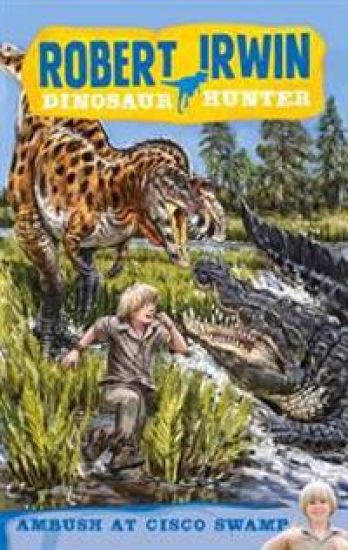
Robert's second adventure finds him in the U.S.--but he's not in the present-day U.S. for long The Irwins are in Texas, doing some crocodilian research on the American Alligator. Robert knows that the ancient deinosuchus roamed around these parts, and when his fossil transports him back in time, he gets to see first hand the prehistoric predator take on an albertasaurus and win
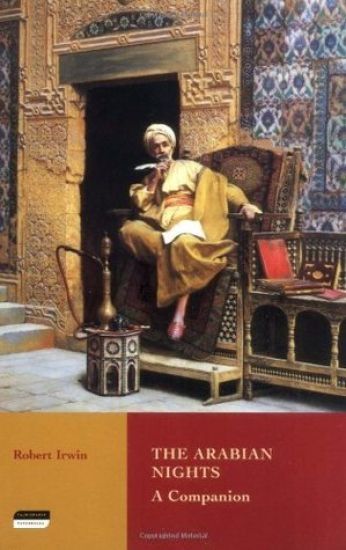
"The Arabian Nights" has become a synonym for the fabulous and the exotic. Every child is familiar with the stories of Aladdin, Sinbad the Sailor and Ali Baba. Yet very few people, even specialists in oriential literature, have a clear idea of when the book was written or what exactly it is. Far from being a batch of stories for children, "The Arabian Nights" contains hundreds of narratives of all kinds - fables, epics, erotica, debates, fairy tales, political allegories, mystical anecdotes and comedies. It is a labyrinth of stories within stories. Widely held in contempt in the Middle East for its frivolity and occasional obscenity, the work has nevertheless had a major influence on European and American culture, to the extent that the story collection must be considered as a key work in Western literature. A full understanding of the writings of Voltaire, Dickens, Melville, Proust and Borges, or indeed of the origins of science fiction, is impossible without some familiarity with the stories of the "Nights". This companion aims to guide the reader into this labyrinth of storytelling. It traces the development of the stories from prehistoric India and Pharaonic Egypt to modern times, and explores the history of translation and imitation. Above all, it uses the stories as a guide to the social history and counter-culture of the medieval Near East and the world of the storyteller, the snake charmer, the burglar, the sorcerer, the drug-addict, the treasure hunter and the adulterer.
Mamluks and Crusaders: Men of the Sword and Men of the Pen brings together a series of studies, based mainly on medieval Arabic sources, of Middle Eastern history and society in the late Middle Ages. Several of these studies deal with the confrontation between the Mamluks and the Crusaders. Others deal with aspects of Mamluk society and culture in Egypt and Syria from the 13th to the early 16th centuries. There are articles on such matters as Crusader feudalism and Mamluk iqta', Crusader and Mamluk currency, the last years of the Crusader states, Mamluk faction fighting, the size of the Mamluk army, the image of the Crusaders and other Europeans in Arabic popular literature, a neglected source on the sex life of the Mamluks, the ritual consumption of horse meat by Mamluks and Mongols, the table talk of the Mamluk Sultan Qansuh al-Ghawri, the deployment of gunpowder and firearms in the Middle East, gangsterism in Cairo and the shared interest of Ibn Khaldun and al-Maqrizi in the occult. Finally, several studies deal with questions of historiography, in both Crusader and Mamluk studies.
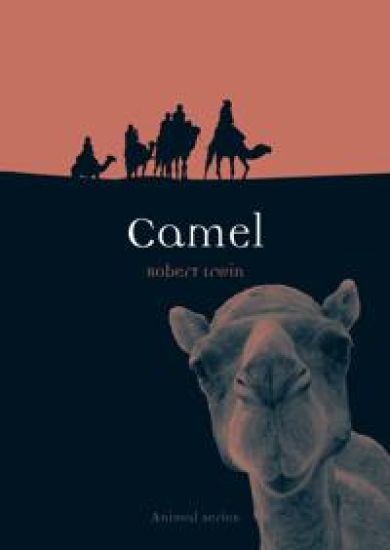
A distinct symbol of the desert and the Middle East, the camel was once unkindly described as ‘half snake, half folding bedstead’. But in the eyes of many the camel is a creature of great beauty. This is most evident in the Arab world, where the camel has played a central role in the historical development of Arabic society. Beauty pageants are still held for camels in some Arabic countries, and an elaborate vocabulary and extensive literature have been devoted to them.In Camel, Robert Irwin explores why the camel has fascinated so many cultures, including those in places where camels are not indigenous. He traces the history of the camel from its origins millions of years ago to the present day, discussing such matters of contemporary concern as the plight of camel herders in the Sudan’s war-torn Darfur region, the alarming increase in the population of feral camels in Australia, and the endangered status of the wild Bactrian in Mongolia and China. Throughout history, the camel has been appreciated worldwide for its practicality, resilience and legendary abilities of survival. It has been featured in the works of Leonardo da Vinci, Poussin, Tiepolo, Flaubert, Kipling and Rose Macaulay, among others. From East to West, Irwin’s Camel is the first survey of its kind to examine the animal’s role in society and history throughout the world.Not just for camel aficionados, this highly illustrated book is sure to entertain and inform anyone interested in this fascinating and exotic animal.