Kirjojen hintavertailu. Mukana 12 595 353 kirjaa ja 12 kauppaa.

Kirjailija

Robert J. Andreach

Kirjat ja teokset yhdessä paikassa: 8 kirjaa, julkaisuja vuosilta 1964-2019, suosituimpien joukossa Approaches to the Contemporary American Theatre. Vertaile teosten hintoja ja tarkista saatavuus suomalaisista kirjakaupoista.

8 kirjaa

Kirjojen julkaisuhaarukka 1964-2019.

Approaches to the Contemporary American Theatre

Approaches to the Contemporary American Theatre

Robert J. Andreach

Academica Press
2019
sidottu
In this engaging study, theatre scholar Robert J. Andreach argues, in what will be his final book, that the contemporary American theatre merits appreciation for dramatizing experiences in genres that jostle the audience into thinking about the experiences in new ways, based on five units of analysis: the naturalistic play, modernist theatre, trilogies, tragedy, and comedy. Andreach’s insights maintain that familiarity with these five units should stimulate thinking about the experiences and what they reveal about contemporary American life and the ways in which the theatre can dramatize that life.
Tragedy in the Contemporary American Theatre

Tragedy in the Contemporary American Theatre

Robert J. Andreach

University Press of America
2014
nidottu
This book refutes the claim that tragedy is no longer a vital and relevant part of contemporary American theatre. Tragedy in the Contemporary American Theatre examines plays by multiple contemporary playwrights and compares them alongside the works of America’s major twentieth-century tragedians: Eugene O’Neill, Arthur Miller, and Tennessee Williams. The book argues that tragedy is not only present in contemporary American theatre, but issues from an expectation fundamental to American culture: the pressure on characters to create themselves. Tragedy in the Contemporary American Theatre concludes that tragedy is vital and relevant, though not always in the Aristotelian model, the standard for traditional evaluation.
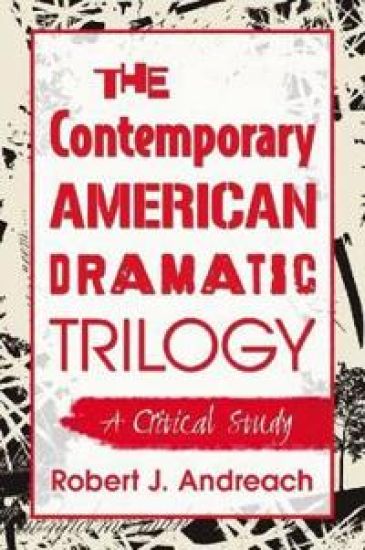
The Contemporary American Dramatic Trilogy

The Contemporary American Dramatic Trilogy

Robert J. Andreach

McFarland Co Inc
2012
pokkari
The dramatic trilogy has been flourishing for some time now in new works and revivals of older works by American, British, and European playwrights. This book analyzes recent American works by Caucasian, African American, Asian American, and Hispanic American men and women. There are five chapters beginning with Opposing Families (trilogies of, e.g., Lanford Wilson, Foote, Machado, and McCraney are examined). Carson, Rabe, and McLaughlin are among those in the Classical Reimaginings chapter while Coen, Berc, and Wolfe constitute the Medieval Reimaginings chapter. Van Itallie, Havis, Rapp, and Hwang, among others, create New Forms. LaBute, Fierstein, and Nelson, among others, create New Selves. The concluding chapter is devoted to Ruhl's Passion Play, which spans 400 years of theatre-creating from Elizabethan England to Hitler's Germany to the Reagan era in America.
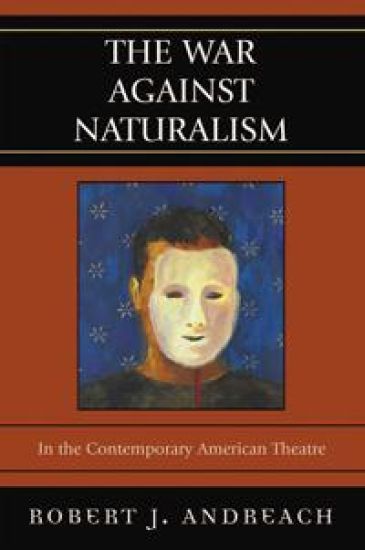
The War Against Naturalism

The War Against Naturalism

Robert J. Andreach

University Press of America
2007
nidottu
The book applies playwright John Guare's statement that, "the war against naturalism," is the history of the American theatre in the Twentieth-Century to selected plays by important contemporary American playwrights. Crucial to the argument is the recognition that a war presupposes two sides with neither side defeating the other, for if naturalistic theatre were to win, all theatre would be linear with characters circumscribed by their heredity and environment. If non-naturalistic theatre were to win, all theatre would be a hodgepodge of incoherent images. After isolating elements of a naturalistic play in its philosophical and mode of production sense, the book examines plays that wage war in language and character. The plays are all of the past few decades: some by Foreman and Wellman are disorienting; some by Albee, Groff, and Maxwell are controversial; others by Eno and Corthron are by playwrights on the verge of major careers; still others by Overmyer and Jenkin are drawing aspiring playwrights to them as models of new, exciting writing for the theatre. All of them, whether colliding genres and styles or destabilizing meaning as in plays by Gibson and Long or reclaiming a mystery as in plays by Ludlam, Greenberg, and Donagy, challenge naturalism's boundaries. The book not only provides an approach to the contemporary American drama-theatre, but also brings together playwrights not perceived as having any connections other than the fact that they are creating plays today. The text is appropriate for undergraduate students through professors and practitioners.
Understanding Beth Henley

Understanding Beth Henley

Robert J. Andreach

University of South Carolina Press
2006
sidottu
Beth Henley remains best known for ""Crimes of the Heart"", a play that won the Pulitzer Prize and the New York Drama Critics Circle Award and later was made into a major motion picture. In this introduction to the Mississippi-born playwright and her body of work, Robert J. Andreach presents Henley's plays as a unified whole, considering both her more accessible work of the 1980s and the commonly misunderstood - and often overlooked - plays of the 1990s. Andreach fills the gap in scholarship about the later plays and, in doing so, argues that they recast familiar themes, images, and motifs into new modes of self-discovery and expression. Andreach concedes that differences in setting and style separate the two decades of Henley's career: the plays from the earlier decade comprise single, representational sets in the Deep South of Mississippi and Louisiana while the plays from the 1990s are multiple, symbolic sets in Southern California and other locations. He contends, however, that whether dramatizing naturalistically or experimentally, Henley does not stray far from her original concerns. Andreach points out that while the self-discoveries of the two decades differ, Henley's goal is the same: characters who prove themselves worthy in a culture that denigrates them. Andreach's analysis features close readings of Henley's entire corpus. He positions her final three works of the 1990s as a trilogy that reconciles differing modes of self-discovery.
Drawing upon the Past

Drawing upon the Past

Robert J. Andreach

Peter Lang Publishing Inc
2003
sidottu
Contemporary American theatre re-creates and invokes classical theatre so as to generate interaction between the two theatres. Using selected works of fourteen playwrights, this book organizes the interaction into three sections: works dramatizing change and reconciliation, works dramatizing the inability or the unwillingness to change and reconcile, and works emphasizing various selves (personal, theatrical, national). By drawing on the past, the fourteen playwrights refine their art in the contemporary American theatre and their vision of contemporary American life.
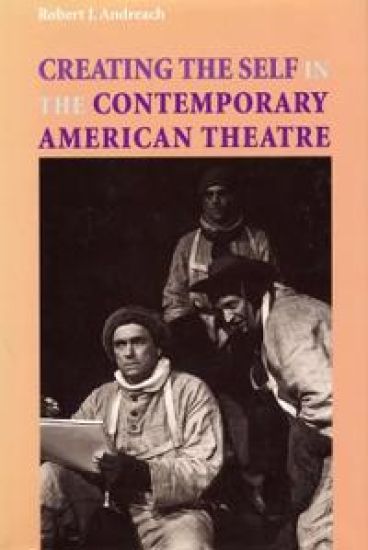
Creating the Self in the Contemporary American Theatre

Creating the Self in the Contemporary American Theatre

Robert J. Andreach

Southern Illinois University Press
1998
sidottu
Combining his skills as both a professional reviewer of theatre and a literary critic, Robert J. Andreach finds himself in a position to provide coherence to what most observers perceive as an unrelated welter of contemporary theatrical experiecnes. Exploring the theatre from the 1960s to the present, he shows the various ways in which the contemporary American theatre creates a personal, theatrical and national self. Andreach argues that the contemporary American theatre creates multiple selves that reflect and give voice to the many communities within our multicultural society. These selves are fragmented and enclaved, however, which makes necessary a counter movement that seeks, through interaction among the various parts, to heal the divisions within, between and among them. In his examination of the contemporary theatre, Andreach demonstrates that the plays and the performance art of the feminist, African-American, Hispanic-American, Asian-American and Native American theatres are equal to the works created within the dominant Eurocentric culture. He then turns to comparable works created within the culture of what performance artist Karen Finley calls the ""one male god"", works that reflect the breakup of an old order. He discusses the experimental theatre, which turns to the imagination to reveal the nature of the self, and concludes with an examination of recent American works, pointing out in each either the presence or absence of resolution within the divisions of self.