Kirjojen hintavertailu. Mukana 12 390 323 kirjaa ja 12 kauppaa.

Kirjailija

Robert J. Barro

Kirjat ja teokset yhdessä paikassa: 13 kirjaa, julkaisuja vuosilta 1976-2025, suosituimpien joukossa Education Matters. Vertaile teosten hintoja ja tarkista saatavuus suomalaisista kirjakaupoista.

Mukana myös kirjoitusasut: Robert J Barro

13 kirjaa

Kirjojen julkaisuhaarukka 1976-2025.

Education Matters

Education Matters

Robert J. Barro; Jong-Wha Lee

Oxford University Press Inc
2015
sidottu
Education has significant and far-reaching effects not only on individuals, but also on the societies in which they live and to which they contribute. The education level of a population affects how a country supports itself and others and the degree to which it can participate in the global field. While everyone from politicians to policymakers to celebrities has stressed the importance of education, there has not been-until now-a vigorous yet comprehensible examination of data to support what has long been common knowledge: education matters. In Education Matters: Global Gains from the 19th to the 21st Century, renowned economists Robert Barro and Jong-Wha Lee present a revolutionary new data set on education in 146 countries since 1870 and projected through 2040. With case studies from the United States, China, and Korea, Barro and Lee evaluate schooling both quantitatively and qualitatively and assess the role of education in political development. The book also addresses sensitive and controversial topics, such as international disparities in education and the role of education in modernization and development. Both challenging and enlightening, Education Matters has exciting implications for the future of education and promises to be a ground-breaking work in the fields of economics and educational attainment. In this comprehensive study, Barro and Lee establish the critical role that education plays - particularly for women and girls - in economic growth, fertility, and democracy. Engaging and informative, Education Matters is a compelling read for students, scholars, and anyone with a passion for education.
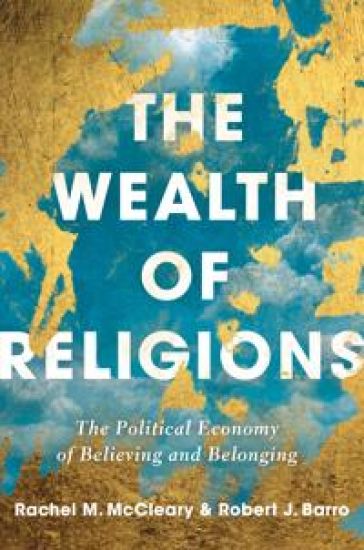
The Wealth of Religions

The Wealth of Religions

Robert J Barro; Rachel M. McCleary

Princeton University Press
2021
pokkari
How religious beliefs and practices can influence the wealth of nationsWhich countries grow faster economically—those with strong beliefs in heaven and hell or those with weak beliefs in them? Does religious participation matter? Why do some countries experience secularization while others are religiously vibrant? In The Wealth of Religions, Rachel McCleary and Robert Barro draw on their long record of pioneering research to examine these and many other aspects of the economics of religion. Places with firm beliefs in heaven and hell measured relative to the time spent in religious activities tend to be more productive and experience faster growth. Going further, there are two directions of causation: religiosity influences economic performance and economic development affects religiosity. Dimensions of economic development—such as urbanization, education, health, and fertility—matter too, interacting differently with religiosity. State regulation and subsidization of religion also play a role.The Wealth of Religions addresses the effects of religious beliefs on character traits such as work ethic, thrift, and honesty; the Protestant Reformation and its long-term effects on education and religious competition; Communism’s suppression of and competition with religion; the effects of Islamic laws and regulations on the functioning of markets and, hence, on the long-term development of Muslim countries; why some countries have state religions; analogies between religious groups and terrorist organizations; the violent origins of the Dalai Lama’s brand of Tibetan Buddhism; and the use by the Catholic Church of saint-making as a way to compete against the rise of Protestant Evangelicals.Timely and incisive, The Wealth of Religions provides fresh insights into the vital interplay between religion, markets, and economic development.
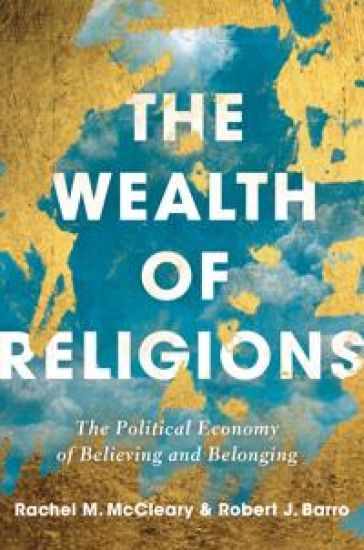
The Wealth of Religions

The Wealth of Religions

Robert J Barro; Rachel M. McCleary

PRINCETON UNIVERSITY PRESS
2019
sidottu
How religious beliefs and practices can influence the wealth of nationsWhich countries grow faster economically—those with strong beliefs in heaven and hell or those with weak beliefs in them? Does religious participation matter? Why do some countries experience secularization while others are religiously vibrant? In The Wealth of Religions, Rachel McCleary and Robert Barro draw on their long record of pioneering research to examine these and many other aspects of the economics of religion. Places with firm beliefs in heaven and hell measured relative to the time spent in religious activities tend to be more productive and experience faster growth. Going further, there are two directions of causation: religiosity influences economic performance and economic development affects religiosity. Dimensions of economic development—such as urbanization, education, health, and fertility—matter too, interacting differently with religiosity. State regulation and subsidization of religion also play a role.The Wealth of Religions addresses the effects of religious beliefs on character traits such as work ethic, thrift, and honesty; the Protestant Reformation and its long-term effects on education and religious competition; Communism’s suppression of and competition with religion; the effects of Islamic laws and regulations on the functioning of markets and, hence, on the long-term development of Muslim countries; why some countries have state religions; analogies between religious groups and terrorist organizations; the violent origins of the Dalai Lama’s brand of Tibetan Buddhism; and the use by the Catholic Church of saint-making as a way to compete against the rise of Protestant Evangelicals.Timely and incisive, The Wealth of Religions provides fresh insights into the vital interplay between religion, markets, and economic development.
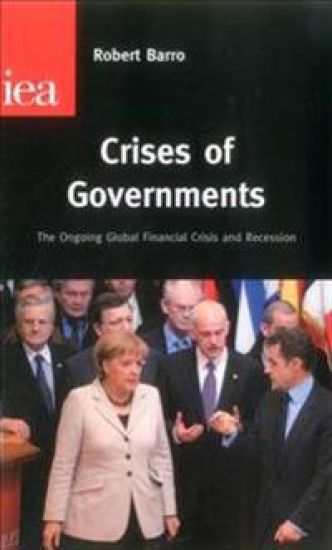
Crises of Governments

Crises of Governments

Robert J. Barro

Institute of Economic Affairs
2011
nidottu
In this short book, Robert Barro, one of the world's leading economists, examines the causes and consequences of the financial crash. In particular, he looks at the effects of fiscal stimulus packages and suggests that, whilst they may lead to an immediate positive impact on growth, the effect will quickly wear off and the effect of the so-called stimulus packages will then be negative. These are important observations given the pressure that Western governments are under to increase government borrowing in the face of slowing growth rates. The author moves on to discuss what he believes will be the next crisis - a crisis of government indebtedness. This publication is based on a lecture given in July 2011 and such a crisis has, indeed, unfolded. However, Professor Barro expects that this crisis will not be confined to the Eurozone. For example, US states are failing to deal with the problems of both explicit debt and future pensions and social insurance obligations. The author concludes with suggestions as to how governments should deal with these growing problems. This publication should be of interest to all who want to understand the wider economic implications of the financial crisis and the policy response to that crisis.
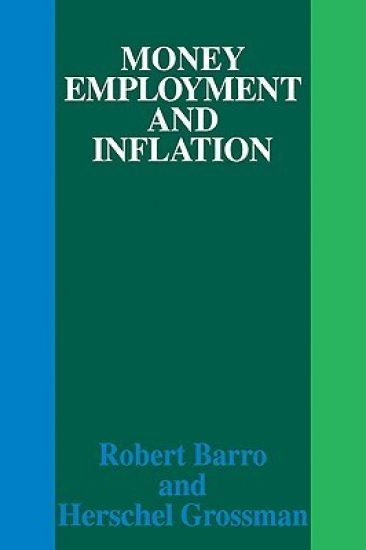
Money Employment and Inflation

Money Employment and Inflation

Robert J. Barro; Herschel I. Grossman

Cambridge University Press
2008
pokkari
This is a textbook on macroeconomic theory that attempts to rework the theory of macroeconomic relations through a re-examination of their microeconomic foundations. In the tradition of Keynes's General Theory of Employment, Interest and Money (published in 1936), and Patinkin's Money, Interest, and Prices, published in 1956 and revised in 1965, this book represents a third generation of macroeconomic theory. This book presents a comprehensive choice-theoretic analysis of the determination of the level of employment and the rate of inflation. A central feature of the book is the recasting of macroeconomic analysis in terms of a theory of exchange under non-market-clearing conditions. In addition, the analysis incorporates other aspects of the current reformulation of macroeconomic theory, including the relation between inflationary expectations, rates of return, and unemployment, the dynamics of aggregate demand, and the significance of incomplete information regarding the spatial distribution of wages and prices.
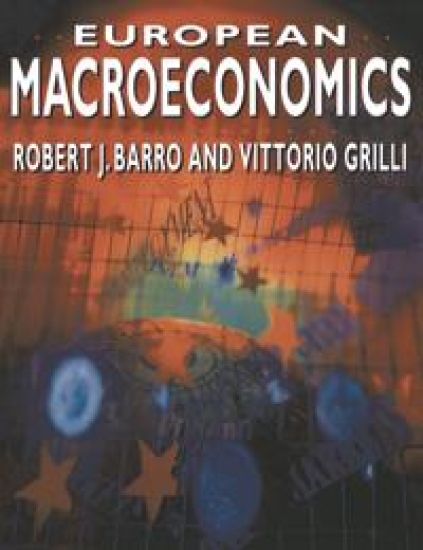
European Macroeconomics

European Macroeconomics

Robert J. Barro; Vittorio Grilli

Red Globe Press
2007
nidottu
This major macroeconomics text by Robert Barro and Vittorio Grilli is written from a European perspective. It adopts an open-economy approach and incorporates full treatment of European labour and financial institutions and markets, and covers the main macroeconomic theories and policy in relation to the components of the macroeconomic environment.
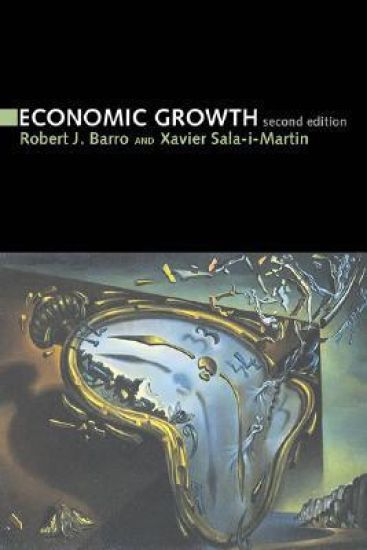
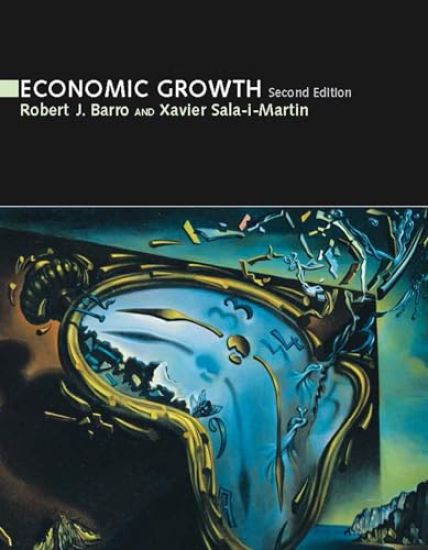
Economic Growth

Economic Growth

Robert J. Barro; Xavier I. Sala-i-Martin

MIT Press
2003
sidottu
The long-awaited second edition of an important textbook on economic growth-a major revision incorporating the most recent work on the subject.This graduate level text on economic growth surveys neoclassical and more recent growth theories, stressing their empirical implications and the relation of theory to data and evidence. The authors have undertaken a major revision for the long-awaited second edition of this widely used text, the first modern textbook devoted to growth theory. The book has been expanded in many areas and incorporates the latest research. After an introductory discussion of economic growth, the book examines neoclassical growth theories, from Solow-Swan in the 1950s and Cass-Koopmans in the 1960s to more recent refinements; this is followed by a discussion of extensions to the model, with expanded treatment in this edition of heterogenity of households. The book then turns to endogenous growth theory, discussing, among other topics, models of endogenous technological progress (with an expanded discussion in this edition of the role of outside competition in the growth process), technological diffusion, and an endogenous determination of labor supply and population. The authors then explain the essentials of growth accounting and apply this framework to endogenous growth models. The final chapters cover empirical analysis of regions and empirical evidence on economic growth for a broad panel of countries from 1960 to 2000. The updated treatment of cross-country growth regressions for this edition uses the new Summers-Heston data set on world income distribution compiled through 2000.
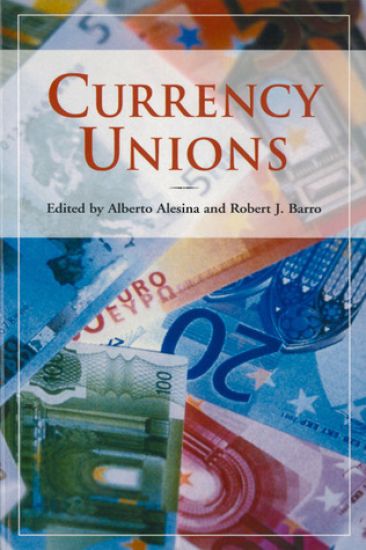
Currency Unions

Currency Unions

Alberto Alesina; Robert J Barro

Hoover Institution Press,U.S.
2001
nidottu
Currency Unions reviews the traditional case for flexible exchange rates and "countercyclical"—that is, expansionary during recessions and contractionary in booms—monetary policy, and shows how flexible exchange rate regimes can better insulate the economy from such real disturbances as terms-of-trade shocks. The book also looks at the pitfalls of flexible exchange rates—and why fixed rates, particularly full dollarization—might be a more sensible choice for some emerging-market countries. The contributors also detail the factors that determine the optimal sizes of currency unions, explain how currency union greatly expands the volume of international trade among its members, and examine the recent implementation of dollarization in Ecuador.
Makroökonomie

Makroökonomie

Robert J Barro; Vittorio Grilli

Walter de Gruyter
1996
sidottu
Dieses Werk tritt im deutschsprachigen Raum die Nachfolge von Barros Makroökonomie an. Inhaltlich entspricht es der vierten Auflage von Barros Makroökonomie im amerikanischen Original. Diese wurde aber auf die europäische Perspektive hin und im Bereich der europäischen Institution vollständig den hiesigen Erfordernissen angepasst. Damit erweist es sich erneut als ein führendes deutschsprachiges Lehrwerk der Makroökonomie.
Money Employment and Inflation

Money Employment and Inflation

Robert J. Barro; Herschel I. Grossman

Cambridge University Press
1976
sidottu
This is a textbook on macroeconomic theory that attempts to rework the theory of macroeconomic relations through a re-examination of their microeconomic foundations. In the tradition of Keynes's General Theory of Employment, Interest and Money (published in 1936), and Patinkin's Money, Interest, and Prices, published in 1956 and revised in 1965, this book represents a third generation of macroeconomic theory. This book presents a comprehensive choice-theoretic analysis of the determination of the level of employment and the rate of inflation. A central feature of the book is the recasting of macroeconomic analysis in terms of a theory of exchange under non-market-clearing conditions. In addition, the analysis incorporates other aspects of the current reformulation of macroeconomic theory, including the relation between inflationary expectations, rates of return, and unemployment, the dynamics of aggregate demand, and the significance of incomplete information regarding the spatial distribution of wages and prices.