Kirjojen hintavertailu. Mukana 12 585 122 kirjaa ja 12 kauppaa.

Kirjailija

Robert J. Corber

Kirjat ja teokset yhdessä paikassa: 9 kirjaa, julkaisuja vuosilta 1993-2024, suosituimpien joukossa Gentleman Jigger. Vertaile teosten hintoja ja tarkista saatavuus suomalaisista kirjakaupoista.

9 kirjaa

Kirjojen julkaisuhaarukka 1993-2024.

Gentleman Jigger

Gentleman Jigger

Richard Bruce Nugent; Arnold Rampersad; Robert J. Corber

FORDHAM UNIVERSITY PRESS
2024
pokkari
Gentleman Jigger stands as a landmark novel, celebrated for its candid exploration of Black sexuality set against the dynamic backdrop of the Harlem Renaissance. The story follows Stuartt, a defiantly queer artist, who navigates the complexities of racial and sexual identity in a period of profound cultural upheaval. Originating from a distinguished light-skinned Black family in Washington D.C., Stuartt immerses himself into the burgeoning arts scene of Harlem, where he aligns with the "Niggeratti," a group of young, rebellious artists and writers. This collective boldly challenges their elders' conviction that their creative endeavors should be dedicated solely to the advancement of racial equality. When their rebellion fizzles and they go their separate ways, Stuartt moves downtown to Greenwich Village where, where he fully indulges in his desires, intertwines with underworld figures, and achieves unexpected fame and fortune. It is also a world that, until his Hollywood debut, assumes that he is white. Part fictionalized autobiography, part social satire, Gentleman Jigger opens up a whole new dimension not only of the Harlem Renaissance but also of the racial and sexual politics of the Jazz Age.
I Am Elijah Thrush

I Am Elijah Thrush

James Purdy; Robert J. Corber

FORDHAM UNIVERSITY PRESS
2022
pokkari
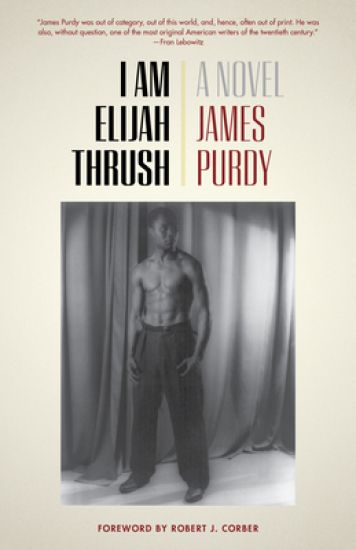
On its surface, I Am Elijah Thrush is the story of Millicent De Frayne and her sensational half century campaign to win the love of Elijah Thrush. Elijah, after ruining the lives of countless men and women, is finally in love “incorrectly, if not indecently,” with his great-grandson, Bird of Heaven. To support an unusual habit, a young Black man, Albert Peggs, reluctantly agrees to tell their remarkable story. It is in this telling the ambitions, desires, and true natures of Elijah, Millicent, and Albert come to light. With a delicately controlled balance of whimsy and pathos, James Purdy gives us this comedy of the heroic, the tragic, and the truly bizarre. Met with critical bewilderment upon its initial publication fifty years ago, this new edition offers a foreword by Robert J. Corber illuminating Purdy’s “complicated allegory” of objectification, desire, and race in the immediate post-Civil Rights moment.
Out with the Stars

Out with the Stars

James Purdy; Robert J. Corber

FORDHAM UNIVERSITY PRESS
2022
pokkari
Following the discovery of an anonymous libretto Abner Blossom comes out of retirement to write an opera based on the life of infamous novelist-turned-photographer Cyril Vane. But those who knew Vane and his Russian-born wife, the silent-screen star Madame Olga Petrovna, are prepared to go to any length to suppress the truth about them. Vane’s dark secret follows him to the grave. But his jealous and vengeful widow and her faded cronies employ all the means at their disposal to prevent the opening of Blossom’s opera. Out with the Stars is peopled by the gothic characters readers of James Purdy have come to anticipate and relish. From Val Sturgis, Kentucky boy made good and now Blossom’s protégé, to Francis X. Beauregard, aging star of the silver screen now living surrounded by streetwise hustlers in his Brooklyn mansion. Back in print for the first time since 1993, Purdy’s flamboyant tale of New York City’s pre-Stonewall bohemia includes an incisive foreword by Robert J. Corber, placing the work within its rich social and cultural context.
Cold War Femme

Cold War Femme

Robert J. Corber

Duke University Press
2011
pokkari
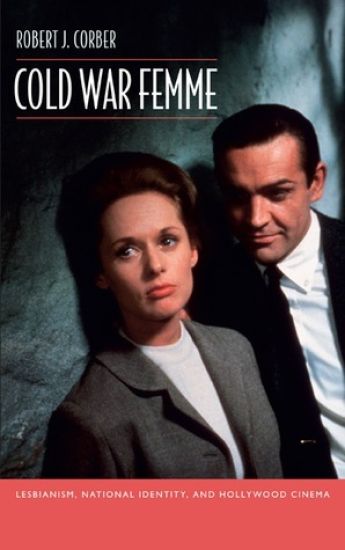
In his bestselling book The Grapevine: A Report on the Secret World of the Lesbian (1965), Jess Stearn announced that, contrary to the assumptions of many Americans, most lesbians appeared indistinguishable from other women. They could mingle “congenially in conventional society.” Some were popular sex symbols; some were married to unsuspecting husbands. Robert J. Corber contends that The Grapevine exemplified a homophobic Cold War discourse that portrayed the femme as an invisible threat to the nation. Underlying this panic was the widespread fear that college-educated women would reject marriage and motherhood as aspirations, weakening the American family and compromising the nation’s ability to defeat totalitarianism. Corber argues that Cold War homophobia transformed ideas about lesbianism in the United States. In the early twentieth century, homophobic discourse had focused on gender identity: the lesbian was a masculine woman. During the Cold War, the lesbian was reconceived as a woman attracted to other women. Corber develops his argument by analyzing representations of lesbianism in Hollywood movies of the 1950s and 1960s, and in the careers of some of the era’s biggest female stars. He examines treatments of the femme in All About Eve, The Children’s Hour, and Marnie, and he explores the impact of Cold War homophobia on the careers of Joan Crawford, Bette Davis, and Doris Day.
Cold War Femme

Cold War Femme

Robert J. Corber

Duke University Press
2011
sidottu
In his bestselling book The Grapevine: A Report on the Secret World of the Lesbian (1965), Jess Stearn announced that, contrary to the assumptions of many Americans, most lesbians appeared indistinguishable from other women. They could mingle “congenially in conventional society.” Some were popular sex symbols; some were married to unsuspecting husbands. Robert J. Corber contends that The Grapevine exemplified a homophobic Cold War discourse that portrayed the femme as an invisible threat to the nation. Underlying this panic was the widespread fear that college-educated women would reject marriage and motherhood as aspirations, weakening the American family and compromising the nation’s ability to defeat totalitarianism. Corber argues that Cold War homophobia transformed ideas about lesbianism in the United States. In the early twentieth century, homophobic discourse had focused on gender identity: the lesbian was a masculine woman. During the Cold War, the lesbian was reconceived as a woman attracted to other women. Corber develops his argument by analyzing representations of lesbianism in Hollywood movies of the 1950s and 1960s, and in the careers of some of the era’s biggest female stars. He examines treatments of the femme in All About Eve, The Children’s Hour, and Marnie, and he explores the impact of Cold War homophobia on the careers of Joan Crawford, Bette Davis, and Doris Day.
Homosexuality in Cold War America

Homosexuality in Cold War America

Robert J. Corber

Duke University Press
1997
pokkari
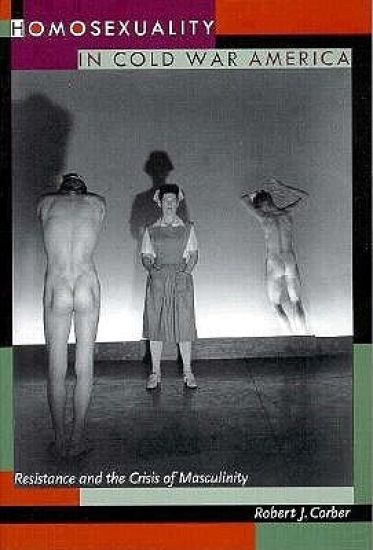
Challenging widely held assumptions about postwar gay male culture and politics, Homosexuality in Cold War America examines how gay men in the 1950s resisted pressures to remain in the closet. Robert J. Corber argues that a form of gay male identity emerged in the 1950s that simultaneously drew on and transcended left-wing opposition to the Cold War cultural and political consensus. Combining readings of novels, plays, and films of the period with historical research into the national security state, the growth of the suburbs, and postwar consumer culture, Corber examines how gay men resisted the "organization man" model of masculinity that rose to dominance in the wake of World War II. By exploring the representation of gay men in film noir, Corber suggests that even as this Hollywood genre reinforced homophobic stereotypes, it legitimized the gay male "gaze." He emphasizes how film noir’s introduction of homosexual characters countered the national "project" to render gay men invisible, and marked a deep subversion of the Cold War mentality. Corber then considers the work of gay male writers Tennessee Williams, Gore Vidal, and James Baldwin, demonstrating how these authors declined to represent homosexuality as a discrete subculture and instead promoted a model of political solidarity rooted in the shared experience of oppression. Homosexuality in Cold War America reveals that the ideological critique of the dominant culture made by gay male authors of the 1950s laid the foundation for the gay liberation movement of the following decade.
Homosexuality in Cold War America

Homosexuality in Cold War America

Robert J. Corber

Duke University Press
1997
sidottu
Challenging widely held assumptions about postwar gay male culture and politics, Homosexuality in Cold War America examines how gay men in the 1950s resisted pressures to remain in the closet. Robert J. Corber argues that a form of gay male identity emerged in the 1950s that simultaneously drew on and transcended left-wing opposition to the Cold War cultural and political consensus. Combining readings of novels, plays, and films of the period with historical research into the national security state, the growth of the suburbs, and postwar consumer culture, Corber examines how gay men resisted the "organization man" model of masculinity that rose to dominance in the wake of World War II. By exploring the representation of gay men in film noir, Corber suggests that even as this Hollywood genre reinforced homophobic stereotypes, it legitimized the gay male "gaze." He emphasizes how film noir’s introduction of homosexual characters countered the national "project" to render gay men invisible, and marked a deep subversion of the Cold War mentality. Corber then considers the work of gay male writers Tennessee Williams, Gore Vidal, and James Baldwin, demonstrating how these authors declined to represent homosexuality as a discrete subculture and instead promoted a model of political solidarity rooted in the shared experience of oppression. Homosexuality in Cold War America reveals that the ideological critique of the dominant culture made by gay male authors of the 1950s laid the foundation for the gay liberation movement of the following decade.
In the Name of National Security

In the Name of National Security

Robert J. Corber

Duke University Press
1993
pokkari
In the Name of National Security exposes the ways in which the films of Alfred Hitchcock, in conjunction with liberal intellectuals and political figures of the 1950s, fostered homophobia so as to politicize issues of gender in the United States.As Corber shows, throughout the 1950s a cast of mind known as the Cold War consensus prevailed in the United States. Promoted by Cold War liberals--that is, liberals who wanted to perserve the legacies of the New Deal but also wished to separate liberalism from a Communist-dominated cultural politics--this consensus was grounded in the perceived threat that Communists, lesbians, and homosexuals posed to national security. Through an analysis of the films of Alfred Hitchcock, combined with new research on the historical context in which these films were produced, Corber shows how Cold War liberals tried to contain the increasing heterogeneity of American society by linking questions of gender and sexual identity directly to issues of national security, a strategic move that the films of Hitchcock both legitimated and at times undermined. Drawing on psychoanalytic and Marxist theory, Corber looks at such films as Rear Window, Strangers on a Train, and Psycho to show how Hitchcock manipulated viewers' attachments and identifications to foster and reinforce the relationship between homophobia and national security issues.A revisionary account of Hitchcock's major works, In the Name of National Security is also of great interest for what it reveals about the construction of political "reality" in American history.
In the Name of National Security

In the Name of National Security

Robert J. Corber

Duke University Press
1993
sidottu
In the Name of National Security exposes the ways in which the films of Alfred Hitchcock, in conjunction with liberal intellectuals and political figures of the 1950s, fostered homophobia so as to politicize issues of gender in the United States.As Corber shows, throughout the 1950s a cast of mind known as the Cold War consensus prevailed in the United States. Promoted by Cold War liberals--that is, liberals who wanted to perserve the legacies of the New Deal but also wished to separate liberalism from a Communist-dominated cultural politics--this consensus was grounded in the perceived threat that Communists, lesbians, and homosexuals posed to national security. Through an analysis of the films of Alfred Hitchcock, combined with new research on the historical context in which these films were produced, Corber shows how Cold War liberals tried to contain the increasing heterogeneity of American society by linking questions of gender and sexual identity directly to issues of national security, a strategic move that the films of Hitchcock both legitimated and at times undermined. Drawing on psychoanalytic and Marxist theory, Corber looks at such films as Rear Window, Strangers on a Train, and Psycho to show how Hitchcock manipulated viewers' attachments and identifications to foster and reinforce the relationship between homophobia and national security issues.A revisionary account of Hitchcock's major works, In the Name of National Security is also of great interest for what it reveals about the construction of political "reality" in American history.