Kirjojen hintavertailu. Mukana 12 390 323 kirjaa ja 12 kauppaa.

Kirjailija

Robert J. Garmston

Kirjat ja teokset yhdessä paikassa: 7 kirjaa, julkaisuja vuosilta 2011-2025, suosituimpien joukossa Leading Toward Efficacy: Why Cognitive Coaching Persists. Vertaile teosten hintoja ja tarkista saatavuus suomalaisista kirjakaupoista.

7 kirjaa

Kirjojen julkaisuhaarukka 2011-2025.

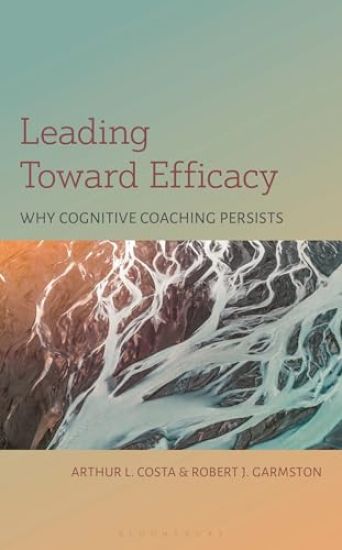
Leading Toward Efficacy: Why Cognitive Coaching Persists

Leading Toward Efficacy: Why Cognitive Coaching Persists

Arthur L. Costa; Robert J. Garmston

BLOOMSBURY ACADEMIC
2025
nidottu
This is a book about leadership, not as a position but rather as a set of behaviors. This is essential in our rapidly emerging technological, political, social and education operations. The behaviors are important for personal performance, individual and collective efficacy, the recognition of those behaviors in others, and advocating their inclusion in educational programs and workplace cultures. Readers will read the book for personal efficacy and influence, efficacy of others and making organization increasingly effective in regard to their mission. The information contained in this book will help the reader be on the forefront of developments in the neurosciences related to Cognitive Coaching. The subject matter will address the current status of education, with issues surrounding parent involvement, political influence, teacher fatigue, and the digital landscape faced by students and educators alike in the time since the ideas of Cognitive Coaching were first introduced including the myriad points of information accessible to students, possibilities for distraction, and the fast-moving onset of artificial intelligence. The book will also present an emerging view of what educational leadership is about in the modern world, including a greater emphasis than ever before on proficiency, vulnerability, psychological safety, empathy, and a sense of community/belonging. After enduring an era of COVID-19, followed by many unanticipated results in personal lives, education, workplaces, and global relationships, many are experiencing physical, emotional and psychological stress. This book considers the classic concepts of Cognitive Coaching, with a fresh modern perspective that will help inspire a new generation of leaders while also reinvigorating those who have been in the field for decades. This book will give the reader tools they need to work with greater efficacy in their careers, education, and lives as a whole. Research shows that people with greater efficacy believe that they can work through problems that are presented, typically work harder, are more successful, and are less stressed than their counterparts.
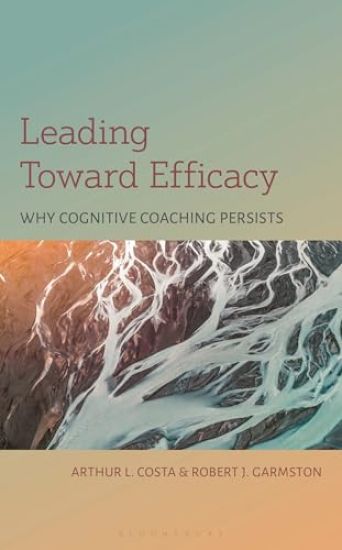
Leading Toward Efficacy: Why Cognitive Coaching Persists

Leading Toward Efficacy: Why Cognitive Coaching Persists

Arthur L. Costa; Robert J. Garmston

BLOOMSBURY ACADEMIC
2025
sidottu
This is a book about leadership, not as a position but rather as a set of behaviors. This is essential in our rapidly emerging technological, political, social and education operations. The behaviors are important for personal performance, individual and collective efficacy, the recognition of those behaviors in others, and advocating their inclusion in educational programs and workplace cultures. Readers will read the book for personal efficacy and influence, efficacy of others and making organization increasingly effective in regard to their mission. The information contained in this book will help the reader be on the forefront of developments in the neurosciences related to Cognitive Coaching. The subject matter will address the current status of education, with issues surrounding parent involvement, political influence, teacher fatigue, and the digital landscape faced by students and educators alike in the time since the ideas of Cognitive Coaching were first introduced including the myriad points of information accessible to students, possibilities for distraction, and the fast-moving onset of artificial intelligence. The book will also present an emerging view of what educational leadership is about in the modern world, including a greater emphasis than ever before on proficiency, vulnerability, psychological safety, empathy, and a sense of community/belonging. After enduring an era of COVID-19, followed by many unanticipated results in personal lives, education, workplaces, and global relationships, many are experiencing physical, emotional and psychological stress. This book considers the classic concepts of Cognitive Coaching, with a fresh modern perspective that will help inspire a new generation of leaders while also reinvigorating those who have been in the field for decades. This book will give the reader tools they need to work with greater efficacy in their careers, education, and lives as a whole. Research shows that people with greater efficacy believe that they can work through problems that are presented, typically work harder, are more successful, and are less stressed than their counterparts.
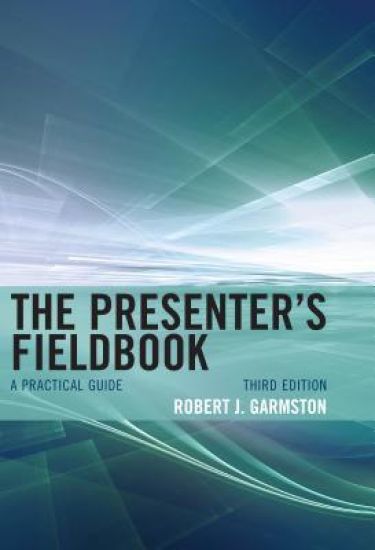
The Presenter's Fieldbook

The Presenter's Fieldbook

Robert J. Garmston

Rowman Littlefield
2018
nidottu
Proper presentations have the power to persuade and transform people and organizations. This is a book about the art of presenting. Using current knowledge about learning, this book describes best practices for designing, delivering, debriefing, and growing from the presenting experience. Some highlights include how to give a two minute speech, getting comfortable in your own skin, overcoming resistance and audience fatigue, and how to de-demonize the personal digital devices in training rooms today. What’s new in this edition is information on interactive presentation technology, making the first 5 minutes magical, a new treatment of presentation design, and attention to cultural mindfulness. This third edition continues to be a guidebook for anyone who has ever stood before a group to make a presentation – novices and experts alike. For novices the book provides a respected foundation upon which to enhance learning for adults. For experienced presenters it offers an opportunity to fine tune your work in specific areas. For the specialist, professor, or trainer of those teaching adults, it serves as a curriculum guide. **Free Study Guide Available at https://rowman.com/ISBN/9781442223684/The-Presenter's-Fieldbook-A-Practical-Guide-3rd-Edition#
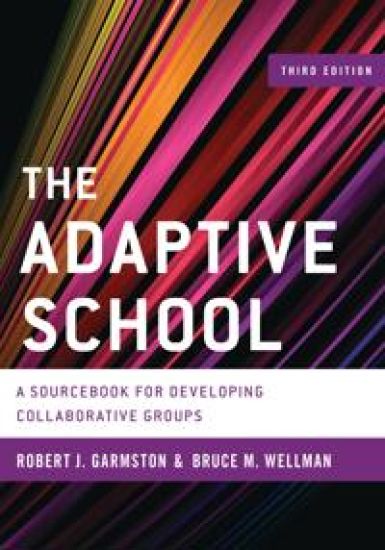
The Adaptive School

The Adaptive School

Robert J. Garmston; Bruce M. Wellman

Rowman Littlefield Publishers
2016
sidottu
This 3rd edition of the award winning Adaptive Schools Sourcebook provides both a theoretical and practical guide for groups and teams to develop and focus their collaborative energies to improve teaching practices and enhance student-learning outcomes. In five sections: Becoming Adaptive, Collaboration Matters, Meetings are Teachers’ Work, Resources for Inquiry, and Conflict, Change and Community, the authors draw on decades of personal experiences in schools and research from multiple disciplines to present powerful tools and useful templates for structuring the work of productive professional communities in schools. Readers will learn ways to develop and sustain the fundamental elements for enhancing social capital in schools: distinguishing between dialogue and discussion, establishing seven norms of collaboration, automating language patterns for inquiry and problem solving, facilitating groups and data teams, engaging in productive conflict, and building community. The book offers links to video clips demonstrating key skills, inventories for assessing groups, instruments for assessing personal skills, and a collection of over 150 meeting strategies and facilitator moves for engaging group members in productive interactions.
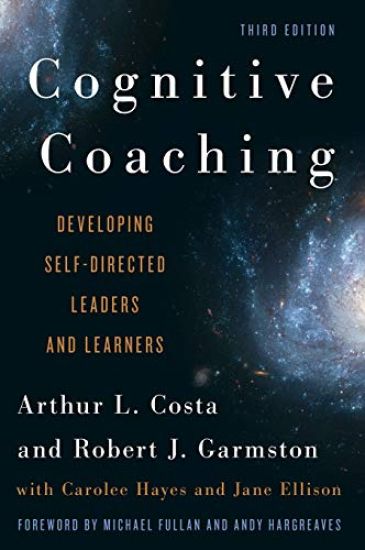
Cognitive Coaching

Cognitive Coaching

Arthur L. Costa; Robert J. Garmston

Rowman Littlefield Publishers
2015
sidottu
In this greatly expanded and extensively updated edition of a widely popular resource you see how teachers' individual and collective capacities for continuing self-improvement are strengthened over time through Cognitive Coaching. You gain essential skills, protocols, guidance, research and resources to use when implementing Cognitive Coaching principles and values in your own school setting. Working toward the goals of making school better places where more students succeed and satisfaction in learning and teaching prevail, Costa and Garmston let you know about their own learning, and how new research and practice can support individuals and schools in reaching higher, more satisfying, and more holistic performance. Organized into four sections, the book clearly and effectively presents these concepts: the meanings of cognitive coaching; the basics of teaching excellence; strategies and tactics for engaging in coaching; and how to integrate Cognitive Coaching throughout the system.
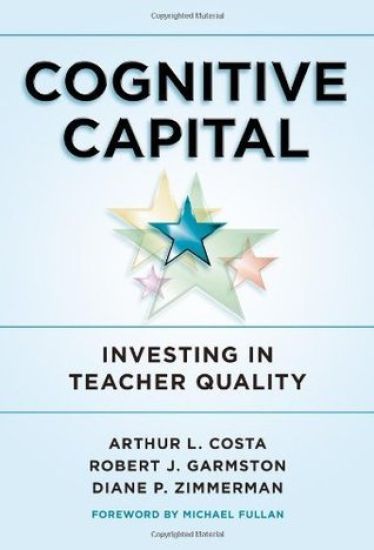
Cognitive Capital

Cognitive Capital

Arthur L. Costa; Robert J. Garmston; Diane P. Zimmerman; Michael Fullan

Teachers' College Press
2013
nidottu
Building on the authors’ celebrated work in cognitive coaching, this important book provides teachers, schools, and policy leaders with the rationale and new direction for enhancing the development of the intellectual capacity of educators, their performance and ultimate effects on student learning. The authors focus on assisting teachers in developing awareness in their own ability to make effective judgments based on all their capabilities and experiences.When teachers weave internal expertise and external criteria together into the exquisite tapestry of teaching and learning, they gain confidence in their ability to make a difference for all students. Rather than spending time becoming better inspectors and enforcers, Cognitive Capital calls for skilful leaders to engage educators’ thought processes which promote practices that have high impacts on their students.