Kirjojen hintavertailu. Mukana 12 390 323 kirjaa ja 12 kauppaa.

Kirjailija

Robert J. Marzano

Kirjat ja teokset yhdessä paikassa: 43 kirjaa, julkaisuja vuosilta 1996-2026, suosituimpien joukossa The Essentials for Standards-Driven Classrooms. Vertaile teosten hintoja ja tarkista saatavuus suomalaisista kirjakaupoista.

Mukana myös kirjoitusasut: Robert J Marzano

43 kirjaa

Kirjojen julkaisuhaarukka 1996-2026.

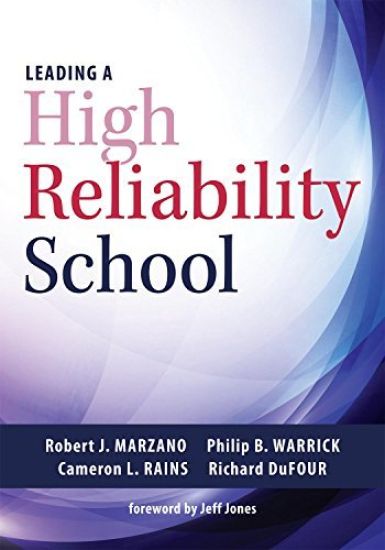
Leading a High Reliability School: (use Data-Driven Instruction and Collaborative Teaching Strategies to Boost Academic Achievement)
How do educators build High Reliability Schools (HRS) and boost academic achievement? By implementing interdependent systems of operation and performance assessment for student-centered learning. A critical commitment to becoming an HRS is the PLC at Work(TM) process of collaborative learning and teaching. This user-friendly teaching resource focuses on: (1) a safe and collaborative culture, (2) effective teaching in every classroom, (3) a guaranteed and viable curriculum, (4) standards-referenced reporting of student progress (standards-based grading), and (5) a competency-based system. Marzano, Warrick, Rains, and DuFour will help you: Increase school effectiveness through a focus on student-centered learning and the implementation of research-based leading indicators of operation. Monitor effective practices through the use of lagging indicators and quick data sources. Explore the three big ideas associated with the PLC at Work(TM) process to implement student-centered learning, collaborative teaching strategies, and data-driven instruction. Engage in periodic reflection on effective school leadership and instructional coaching practices. Understand how to balance and achieve school and district goals using data to improve students' academic achievement and college- and career-readiness skills. Contents: Foreword Introduction Chapter 1: High Reliability Organizations and School Leadership Chapter 2: Safe and Collaborative Culture Chapter 3: Effective Teaching in Every Classroom Chapter 4: Guaranteed and Viable Curriculum Chapter 5: Standards-Referenced Reporting Chapter 6: Competency-Based Education Chapter 7: District Leadership in High Reliability Schools Appendix References and Resources Index
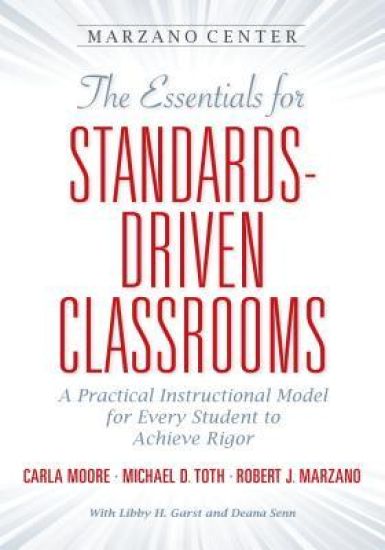
The Essentials for Standards-Driven Classrooms

The Essentials for Standards-Driven Classrooms

Carla Moore; Michael D. Toth; Robert J. Marzano

Learning Sciences International
2017
nidottu
As a supplement to the Essentials for Achieving Rigor series, this guide gives teachers a big-picture view of the Essentials model and its research-based strategies. Its valuable tips and guidance empower educators and leaders to increase classroom rigor and transform their schools into thriving, sustainable communities of practice.
Identifying Critical Content

Identifying Critical Content

Deana Senn; Amber C. Rutherford; Robert J. Marzano

Learning Sciences International
2014
nidottu
Based on the earlier work of Dr. Robert J. Marzano, this instructional guide provides explicit steps, examples, and adaptations to help educators effectively teach students how to examine errors in reasoning.
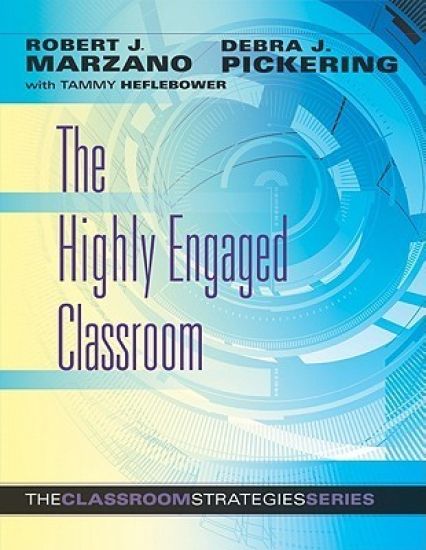
The Highly Engaged Classroom

The Highly Engaged Classroom

Robert J. Marzano; Debra J. Pickering

Marzano Resources
2010
nidottu
If students are not engaged, there is little, if any, chance that they will learn what is being addressed in class. A basic premise of The Highly Engaged Classroom is that student engagement happens as a result of a teacher's careful planning and execution of specific strategies. In other words, student engagement is not serendipitous. This book was designed as a self-study text that provides an in-depth understanding of how to generate high levels of attention and engagement. Engagement is obviously a central aspect of effective teaching. Using the suggestions presented in this book, every teacher can create a classroom environment in which engagement is the norm instead of the exception.
Assessment Literacy for Educators: Rethinking the What, Why, and How of Assessment and Grading (Create Equitable, Accurate Classroom Assessment.)
Assessment practices in schools often stem from outdated traditions that don't serve today's learners. Assessment Literacy for Educators is the culmination of Robert J. Marzano's decades of work, coauthored with Michael D. Evans and Julia A. Simms. Presenting 43 tenets for assessment literacy, the book equips teachers and leaders to replace outdated grading practices with equitable, accurate approaches that truly advance student learning. K-12 educators and preservice teachers can use this book to: Understand the history of assessment in the United States, including failures and biases Learn the technical characteristics and limitations of influential large-scale exams Employ a variety of effective classroom assessments to measure student knowledge on specific learning progressions Aggregate formative assessment scores over time and compute summative scores to accurately report student status and growth Individualize the assessment and learning process with competency-based practices Contents: Introduction: Revisiting Assessment Practices Part I: Large-Scale Assessments Chapter 1: The Influence of Large-Scale Assessments Chapter 2: Technical Characteristics of Large-Scale Assessments Part II: Classroom Assessments Chapter 3: Rethinking Classroom Assessments Chapter 4: Scoring Classroom Assessments Chapter 5: Aggregating Classroom Assessment Scores Part III: Grading Practice Chapter 6: Grading Systems Chapter 7: Competency-Based Systems Epilogue: Applying the Tenets of Assessment Literacy References and Resources Index
Pioneers of Personalized Education: Westminster Public Schools and the Pursuit of Competency-Based Learning (a Blueprint for Competency-Based Learning
Westminster Public Schools (WPS) in Colorado has embarked on a transformative journey toward competency-based education. Through strategic planning and continuous improvement, WPS developed a learner-centered system prioritizing personalized learning and student agency. Their road map--rooted in shared vision and second-order change--highlights successes and challenges, offering insights on scheduling, school leadership, and systems to guide others in achieving high reliability and impactful school reform. K-12 school and district leaders can use this book to: Understand a sustainable framework that supports continued growth and development Envision schools and classrooms as spaces that prioritize students and their learning experiences Learn how teachers, students, and the community can each have a meaningful voice in the operation of schools and districts Discover new systems for competency-based instruction, assessment, grading, and reporting Cultivate a vision for navigating transition and change Contents: Introduction Chapter 1: Shared Vision Chapter 2: Leadership at All Levels Chapter 3: Competency-Based Design Chapter 4: Learner-Centered Classroom Chapter 5: Continuous Improvement Chapter 6: Bridging Continuous Improvement to High Reliability Epilogue References Index
Leading a Competency-Based Secondary School: The Marzano Academies Model (Become a Transformational Leader with Field-Tested Competency-Based Educatio
This is your blueprint for how you, as a secondary school leader, can implement an effective competency-based education system. Based on decades of research and refined in the Marzano Academies, the model presented in this book will aid you and your staff in the process of shifting from a traditional school to a high reliability, competency-based organization. Middle school and high school leaders will: Learn about the Marzano Academies model and its application in secondary schools Explore a phased approach to transitioning to competency-based education Understand 16 school-level indicators and specific programs and practices for each Monitor the impact of each indicator through high reliability leadership Examine the roles of leaders during transformational change Contents: Introduction Chapter 1: Phase 1--Laying the Foundations Chapter 2: Phase 2--Implementing the Core of a Competency-Based System Chapter 3: Phase 3--Focusing on Learning and Growth Chapter 4: Phase 4--Finishing Strong Chapter 5: The Four Roles of a Transformational Leader References and Resources Index
Teaching in a Competency-Based Secondary School: The Marzano Academies Model (Your Definitive Guide to Maximize the Potential of a Solid Competency-Ba
Improve your practice with a model of instruction for secondary teachers that facilitates student learning, supports individual growth, and fosters community in competency-based education (CBE) systems. Based on decades of research and practical experience, this definitive guide offers a detailed breakdown of the four domains, ten design areas, and forty-nine elements of effective teaching within the Marzano Academies instructional model. Readers will ensure growth and learning for all students by: Understanding the tenets of competency-based education and its benefits Becoming familiar with the four domains, ten design areas, and forty-nine elements of the Marzano Academies instructional model Implementing the model in your competency-based secondary classroom with practical strategies, real-world examples, and artifacts of CBE in action Facilitating your students' journey to proficiency with academic content and the development of important mindsets and life skills Developing the correct mental approach to realize the full potential of CBE Contents: Introduction Chapter 1: Feedback Chapter 2: Content Chapter 3: Context Chapter 4: Self-Regulation Chapter 5: The CBE Mindset References and Resources Index
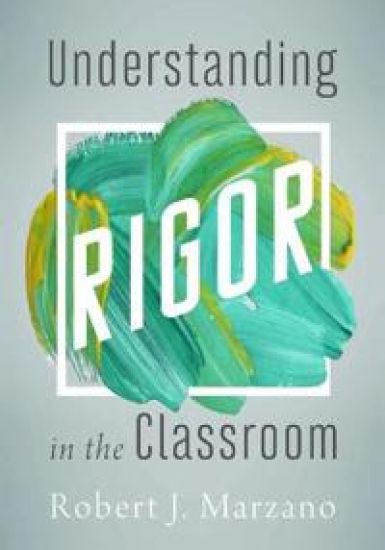
Understanding Rigor in the Classroom

Understanding Rigor in the Classroom

Robert J. Marzano

Learning Sciences International
2019
nidottu
Robert J Marzano has spent over 50 years revolutionizing educational research and observation. Now in Understanding Rigor in the Classroom, Marzano brings that experience and expertise to one of the most complicated questions in education: what is rigor, and how can I use it to improve my student’s learning?Marzano cuts through the noise to define rigor up front on page one, breaking the concept down to its most essential components for each key situation of student learning—both declarative and procedural knowledge, and the different levels of student subject familiarity. This book explores: Specific activities, tasks, and concrete strategies for teachers to integrate and adapt How to incorporate cognitive analysis processes and habit of mind strategies into every lesson Seeking rigor in Project-Based Learning through knowledge application tasks Understanding Rigor in the Classroom provides a focused, yet comprehensive framework for enhancing rigor across grade levels and subject areas. This book makes it possible for entire schools, and school systems, to create comprehensive and rigorous K–12 curriculums.
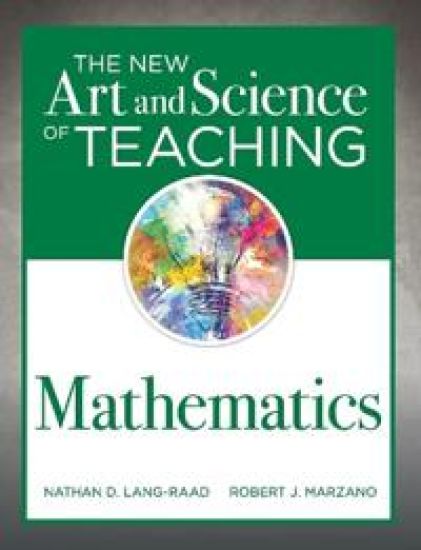
The New Art and Science of Teaching Mathematics

The New Art and Science of Teaching Mathematics

Nathan D Lang-Raad; Robert J Marzano

Solution Tree Press
2019
pokkari
Part of The New Art and Science of Teaching series In The New Art and Science of Teaching Mathematics, authors Nathan D. Lang-Raad and Robert J. Marzano reenvision the groundbreaking New Art and Science of Teaching framework for math classrooms. Readers will discover myriad math strategies, tools, and methods of teaching mathematics for every step of the process, from articulating learning targets and conducting math lessons to engaging students, tracking progress, and celebrating successes. Use this teaching resource to implement research-based best practices in teaching math: Explore how The New Art and Science of Teaching framework can help you optimize your methods and establish best practices in teaching mathematics. Become familiar with the 10 design areas and 43 elements of effective teaching strategies that make up the framework. Develop an understanding of which of the 43 elements of instruction are most effective in the mathematics classroom and in which types of lessons they should be used when teaching mathematics. Use each chapter's Guiding Questions for Curriculum Design to support planning and aid in reflection as a mathematics teacher. Discover a four-step process designed to help you deepen your expertise of math teaching strategies. A joint publication of ASCD and Solution Tree Contents: Introduction Chapter 1: Providing and Communicating Clear Learning Goals Chapter 2: Using Assessments Chapter 3: Conducting Direct Instruction Lessons Chapter 4: Conducting Practicing and Deepening Lessons Chapter 5: Conducting Knowledge Application Lessons Chapter 6: Using Strategies That Appear in All Types of Lessons Chapter 7: Using Engagement Strategies Chapter 8: Implementing Rules and Procedures Chapter 9: Building Relationships Chapter 10: Communicating High Expectations Chapter 11: Developing Expertise Appendix References and Resources
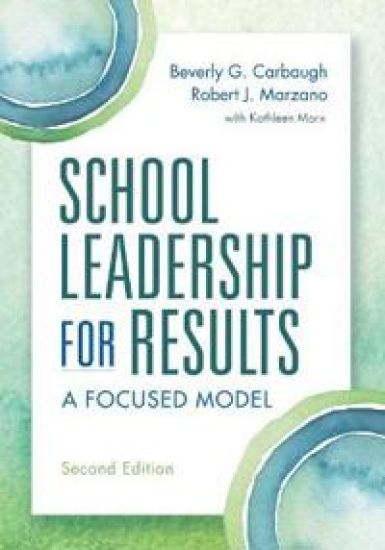
School Leadership for Results

School Leadership for Results

Beverly G. Carbaugh; Robert J. Marzano

Learning Sciences International
2019
nidottu
In School Leadership for Results Beverly Carbaugh and Robert Marzano update their seminal work to reflect the most up to date literature and understanding of leadership roles and responsibilities. With the right focus and support, leadership skills can be acquired as long as we are committed to helping leaders build the skills they need to succeed. In 2015, School Leadership for Results: Shifting the Focus of Leader Evaluation provided a thorough exploration of the Marzano School Leader Evaluation Model and a practical guide to meeting the challenges of fair and accurate evaluation of instructional leaders. It encouraged schools all over the world to change their approach to leader evaluation, shifting the focus from simple measurement to real, effective evaluation based on growth. Research into school leader evaluation has continued to evolve, and so has the Marzano School Leader Evaluation Model. In School Leadership for Results: A Focused Model, the authors update their seminal work to reflect the most up to date literature and understanding of leadership roles and responsibilities, translating the research into six domains of action every school can take: Keeping a Data-Driven Focus on School Improvement.Teaching a Visible and Guaranteed Curriculum.Fostering Continuous Development of Teachers and Staff.Creating a Community of Care and Collaboration.Maintaining Core Values.Managing Resources Effectively.Effective school leader evaluation is a collaborative, shared process of focused improvement – and it remains the only way to achieve school leadership for results.
New Art and Science of Classroom Assessment: (Authentic Assessment Methods and Tools for the Classroom)
Part of The New Art and Science of Teaching series Shift to a new paradigm of classroom assessment that is more accurate, meaningful, and authentic. The New Art and Science of Classroom Assessment explores the inadequacies of traditional assessment methods and details how to use classroom assessment to its full potential. Step by step, the authors outline a clear path for transitioning to more holistic assessment methods that truly reflect course curriculum and student progress. Learn how you can develop authentic assessment for learning in the classroom: Explore a new perspective on effective assessment for learning, including classroom, interim, and year-end assessments (from formative assessment to summative assessment). Learn how to create a curriculum that provides clear guidance as to what should be assessed. Acquire strategies for assessing four general types of skills: (1) cognitive skills, (2) knowledge-application skills, (3) metacognitive skills, and (4) general behavior skills. Develop expertise with classroom assessment tools, such as the types of declarative content, selected response items, and short constructed response questions. Download free reproducible tables and checklists to assist in implementing new methods of assessment design. A joint publication of ASCD and Solution Tree Contents: Introduction Chapter 1: The Assessment-Friendly Curriculum Chapter 2: Proficiency Scales Chapter 3: Parallel Assessments Chapter 4: The Measurement Process and Different Types of Assessment Chapter 5: Summative Scores Chapter 6: Non-Subject-Specific Skills Chapter 7: Record Keeping and Reporting Epilogue Appendix A: Types of Declarative Content Appendix B: Types of Test Response Items References and Resources Books in The New Art and Science of Teaching series: The New Art and Science of Teaching The Handbook for the New Art and Science of Teaching The New Art and Science of Teaching Reading The New Art and Science of Teaching Writing The New Art and Science of Classroom Assessment
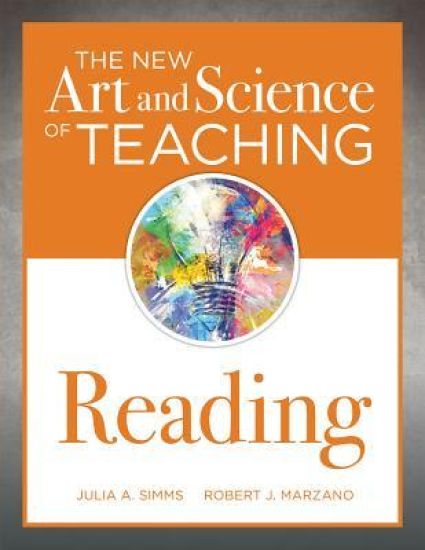
New Art and Science of Teaching Reading: (How to Teach Reading Comprehension Using a Literacy Development Model)
Part of The New Art and Science of Teaching series Only when teachers have in-depth knowledge of reading skill and literacy development can they deliver best-practice reading assessment and instruction to students. The New Art and Science of Teaching Reading presents a compelling model for the stages of reading development, structured around five key topics: (1) foundational skills, (2) word recognition, (3) reading fluency, (4) vocabulary, and (5) reading comprehension. More than 100 reading-focused instructional strategies are laid out in detail to help teachers ensure every student becomes a proficient reader. Guide students at all stages of literacy development, from learning the basic concepts of print to demonstrating advanced reading comprehension. Discover a research-based reading model to guide your instruction: Understand how to best utilize The New Art and Science of Teaching framework for teaching reading comprehension and other reading skills. Explore a reading model that addresses how to articulate content, implement specific instructional strategies, and navigate reading-related issues that might arise in the classroom. Understand which elements of instruction are best suited for teaching reading. Explore how general strategies for teaching can be employed alongside specific strategies to enhance teaching, enrich learning and literacy development, and improve the classroom environment. Access free reproducibles, including exercises, games, and readings for the classroom. A joint publication of ASCD and Solution Tree Contents: Introduction Chapter 1: Reading Research and a Reading-Specific Model of Instruction Chapter 2: Providing and Communicating Clear Learning Goals Chapter 3: Using Assessments Chapter 4: Conducting Direct Instruction Lessons Chapter 5: Conducting Practicing and Deepening Lessons Chapter 6: Conducting Knowledge Application Lessons Chapter 7: Using Strategies That Appear in All Types of Lessons Chapter 8: Using Engagement Strategies Chapter 9: Implementing Rules and Procedures Chapter 10: Building Relationships Chapter 11: Communicating High Expectations Chapter 12: Developing Expertise Appendix A: The New Art and Science of Teaching Framework Appendix B: Orthography Exercises Appendix C: Reading in the Disciplines Appendix D: Phoneme Charts Appendix E: Vocabulary Games Appendix F: Culturally Diverse Texts References and Resources Books in The New Art and Science of Teaching series: The New Art and Science of Teaching The Handbook for the New Art and Science of Teaching The New Art and Science of Teaching Reading The New Art and Science of Teaching Writing The New Art and Science of Classroom Assessment
New Art and Science of Teaching Writing: (Research-Based Instructional Strategies for Teaching and Assessing Writing Skills)
For educators to be effective, they must intentionally select and implement research-based instructional strategies and conduct assessments. Using a clear and well-organized structure, the authors apply the strategies and techniques originally presented in The New Art and Science of Teaching by Robert J. Marzano to the teaching and assessment of writing skills, as well as some associated reading skills. In total, the book shares more than 100 strategies across grade levels and subject areas. Use effective teaching methods to reach desired writing learning outcomes and student success: Understand which instructional strategies are best suited to teaching writing skills, and gain specific examples for implementing these strategies. Learn how to utilize general and specific strategies to improve the learning environment of the classroom and obtain desired student learning outcomes for writing. Fine-tune your writing curriculum to achieve student success by developing and assessing writing skills with the book's instructional techniques. Examine samples of writing rubrics, proficiency scales, and checklists, and learn effective teaching methods to use them as assessment and instructional tools. Utilize an advance organizer as a quick reference of all strategies to assist you in designing writing curriculum and planning lessons. Access and download free reproducible activities, rubrics for assessing student writing, writing assessment examples, writing checklists, and more for classroom use. Contents: Introduction Chapter 1: Providing and Communicating Clear Learning Goals Chapter 2: Using Assessments Chapter 3: Conducting Direct Instruction Lessons Chapter 4: Conducting Practicing and Deepening Lessons Chapter 5: Conducting Knowledge Application Lessons Chapter 6: Using Strategies That Appear in All Types of Lessons Chapter 7: Using Engagement Strategies Chapter 8: Implementing Rules and Procedures and Building Relationships Chapter 9: Developing Expertise Conclusion Appendix A Appendix B References and Resources
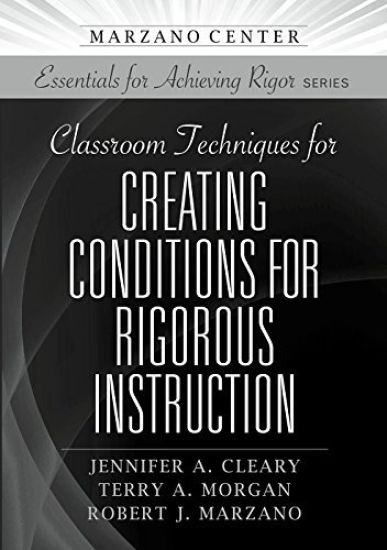
Classroom Techniques for Creating Conditions for Rigorous Instruction

Classroom Techniques for Creating Conditions for Rigorous Instruction

Jennifer A. Cleary; Terry A. Morgan; Robert J. Marzano

Learning Sciences International
2018
nidottu
In today’s classrooms and schools, rigorous instruction and learning don’t just happen by accident. In fact, ensuring rigorous instruction happen consistently, teachers must be willing to pay close attention to their respective learning environments. And that includes having the foresight to plan for the conditions within that learning environment before ever moving on to traditional content planning. Without the appropriate conditions in place, consistent levels of rigorous instruction, learning, and performance are unachievable.Therein lies the practical magic of Classroom Techniques for Creating Conditions for Rigorous Instruction. It speaks to the conditions in the classroom that are required to achieve rigorous instruction, and provides teachers of all grade levels and subjects the strategies to get there, including:Establishing rules and proceduresRecognizing adherence and lack of adherence to rules and proceduresUsing engagement strategies when students are not engagedEstablishing and maintaining effective relationshipsCommunicating high expectations for all studentsWith step-by-step activities for each of its five main strategies, the guide doesn’t just provide useful information, it turns that information into actionable insights and templates for bringing solid ideas to life.
The New Art and Science of Teaching

The New Art and Science of Teaching

Robert J. Marzano

Solution Tree
2018
sidottu
This title is a greatly expanded volume of the original Art and Science of Teaching, offering a competency-based education framework for substantive change based on Dr. Robert Marzano's 50 years of education research. While the previous model focused on teacher outcomes, the new version places focus on student learning outcomes, with research-based instructional strategies teachers can use to help students grasp the information and skills transferred through their instruction. Throughout the book, Marzano details the elements of three overarching categories of teaching, which define what must happen to optimize student learning: students must receive feedback, get meaningful content instruction, and have their basic psychological needs met. Gain research-based instructional strategies and teaching methods that drive student success: Explore instructional strategies that correspond to each of the 43 elements of The New Art and Science of Teaching, which have been carefully designed to maximize student engagement and achievement. Use ten design questions and a general framework to help determine which classroom strategies you should use to foster student learning. Analyze the behavioral evidence that proves the strategies of an element are helping learners reach their peak academic success. Study the state of the modern standards movement and what changes must be made in K-12 education to ensure high levels of learning for all. Download free reproducible scales specific to the elements in The New Art and Science of Teaching. Contents: Chapter 1: Providing and Communicating Clear Learning Goals Chapter 2: Conducting Assessment Chapter 3: Conducting Direct Instruction Lessons Chapter 4: Practicing and Deepening Lessons Chapter 5: Implementing Knowledge Application Lessons Chapter 6: Using Strategies That Appear in All Types of Lessons Chapter 7: Using Engagement Strategies Chapter 8: Implementing Rules and Procedures Chapter 9: Building Relationships Chapter 10: Communicating High Expectations Chapter 11: Making System Changes