
Kirjailija
Robert J. Miller
Kirjat ja teokset yhdessä paikassa: 22 kirjaa, julkaisuja vuosilta 1999-2025, suosituimpien joukossa The Jesus Seminar and Its Critics. Vertaile teosten hintoja ja tarkista saatavuus suomalaisista kirjakaupoista.
Mukana myös kirjoitusasut: Robert J Miller
22 kirjaa
Kirjojen julkaisuhaarukka 1999-2025.

An essential resource for the analytical study of the gospels, The Complete Gospel Parallels goes beyond the standard parallels. This book gives those who study the gospels in English a one-volume compendium of synopses not only for the Gospels of Matthew, Mark, Luke, and John, but also for the Gospels of Thomas and Peter, as well as for a few gospel fragments (the Egerton Gospel, Gospel Oxyrhynchus 1224, as well as the Jewish-Christian Gospels of the Hebrews and the Nazoreans). The Complete Gospel Parallels also includes a synopsis for the reconstructed Q Gospel, which enables the reader both to discern how the text of Q can be derived and how Q was adopted and adapted by Matthew and Luke. The Complete Gospel Parallels features the fresh and vibrant Scholars Version translation, which has been thoroughly revised and fine-tuned to facilitate the precise comparison of parallel passages, using consistent English for the same Greek and different English where the originals vary. The Complete Gospel Parallels lucid translation, its easy-to-use format, and its broad range of gospel materials will enhance and deepen the serious reader s appreciation of early Christian tradition and literature.
Native America, Discovered and Conquered takes a fresh look at American history through the lens of the Doctrine of Discovery—the legal basis that Europeans and Americans used to lay claim to the land of the indigenous peoples they "discovered." Robert J. Miller illustrates how the American colonies used the Doctrine of Discovery against the Indian nations from 1606 forward. Thomas Jefferson used the doctrine to exert American authority in the Louisiana Territory, to win the Pacific Northwest from European rivals, and to "conquer" the Indian nations. In the broader sense, these efforts began with the Founding Fathers and with Thomas Jefferson's Corps of Discovery, and eventually the Doctrine of Discovery became part of American law, as it still is today. Miller shows how Manifest Destiny grew directly out of the legal elements and policies of the Doctrine of Discovery and how Native peoples, whose rights stood in the way of this destiny, were "discovered" and then "conquered." Miller's analysis of the principles of discovery brings a new perspective and valuable insights to the study of Jefferson, Lewis and Clark, the Louisiana Purchase, the Pacific Northwest, American expansionism, and U.S. Indian policy. This Bison Books edition includes a new afterword by the author.

Listening to the Parables of Jesus
Robert W. Funk; Edward F. Beutner; Lane C. McGaughy; Robert J. Miller; Bernard Brandon Scott; Paul Verhoeven
Polebridge Press
2007
nidottu
"What if the purpose or function of a parable is not to instruct but to haunt?" So begins Listening to the Parables of Jesus, edited by Edward F. Beutner, who suggests that, from time to time, even scholars scratch their heads in puzzlement over the yin and yang of Jesus' parables. This concise, well-edited book brings together insights from world-renowned scholars into the interpretation of parables. Lane McGaughy's opening essay provides high fidelity earphones that let readers hear the vivid and distinctive nature of the language of parable. Robert Miller offers an original treatment of two parables from the gospels of Matthew and Thomas, parables that he renames, "The Overpriced Pearl" and "The Treasure of Immorality." With his eye for narrative structure, film Director Paul Verhoeven identifies fault lines in Matthew's version of the Vineyard Laborers and proposes an alternative version in which the first will be first. In his essay on the Leased Vineyard, Brandon Scott demonstrates how rabbinic parables can illuminate the otherwise shadowy nooks and crannies of a dark parable of violence found in Mark's gospel. The final three essays describe the parables globally as artful language events as fulcrums, so to speak, upon which our understanding of the world gets overturned and undermined. According to Robert Funk, Jesus parables are a knothole in the cosmic fence through which we glimpse the world as Jesus saw it. In Listening to the Parables of Jesus, leading scholars of the parables help readers find the knothole. The rest is up to them.

Both Prayed to the Same God is the first book-length, comprehensive study of religion in the Civil War. While much research has focused on religion in a specific context of the civil war, this book provides a needed overview of this vital yet largely forgotten subject of American History. Writing passionately about the subject, Father Robert Miller presents this history in an accessible but scholarly fashion. Beginning with the religious undertones in the lead up to the war and concluding with consequences on religion in the aftermath, Father Miller not only shows us a forgotten aspect of history, but how our current historical situation is not unprecedented.

In this compelling study of the birth and infancy of Jesus, Robert Miller separates fact from fiction in the gospel narratives and relates them to stories about the miraculous births of Israelite heroes and of Greek and Roman sons of God. Born Divine analyzes the Christian claim that the birth and childhood of Jesus fulfilled Old Testament prophecies. The historical and theological dimensions of the virgin birth tradition are discussed with honesty and insight. This wide-ranging book also presents additional infancy gospels from the second century through the Middle Ages.
The pioneering work of The Jesus Seminar has come in for high praise as well as searing denunciation from the press, the clergy, the scholars. Now a veteran member of the Seminar, Robert Miller, examines its agenda and its inner deliberations, dissecting the rationale of the Seminar's historical work and clearly explaining what its findings portend.

Reservation Capitalism: Economic Development in Indian Country supplies the true history, present-day circumstances, and potential future of Native American communities and economics. In this new edition, Robert J. Miller, author of the first edition, teams with fellow Indigenous Peoples law and property expert Adam Crepelle to offer a meticulously edited and thoroughly updated text that addresses newly salient issues such as the fast-growing tribal cannabis industry, the significant developments within reservation-based Community Development Financial Institutions, and similarly significant developments with low-income tax credits. This edition also includes two new chapters on emerging opportunities in the clean energy sector and e-commerce, respectively. Ultimately, these additions shows how, after Covid-19, tribal communities are moving beyond their formerly vulnerable economies predicated almost exclusively on gaming foster sustainable economic development on reservations in order to improve standards of living and sustain their self-sufficiency and self-determination.
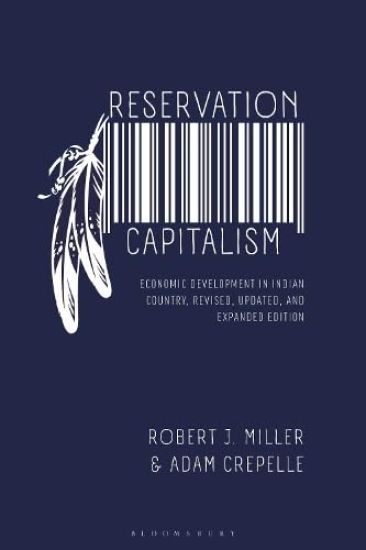
Reservation Capitalism: Economic Development in Indian Country supplies the true history, present-day circumstances, and potential future of Native American communities and economics. In this new edition, Robert J. Miller, author of the first edition, teams with fellow Indigenous Peoples law and property expert Adam Crepelle to offer a meticulously edited and thoroughly updated text that addresses newly salient issues such as the fast-growing tribal cannabis industry, the significant developments within reservation-based Community Development Financial Institutions, and similarly significant developments with low-income tax credits. This edition also includes two new chapters on emerging opportunities in the clean energy sector and e-commerce, respectively. Ultimately, these additions shows how, after Covid-19, tribal communities are moving beyond their formerly vulnerable economies predicated almost exclusively on gaming foster sustainable economic development on reservations in order to improve standards of living and sustain their self-sufficiency and self-determination.

Faith of the Fathers
Robert J. Miller; James M. McPherson
UNIVERSITY OF NOTRE DAME PRESS
2025
sidottu
Faith of the Fathers provides a captivating collective biography of the Catholic priests who served in America's most deadly war. Faith of the Fathers brings to light the forgotten stories of courageous chaplains whose commitments to faith and to men at war during America's most divisive conflict have long been overlooked. The Reverend Robert J. Miller provides a comprehensive and compelling portrait of the 126 priest-chaplains who served during the Civil War and reflects on the importance of religion and faith in nineteenth-century America. As a culture of death and horror raged around them, Catholic priest-chaplains met the needs of soldiers and officers alike, providing years of faithful and dedicated service in hospitals, prisons, battlefields, and camps. Whether ministering to Union or Confederate soldiers (or both), in eastern or western theaters, in battle or camp, these priests risked their lives to bring faith and hope to one of the darkest and most devastating periods of American history.
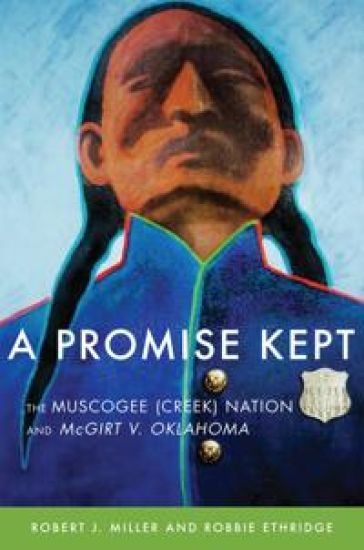
“At the end of the Trail of Tears there was a promise,” U.S. Supreme Court Justice Neil Gorsuch wrote in the decision issued on July 9, 2020, in the case of McGirt v. Oklahoma. And that promise, made in treaties between the United States and the Muscogee (Creek) Nation more than 150 years earlier, would finally be kept. With the Court’s ruling, the full extent of the Muscogee (Creek) Reservation was reaffirmed—meaning that 3.25 million acres of land in Oklahoma, including part of the city of Tulsa, were recognized once again as “Indian Country” as defined by federal law. A Promise Kept explores the circumstances and implications of McGirt v. Oklahoma, likely the most significant Indian law case in well over 100 years. Combining legal analysis and historical context, this book gives an in-depth, accessible account of how the case unfolded and what it might mean for Oklahomans, the Muscogee (Creek) Nation, and other tribes throughout the United States. For context, Robbie Ethridge traces the long history of the Muscogee (Creek) Nation from its inception in present-day Georgia and Alabama in the seventeenth century; through the tribe’s rise to regional prominence in the colonial era, the tumultuous years of Indian Removal, and the Civil War and allotment; and into its resurgence in Oklahoma in the twentieth and twenty-first centuries. Against this historical background, Robert J. Miller considers McGirt v. Oklahoma, examining important related cases, precedents that informed the Court’s decision, and future ramifications—legal, civil, regulatory, and practical—for the Muscogee (Creek) Nation, federal Indian law, the United States, the state of Oklahoma, and Indian nations in Oklahoma and elsewhere. Their work clarifies the stakes of a decision that, while long overdue, raises numerous complex issues profoundly affecting federal, state, and tribal relations and law—and will continue to do so for the foreseeable future.

“At the end of the Trail of Tears there was a promise,” U.S. Supreme Court Justice Neil Gorsuch wrote in the decision issued on July 9, 2020, in the case of McGirt v. Oklahoma. And that promise, made in treaties between the United States and the Muscogee (Creek) Nation more than 150 years earlier, would finally be kept. With the Court’s ruling, the full extent of the Muscogee (Creek) Reservation was reaffirmed—meaning that 3.25 million acres of land in Oklahoma, including part of the city of Tulsa, were recognized once again as “Indian Country” as defined by federal law. A Promise Kept explores the circumstances and implications of McGirt v. Oklahoma, likely the most significant Indian law case in well over 100 years. Combining legal analysis and historical context, this book gives an in-depth, accessible account of how the case unfolded and what it might mean for Oklahomans, the Muscogee (Creek) Nation, and other tribes throughout the United States. For context, Robbie Ethridge traces the long history of the Muscogee (Creek) Nation from its inception in present-day Georgia and Alabama in the seventeenth century; through the tribe’s rise to regional prominence in the colonial era, the tumultuous years of Indian Removal, and the Civil War and allotment; and into its resurgence in Oklahoma in the twentieth and twenty-first centuries. Against this historical background, Robert J. Miller considers McGirt v. Oklahoma, examining important related cases, precedents that informed the Court’s decision, and future ramifications—legal, civil, regulatory, and practical—for the Muscogee (Creek) Nation, federal Indian law, the United States, the state of Oklahoma, and Indian nations in Oklahoma and elsewhere. Their work clarifies the stakes of a decision that, while long overdue, raises numerous complex issues profoundly affecting federal, state, and tribal relations and law—and will continue to do so for the foreseeable future.

Storm Warrior Vol 34: The Winner's Circle
Robert J. Miller; Wl Cox
Createspace Independent Publishing Platform
2017
nidottu

American Indian Identity
Se-Ah-Dom Edmo; Robert J. Miller; jessie Young; Alan Parker
Praeger Publishers Inc
2016
sidottu
This single-volume book contends that reshaping the paradigm of American Indian identity, blood quantum, and racial distinctions can positively impact the future of the Indian community within America and America itself.This academic compendium examines the complexities associated with Indian identity in North America, including the various social, political, and legal issues impacting Indian expression in different periods; the European influence on how self-governing tribal communities define the rights of citizenship within their own communities; and the effect of Indian mascots, Thanksgiving, and other cultural appropriations taking place within American society on the Indian community. The book looks at and proposes solutions to the controversies surrounding the Indian tribal nations and their people.The authors—all leading advocates of Indian progress—argue that tribal governments and communities should reconsider the notion of what comprises Indian identity, and in doing so, they compare and contrast how indigenous people around the world define themselves and their communities. Chapters address complex questions under the discourse of Indian law, history, philosophy, education, political science, anthropology, art, psychology, and civil rights. Topics covered in depth include blood quantum, racial distinctions, First Nations, and tribal citizenship.
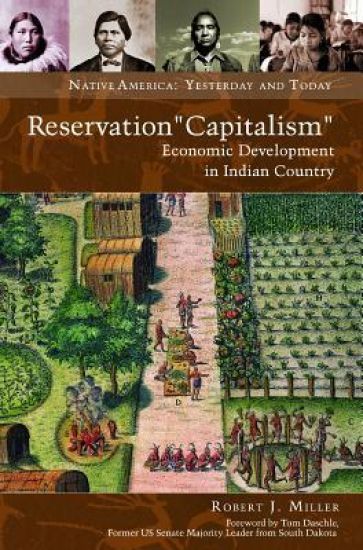
This unique book investigates the history and future of American Indian economic activities and explains why tribal governments and reservation communities must focus on creating sustainable privately and tribally owned businesses if reservation communities and tribal cultures are to continue to exist.Native American peoples suffer from health, educational, infrastructure, and social deficiencies that most Americans who live outside of tribal lands are wholly unaware of and would not tolerate. By creating sustainable economic development on reservations, however, gradual, long-term change can be effected, thereby improving the standard of living and sustaining tribal cultures.Reservation "Capitalism": Economic Development in Indian Country supplies the true history, present-day circumstances, and potential future of Indian communities and economics. It provides key background information on indigenous economic systems and property rights regimes in what is now the United States, and explains how the vast majority of native lands and natural resource assets were lost. The book focuses on strategies for establishing privately and publicly owned economic activities on reservations and creating economies where reservation inhabitants can be employed, live, and buy the necessities of life, thereby enabling complete tribal self-sufficiency and self-determination.

Discovering Indigenous Lands
Robert J. Miller; Jacinta Ruru; Larissa Behrendt; Tracey Lindberg
Oxford University Press
2012
nidottu
This book presents new material and shines fresh light on the under-explored historical and legal evidence about the use of the doctrine of discovery in Australia, Canada, New Zealand, and the United States. North America, New Zealand, and Australia were colonised by England under an international legal principle that is known today as the doctrine of discovery. When Europeans set out to explore and exploit new lands in the fifteenth through to the twentieth centuries, they justified their sovereign and property claims over these territories and the Indigenous peoples with the discovery doctrine. This legal principle was justified by religious and ethnocentric ideas of European and Christian superiority over the other cultures, religions, and races of the world. The doctrine provided that newly-arrived Europeans automatically acquired property rights in the lands of Indigenous peoples and gained political and commercial rights over the inhabitants. The English colonial governments and colonists in North America, New Zealand, and Australia all utilised this doctrine, and still use it today to assert legal rights to Indigenous lands and to assert control over Indigenous peoples. Written by Indigenous legal academics - an American Indian from the Eastern Shawnee Tribe, a New Zealand Maori (Ngati Rawkawa and Ngati Ranginui), an Aboriginal Australian (Eualayai/Gammilaroi), and a Cree (Neheyiwak) in the country now known as Canada - Discovering Indigenous Lands provides a unique insight into the insidious historical and contemporary application of the doctrine of discovery.

Discovering Indigenous Lands
Robert J. Miller; Jacinta Ruru; Larissa Behrendt; Tracey Lindberg
Oxford University Press
2010
sidottu
This book presents new material and shines fresh light on the under-explored historical and legal evidence about the use of the doctrine of discovery in Australia, Canada, New Zealand and the United States. North America, New Zealand and Australia were colonised by England under an international legal principle that is known today as the doctrine of discovery. When Europeans set out to explore and exploit new lands in the fifteenth through to the twentieth centuries, they justified their sovereign and property claims over these territories and the indigenous peoples with the discovery doctrine. This legal principle was justified by religious and ethnocentric ideas of European and Christian superiority over the other cultures, religions, and races of the world. The doctrine provided that newly-arrived Europeans automatically acquired property rights in the lands of indigenous peoples and gained political and commercial rights over the inhabitants. The English colonial governments and colonists in North America, New Zealand and Australia all utilised this doctrine, and still use it today to assert legal rights to indigenous lands and to assert control over indigenous peoples. Written by indigenous legal academics - an American Indian from the Eastern Shawnee Tribe, a New Zealand Maori (Ngati Rawkawa and Ngai Te Rangi), an Indigenous Australian, and a Cree (Neheyiwak) in the country now known as Canada, Discovering Indigenous Lands provides a unique insight into the insidious historical and contemporary application of the doctrine of discovery.

Both Prayed to the Same God is the first book-length, comprehensive study of religion in the Civil War. While much research has focused on religion in a specific context of the civil war, this book provides a needed overview of this vital yet largely forgotten subject of American History. Writing passionately about the subject, Father Robert Miller presents this history in an accessible but scholarly fashion. Beginning with the religious undertones in the lead up to the war and concluding with consequences on religion in the aftermath, Father Miller not only shows us a forgotten aspect of history, but how our current historical situation is not unprecedented.

What is the future of the Christian tradition as it confronts the challenges and opportunities of the global age? That question, addressed by authors from around the globe, leads in turn to more questions. What elements of a traditional Christian faith can be carried forward in an authentic contemporary faith: The Bible as Sacred Scripture? Life after death? Sin and guilt? Reward and punishment? How do we make an earth-centered vision the heart of a faith for the second axial age? And many more. Contributors include: John Shelby Spong, Episcopal Bishop Emeritus of Newark, New Jersey; Robert W. Funk, Founder of the Jesus Seminar; Eugenie Scott, Director of the Center for Science Education; Richard Holloway, Bishop of Edinburgh & Primus of the Scottish Episcopal Church, Retired; Lloyd Geering, Emeritus Professor of Victoria University of Wellington, New Zealand; Don Cupitt, former Dean of Emmanuel College, Cambridge, England; Anne Primavesi, Fellow of the Centre for the Interdisciplinary Study of Religion, Birkbeck College, University of London; and Fellows of the Jesus Seminar.