Kirjojen hintavertailu. Mukana 12 595 353 kirjaa ja 12 kauppaa.

Kirjailija

Robert J. Sharer

Kirjat ja teokset yhdessä paikassa: 7 kirjaa, julkaisuja vuosilta 1992-2023, suosituimpien joukossa Daily Life in Maya Civilization. Vertaile teosten hintoja ja tarkista saatavuus suomalaisista kirjakaupoista.

7 kirjaa

Kirjojen julkaisuhaarukka 1992-2023.

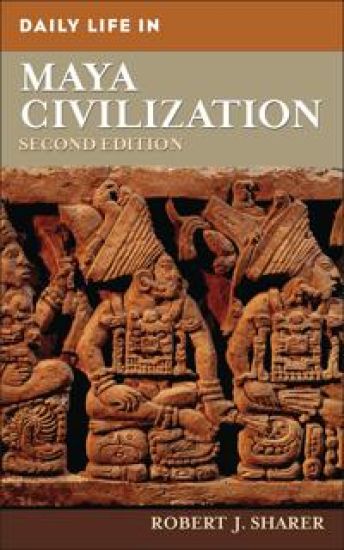
Daily Life in Maya Civilization

Daily Life in Maya Civilization

Robert J. Sharer

BLOOMSBURY PUBLISHING PLC
2023
nidottu
Experience daily life in Maya civilization, from its earliest beginnings to the Spanish conquest in the 16th century. Narrative chapters describe Mayan political life, economy, social structure, religion, writing, warfare, and scientific methods. Readers will explore the Mayan calendar, counting system, hunting and gathering methods, language, and family roles and relationships. A revised and expanded edition based on the latest archaeological research, this volume offers new interpretations and corrects popular misconceptions, and shows how the Maya adapted to their environment and preserved their culture and language over thousands of years. Over 60 photos and illustrations, several of new archaeological sites, enhance the material, and an expanded resource center bibliography includes web sites and DVDs for further study. The closing chapter discusses what Maya civilization means for us today and what we can learn from Maya achievements and failures. A first-stop reference source for any student of Latin American and Native American history and culture.
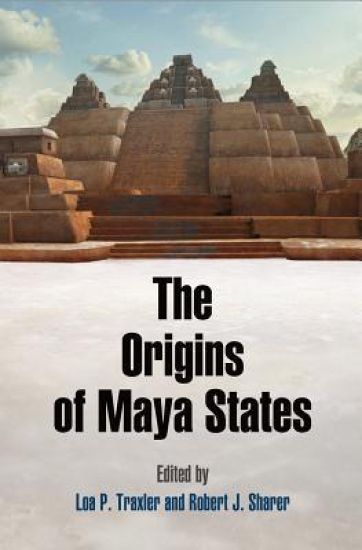
The Origins of Maya States

The Origins of Maya States

Loa P. Traxler; Robert J. Sharer

University of Pennsylvania Museum of Archaeology Anthropology
2017
sidottu
The Pre-Columbian Maya were organized into a series of independent kingdoms or polities rather than unified into a single state. The vast majority of studies of Maya states focus on the apogee of their development in the classic period, ca. 250-850 C.E. As a result, Maya states are defined according to the specific political structures that characterized classic period lowland Maya society. The Origins of Maya States is the first study in over 30 years to examine the origins and development of these states specifically during the preceding preclassic period, ca. 1000 B.C.E. to 250 C.E. Attempts to understand the origins of Maya states cannot escape the limitations of archaeological data, and this is complicated by both the variability of Maya states in time and space and the interplay between internal development and external impacts. To mitigate these factors, editors Loa P. Traxler and Robert J. Sharer assemble a collection of essays that combines an examination of topical issues with regional perspectives from both the Maya area and neighboring Mesoamerican regions to highlight the role of interregional interaction in the evolution of Maya states. Topics covered include material signatures for the development of Maya states, evaluations of extant models for the emergence of Maya states, and advancement of new models based on recent archaeological data. Contributors address the development of complexity during the preclassic era within the Maya regions of the Pacific coast, highlands, and lowlands and explore preclassic economic, social, political, and ideological systems that provide a developmental context for the origins of Maya states. Contributors: Marcello A. Canuto, John E. Clark, Ann Cyphers, Francisco Estrada-Belli, David C. Grove, Norman Hammond, Richard D. Hansen, Eleanor King, Michael Love, Simon Martin, Astrid Runggaldier, Robert Sharer, Loa Traxler.
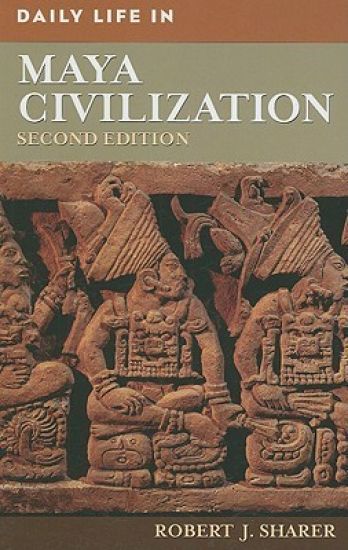
Daily Life in Maya Civilization

Daily Life in Maya Civilization

Robert J. Sharer

Greenwood Press
2009
sidottu
Experience daily life in Maya civilization, from its earliest beginnings to the Spanish conquest in the 16th century. Narrative chapters describe Mayan political life, economy, social structure, religion, writing, warfare, and scientific methods. Readers will explore the Mayan calendar, counting system, hunting and gathering methods, language, and family roles and relationships. A revised and expanded edition based on the latest archaeological research, this volume offers new interpretations and corrects popular misconceptions, and shows how the Maya adapted to their environment and preserved their culture and language over thousands of years. Over 60 photos and illustrations, several of new archaeological sites, enhance the material, and an expanded resource center bibliography includes web sites and DVDs for further study. The closing chapter discusses what Maya civilization means for us today and what we can learn from Maya achievements and failures. A first-stop reference source for any student of Latin American and Native American history and culture.
The Ancient Maya, 6th Edition

The Ancient Maya, 6th Edition

Robert J. Sharer; Loa P. Traxler

Stanford University Press
2005
sidottu
This book traces the evolution of Maya civilization through the Pre-Columbian era, a span of some 2,500 years from the origins of complex society within Mesoamerica to the end of the Pre-Columbian world with the Spanish Conquest in the 16th century. The sixth edition presents new archaeological evidence and historical studies and offers the most extensive revisions of this classic work to date. The result is the most thorough and incisive study of the origins and development of ancient Maya civilization ever published.
The Ancient Maya, 6th Edition

The Ancient Maya, 6th Edition

Robert J. Sharer; Loa P. Traxler

Stanford University Press
2005
pokkari
This book traces the evolution of Maya civilization through the Pre-Columbian era, a span of some 2,500 years from the origins of complex society within Mesoamerica to the end of the Pre-Columbian world with the Spanish Conquest in the 16th century. The sixth edition presents new archaeological evidence and historical studies and offers the most extensive revisions of this classic work to date. The result is the most thorough and incisive study of the origins and development of ancient Maya civilization ever published.
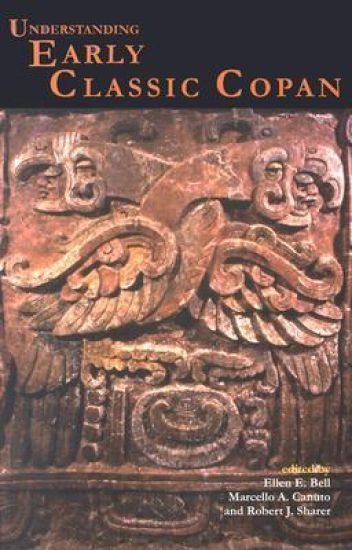
Understanding Early Classic Copan

Understanding Early Classic Copan

Ellen E. Bell; Marcello A. Canuto; Robert J. Sharer

University of Pennsylvania Press
2003
sidottu
The first volume to focus on the Early Classic context (A.D. 400-650) of the Maya city of CopAn combines and synthesizes many different research methods and disciplines, interpreting data that contradict, enhance, and supplement previous work. Its methods are conjunctive, including and integrating research in archaeological surveys and excavations with studies in art, hieroglyphics, history, forensic/biological anthropology, and chemical analyses of teeth, bones, and other materials. The book is not just multidisciplinary but interdisciplinary, linking, for example, the architecture of monuments with epigraphy, language concepts, and human events. Until recently, scholars speculated as to whether K'inich Yax K'uk' Mo' was an alleged or fictitious founding father of the CopAn dynasty. This work presents new information on him and his accomplishments, showing how we almost certainly now have his skeleton with its parry fractures from the battlefield or the ball court, along with abundant descriptions of this and other burials.
New Theories on the Ancient Maya

New Theories on the Ancient Maya

Elin C. Danien; Robert J. Sharer

University of Pennsylvania Press
1992
sidottu
Papers from the 1987 Maya Weekend conference at the University of Pennsylvania Museum present current views of Maya culture and language. Also included is an article by George Stuart summarizing the history of the study of Maya hieroglyphs and the fascinating scholars and laypersons who have helped bring about their decipherment.