Kirjojen hintavertailu. Mukana 12 489 803 kirjaa ja 12 kauppaa.

Kirjailija

Robert J. Shiller

Kirjat ja teokset yhdessä paikassa: 20 kirjaa, julkaisuja vuosilta 1992-2021, suosituimpien joukossa The Squam Lake Report. Vertaile teosten hintoja ja tarkista saatavuus suomalaisista kirjakaupoista.

20 kirjaa

Kirjojen julkaisuhaarukka 1992-2021.

The Squam Lake Report

The Squam Lake Report

Kenneth R. French; Martin N. Baily; John Y. Campbell; John H. Cochrane; Douglas W. Diamond; Darrell Duffie; Anil K. Kashyap; Frederic S. Mishkin; Raghuram G. Rajan; David S. Scharfstein; Robert J. Shiller; Hyun Song Shin; Matthew J. Slaughter; Jeremy C. Stein; René M. Stulz

Princeton University Press
2010
sidottu
In the fall of 2008, fifteen of the world's leading economists--representing the broadest spectrum of economic opinion--gathered at New Hampshire's Squam Lake. Their goal: the mapping of a long-term plan for financial regulation reform. The Squam Lake Report distills the wealth of insights from the ongoing collaboration that began at these meetings and provides a revelatory, unified, and coherent voice for fixing our troubled and damaged financial markets. As an alternative to the patchwork solutions and ideologically charged proposals that have dominated other discussions, the Squam Lake group sets forth a clear nonpartisan plan of action to transform the regulation of financial markets--not just for the current climate--but for generations to come. Arguing that there has been a conflict between financial institutions and society, these diverse experts present sound and transparent prescriptions to reduce this divide. They look at the critical holes in the existing regulatory framework for handling complex financial institutions, retirement savings, and credit default swaps. They offer ideas for new financial instruments designed to recapitalize banks without burdening taxpayers. To lower the risk that large banks will fail, the authors call for higher capital requirements as well as a systemic regulator who is part of the central bank. They collectively analyze where the financial system has failed, and how these weak points should be overhauled. Combining an immense depth of academic, private sector, and public policy experience, The Squam Lake Report contains urgent recommendations that will positively influence everyone's financial well-being--all who care about the world's economic health need to pay attention.

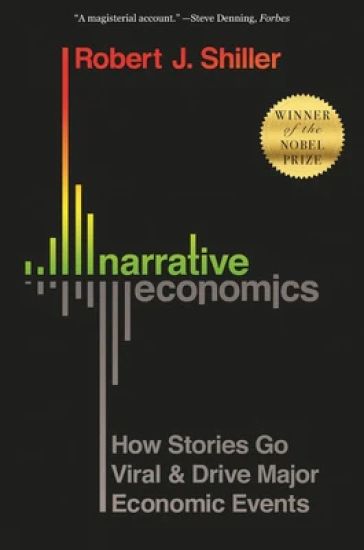
Narrative Economics

Narrative Economics

Robert J. Shiller

Princeton University Press
2020
pokkari
From Nobel Prize–winning economist and New York Times bestselling author Robert Shiller, a groundbreaking account of how stories help drive economic events—and why financial panics can spread like epidemic virusesStories people tell—about financial confidence or panic, housing booms, or Bitcoin—can go viral and powerfully affect economies, but such narratives have traditionally been ignored in economics and finance because they seem anecdotal and unscientific. In this groundbreaking book, Robert Shiller explains why we ignore these stories at our peril—and how we can begin to take them seriously. Using a rich array of examples and data, Shiller argues that studying popular stories that influence individual and collective economic behavior—what he calls "narrative economics"—may vastly improve our ability to predict, prepare for, and lessen the damage of financial crises and other major economic events. The result is nothing less than a new way to think about the economy, economic change, and economics. In a new preface, Shiller reflects on some of the challenges facing narrative economics, discusses the connection between disease epidemics and economic epidemics, and suggests why epidemiology may hold lessons for fighting economic contagions.
Narrative Economics

Narrative Economics

Robert J. Shiller

PRINCETON UNIVERSITY PRESS
2019
sidottu
From Nobel Prize–winning economist and New York Times bestselling author Robert Shiller, a groundbreaking account of how stories help drive economic events—and why financial panics can spread like epidemic virusesIn a world in which internet troll farms attempt to influence foreign elections, can we afford to ignore the power of viral stories to affect economies? In this groundbreaking book, Nobel Prize–winning economist and New York Times bestselling author Robert Shiller offers a new way to think about the economy and economic change. Using a rich array of historical examples and data, Shiller argues that studying popular stories that affect individual and collective economic behavior—what he calls "narrative economics"—has the potential to vastly improve our ability to predict, prepare for, and lessen the damage of financial crises, recessions, depressions, and other major economic events.Spread through the public in the form of popular stories, ideas can go viral and move markets—whether it's the belief that tech stocks can only go up, that housing prices never fall, or that some firms are too big to fail. Whether true or false, stories like these—transmitted by word of mouth, by the news media, and increasingly by social media—drive the economy by driving our decisions about how and where to invest, how much to spend and save, and more. But despite the obvious importance of such stories, most economists have paid little attention to them. Narrative Economics sets out to change that by laying the foundation for a way of understanding how stories help propel economic events that have had led to war, mass unemployment, and increased inequality.The stories people tell—about economic confidence or panic, housing booms, the American dream, or Bitcoin—affect economic outcomes. Narrative Economics explains how we can begin to take these stories seriously. It may be Robert Shiller's most important book to date.
Phishing for Phools

Phishing for Phools

George A. Akerlof; Robert J. Shiller

Princeton University Press
2016
pokkari
Ever since Adam Smith, the central teaching of economics has been that free markets provide us with material well-being, as if by an invisible hand. In Phishing for Phools, Nobel Prize-winning economists George Akerlof and Robert Shiller deliver a fundamental challenge to this insight, arguing that markets harm as well as help us. As long as there is profit to be made, sellers will systematically exploit our psychological weaknesses and our ignorance through manipulation and deception. Rather than being essentially benign and always creating the greater good, markets are inherently filled with tricks and traps and will "phish" us as "phools." Phishing for Phools therefore strikes a radically new direction in economics, based on the intuitive idea that markets both give and take away. Akerlof and Shiller bring this idea to life through dozens of stories that show how phishing affects everyone, in almost every walk of life. We spend our money up to the limit, and then worry about how to pay the next month's bills. The financial system soars, then crashes. We are attracted, more than we know, by advertising. Our political system is distorted by money. We pay too much for gym memberships, cars, houses, and credit cards. Drug companies ingeniously market pharmaceuticals that do us little good, and sometimes are downright dangerous. Phishing for Phools explores the central role of manipulation and deception in fascinating detail in each of these areas and many more. It thereby explains a paradox: why, at a time when we are better off than ever before in history, all too many of us are leading lives of quiet desperation. At the same time, the book tells stories of individuals who have stood against economic trickery--and how it can be reduced through greater knowledge, reform, and regulation.
Irrational Exuberance

Irrational Exuberance

Robert J. Shiller

Princeton University Press
2016
pokkari
In this revised, updated, and expanded edition of his New York Times bestseller, Nobel Prize-winning economist Robert Shiller, who warned of both the tech and housing bubbles, cautions that signs of irrational exuberance among investors have only increased since the 2008-9 financial crisis. With high stock and bond prices and the rising cost of housing, the post-subprime boom may well turn out to be another illustration of Shiller's influential argument that psychologically driven volatility is an inherent characteristic of all asset markets. In other words, Irrational Exuberance is as relevant as ever. Previous editions covered the stock and housing markets--and famously predicted their crashes. This edition expands its coverage to include the bond market, so that the book now addresses all of the major investment markets. It also includes updated data throughout, as well as Shiller's 2013 Nobel Prize lecture, which places the book in broader context. In addition to diagnosing the causes of asset bubbles, Irrational Exuberance recommends urgent policy changes to lessen their likelihood and severity--and suggests ways that individuals can decrease their risk before the next bubble bursts. No one whose future depends on a retirement account, a house, or other investments can afford not to read this book.
Phishing for Phools

Phishing for Phools

George A. Akerlof; Robert J. Shiller

PRINCETON UNIVERSITY PRESS
2015
sidottu
Ever since Adam Smith, the central teaching of economics has been that free markets provide us with material well-being, as if by an invisible hand. In Phishing for Phools, Nobel Prize-winning economists George Akerlof and Robert Shiller deliver a fundamental challenge to this insight, arguing that markets harm as well as help us. As long as there is profit to be made, sellers will systematically exploit our psychological weaknesses and our ignorance through manipulation and deception. Rather than being essentially benign and always creating the greater good, markets are inherently filled with tricks and traps and will "phish" us as "phools." Phishing for Phools therefore strikes a radically new direction in economics, based on the intuitive idea that markets both give and take away. Akerlof and Shiller bring this idea to life through dozens of stories that show how phishing affects everyone, in almost every walk of life. We spend our money up to the limit, and then worry about how to pay the next month's bills. The financial system soars, then crashes. We are attracted, more than we know, by advertising. Our political system is distorted by money. We pay too much for gym memberships, cars, houses, and credit cards. Drug companies ingeniously market pharmaceuticals that do us little good, and sometimes are downright dangerous. Phishing for Phools explores the central role of manipulation and deception in fascinating detail in each of these areas and many more. It thereby explains a paradox: why, at a time when we are better off than ever before in history, all too many of us are leading lives of quiet desperation. At the same time, the book tells stories of individuals who have stood against economic trickery--and how it can be reduced through greater knowledge, reform, and regulation.
Finance and the Good Society

Finance and the Good Society

Robert J. Shiller

Princeton University Press
2013
pokkari
The reputation of the financial industry could hardly be worse than it is today in the painful aftermath of the 2008 financial crisis. New York Times best-selling economist Robert Shiller is no apologist for the sins of finance--he is probably the only person to have predicted both the stock market bubble of 2000 and the real estate bubble that led up to the subprime mortgage meltdown. But in this important and timely book, Shiller argues that, rather than condemning finance, we need to reclaim it for the common good. He makes a powerful case for recognizing that finance, far from being a parasite on society, is one of the most powerful tools we have for solving our common problems and increasing the general well-being. We need more financial innovation--not less--and finance should play a larger role in helping society achieve its goals. Challenging the public and its leaders to rethink finance and its role in society, Shiller argues that finance should be defined not merely as the manipulation of money or the management of risk but as the stewardship of society's assets. He explains how people in financial careers--from CEO, investment manager, and banker to insurer, lawyer, and regulator--can and do manage, protect, and increase these assets. He describes how finance has historically contributed to the good of society through inventions such as insurance, mortgages, savings accounts, and pensions, and argues that we need to envision new ways to rechannel financial creativity to benefit society as a whole. Ultimately, Shiller shows how society can once again harness the power of finance for the greater good.
Reforming U.S. Financial Markets

Reforming U.S. Financial Markets

Randall S. Kroszner; Robert J. Shiller

MIT Press
2013
pokkari
Two top economists outline distinctive approaches to post-crisis financial reform.Over the last few years, the financial sector has experienced its worst crisis since the 1930s. The collapse of major firms, the decline in asset values, the interruption of credit flows, the loss of confidence in firms and credit market instruments, the intervention by governments and central banks: all were extraordinary in scale and scope. In this book, leading economists Randall Kroszner and Robert Shiller discuss what the United States should do to prevent another such financial meltdown. Their discussion goes beyond the nuts and bolts of legislative and regulatory fixes to consider fundamental changes in our financial arrangements. Kroszner and Shiller offer two distinctive approaches to financial reform, with Kroszner providing a systematic analysis of regulatory gaps and Shiller addressing the broader concerns of democratizing and humanizing finance. After brief discussions by four commentators (Benjamin M. Friedman, George G. Kaufman, Robert C. Pozen, and Hal S. Scott), Kroszner and Shiller each offer a response to the other's proposals, creating a fruitful dialogue between two major figures in the field.
The Subprime Solution

The Subprime Solution

Robert J. Shiller

Princeton University Press
2012
pokkari
The subprime mortgage crisis has already wreaked havoc on the lives of millions of people and now it threatens to derail the U.S. economy and economies around the world. In this trenchant book, best-selling economist Robert Shiller reveals the origins of this crisis and puts forward bold measures to solve it. He calls for an aggressive response--a restructuring of the institutional foundations of the financial system that will not only allow people once again to buy and sell homes with confidence, but will create the conditions for greater prosperity in America and throughout the deeply interconnected world economy. Shiller blames the subprime crisis on the irrational exuberance that drove the economy's two most recent bubbles--in stocks in the 1990s and in housing between 2000 and 2007. He shows how these bubbles led to the dangerous overextension of credit now resulting in foreclosures, bankruptcies, and write-offs, as well as a global credit crunch. To restore confidence in the markets, Shiller argues, bailouts are needed in the short run. But he insists that these bailouts must be targeted at low-income victims of subprime deals. In the longer term, the subprime solution will require leaders to revamp the financial framework by deploying an ambitious package of initiatives to inhibit the formation of bubbles and limit risks, including better financial information; simplified legal contracts and regulations; expanded markets for managing risks; home equity insurance policies; income-linked home loans; and new measures to protect consumers against hidden inflationary effects. This powerful book is essential reading for anyone who wants to understand how we got into the subprime mess--and how we can get out. In a new preface to this powerful book, Shiller discusses the development of the crisis in relation to the ideas presented in The Subprime Solution.
Finance and the Good Society

Finance and the Good Society

Robert J. Shiller

Princeton University Press
2012
sidottu
The reputation of the financial industry could hardly be worse than it is today in the painful aftermath of the 2008 financial crisis. "New York Times" best-selling economist Robert Shiller is no apologist for the sins of finance - he is probably the only person to have predicted both the stock market bubble of 2000 and the real estate bubble that led up to the subprime mortgage meltdown. But in this important and timely book, Shiller argues that, rather than condemning finance, we need to reclaim it for the common good. He makes a powerful case for recognizing that finance, far from being a parasite on society, is one of the most powerful tools we have for solving our common problems and increasing the general well-being. We need more financial innovation - not less - and finance should play a larger role in helping society achieve its goals. Challenging the public and its leaders to rethink finance and its role in society, Shiller argues that finance should be defined not merely as the manipulation of money or the management of risk but as the stewardship of society's assets. He explains how people in financial careers - from CEO, investment manager, and banker to insurer, lawyer, and regulator - can and do manage, protect, and increase these assets. He describes how finance has historically contributed to the good of society through inventions such as insurance, mortgages, savings accounts, and pensions, and argues that we need to envision new ways to rechannel financial creativity to benefit society as a whole. Ultimately, Shiller shows how society can once again harness the power of finance for the greater good.
Animal Spirits

Animal Spirits

George A. Akerlof; Robert J. Shiller

Princeton University Press
2010
pokkari
The global financial crisis has made it painfully clear that powerful psychological forces are imperiling the wealth of nations today. From blind faith in ever-rising housing prices to plummeting confidence in capital markets, "animal spirits" are driving financial events worldwide. In this book, acclaimed economists George Akerlof and Robert Shiller challenge the economic wisdom that got us into this mess, and put forward a bold new vision that will transform economics and restore prosperity. Akerlof and Shiller reassert the necessity of an active government role in economic policymaking by recovering the idea of animal spirits, a term John Maynard Keynes used to describe the gloom and despondence that led to the Great Depression and the changing psychology that accompanied recovery. Like Keynes, Akerlof and Shiller know that managing these animal spirits requires the steady hand of government--simply allowing markets to work won't do it. In rebuilding the case for a more robust, behaviorally informed Keynesianism, they detail the most pervasive effects of animal spirits in contemporary economic life--such as confidence, fear, bad faith, corruption, a concern for fairness, and the stories we tell ourselves about our economic fortunes--and show how Reaganomics, Thatcherism, and the rational expectations revolution failed to account for them. Animal Spirits offers a road map for reversing the financial misfortunes besetting us today. Read it and learn how leaders can channel animal spirits--the powerful forces of human psychology that are afoot in the world economy today. In a new preface, they describe why our economic troubles may linger for some time--unless we are prepared to take further, decisive action.
Too Big to Save? How to Fix the U.S. Financial System

Too Big to Save? How to Fix the U.S. Financial System

Robert Pozen; Robert J. Shiller

John Wiley Sons Inc
2009
sidottu
Industry luminary Robert Pozen offers his insights on the future of U.S. finance The recent credit crisis and the resulting bailout program are unprecedented events in the financial industry. While it's important to understand what got us here, it's even more important to consider how we should get out. While there is little question that immediate action was required to stabilize the situation, it is now time to look for a long-term plan to reform the United States financial industry. That is where Bob Pozen comes in. Perhaps more than anyone in the industry, Pozen commands the respect and attention of the public and private sector. In this timely guide, he outlines his vision for the new financial future and provides actionable advice along the way. To Pozen, there are four high-priority problems that must be addressed, and this book puts them in perspective Analyzes alternative models for government stakes in banksRecommends a new board structure for large financial institutionsExamines the importance of broader Fed jurisdiction over systemic risksProposes a way to revive the securitization of loans With Too Big to Save, you'll learn the likely future of the finance industry and understand why changes have to be made.
Animal Spirits

Animal Spirits

George A. Akerlof; Robert J. Shiller

PRINCETON UNIVERSITY PRESS
2009
sidottu
The global financial crisis has made it painfully clear that powerful psychological forces are imperiling the wealth of nations today. From blind faith in ever-rising housing prices to plummeting confidence in capital markets, "animal spirits" are driving financial events worldwide. In this book, acclaimed economists George Akerlof and Robert Shiller challenge the economic wisdom that got us into this mess, and put forward a bold new vision that will transform economics and restore prosperity. Akerlof and Shiller reassert the necessity of an active government role in economic policymaking by recovering the idea of animal spirits, a term John Maynard Keynes used to describe the gloom and despondence that led to the Great Depression and the changing psychology that accompanied recovery. Like Keynes, Akerlof and Shiller know that managing these animal spirits requires the steady hand of government--simply allowing markets to work won't do it. In rebuilding the case for a more robust, behaviorally informed Keynesianism, they detail the most pervasive effects of animal spirits in contemporary economic life--such as confidence, fear, bad faith, corruption, a concern for fairness, and the stories we tell ourselves about our economic fortunes--and show how Reaganomics, Thatcherism, and the rational expectations revolution failed to account for them. Animal Spirits offers a road map for reversing the financial misfortunes besetting us today. Read it and learn how leaders can channel animal spirits--the powerful forces of human psychology that are afoot in the world economy today.
The Subprime Solution

The Subprime Solution

Robert J. Shiller

Princeton University Press
2008
sidottu
The subprime mortgage crisis has already wreaked havoc on the lives of millions of people and now it threatens to derail the U.S. economy and economies around the world. In this trenchant book, best-selling economist Robert Shiller reveals the origins of this crisis and puts forward bold measures to solve it. He calls for an aggressive response--a restructuring of the institutional foundations of the financial system that will not only allow people once again to buy and sell homes with confidence, but will create the conditions for greater prosperity in America and throughout the deeply interconnected world economy. Shiller blames the subprime crisis on the irrational exuberance that drove the economy's two most recent bubbles--in stocks in the 1990s and in housing between 2000 and 2007. He shows how these bubbles led to the dangerous overextension of credit now resulting in foreclosures, bankruptcies, and write-offs, as well as a global credit crunch. To restore confidence in the markets, Shiller argues, bailouts are needed in the short run. But he insists that these bailouts must be targeted at low-income victims of subprime deals. In the longer term, the subprime solution will require leaders to revamp the financial framework by deploying an ambitious package of initiatives to inhibit the formation of bubbles and limit risks, including better financial information; simplified legal contracts and regulations; expanded markets for managing risks; home equity insurance policies; income-linked home loans; and new measures to protect consumers against hidden inflationary effects. This powerful book is essential reading for anyone who wants to understand how we got into the subprime mess--and how we can get out.
The New Financial Order

The New Financial Order

Robert J. Shiller

Princeton University Press
2004
pokkari
In his best-selling Irrational Exuberance, Robert Shiller cautioned that society's obsession with the stock market was fueling the volatility that has since made a roller coaster of the financial system. Less noted was Shiller's admonition that our infatuation with the stock market distracts us from more durable economic prospects. These lie in the hidden potential of real assets, such as income from our livelihoods and homes. But these "ordinary riches," so fundamental to our well-being, are increasingly exposed to the pervasive risks of a rapidly changing global economy. This compelling and important new book presents a fresh vision for hedging risk and securing our economic future. Shiller describes six fundamental ideas for using modern information technology and advanced financial theory to temper basic risks that have been ignored by risk management institutions--risks to the value of our jobs and our homes, to the vitality of our communities, and to the very stability of national economies. Informed by a comprehensive risk information database, this new financial order would include global markets for trading risks and exploiting myriad new financial opportunities, from inequality insurance to intergenerational social security. Just as developments in insuring risks to life, health, and catastrophe have given us a quality of life unimaginable a century ago, so Shiller's plan for securing crucial assets promises to substantially enrich our condition. Once again providing an enormous service, Shiller gives us a powerful means to convert our ordinary riches into a level of economic security, equity, and growth never before seen. And once again, what Robert Shiller says should be read and heeded by anyone with a stake in the economy.
Macro Markets

Macro Markets

Robert J. Shiller

Oxford University Press
1998
nidottu
Macro Markets puts forward a unique and authoritative set of detailed proposals for establishing new markets for the management of the biggest economic risks facing society. Our existing financial markets are seen as being inadequate in dealing with such risks and Professor Shiller suggests major new markets as solutions to the problem. Shiller argues that although some risks, such as natural disaster or temporary unemployment, are shared by society, most risks are borne by the individual and standards of living determined by luck. He investigates whether a new technology of markets could make risk-sharing possible, and shows how new contracts could be designed to hedge all manner of risks to the individual's living standards. He proposes new international markets for perpetual claims on national incomes, and on components and aggregates of national incomes, concluding that these markets may well dwarf our stock markets in their activity and significance. He also argues for new liquid international markets for residential and commercial property. Establishing such unprecedented new markets presents some important technical problems which Shiller attempts to solve with proposals for implementing futures markets on perpetual claims on incomes, and for the construction of index numbers for cash settlement of risk management contracts. These new markets could fundamentally alter and diminish international economic fluctuations, and reduce the inequality of incomes around the world.
Market Volatility

Market Volatility

Robert J. Shiller

MIT Press
1992
pokkari
Market Volatility proposes an innovative theory, backed by substantial statistical evidence, on the causes of price fluctuations in speculative markets. It challenges the standard efficient markets model for explaining asset prices by emphasizing the significant role that popular opinion or psychology can play in price volatility. Why does the stock market crash from time to time? Why does real estate go in and out of booms? Why do long term borrowing rates suddenly make surprising shifts? Market Volatility represents a culmination of Shiller's research on these questions over the last dozen years. It contains reprints of major papers with new interpretive material for those unfamiliar with the issues, new papers, new surveys of relevant literature, responses to critics, data sets, and reframing of basic conclusions. Included is work authored jointly with John Y. Campbell, Karl E. Case, Sanford J. Grossman, and Jeremy J. Siegel. Market Volatility sets out basic issues relevant to all markets in which prices make movements for speculative reasons and offers detailed analyses of the stock market, the bond market, and the real estate market. It pursues the relations of these speculative prices and extends the analysis of speculative markets to macroeconomic activity in general. In studies of the October 1987 stock market crash and boom and post-boom housing markets, Market Volatility reports on research directly aimed at collecting information about popular models and interpreting the consequences of belief in those models. Shiller asserts that popular models cause people to react incorrectly to economic data and believes that changing popular models themselves contribute significantly to price movements bearing no relation to fundamental shocks.