Kirjojen hintavertailu. Mukana 12 290 406 kirjaa ja 12 kauppaa.

Kirjailija

Robert J. Thompson

Kirjat ja teokset yhdessä paikassa: 8 kirjaa, julkaisuja vuosilta 1997-2024, suosituimpien joukossa Anti-intellectualism to Anti-rationalism to Post-truth Era. Vertaile teosten hintoja ja tarkista saatavuus suomalaisista kirjakaupoista.

8 kirjaa

Kirjojen julkaisuhaarukka 1997-2024.

Anti-intellectualism to Anti-rationalism to Post-truth Era

Anti-intellectualism to Anti-rationalism to Post-truth Era

Robert J. Thompson

BLOOMSBURY PUBLISHING PLC
2024
nidottu
Anti-intellectualism to Anti-rationalism to Post-truth Era: The Challenges for Higher Education argues that emergence of the post-truth world is evidence that anti-intellectualism, long recognized as a characteristic of American culture, has morphed into anti-rationalism as a surging force in American society that threatens our collective commitment to rationality. A post-truth world, however, is not an immutable condition and cannot be accepted as the new norm. The author argues that American higher education take responsibility for combating anti-rationalism by promoting the development of student's personal attributes that constitute a rational mind-set and rationalist identity, such that they hold themselves accountable for commitments to seeking truth and the value of critical thought and reasoned discourse as defining element of their way of being in the world. Scholarship exists across many disciplines regarding anti-intellectualism and anti-rationalism in American society and the personal attributes that together constitute a rational mind-set, including an evaluativist personal epistemology, open-mindedness and conscientiousness, and a rationalist identity. The author brings the perspective of a psychologist to the analysis and synthesis of this scholarship and the implications for educational practices that are effective in promoting the development of student's rational mind-set and rationalist identity necessary to combat anti-rationalism and the post-truth world.
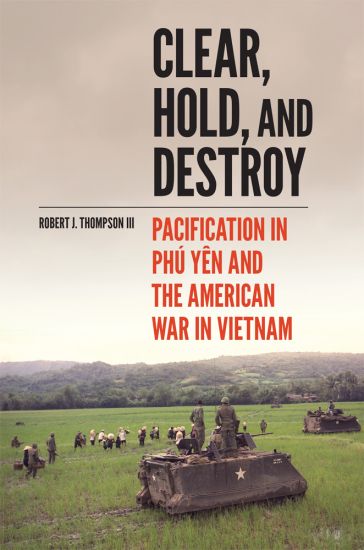
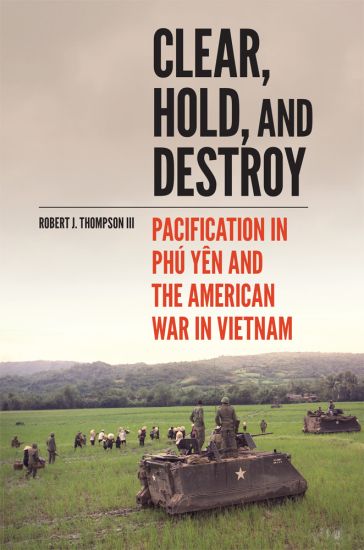
Clear, Hold, and Destroy

Clear, Hold, and Destroy

Robert J. Thompson

UNIVERSITY OF OKLAHOMA PRESS
2023
nidottu
By the end of the American War in Vietnam, the coastal province of PhÚ YÊn was one of the least-secure provinces in the Republic of Vietnam. It was also a prominent target of the American strategy of pacification—an effort, purportedly separate and distinct from conventional warfare, to win the “hearts and minds” of the Vietnamese. In Robert J. Thompson III’s analysis, the consistent, and consistently unsuccessful, struggle to place PhÚ YÊn under Saigon’s banner makes the province particularly fertile ground for studying how the Americans advanced pacification and why this effort ultimately failed. In March 1970 a disastrous military engagement began in PhÚ YÊn, revealing the enemy’s continued presence after more than three years of pacification. Clear, Hold, and Destroy provides a fresh perspective on the war across multiple levels, from those making and implementing policy to those affected by it. Most pointedly, Thompson contends that pacification, far from existing apart from conventional warfare, actually depended on conventional military forces for its application. His study reaches back into PhÚ YÊn’s storied history with pacification before and during the French colonial period, then focuses on the province from the onset of the American war in 1965 to its conclusion in 1975. A sharply focused, fine-grained analysis of one critical province during the Vietnam War, Thompson’s work demonstrates how pacification is better understood as the foundation of U.S. fighting in Vietnam.
Anti-intellectualism to Anti-rationalism to Post-truth Era

Anti-intellectualism to Anti-rationalism to Post-truth Era

Robert J. Thompson

BLOOMSBURY PUBLISHING PLC
2022
sidottu
Anti-intellectualism to Anti-rationalism to Post-truth Era: The Challenges for Higher Education argues that emergence of the post-truth world is evidence that anti-intellectualism, long recognized as a characteristic of American culture, has morphed into anti-rationalism as a surging force in American society that threatens our collective commitment to rationality. A post-truth world, however, is not an immutable condition and cannot be accepted as the new norm. The author argues that American higher education take responsibility for combating anti-rationalism by promoting the development of student's personal attributes that constitute a rational mind-set and rationalist identity, such that they hold themselves accountable for commitments to seeking truth and the value of critical thought and reasoned discourse as defining element of their way of being in the world. Scholarship exists across many disciplines regarding anti-intellectualism and anti-rationalism in American society and the personal attributes that together constitute a rational mind-set, including an evaluativist personal epistemology, open-mindedness and conscientiousness, and a rationalist identity. The author brings the perspective of a psychologist to the analysis and synthesis of this scholarship and the implications for educational practices that are effective in promoting the development of student's rational mind-set and rationalist identity necessary to combat anti-rationalism and the post-truth world.
Clear, Hold, and Destroy

Clear, Hold, and Destroy

Robert J. Thompson

University of Oklahoma Press
2021
sidottu
By the end of the American war in Vietnam, the coastal province of Phú Yên was one of the least-secure provinces in the Republic of Vietnam. It was also a prominent target of the American strategy of pacification - an effort, purportedly separate and distinct from conventional warfare, to win the 'hearts and minds' of the Vietnamese. In Robert J. Thompson III's analysis, the consistent, and consistently unsuccessful, struggle to place Phú Yên under Saigon's banner makes the province particularly fertile ground for studying how the Americans advanced pacification and why this effort ultimately failed. In March 1970, a disastrous military engagement began in Phú Yên, revealing the enemy's continued presence after more than three years of pacification. Clear, Hold, and Destroy provides a fresh perspective on the war across multiple levels, from those making and implementing policy to those affected by it. Most pointedly, Thompson contends that pacification, far from existing apart from conventional warfare, actually depended on conventional military forces for its application. His study reaches back into Phú Yên's storied history with pacification before and during the French colonial period, then focuses on the province from the onset of the American War in 1965 to its conclusion in 1975. A sharply focused, fine-grained analysis of one critical province during the Vietnam War, Thompson's work demonstrates how pacification is better understood as the foundation of U.S. fighting in Vietnam.
Beyond Reason and Tolerance

Beyond Reason and Tolerance

Robert J. Thompson

Oxford University Press Inc
2014
sidottu
The major challenges facing higher education are often framed in terms of preparing students for life-long learning. Society's 21st century needs require civic-minded individuals who have the intellectual and personal capabilities to constructively engage political, ethnic, and religious differences, work effectively, and live together with many different kinds of people in a more global society. In this volume, Robert J. Thompson aims to influence the current conversation about the purposes and practices of higher education. Beyond Reason and Tolerance adopts a developmental science basis to inform the transformations in undergraduate educational practices that are necessary to empower students to act globally and constructively engage difference. It synthesizes current scholarship regarding the nature and development of three core capacities deemed essential: A personal epistemology that reflects a sophisticated understanding of knowledge, beliefs, and ways of thinking; empathy and the capacity to understand the mental states of others; and an integrated identity that includes values, commitments, and a sense of agency for civic and social responsibility. Beyond Reason and Tolerance argues that to foster the development of these capabilities, colleges and universities must recommit to providing a formative liberal education and adopt a developmental model of undergraduate education as a process of intellectual and personal growth, involving empathy as well as reasoning, values as well as knowledge, and identity as well as competencies. Thompson focuses on emerging adulthood as an especially dynamic time of reorganization and development of the brain that both influences, and is influenced by, the undergraduate experience. Advances in our understanding of human development and learning are synthesized with regard to the direct implications for undergraduate education practices.