Kirjojen hintavertailu. Mukana 12 595 353 kirjaa ja 12 kauppaa.

Kirjailija

Robert J. Trent

Kirjat ja teokset yhdessä paikassa: 4 kirjaa, julkaisuja vuosilta 2007-2018, suosituimpien joukossa Strategic Supply Management Revisited. Vertaile teosten hintoja ja tarkista saatavuus suomalaisista kirjakaupoista.

4 kirjaa

Kirjojen julkaisuhaarukka 2007-2018.

Strategic Supply Management Revisited

Strategic Supply Management Revisited

Robert J. Trent

J Ross Publishing
2018
sidottu
In his 2007 best-selling book, Strategic Supply Management, Robert Trent presented concepts, processes, tools, best practices, and a framework for creating a supply management organization that would provide a reliable source of supply and competitive advantage. This book introduces a new set of essential supply management concepts, strategies, and practices that are an integral part of surviving and thriving in this unprecedented era of rapid change and disruption. Key Features:Addresses the importance of developing well-crafted supply strategies and linking supply management success to corporate financial successExplores the four areas that enable strategic supply management to become a reality in this new era: the shift from human resource management to talent management, evolving organizational designs, new directions in supply measurement, and the information-enabled supply organizationExplains how to gain a competitive advantage through true collaborative relationships and become the customer of choice to suppliers
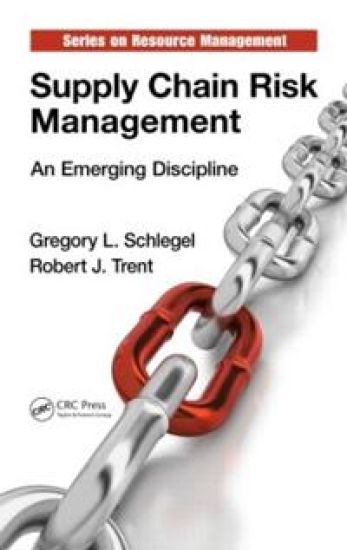
Supply Chain Risk Management

Supply Chain Risk Management

Gregory L. Schlegel; Robert J. Trent

Apple Academic Press Inc.
2014
sidottu
You don’t have to outrun the bear … you just have to outrun the other guy. Often in business we only have to run a bit faster than our competitors to be successful. The same is true in risk management. While we would always like to anticipate and prevent risk from happening, when risk events do occur being faster, flexible, and more responsive than others can make a world of difference. Supply Chain Risk Management: An Emerging Discipline gives you the tools and expertise to do just that.While the focus of the book is on how you can react better and faster than the others, the text also helps you understand how to prevent certain risks from happening in the first place. The authors detail a risk management framework that helps you reduce the costs associated with risk, protect your brand and reputation, ensure positive financial outcomes, and develop visible, predictable, resilient, and sustainable supply chains. They provide access to a cloud-based, end-to-end supply chain risk assessment "Heat Map" that illustrates the maturity of the chain through the various stages. It should not come as a surprise to anyone that the world is a riskier place than it was just 15 years ago. A survey used to calculate the Allianz Risk Barometer recently concluded for the first time that supply chain risk is now the top concern of global insurance providers. For most organizations this new reality requires major adjustments, some of which will not be easy. This book helps you understand the emerging discipline called supply chain risk management. It explains the relevant concepts, supplies a wide variety of tools and approaches to help your organization stay ahead of its competitors, and takes a look at future directions in risk management—all in a clear, concise presentation that gives you practical advice and helps you develop actionable strategies.
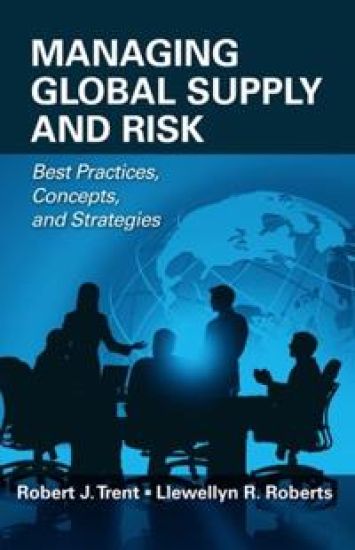
Managing Global Supply and Risk

Managing Global Supply and Risk

Robert J. Trent; Llewellyn Roberts

J Ross Publishing
2009
sidottu
Due to the profound growth in international trade, the need to pursue global supply and institute risk management practices has never been greater. The globalization of world markets has reconfigured supply networks, causing increasing complexities and challenges in sourcing and risk management. Managing Global Supply and Risk blends three distinct but interrelated topics—international purchasing, global supply management, and global risk management—to present the critical differences between companies that pursue international purchasing and those that have evolved toward a more sophisticated global supply management model. This book covers every aspect of global supply management and details what it takes to pursue supply management at the international level. Each chapter is loaded with critical concepts that supply managers must understand and includes company examples, cases, best practices, and strategies that offer prescriptions for success. Global supply management is a process that proactively integrates and coordinates common items and materials, as well as processes, designs, technologies, and suppliers across worldwide purchasing, engineering, and operating locations. It is a process that could very well provide your organization with its next quantum leap in performance. Managing Global Supply and Risk: Best Practices, Concepts, and Strategies is a must read for every c-level executive and supply chain leader that wants to gain or maintain a competitive advantage during difficult economic periods.
Beat the Odds

Beat the Odds

Robert J. Trent

J Ross Publishing
2007
nidottu
Beat the Odds fills a crucial void in the current business literature. It clearly illustrates why great organizations slip from leader to follower to road-kill, and how organizations can "beat the odds" and avoid this fate. This is a concise must-read for senior executives, and for any manager interested in seeing his or her organization avoid corporate death and build for the future.Over the past 10 years, there have been more than 600,000 business bankruptcies in the United States. Research findings confirm that the odds are very slim for any organization to survive more than a few decades. Many books that purport to offer secrets of business success only study companies that are currently successful. Other books provide pieces that don't fit together to solve the puzzle in real-world practice.Beat the Odds evolved from a study of a broad pool of companies across a wide spectrum of performance over an extended period of time. The book presents a tested and comprehensive nine-part framework for understanding, building and ensuring long-term organizational success through the ups and downs of business cycles, competitive cycles and management cycles. Supported by real case studies, each of the nine framework elements includes a clear description of the underlying principles pertaining to both successful and dysfunctional behaviors.The assessment and diagnostic tools provided in this book are designed to give managers deep insights into their firm's underlying challenges and for performing their own gap analysis of where they are now, versus where they should be. It also features the factual basis for corrective action and prescriptive steps for immediate deployment of this framework.