Kirjojen hintavertailu. Mukana 12 595 353 kirjaa ja 12 kauppaa.

Kirjailija

Robert James Maddox

Kirjat ja teokset yhdessä paikassa: 6 kirjaa, julkaisuja vuosilta 2004-2021, suosituimpien joukossa From War to Cold War. Vertaile teosten hintoja ja tarkista saatavuus suomalaisista kirjakaupoista.

6 kirjaa

Kirjojen julkaisuhaarukka 2004-2021.

From War to Cold War

From War to Cold War

Robert James Maddox

Routledge
2021
nidottu
This book reviews the strains between the United States and Great Britain that led to the Cold War as the result of personal characteristics of the leaders of the United States, the Soviet Union, and Great Britain as well as of historical and ideological forces.
From War to Cold War

From War to Cold War

Robert James Maddox

Routledge
2019
sidottu
This book reviews the strains between the United States and Great Britain that led to the Cold War as the result of personal characteristics of the leaders of the United States, the Soviet Union, and Great Britain as well as of historical and ideological forces.
The New Left and the Origins of the Cold War

The New Left and the Origins of the Cold War

Robert James Maddox

Princeton University Press
2016
sidottu
As more and more people are questioning the assumptions of present U.S. foreign policy they are reexamining the roots of these policies in the diplomacy of the Cold War. This scrutiny has made the origins of the Cold War the most controversial issue in American diplomatic history. Now a complete new dimension has been added to the debate by the charges leveled by Robert James Maddox in The New Left and the Origins of the Cold War. How did the Cold War begin? Who or what was responsible? Could it have been avoided? Was it a temporary condition created by a combination of individual personalities and historical factors, or did it represent the clash of fundamentally irreconcilable political systems? The orthodox explanation of the Cold War is that it was "the brave and essential response of free men to Communist aggression." A number of scholars more or less identified with the New Left have challenged the conventional explanation by asserting that the U.S. bears the major responsibility for its onset. One group of revisionists sees this as the result of a failure of statesmanship on the part of Truman and the advisors around him, the other that the Cold War was the inevitable result of the American system as it developed over the years. Their conclusions have often been challenged in matters of interpretation. Robert Maddox, however, believes that an examination of the manner in which new interpretations are reached should precede dialogues over the ideas themselves. Consequently he has examined seven of the most prominent New Left works: The Tragedy of American Diplomacy by William Appleman Williams; The Cold War and Its Origins by D. F. Fleming; Atomic Diplomacy by Gar Alperovitz; The Free World Colossus by David Horowitz; The Politics of War by Gabriel Kolko; Yalta by Diane Shaver Clemens; and Architects of Illusion by Lloyd C. Gardner. After detailed comparisons of the evidence they present with the sources from which it was taken, he concludes that these books are based on pervasive misuse of the source materials and fail to measure up to the most elementary standards of good scholarship. Originally published in 1973. The Princeton Legacy Library uses the latest print-on-demand technology to again make available previously out-of-print books from the distinguished backlist of Princeton University Press. These editions preserve the original texts of these important books while presenting them in durable paperback and hardcover editions. The goal of the Princeton Legacy Library is to vastly increase access to the rich scholarly heritage found in the thousands of books published by Princeton University Press since its founding in 1905.
The New Left and the Origins of the Cold War

The New Left and the Origins of the Cold War

Robert James Maddox

Princeton University Press
2015
pokkari
As more and more people are questioning the assumptions of present U.S. foreign policy they are reexamining the roots of these policies in the diplomacy of the Cold War. This scrutiny has made the origins of the Cold War the most controversial issue in American diplomatic history. Now a complete new dimension has been added to the debate by the charges leveled by Robert James Maddox in The New Left and the Origins of the Cold War. How did the Cold War begin? Who or what was responsible? Could it have been avoided? Was it a temporary condition created by a combination of individual personalities and historical factors, or did it represent the clash of fundamentally irreconcilable political systems? The orthodox explanation of the Cold War is that it was "the brave and essential response of free men to Communist aggression." A number of scholars more or less identified with the New Left have challenged the conventional explanation by asserting that the U.S. bears the major responsibility for its onset. One group of revisionists sees this as the result of a failure of statesmanship on the part of Truman and the advisors around him, the other that the Cold War was the inevitable result of the American system as it developed over the years. Their conclusions have often been challenged in matters of interpretation. Robert Maddox, however, believes that an examination of the manner in which new interpretations are reached should precede dialogues over the ideas themselves. Consequently he has examined seven of the most prominent New Left works: The Tragedy of American Diplomacy by William Appleman Williams; The Cold War and Its Origins by D. F. Fleming; Atomic Diplomacy by Gar Alperovitz; The Free World Colossus by David Horowitz; The Politics of War by Gabriel Kolko; Yalta by Diane Shaver Clemens; and Architects of Illusion by Lloyd C. Gardner. After detailed comparisons of the evidence they present with the sources from which it was taken, he concludes that these books are based on pervasive misuse of the source materials and fail to measure up to the most elementary standards of good scholarship. Originally published in 1973. The Princeton Legacy Library uses the latest print-on-demand technology to again make available previously out-of-print books from the distinguished backlist of Princeton University Press. These editions preserve the original texts of these important books while presenting them in durable paperback and hardcover editions. The goal of the Princeton Legacy Library is to vastly increase access to the rich scholarly heritage found in the thousands of books published by Princeton University Press since its founding in 1905.
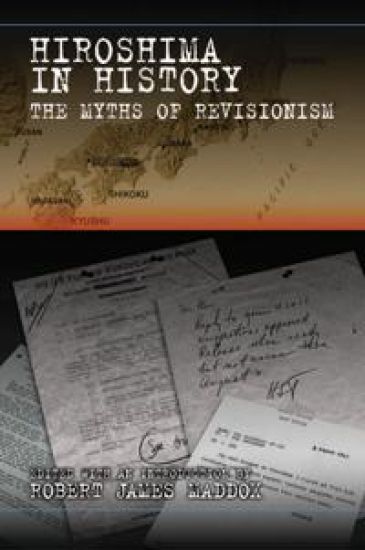
Hiroshima in History

Hiroshima in History

Robert James Maddox

University of Missouri Press
2011
nidottu
When President Harry Truman authorised the use of atomic weapons against Japan, he did so to end a bloody war that would have been bloodier still had the planned invasion of Japan proved necessary. Revisionists claim that Truman’s real interest was a power play with the Soviet Union and that the Japanese would have surrendered even earlier had the retention of their imperial system been assured. Truman wanted the war to continue, they insist, in order to show off America’s powerful new weapon.This anthology exposes revisionist fallacies about Truman’s motives, the cost of an invasion, and the question of Japan’s surrender. Essays by prominent military and diplomatic historians reveal the hollowness of revisionist claims, exposing the degree to which these agenda-driven scholars have manipulated the historical record to support their contentions. They show that, although some Japanese businessmen and minor officials indicated a willingness to negotiate peace, no one in a governmental decision-making capacity even suggested surrender. And although casualty estimates for an invasion vary considerably, the more authoritative approximations point to the very bloodbath that Truman sought to avoid.Volume editor Robert Maddox first examines the writings of revisionist Gar Alperovitz to expose the unscholarly methods Alperovitz employed to support his claims, then distinguished Japanese historian Sadao Asada reveals how difficult it was for his country’s peace faction to prevail even after the bombs had been dropped. Other contributors point to continuing Japanese military buildups, analyse the revisionists’ low casualty estimates for an invasion, reveal manipulations of the Strategic Bombing Survey of 1946, and show how even the exhibit commemorating the fiftieth anniversary of the bombing at the Smithsonian National Air and Space Museum hewed to the revisionist line. And a close reading of Tsuyoshi Hasegawa’s acclaimed Racing the Enemy exposes many grave discrepancies between that recent revisionist text and its sources. The use of atomic bombs against Japan remains one of the most controversial issues in American history. Gathered in a single volume for the first time, these insightful readings take a major step toward settling that controversy by showing how insubstantial Hiroshima revisionism really is—and that sometimes history cannot proceed without decisive action, however regrettable.
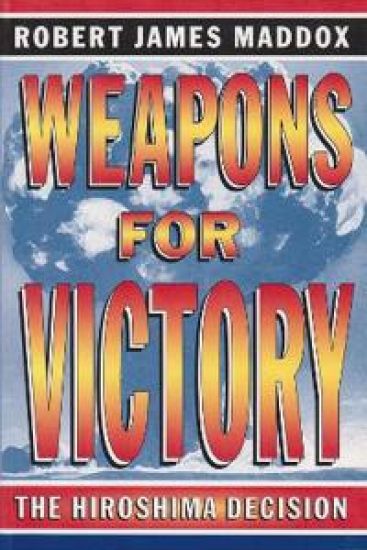
Weapons for Victory

Weapons for Victory

Robert James Maddox

University of Missouri Press
2004
nidottu
Weapons for Victory originally appeared in 1995, the fiftieth anniversary of the end of World War II. Now, in this paperback edition, Robert James Maddox provides a new introduction about the ongoing controversy related to the decision to bomb Hiroshima.